REVIEW · CANCUN
Cancun: Scuba Diving for Certified Divers, 3 options to dive
Book on GetYourGuide →Operated by A' HA' Scuba Diving Cancun · Bookable on GetYourGuide
Scuba in Cancun feels close to postcard life. For certified divers, this 4-hour outing pairs two underwater tank sessions with real choices: art reefs, coral outside the bay, or famous shipwreck sites. You also travel with a small group (max 10), guided in English or Spanish, which keeps things calmer when you’re suited up and ready.
I especially like the Option 1 combo: MUSA’s submerged sculptures and a mostly beginner-friendly reef stop. It’s a smart way to see dramatic ocean scenery without turning the day into a technical test.
My main caution is budget math. There’s an extra entrance fee of 500 Mexican Pesos per person that isn’t included in the $161 price.
In This Review
- Key points to know before you go
- How the 4-hour Cancun scuba plan runs for certified divers
- Option 1: MUSA sculptures plus Manchones Reef for a calmer start
- Option 2: Punta Cancun reefs outside the bay (15–17 meters) for stronger comfort
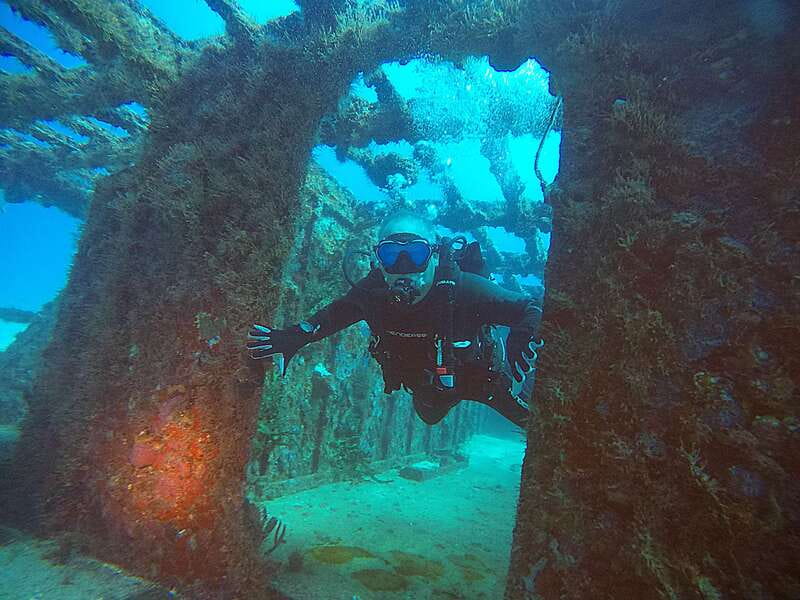
- Option 3: Wreck diving on C-58 or C-55 plus a reef stop for deeper thrill
- Marine life you can realistically expect in Cancun waters
- Gear and rules that keep the day smooth (and protect the ocean)
- Safety and guide quality: why small groups pay off
- Price and value: $161 plus the 500-peso entrance fee
- Which option fits you best
- Should you book this Cancun scuba outing?
- FAQ
- What certification do I need?
- How long is the experience?
- What are the three site options?
- What depths should I expect?
- What scuba equipment is included?
- Is transportation included from my hotel?
- Are photos included?
- What is the entrance fee?
- Can I wear sunscreen?
- How long should I wait before flying after the activity?
Key points to know before you go
- Three site choices for certified scuba divers: MUSA + reef, Punta Cancun reefs, or wrecks (C-58/C-55) plus reef
- Two tank sessions in each option so you get more real water time than a quick stop
- Small group size (10 max), which helps with setup, gear checks, and calm guidance
- Gear and wetsuit included, plus weights and purified water
- MUSA entrance fee not included (500 Mexican Pesos per person)
How the 4-hour Cancun scuba plan runs for certified divers
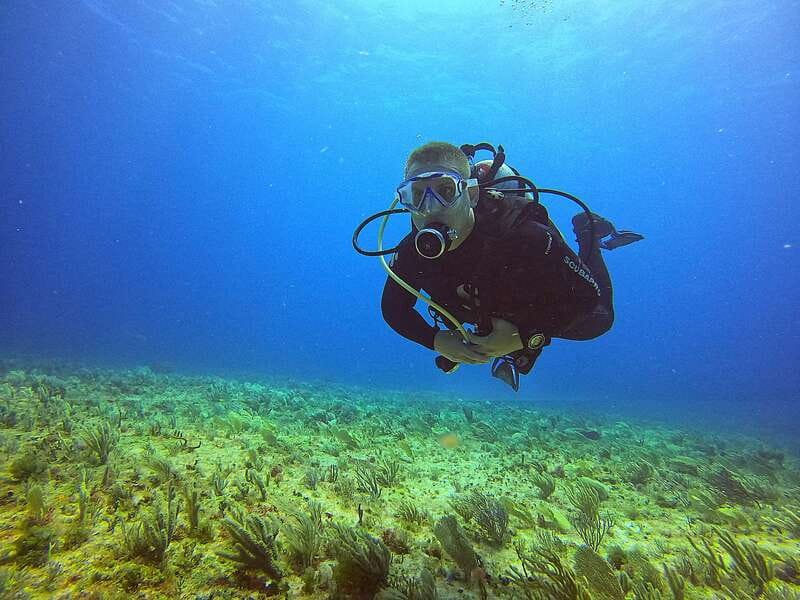
This is built for people who already have certification. You’ll show your scuba card before you go, fill out a medical document, and then get suited up with the included equipment. The whole experience is designed around two separate underwater tank sessions within one day, with a live guide (English and Spanish) and a max group size of 10.
You’ll meet at the Sotavento hotel and find the staff waiting by the pool area. The hotel is behind Calypso, so if you’re already in the hotel zone, you’ll be able to spot them quickly once you ask for the scuba activity.
Timing is tight but not rushed. The schedule shifts by option:
- Option 1 starts in the morning (check-in 9:00 AM, depart 9:30 AM, back around 1:00 PM)
- Options 2 and 3 start in the early afternoon (check-in 1:30 PM, depart 2:00 PM, back around 5:30 PM)
You also need to think about safety timing. Plan on waiting at least 18–24 hours after your last underwater time before taking a flight.
You can also read our reviews of more tours and experiences in Cancun.
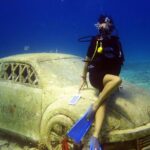
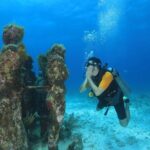
Option 1: MUSA sculptures plus Manchones Reef for a calmer start
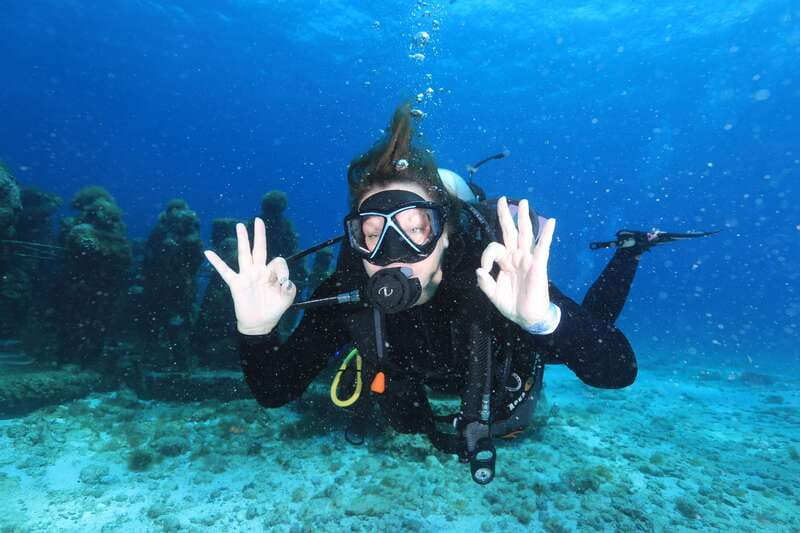
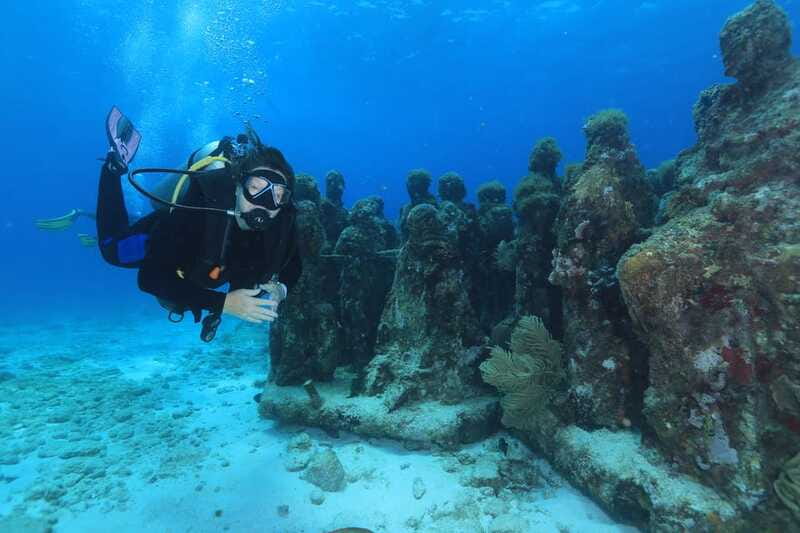
If you want the Cancun experience to feel visual and fun first, Option 1 is a strong pick. You combine the MUSA Underwater Museum with a reef stop called Manchones Reef. This option uses shallower depths, which makes it a good fit if you’d like a lighter day underwater.
Here’s how it breaks down:
- First underwater stop: MUSA Underwater Museum at about 8 meters / 27 feet
- Second underwater stop: Manchones Reef at about 10 meters / 33 feet
- You’ll return to the dock around 1:00 PM
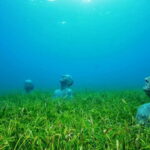
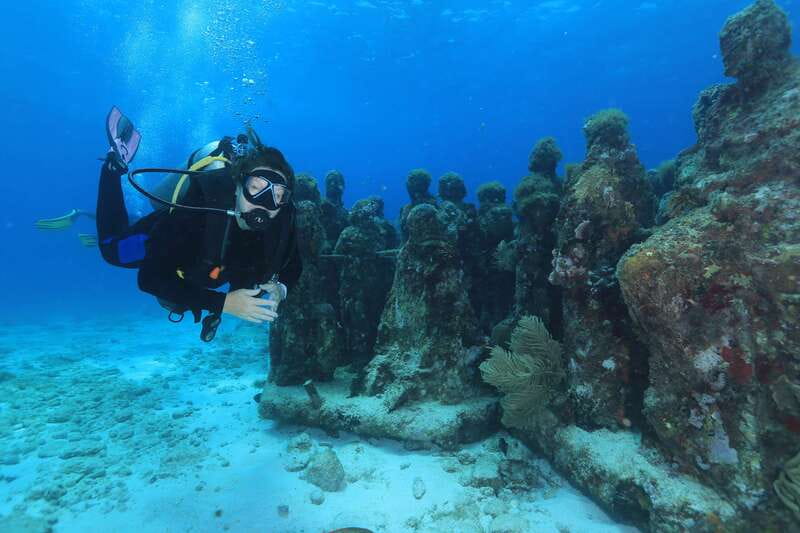
What makes MUSA special is the scale. You’re not just looking at a few sculptures—you’re seeing around 500 life-size pieces submerged underwater. The goal is the art-meets-ocean feeling: you’ll swim through the museum pieces while marine life settles in around them.
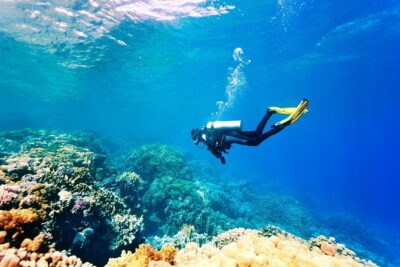
The reef stop is mostly for beginners, and it’s set up to be less intimidating than deeper open-water routes. Manchones Reef is described as covering about 800 meters of reef, which means you don’t feel like you’re doing laps; you get time to notice coral growth and small sea life as you move along the area.
One practical tip: If you tend to feel more comfortable with training wheels, this is the option that fits. It’s also a nice choice if you’re coming back after time away from scuba, because the day doesn’t jump straight to deep-water profiles.
Option 2: Punta Cancun reefs outside the bay (15–17 meters) for stronger comfort
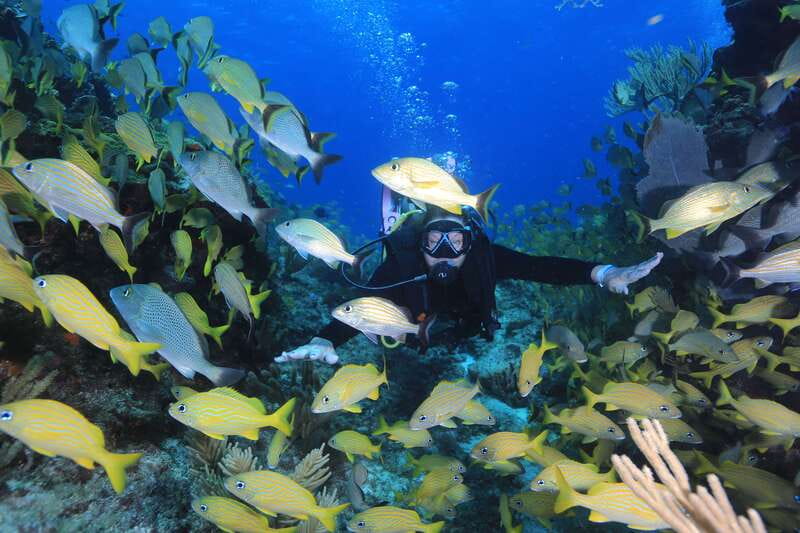
Option 2 is for certified divers who want more challenge and more open-water variety. This route runs outside the bay, and the depth profile goes deeper than Option 1.
You’ll check in at 1:30 PM, depart at 2:00 PM, and return around 5:30 PM. You’ll complete two tank sessions at different Punta Cancun reefs chosen on the day.
Depth range is about 15–17 meters / 50–56 feet, so you’ll want to be comfortable with that depth, equalization, and buoyancy control. The upside is scenery and wildlife that tends to feel more “out there” rather than sheltered.
The reef names you might visit include:
- San Toribio
- Ginas
- San Miguel
- La Herradura
- Punta Negra
- El tunnel
- Aristos (La Iglesia)
- Grampin
What you’re looking for is coral formations and sea life living outside the bay—think more movement in the water and more chances for bigger passing fish. Because the exact sites can change, you should focus on the general experience: deeper reef habitat plus two different locations in one day.
If you’re deciding between Option 2 and Option 3, consider how you feel about depth versus type of attraction. Option 2 keeps it reef-focused. Option 3 adds wrecks and goes even deeper.
Option 3: Wreck diving on C-58 or C-55 plus a reef stop for deeper thrill
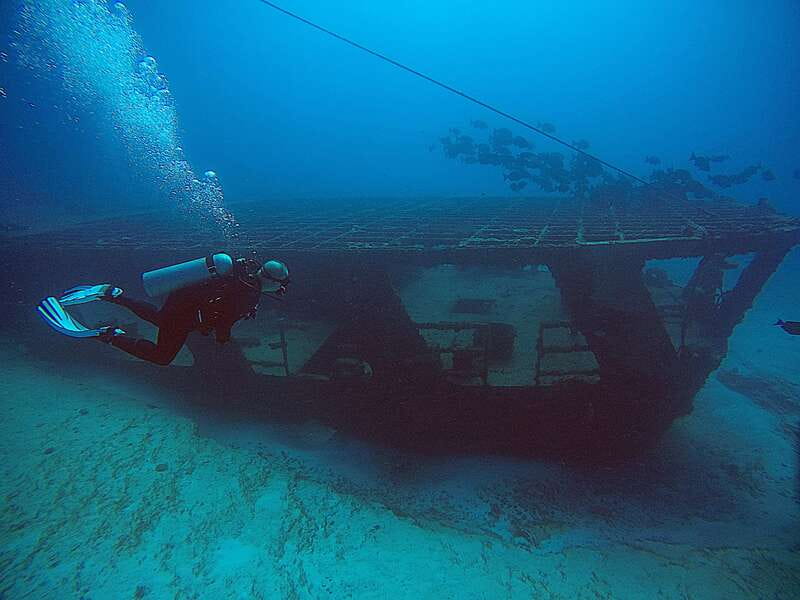
Option 3 is the “go farther down” choice. You’ll target shipwrecks C-58 or C-55, described as being located in Cancun’s deepest diving area, then you’ll do a reef stop as well.
Like Option 2, check-in is 1:30 PM, depart at 2:00 PM, and return around 5:30 PM. The wreck site depth is about 25 meters / 80 feet, which is a serious jump from the other options.
This option suits divers who:
- already feel confident at greater depths
- want a wreck experience, not only coral
- can stay calm with heavier depth-focused planning
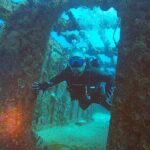
Wrecks can offer a different kind of reef habitat—structure for fish and other life to use. Even when visibility and currents vary, wreck sites tend to hold interest because the environment is built, not just grown.
A real-world caution: because this option reaches 25 meters, you should be honest about your comfort and not pick it just for the “cool factor.” If you feel even slightly uncertain about depth, Option 2 is usually the safer bet.
Marine life you can realistically expect in Cancun waters
No scuba day is guaranteed, because sea conditions and where wildlife swims matter. But you can plan around what this region offers and what the guides commonly see on these itineraries.
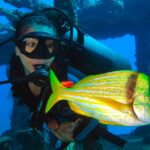
From actual trip experiences, the animal highlights often include:
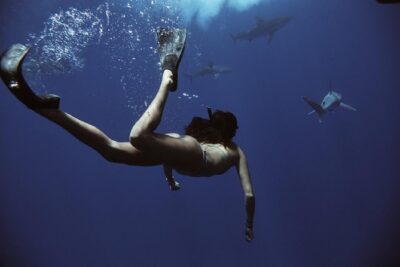
- Sea turtles
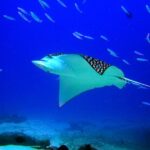
- Sting rays, including eagle ray sightings
- Nurse shark
- Barracudas and other fast fish
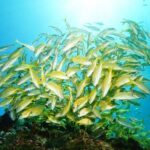
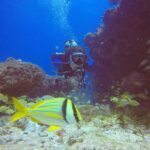
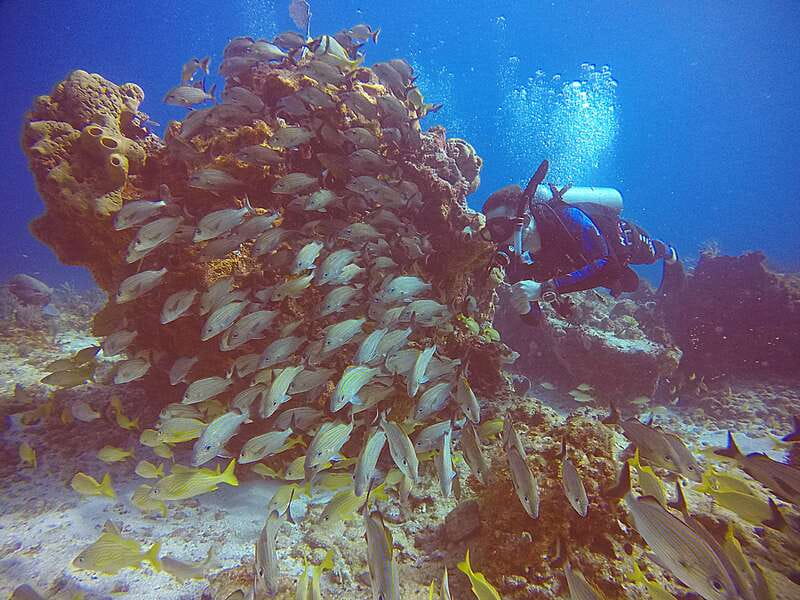
- Hundreds of reef fish, including snapper
- Small reef specialists like stone fish and trigger fish
- Lobsters in reef habitat
So if you’re the type who enjoys scanning carefully for wildlife patterns—moving from big flash sightings (like turtles and rays) to smaller “wait, there it is” moments—these sites deliver.
You’ll also get to notice plant life. Even on days when a headline animal doesn’t show up, the reef still gives you texture: coral shapes, color changes, and fish hiding in the seams. And with two separate stops, you get more chances to find something interesting without feeling like you’re gambling on one location.
Gear and rules that keep the day smooth (and protect the ocean)
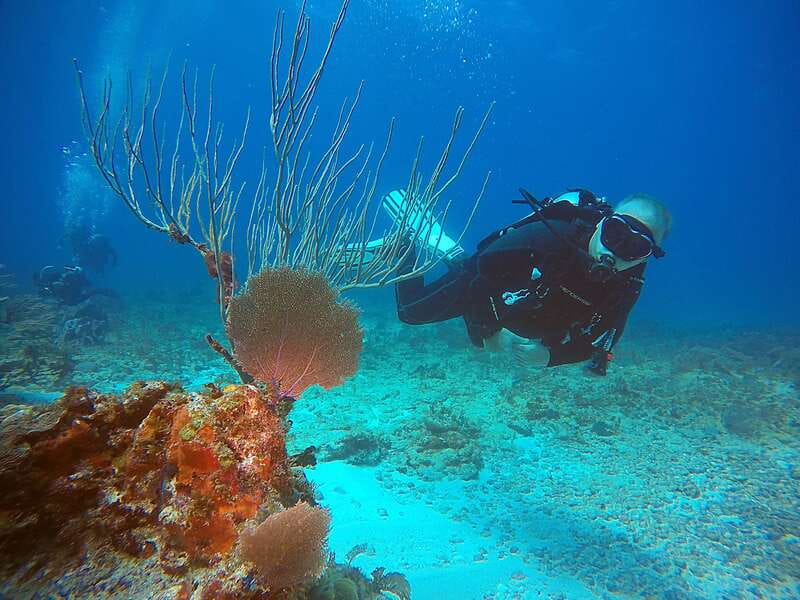
Good news: you don’t have to bring much scuba hardware. The experience includes:
- BCD, regulator, mask, fins
- Wetsuit
- Tanks and weights
- Drinking purified water
You just provide your certification card and basics like swimwear and a towel. You should also wear comfortable clothes for the non-water parts of the day.
A key rule you’ll want to remember: no sunscreen is allowed. That’s not an inconvenience for the sake of it; reef-safe practices matter, especially around coral and museum sites. If you’re sun-sensitive, plan on using clothing and shade rather than sunscreen.
Also, you’ll likely be asked to fill out a medical document before getting in the water. If you have a relevant health history, don’t assume you’ll be allowed. The activity specifically states that people with asthma, heart or brain problems, high blood pressure, lung lesions, organ transplant, diabetes, epilepsy, or any surgery less than 1 year cannot dive. And if you’re over 65 or pregnant, it’s also listed as not suitable.
Finally, plan what you’ll do on travel day. At minimum, follow the 18–24 hour wait before flying.
Safety and guide quality: why small groups pay off
This is one of the best parts of the experience. The group cap of 10 helps a lot. You get more time for checks, more patience for questions, and fewer rushed moments as you assemble gear.
On safety-focused days, guides also make a point of slowing the process down. One example from a past trip: the guide Carlos and his team reviewed proper procedures and did multiple checks of equipment before people entered the water. That’s the kind of calm that reduces stress for divers who haven’t been in the water recently.
If it’s been a while since your last underwater time, this kind of setup matters. A patient approach also helps with things like buoyancy adjustments, staying relaxed during descent, and communicating at the right moments.
Bottom line: you can feel that safety isn’t an afterthought. It’s part of how the day is run.
Price and value: $161 plus the 500-peso entrance fee
At $161 per person for about 4 hours, this can be good value because the core costs are already covered:
- Two tank sessions
- full scuba equipment
- wetsuit
- tanks and weights
- purified drinking water
Where value changes is the entrance fee. You’ll pay 500 Mexican Pesos per person on top for the activity’s entrance. Photos are also optional, and transportation from your hotel is not included.
So the real “all-in” cost is about the listed price plus that fee. If you’re choosing Option 1, you’re paying for MUSA access plus a second reef stop. If you’re choosing Option 2 or 3, you’re still paying for two tank sessions with gear included, but you should expect the day to feel more like reef exploration (Option 2) or wreck-plus-reef (Option 3).
My practical advice: treat the entrance fee like part of the plan, not a surprise. Once you do, the pricing becomes easier to judge. Then pick the option that matches your skill level and curiosity—art reefs, deeper reefs, or wrecks.
Which option fits you best
Here’s a straightforward way to choose:
- Choose Option 1 (MUSA + Manchones Reef) if you want shallower depths, a strong visual centerpiece, and a reef stop described as mostly beginner-friendly. It’s great when you want the day to feel more like exploration than a test.
- Choose Option 2 (Punta Cancun Reefs) if you’re comfortable with 15–17 meters and want coral habitat outside the bay plus two reef locations in one afternoon. It’s a good match for divers who feel ready for a deeper profile.
- Choose Option 3 (C-58 or C-55 wrecks) if you’re comfortable with around 25 meters and specifically want wreck structure and the deepest site experience mentioned for Cancun. If depth makes you nervous, skip it and go with Option 2.
And don’t forget the practical checklist: swimwear, towel, and your certification card. Then plan your day around the “no flight for 18–24 hours” rule.
Should you book this Cancun scuba outing?
If you’re a certified scuba diver and you want two underwater tank sessions with gear handled for you, this is a solid pick in Cancun. The small group size helps the day feel controlled, and the site options let you match your comfort level—museum and reef, deeper reefs, or wrecks.
Book it if:
- you want a guided, organized day with equipment included
- you like the idea of choosing between museum art, reef variety, or wreck structure
- you value safety procedure and calm coaching
Skip it if:
- you’re not certified
- you’re unsure about medical clearance or have any listed restrictions
- you can’t plan the post-water flight window
If you do book, bring your certification card, show up at Sotavento’s pool meeting point, and treat the 500-peso entrance fee as part of your budget. Then spend the day paying attention—because turtles, rays, sharks, and plenty of reef life have a way of showing up when you’re ready to look.
FAQ
What certification do I need?
This activity is only for certified scuba divers, and your scuba certification card is required.
How long is the experience?
The duration is 4 hours. Exact timing depends on which option you pick.
What are the three site options?
You can choose one of three options: MUSA Underwater Museum plus Manchones Reef, Punta Cancun Reefs (two reef stops), or wreck diving on C-58 or C-55 plus a reef stop.
What depths should I expect?
Option 1 is about 8 meters and 10 meters. Option 2 is about 15–17 meters. Option 3 goes to about 25 meters on the wreck.
What scuba equipment is included?
The tour includes full SCUBA equipment: BCD, regulator, mask, fins, plus a wetsuit, tanks, and weights.
Is transportation included from my hotel?
No. Transportation from your hotel is not included.
Are photos included?
Photos are optional, so they are not included by default.
What is the entrance fee?
An entrance fee of 500 Mexican Pesos per person is not included.
Can I wear sunscreen?
No. Sunscreen is not allowed.
How long should I wait before flying after the activity?
You need to wait at least 18–24 hours after diving before taking an airplane.