REVIEW · MALLORCA
Palma de Mallorca: Shark Dive at Palma Aquarium
Book on GetYourGuide →Operated by Palma Aquarium · Bookable on GetYourGuide
Sharks, in Palma’s Big Blue tank, feels unreal. This Palma Aquarium experience pairs a controlled scuba session with a qualified instructor inside one of Europe’s biggest shark tanks. I like the idea of seeing large sharks up close while staying in a managed, safety-first setup.
I also love the value add: after your underwater time, you get a relaxed chance to roam the aquarium at your own pace, and your companion gets free entry too. The main drawback to think about is the admin and rules: you’ll need a current scuba medical certificate and the right insurance, plus timing matters around flights.
In This Review
- Key takeaways before you book
- Palma Aquarium’s Big Blue tank: why this set-up works
- The schedule at Palma Aquarium, step by step
- Safety briefing: how instructors keep the experience calm
- Your underwater session with sharks: what it feels like
- Depth limits and certification: choosing the right expectation
- Your companion gets the best of Palma Aquarium, too
- What’s included (and what that means for value)
- Gear, insurance, and paperwork: plan this early
- Languages and private-group comfort
- Not for everyone: who should skip this session
- Potential downsides to consider before you pay
- Should you book Palma Aquarium’s shark scuba experience?
- FAQ
- FAQ
- Where does the experience start?
- How long is the safety briefing and the underwater session?
- How deep will I go if I have a scuba license versus if I don’t?
- What’s included in the booking, and does a companion get access too?
- Do I need accident insurance to do this activity?
- Is a medical certificate required?
- Are there any flight-time restrictions?
- Is the experience suitable for people with mobility impairments?
- Is there free cancellation, and when does it apply?
Key takeaways before you book
- Big Blue tank time: one of Europe’s deepest shark tanks, with 11 large sharks plus rays and lots of fish
- Clear depth limits: up to 8.5 m with a scuba license, up to 4 m without one
- A real instructor in your corner: briefing first, then a short in-water session with gear included
- Your companion gets the aquarium: you dive, they tour—then you can swap photos and sightings
- Safety is built in: structured security measures and an instructor-led routine
- Availability depends on conditions: weather and biological factors can affect scheduling
Palma Aquarium’s Big Blue tank: why this set-up works
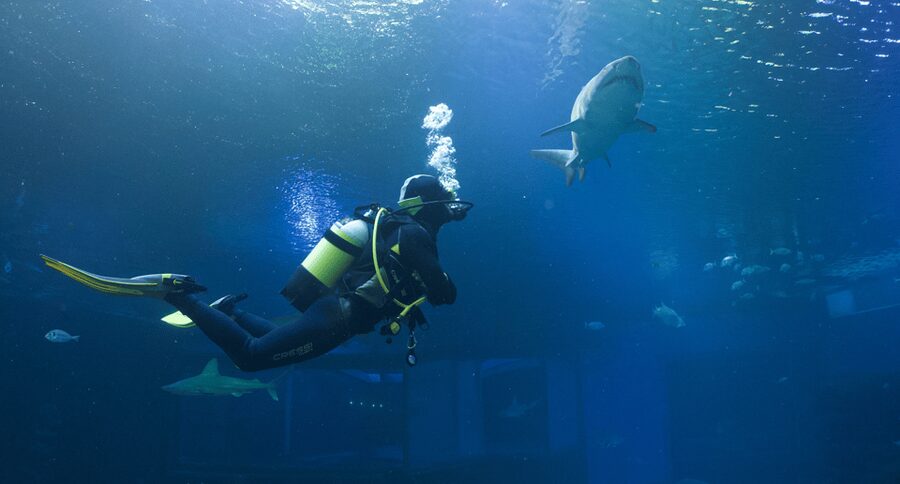
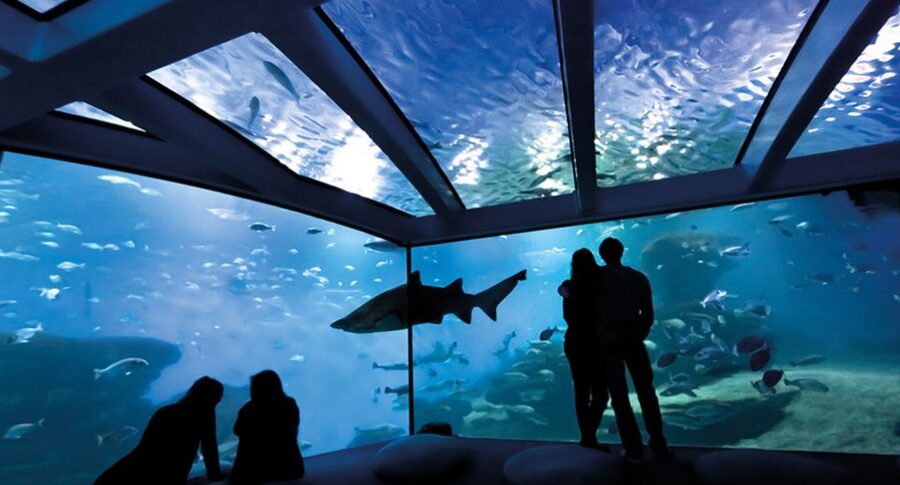
Palma Aquarium’s Big Blue tank is the whole show. The reason people get excited is simple: you’re not doing this as a distant viewing experience. You’re in the water column with large sharks in a deep, purpose-built environment. And yes, it’s the kind of place where your brain goes, wait, I’m actually here with them.
What makes the experience feel extra practical (not just exciting) is the format. You start with a safety briefing and then move into a timed underwater session. That matters because sharks look bold and dramatic from outside the glass, but underwater they’re just animals living their routine. A good instructor helps you shift from thrill-mode to calm-mode fast, so you can actually enjoy what’s in front of you.
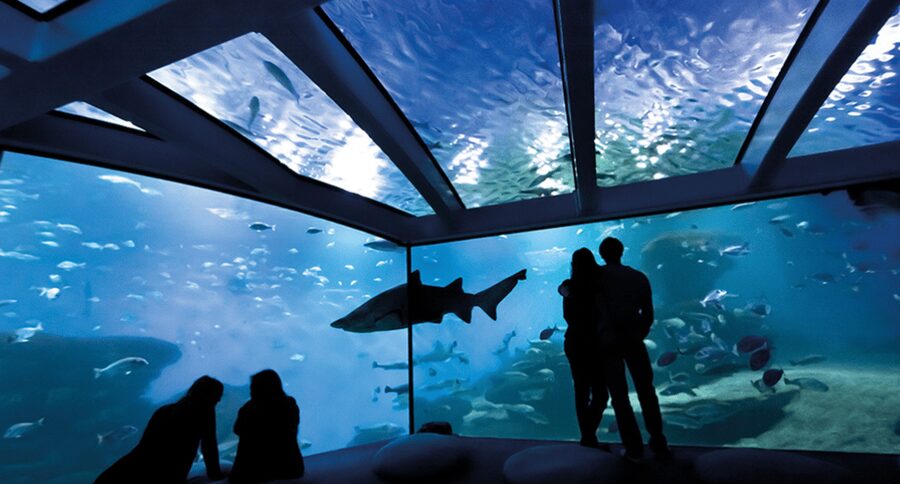
The tank is also designed for viewing. In past experiences, the companion side tends to be set up so people can watch through glass, take photos, and generally feel included even if they’re not in the water. If your group includes a non-diver, that’s a big plus for relationship-friendly sightseeing.
You can also read our reviews of more tours and experiences in Mallorca.
The schedule at Palma Aquarium, step by step
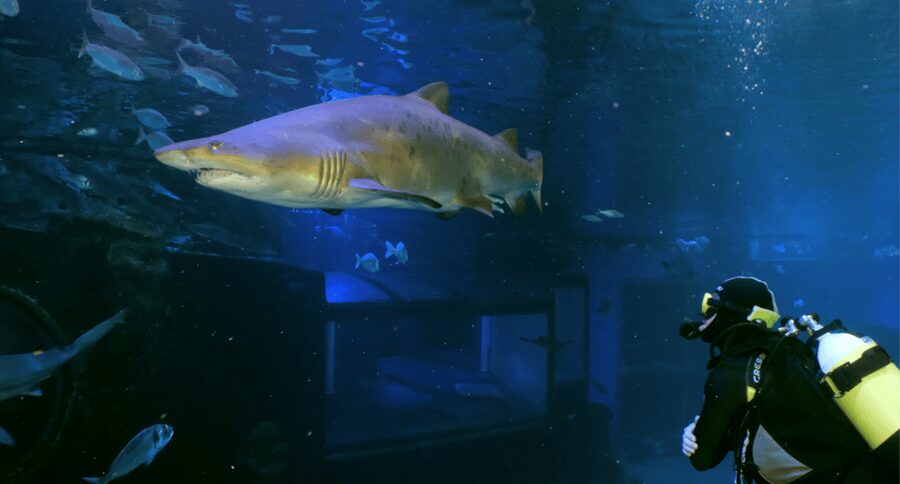
This is a tight, single-location experience. You’ll start at Palma Aquarium, do your briefing, complete your in-water session, and then have time to visit the aquarium.
Here’s what your day usually looks like:
- Safety briefing (40 minutes): you’ll get an explanation of the Big Blue tank, what to expect, and the security measures you need to feel comfortable
- Underwater session (30 minutes): your actual scuba time in the tank
- Aquarium visit (about 1.5 hours): after your session, you can explore at your own pace
The day’s total time can feel compact, which is good when you want a memorable activity without eating an entire travel day. It also gives you a built-in plan for the rest of your visit: you’re not stuck wondering what to do after your underwater time ends.
One practical tip: build in a little buffer in your mental schedule. Even though the underwater portion is listed as short, the briefing and gear process take time, and you’ll want to arrive with enough energy to focus.
Safety briefing: how instructors keep the experience calm
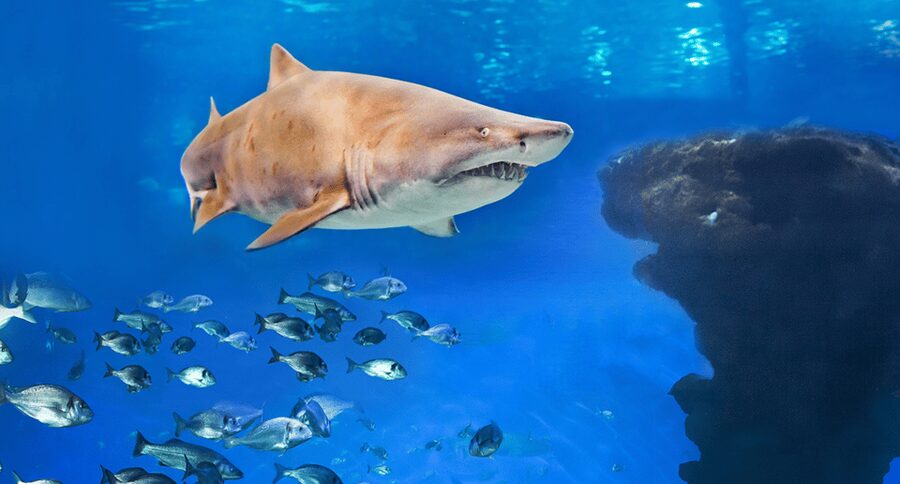
The briefing is not a formality here. It’s where you learn the tank rules, how the instructor will manage your group, and how to handle basic underwater behavior in a controlled way.
You’ll also learn about what you can expect depending on certification:
- If you have a scuba license, the maximum depth is listed at 8.5 m
- If you don’t have a license, the maximum depth is listed at 4 m
That depth distinction is a big deal for first-timers. Four meters is not nothing. It still involves buoyancy control, breathing rhythm, and learning how your body behaves underwater. But it’s also an environment that’s easier for beginners to manage, especially when someone is guiding you.
From what I can tell, the best instructors here do two things well: they explain the plan and they stay patient. One guide named Louis is specifically mentioned for taking time with instruction and helping people feel safe. That kind of instructor attitude is not a small detail. It’s the difference between thinking about sharks and thinking about your gear.
Your underwater session with sharks: what it feels like
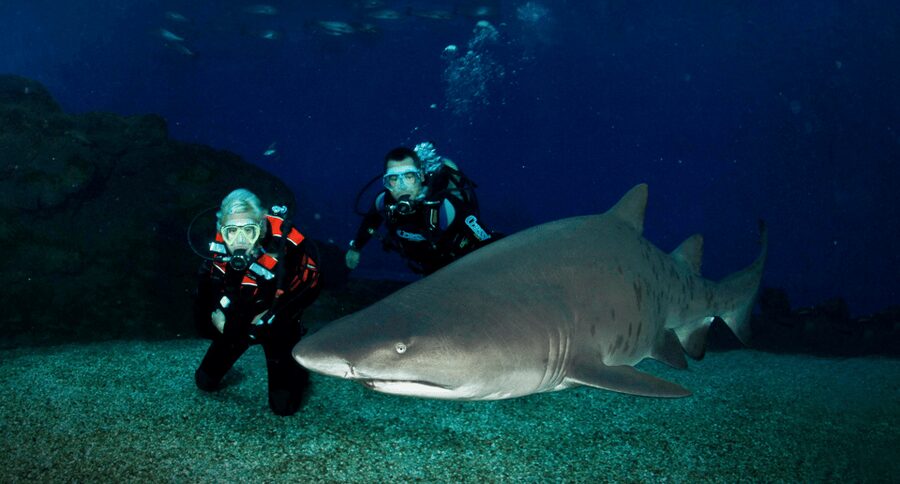
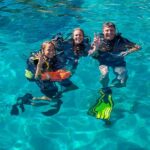
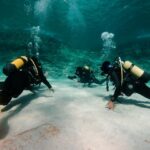
Your underwater time happens in the Big Blue tank with a setup meant to keep things predictable. You’re not roaming an ocean; you’re in a controlled environment with staff supervision and instructor-led guidance.
What you’re likely to see:
- 11 large sharks in the tank
- rays
- hundreds of fish (so you’re not staring at empty water)
The most common reason people feel emotional about this kind of experience is closeness. In a tank, distance can trick your eyes. Up close, you realize how real and calm big animals can be when the routine is stable.
A few practical thoughts for your mindset:
- Expect to spend some attention on buoyancy and breathing, not just on the sharks
- Use your instructor’s cues and do not freelance
- If you feel nervous, that’s normal; your job is to follow the plan and let the sharks stay sharks
One detail worth noting: you may want to bring your phone so you can capture your moment. A participant specifically recommended taking a phone because they didn’t feel there was an easy alternative for photos of the underwater experience. That’s not a guarantee for every situation, but it’s a good reality check: if photos matter to you, plan to have a way to capture them.
Depth limits and certification: choosing the right expectation
The activity handles two skill tracks, and they’re clear:
- Scuba license holders can go deeper, up to 8.5 m
- No license means a shallower max at 4 m
So the real question for you is not whether sharks are exciting. It’s how much you want to work during the session.
If you’re already certified, you’ll likely appreciate having a standard depth goal and a guided tank experience. You can focus more on observation: how sharks move, how rays glide, how fish cluster around the tank environment.
If you’re not certified, you should treat this as a guided introduction to underwater control. You’re still doing real scuba, but within a beginner-friendly range. That’s exactly why the instructor briefing and security measures matter so much: they help you manage the basics quickly.

Your companion gets the best of Palma Aquarium, too
One of the smartest parts of this booking is that your companion doesn’t just wait outside. The package includes free aquarium entry for a companion.
After your underwater session, you get the freedom to explore the aquarium at your own pace. That makes the experience feel less like a quick stop-and-go activity and more like a full attraction day with a highlight inside it.
Also, in real life, companions often want two things:
- to watch if they can
- to have something to do while you’re in the water
The aquarium visit time answers both. And if your companion is the type who likes photos and video, there’s evidence that people can watch through the glass and capture the moment from the viewing area.
If you’re traveling as a couple or family, this structure is what turns a strong experience into a smooth one.
What’s included (and what that means for value)
The booking includes:
- entry to Palma Aquarium for you
- free entry for your companion
- scuba equipment
- an instructor
- accident insurance to do the activity
It also includes skipping the ticket line, which saves time you can spend actually enjoying the day.
Let’s translate the price into plain value. The cost is listed at $247 per group up to 1. For that, you’re getting more than just a tank visit. You’re getting gear, instructor guidance, and insurance coverage tied to the activity. If you’re bringing someone along, the free companion entry can lower the effective cost of the day for two people.
In other words: this pricing structure makes the most sense when you’re pairing your underwater experience with a full aquarium visit. If you’re traveling alone, it’s still a solid premium experience. If you’re traveling with someone, it becomes much more budget-friendly.
Gear, insurance, and paperwork: plan this early
This experience has several non-negotiable requirements, and the main one is paperwork.
You must have:
- a scuba medical certificate issued within the last 12 months
- accident insurance for the activity
The notes say you can purchase the accident insurance when you arrive if you don’t already have it. But that’s only helpful if you show up with everything else ready. Don’t treat this as something you can sort last-minute.
Also, the activity is affected by weather and biological conditions. That’s not unusual for aquarium-based marine activities, but it does mean you should build flexibility into your day and avoid booking it as your only plan if you’re traveling on a tight schedule.
Finally, the flight timing rule matters. The information provided includes two versions:
- a rule saying the session can’t be done 24 hours before or after flying
- and a more formal note saying 12 hours before or after flying
Either way, the safe move is to schedule with extra buffer around flights. If your travel day is complicated, you’ll sleep better doing this on a different day.
Languages and private-group comfort
The instructor is listed as speaking English, Spanish, and German. That’s helpful if you want clear explanations and not just hand signals.
This is also a private group format. Even if the booking is for a single participant, the private nature can matter. You typically get more attention, less waiting, and fewer distractions than a larger group format.
And from the way the experience is described, the instructor doesn’t just rush through. Someone named Louis is singled out for giving time and helping people feel safe. Another person also thanked staff for care and for not leaving questions unanswered. That kind of pace usually improves first-timer experiences.
Not for everyone: who should skip this session
The activity is listed as not suitable for people with mobility impairments. That’s important. If mobility is a concern, you’ll want to choose a different aquarium experience without the in-water requirements.
If you’re in good physical shape and can follow instructions, the skill levels are clearly defined by certification. First-timers are welcome, but you should be honest with yourself about your comfort with controlled scuba gear and short underwater time.
Potential downsides to consider before you pay
This is a top-rated experience, but it’s not a casual stop.
Here are the main things that could be frustrating:
- Medical certificate requirement: if you don’t already have a valid certificate from the last 12 months, you’ll need to handle it before travel
- Flight timing restrictions: schedule with buffer so you don’t end up blocked by the rule
- Availability can change: weather and biological conditions can affect whether the session runs
- Limited underwater time: the in-water portion is only 30 minutes, so the experience is intense but short
One more thing: because the session is instructor-led and time-bound, you won’t get unlimited wandering or endless photo time. If you go in expecting a long personal underwater photo shoot, you may feel disappointed. If you go in expecting a guided, safe encounter with sharks, you’ll likely feel it was worth every euro.
Should you book Palma Aquarium’s shark scuba experience?
Book it if you want:
- a guided shark encounter in a controlled tank
- a clear structure (briefing, short underwater time, then aquarium exploring)
- value for money that includes equipment, instructor help, insurance, and aquarium entry for a companion
Skip it (or choose another plan) if:
- you don’t have the required scuba medical certificate timeframe handled
- you need to schedule close to a flight
- mobility issues could make it difficult to participate
- you hate rules and paperwork when you travel
If you’re the type who loves nature but also likes comfort and clear instructions, this fits. It’s not just about seeing sharks. It’s about seeing them without the chaos that usually comes with high-adrenaline activities.
FAQ
FAQ
Where does the experience start?
It starts at Palma Aquarium.
How long is the safety briefing and the underwater session?
The safety briefing is 40 minutes, and the underwater scuba session is 30 minutes.
How deep will I go if I have a scuba license versus if I don’t?
With a scuba license, you can go up to 8.5 m. Without a scuba license, you go up to 4 m.
What’s included in the booking, and does a companion get access too?
Your booking includes entry to Palma Aquarium for you, free entry for a companion, scuba equipment, an instructor, and accident insurance for the activity. It also includes skipping the ticket line.
Do I need accident insurance to do this activity?
Yes. Accident insurance is required. If you don’t have it, you can purchase it when you arrive.
Is a medical certificate required?
Yes. You must present a scuba medical certificate issued within the last 12 months.
Are there any flight-time restrictions?
Yes. The information provided says the activity can’t take place 12 hours before or after flying, and it also mentions a stricter 24-hour window—so plan extra buffer around flights.
Is the experience suitable for people with mobility impairments?
No. It’s listed as not suitable for people with mobility impairments.
Is there free cancellation, and when does it apply?
Yes. You can cancel up to 3 days in advance for a full refund.