REVIEW · MALLORCA
Mallorca: Discover Scuba Diving from the beach
Book on GetYourGuide →Operated by Big Blue Diving Mallorca · Bookable on GetYourGuide
Nothing beats starting scuba from the shoreline.
This Mallorca experience is built for first-timers: a certified instructor guides you step-by-step, and you’re in the water for a gentle 2–3 meter session right off the beach. I like that the format is relaxed—short theory, quick skill checks, and plenty of coaching—so you’re not guessing. I also like that you get full rental equipment, so you show up in beachwear and just follow instructions. One thing to consider: the time window is tight, and you may want a bit more gear-on photo time than the schedule allows.
You’re also not chasing a license.
This is a try-scuba program, not a certification course, so if your goal is training for an official qualification, you’ll need a different program after this. The good news is that the short, supervised setup makes it ideal for a first taste of the underwater world—especially if you want it to feel safe and simple.
In This Review
- Key points I’d plan around
- Beach-First Scuba on Mallorca: Why this setup feels easy
- Your 2-hour flow: Theory, shallow skills, then your first underwater swim
- 1) Short theory before you get wet
- 2) Practical training in shallow water
- 3) Final underwater experience from the beach
- Instructor coaching and full gear: What you’ll actually rely on
- Equipment rental does the heavy lifting
- Languages are practical
- What the best instructors tend to do
- What you’ll see at 2–3 meters: Fish close up, with minimal pressure
- Price and value: Is $130 a fair deal?
- Who this Mallorca beach scuba try-out is best for
- Best fit
- Important limits you should respect
- What to bring and how to prep so it feels smooth
- Bring these basics
- Food and comfort tips
- If weather changes
- Quick logistics: Where you meet and what the day looks like
- Should you book this Mallorca beach scuba session?
- FAQ
- How deep do you go in the Mallorca beach scuba try-out?
- Do I need prior scuba experience?
- What’s included in the price?
- What should I bring with me?
- Who can’t join this activity?
- Is this a scuba certification course?
Key points I’d plan around
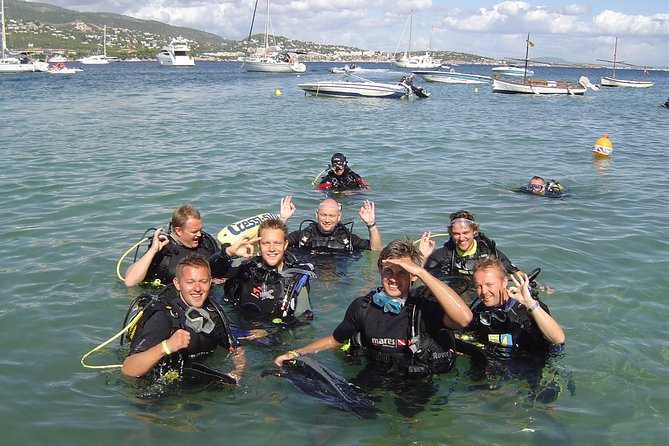
- Beach entry keeps things straightforward and low-stress
- Full equipment rental means you don’t have to shop or pack gear
- Shallow-water practice helps you learn buoyancy basics quickly
- Small, private instruction makes it easier to go at your pace
- 2–3 meter maximum keeps your first session comfortable
- Not a certification course—great for trying, not for licensing
Beach-First Scuba on Mallorca: Why this setup feels easy
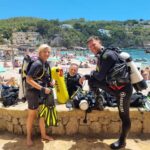
The smartest part of this experience is the starting point. Instead of doing a complicated boat transfer and a long logistical warm-up, you walk down to the beach and get into the lesson where it starts: at the waterline. The operator is right by the boat pier area, so you’re not spending your morning guessing where to be or hauling gear across town.
That matters more than people think. First-timers tend to get nervous when the plan feels vague. Here, the plan is physical and simple: stairs down, gear on, instructions given, then shallow practice. I like experiences that don’t make you work just to begin.
It also helps that you’re working with an instructor who’s close by at every stage. Your first success in scuba is usually comfort: understanding what each strap does, why you breathe the way you do, and how to stay relaxed. With this format, you’re not left to figure it out alone.
Finally, the depth is modest (about 2–3 meters). That’s “experience” depth, not “project” depth. You can focus on what’s around you—fish, sea life, and the feeling of being weightless—without constantly thinking about what might happen if things go wrong.
You can also read our reviews of more tours and experiences in Mallorca.
Your 2-hour flow: Theory, shallow skills, then your first underwater swim
The whole session is designed to fit into about 2 hours, which is ideal if you’re trying scuba without turning it into a full-day commitment. Here’s how it typically unfolds, in a way that’s easy to picture.
1) Short theory before you get wet
You start with a quick introduction to how the equipment works and how the lesson will run. You’re not being overloaded with scuba textbooks. The goal is simple: you should understand the basics well enough to follow instructions underwater.
This part is where you should ask questions if something feels confusing. If you ever freeze when someone explains gear, this is the time to speak up. The more clear you feel here, the calmer you’ll be when your mask is on.
2) Practical training in shallow water
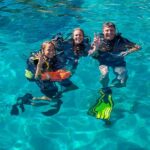
Next comes the hands-on part in shallow water. This is where you learn the “new body” feeling: staying controlled, breathing steadily, and moving without fighting your equipment. Shallow practice is key for first-timers. It’s enough water to make the skills real, but shallow enough that you can build confidence quickly.
It’s also the stage that reduces stress. If you can succeed right near the surface, the final underwater swim becomes a confidence extension, not a jump into the unknown.
3) Final underwater experience from the beach
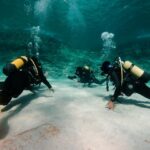
Then you head into the main underwater portion. The plan includes a final swim from the beach, staying around 2–3 meters. Your instructor guides you through the experience at a comfortable pace, with the focus on safe movement and enjoying marine life up close.
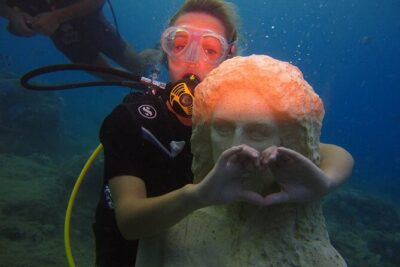
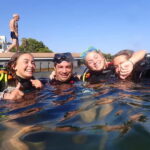
One practical note: if you care about photos, think about your timing. The gear-on photo moment can feel limited, and some people wish the schedule left more breathing room for photos while dressed in full kit. So if photos matter, manage your expectations and ask early if there’s a moment for a quick shot.

Instructor coaching and full gear: What you’ll actually rely on
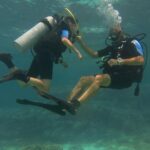
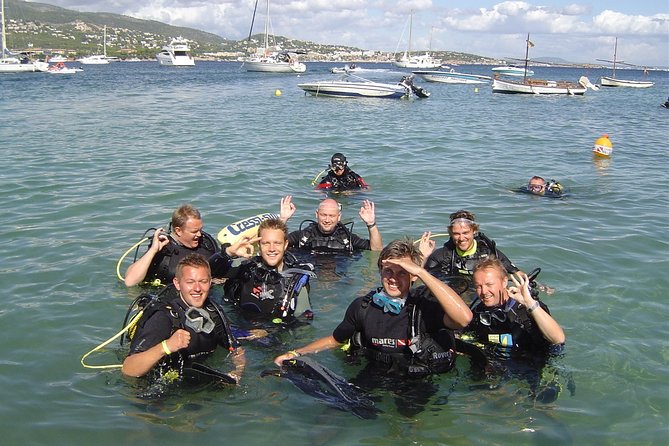
This is a guided experience with an instructor at your side through the whole flow. That’s not just comfort—it’s how you learn. Good scuba instruction is mostly about feedback: correcting small things before they become bigger issues.
Equipment rental does the heavy lifting
You’ll get full scuba gear included. That means you don’t need to bring your own mask, fins, or regulator. For value, that’s huge. Getting your own equipment is expensive, and renting it separately often adds cost. Here, it’s wrapped into the price.
If you have sensitive skin or you’re particular about fit, this is still manageable—just be ready to communicate what feels wrong (tight mask, discomfort, anything pinching). The instructor can usually help you adjust so you’re not dealing with discomfort during the underwater portion.
Languages are practical
Instruction is available in English, German, Italian, French, and Spanish. For many people, first-scuba nerves are language nerves too. Having options reduces that risk.
What the best instructors tend to do
From what I’ve seen people single out, instructors are attentive and safety-minded. One instructor example that comes up by name is Tim, praised for being friendly, kind, and ensuring participants feel okay throughout the session. That’s exactly what you want in your head before gear goes on: not just technical competence, but calm reassurance.
What you’ll see at 2–3 meters: Fish close up, with minimal pressure
At around 2–3 meters, you’re not aiming for “world record” visibility. You’re aiming for a first connection with marine life. And that’s where this experience shines.
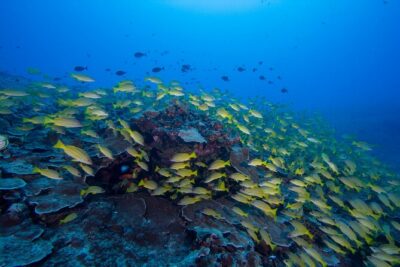
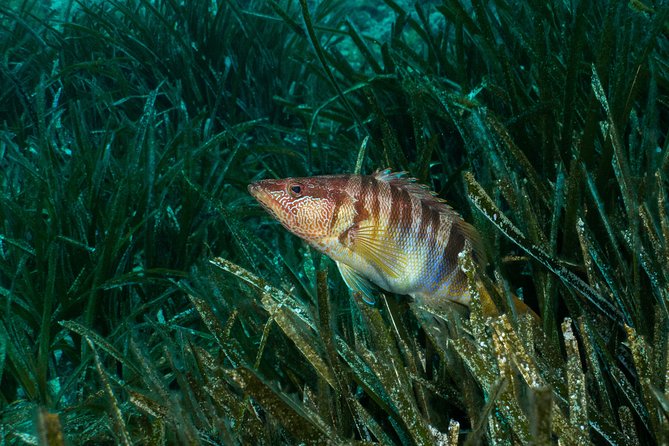
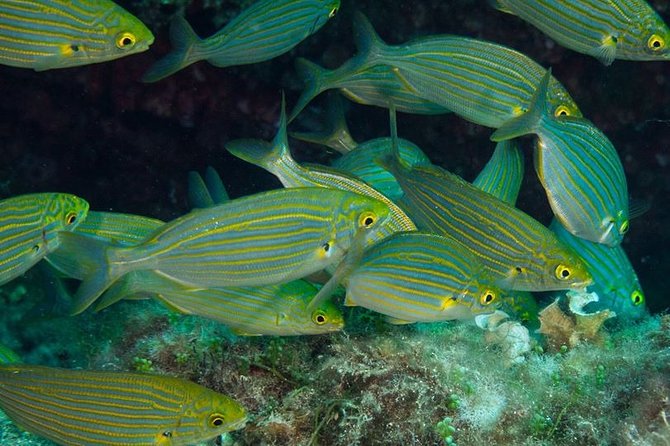
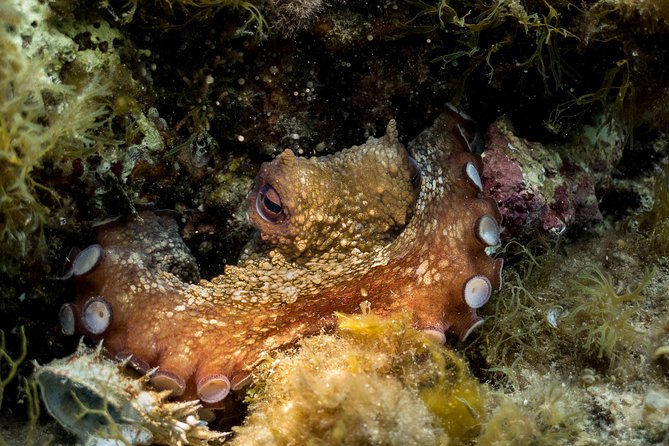
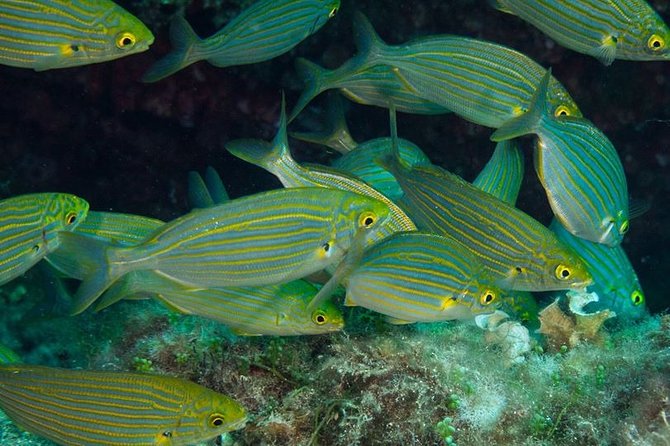
You’ll get a chance to see fish up close as you move slowly underwater. The shallow depth helps you stay relaxed, and it makes it easier for the instructor to keep the group together and moving safely. That slow, controlled pace is also why first-timers tend to remember this part most clearly: it feels like you’re watching an aquarium rather than rushing through a checklist.
Sea life sightings aren’t guaranteed in the sense that you can’t control fish behavior. But the structure of the experience is designed so you’ll have time to observe rather than sprint from one point to another. If you like the idea of being able to actually look—mask steady, breathing calm—this depth range supports that.
And yes, the underwater feeling itself is a big part of the payoff. Even if the water is only a few meters deep, the sensation of moving with buoyancy is its own kind of magic. You’ll likely come out thinking: I get why people do this.
Price and value: Is $130 a fair deal?
At $130 per person for about 2 hours, the big question is what you’re paying for besides the experience label.
Here’s what’s included that changes the math:
- Short theory + practical shallow training
- Final underwater session from the beach
- Diving insurance
- Rental equipment
When a provider includes gear rental and insurance, you avoid extra add-on costs. You also avoid the frustration of trying to source the right equipment on your own.
What’s not included:
- Accommodation and meals
- Underwater photo cameras
So if you’re traveling light, this is usually a smart choice. If you already own perfectly fitting scuba gear and you don’t want to rent anything, this still tends to be worth it because the instruction is the core. At first scuba, guidance is what keeps it safe and comfortable.
Bottom line: the price feels fair if you’re a first-timer who wants everything handled—gear, coaching, and insurance—without turning it into a half-week project.
Who this Mallorca beach scuba try-out is best for
This is a program for beginners. You don’t need prior scuba experience, but you do need to be ready physically and mentally for a supervised underwater session.
Best fit
You’ll likely love this if:
- You’re at least 10 years old
- You can swim comfortably
- You’re generally in good health
- You want an easy first experience with guidance
- You like the idea of shallow practice before the main underwater portion
- You’re traveling with a smaller group setup (it’s a private group)
Important limits you should respect
This program is not suitable for:
- Children under 10
- Pregnant women
- People with claustrophobia
- People with heart problems
- Wheelchair users
- People with vertigo
- Non-swimmers
- People over 65
- People with a cold
- People over 331 lbs / 150 kg
- People with pre-existing medical conditions
- People with high blood pressure
And there’s a strict rule after your session: don’t fly for at least 24 hours afterward. That’s a safety requirement you shouldn’t treat casually.
If you’re unsure whether your health situation counts as a restriction, you should check with the provider before booking. For people over 60 or those with medical conditions, a valid scuba medical certificate is required.
What to bring and how to prep so it feels smooth
You don’t need much, but the right prep keeps the day from becoming annoying.
Bring these basics
- Towel
- Sunscreen
- Beachwear
Sun protection matters because you’ll be outdoors before and between water stages. Even if the sea feels cool, sun exposure is still real.
Food and comfort tips
It’s recommended to take a light meal in advance. That’s practical advice. Being hungry can make nerves worse, and heavy food can make you feel sluggish.
Also, come ready to be in full gear for short periods. If you’re someone who hates tight straps, plan to communicate what feels off immediately. In shallow practice, adjustments are easier than waiting until you’re already underwater.
If weather changes
Bad weather can postpone the tour. It’s worth building your schedule with some flexibility, especially if you’re traveling in shoulder season.
Quick logistics: Where you meet and what the day looks like
Meeting point is simple: walk down the stairs to the beach. The scuba center is located directly at the boat pier area. That means you’re not hunting for a storefront or doing a complicated transfer.
The instruction team is ready in multiple languages, and the group format is private. That usually means fewer pauses and more direct attention, which is a plus when you’re learning equipment and buoyancy for the first time.
Also, keep your expectations aligned with the fact that this is not a certification route. You’ll come away with experience and confidence, not official training credentials.
Should you book this Mallorca beach scuba session?
If your goal is a first, calm, beginner-friendly underwater experience, I’d say yes—this setup is built for comfort and confidence. The beach entry, shallow skills practice, and close instructor guidance make it a sensible way to try scuba without adding extra travel friction.
Book it if:
- You’re a beginner
- You want full gear provided
- You like short sessions (about 2 hours)
- You value clear coaching over a longer training course
Skip it (or check carefully) if:
- You’re under 10, over 65, or you have the listed health restrictions
- You’re not comfortable with underwater enclosed gear feelings (claustrophobia risk)
- You want a certification outcome, not just a try-scuba experience
- You strongly care about lots of gear-on photos, since time can feel a bit tight
FAQ
How deep do you go in the Mallorca beach scuba try-out?
The session includes an underwater experience at a depth of about 2 to 3 meters.
Do I need prior scuba experience?
No. You don’t need previous scuba experience, but you do need good health and general swimming skills.
What’s included in the price?
The program includes a short theoretical introduction, practical training in shallow water, the final underwater session from the beach, diving insurance, and rental equipment.
What should I bring with me?
Bring a towel, sunscreen (sun blocker is recommended), and beachwear.
Who can’t join this activity?
It’s not suitable for children under 10, pregnant women, people with claustrophobia, heart problems, vertigo, non-swimmers, people over 65, people with a cold, people over 331 lbs (150 kg), and people with pre-existing medical conditions or high blood pressure.
Is this a scuba certification course?
No. This is not a certification course and it does not lead to obtaining a diving certificate.