REVIEW · PLAYA DEL CARMEN
Open Water Diver course PADI including underwater video
Book on Viator →Operated by Diversland Mexico · Bookable on Viator
Three days to feel confident underwater. This PADI Open Water Diver course in Playa del Carmen is built around real skill practice—pool work, then cenotes, then open water—plus hotel pickup and drop-off. One thing to plan for: you’ll complete a health questionnaire first, and certain medical conditions can stop you from participating.
What I really like is the course package: you get underwater video (so you can review your technique) and the full set of training, fees, and materials needed for the PADI certification. The classes and materials include a digital manual, and the instruction is offered in English with a certified, multilingual instructor. Small groups also help you get coached, not just herded along, with a max of 15 people.
In This Review
- Key Points That Matter Before You Go
- Playa del Carmen PADI Course: What You’re Really Buying for $480
- Diversland Setup: Meeting Point, Daily Pickup, and Group Size
- Day-by-Day Training Flow: Knowledge Development to Confined-Water Skills
- Cenote Sessions in Playa del Carmen: Two Weeks of Confidence in Three Days
- The Open-Water Days: Using Skills and Completing the PADI Course
- Equipment, Digital Manual, and Underwater Video: What’s Actually Included
- Instructors and Safety Style: What the Teaching Approach Looks Like
- Weather, Timing, and How a 3-Day Schedule Handles Reality
- Who This Course Fits Best (and who should reconsider)
- Price and Logistics: Is $480 Good Value?
- Should You Book Diversland’s PADI Open Water Diver Course?
- FAQ
- What certification do I get?
- What is included in the 3-day course?
- Do I have to study theory before the water sessions?
- How does pickup work?
- Is the course offered in English?
- Is diving insurance included?
- Are there health requirements before I can participate?
Key Points That Matter Before You Go
- Max group size of 15 means you’re more likely to get hands-on attention.
- Underwater video included so you can study what you did and share the results.
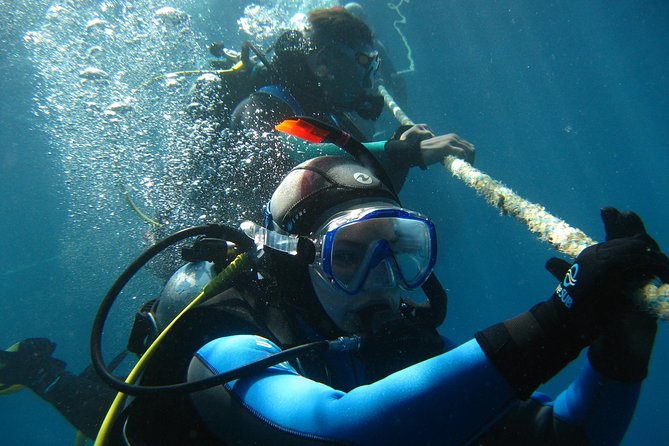
- Two pool sessions + two cenote sessions + two open-water sessions gives a smooth progression.
- All equipment and PADI-related exam steps included helps you avoid surprise costs.
- Hotel pickup and drop-off covers Playa del Carmen, Cancun, and Riviera Maya areas.
- English instruction keeps everything straightforward if that’s your comfort zone.
Playa del Carmen PADI Course: What You’re Really Buying for $480
At $480 per person for a 3-day PADI Open Water Diver course, you’re not just paying for a “try it” experience. You’re paying for a structured path to certification: knowledge development, confined-water skills practice, and then the in-water work that lets you actually use those skills.
Here’s where the value shows up. This includes all equipment, the PADI exam/certification steps, and the course fees and taxes. It also includes bottled water and the underwater video deliverable. When those basics are included, you spend less time on logistics and more time learning and building confidence.
And yes, the 3-day format is intense—but in a good way. It compresses learning into a tight schedule, with repeated practice. For many people, that’s faster than stitching together separate day trips and “extra practice” plans on their own.
Possible drawback: you’re also committing to the medical screening. You’ll be required to complete a health questionnaire prior to diving, and some pre-existing conditions (like asthma or heart issues) may prevent participation. If you’re unsure, it’s smart to talk to your doctor before you book, not after.
You can also read our reviews of more tours and experiences in Playa del Carmen.
Diversland Setup: Meeting Point, Daily Pickup, and Group Size
This is one of those courses where logistics are handled for you. Pickup is offered for hotels across Playa del Carmen, Cancun, and Riviera Maya. The start time is 8:30 am, and the activity ends back at the meeting point.
If you prefer a clear baseline, the meeting point is Plaza Palmeiras, C. 11 Sur, Ejidal, 77712 Playa del Carmen, Q.R., Mexico. After pickup and daily logistics, you’ll finish each day back at the starting area.
Why that matters: with a course like this, you don’t want to lose half a morning to getting organized. The easier the start, the more energy you’ll have for skill work.
The group is also capped at 15 travelers. That’s a meaningful detail. Smaller groups tend to move smoother and give instructors a better chance to spot issues early—especially when you’re learning buoyancy, breathing control, and basic safety habits.
Day-by-Day Training Flow: Knowledge Development to Confined-Water Skills
PADI Open Water Diver is the first certification level. It allows you to dive up to 18 meters once you’re certified. Within the course, you’ll work through three learning stages:
1) Knowledge development
You’ll cover scuba theory either online (independent study) or in a classroom setting. This is where you learn the basic principles behind safe scuba: how breathing and pressure work, why you follow procedures, and what to do when things don’t go perfectly.
2) Confined water dives / pool or shallow training
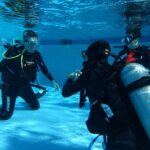
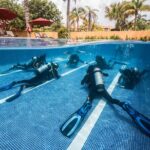
This is where the “book knowledge” becomes real muscle memory. You’ll practice foundational scuba skills in a pool or shallow, confined water so your brain isn’t fighting two battles at once—new equipment and new underwater tasks.
3) Open-water sessions
Once you can handle the basics in the controlled environment, you use those skills during open-water training. That’s when confidence starts to click.
The course structure is one reason the experience works so well for first-timers. Instead of jumping straight into bigger water situations, you earn the right to progress step by step.
And for nervous students, this pace can be a big deal. Even the most “adventurous” people often need repetition. Multiple training sessions help you get calm before you’re asked to perform skills in open water.
Cenote Sessions in Playa del Carmen: Two Weeks of Confidence in Three Days
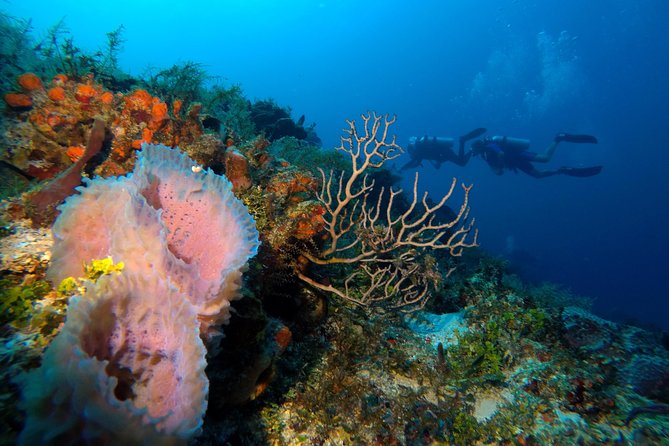
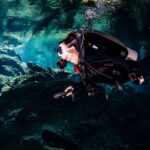
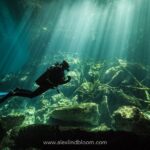
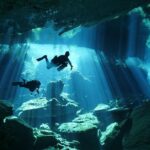
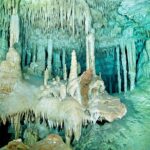
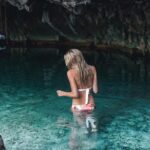
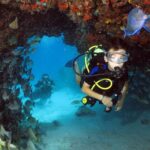
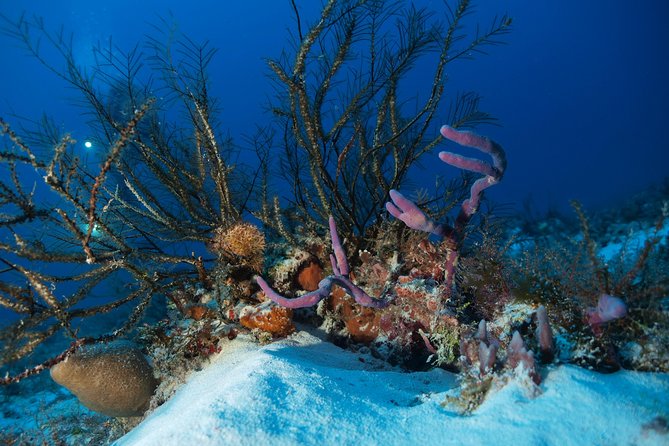
Cenotes are a highlight in this program: you’ll do two cenote sessions as part of the 3-day course. Cenotes bring a different feel than a pool. The water environment is still controlled enough for training, but you get that real underwater perspective—light rays, natural walls, and a setting that makes the learning moment feel special rather than mechanical.
What makes this valuable for you as a beginner is that cenotes help bridge the gap. Pool practice teaches control. Open water teaches navigation and reacting to conditions. Cenotes sit in between, so you learn to stay steady while the environment looks and feels more “real.”
Also, cenotes in this region are known for unforgettable moments. One of the course anecdotes tied to the cenote area involves Pancho the crocodile. You can’t treat that as a guaranteed sighting, but it shows the kind of “alive” storytelling and local color the team brings into the water experience.
Quick practical tip: for cenote days, keep your expectations focused on what you can control—breathing rhythm, buoyancy, and following your instructor. If you spend your energy trying to do everything at once, the beauty of the setting can get lost. If you stay calm, the scenery tends to do the rest.
The Open-Water Days: Using Skills and Completing the PADI Course
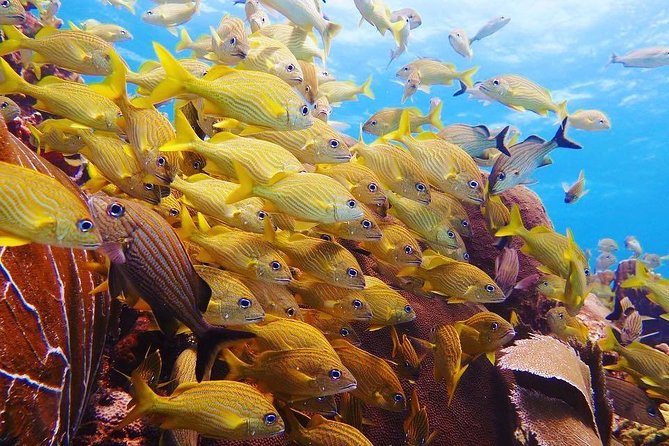
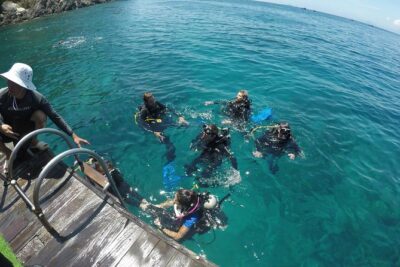
By the time you reach open water, you’re not just showing up—you’re demonstrating skills you practiced earlier. In total, the course includes two open-water sessions, after your two pool sessions and two cenote sessions.
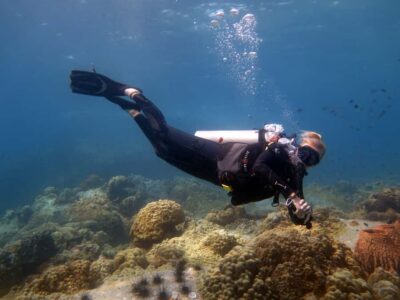
This is where you learn how your body behaves underwater when things aren’t as predictable as a pool. You’ll practice what you already worked on: staying balanced, communicating as needed, and handling your equipment safely while you’re in open conditions.
For many people, the open-water stage is the moment where the course stops being “training” and starts feeling like real scuba. That shift is usually built on repeated skill work, and this program gives you those repeats.
You’ll also have the PADI certification process included, so once you complete the required steps, you’re set up to earn the credential that allows future scuba activities up to 18 meters.
Equipment, Digital Manual, and Underwater Video: What’s Actually Included
This course includes a lot of the stuff that usually makes beginner courses feel like scavenger hunts.
Included items you should care about:
- All equipment
You won’t have to chase rental gear or worry about mismatched sizes.
- Digital manual
Theory materials are part of your package, supporting the knowledge development stage.
- Underwater video
This is more useful than it sounds. Seeing your movements on video helps you correct technique faster. It also makes it easier to remember what you were taught after the course ends.
- Bottled water
Small comfort, but it helps when you’re moving between locations and spending full days training.
Also included: all fees and taxes, plus the PADI Open Water Diver certification.
What’s not included:
- Diving insurance is optional.
My practical advice: if you’re planning additional scuba after certification, consider whether insurance fits your wider travel plan. This course gets you certified. Insurance is about your future flexibility.
Instructors and Safety Style: What the Teaching Approach Looks Like
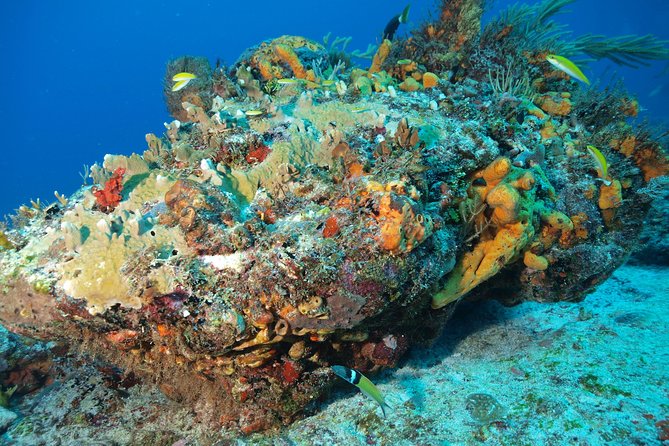
The instructors at Diversland are a major part of why this course earns such strong marks. Across different instructors named in the experience, the consistent thread is patience and pacing.
You’ll find different teaching personalities here, including instructors such as Andrii/Andrey, Julia, Patrick, Serge, Alex, and Demitre. Instructors like Patrick are known for combining clear instruction with calm leadership during tricky moments, like rougher weather days. Others, like Julia, are praised for being supportive and thorough with theory checks, so you don’t feel like you’re guessing your way through quizzes or skills.
One of the best signals for first-timers is how instructors handle nerves. If you feel anxious at the start, you want someone who slows down, repeats what matters, and stays close during the actual water skills. The teaching approach described in the experience focuses on making you feel safe while you learn.
A small, slightly humorous truth: scuba is equal parts bravery and paperwork. You’ll learn both. The instructors’ job is to make the equipment feel normal and the safety steps feel automatic.
Weather, Timing, and How a 3-Day Schedule Handles Reality
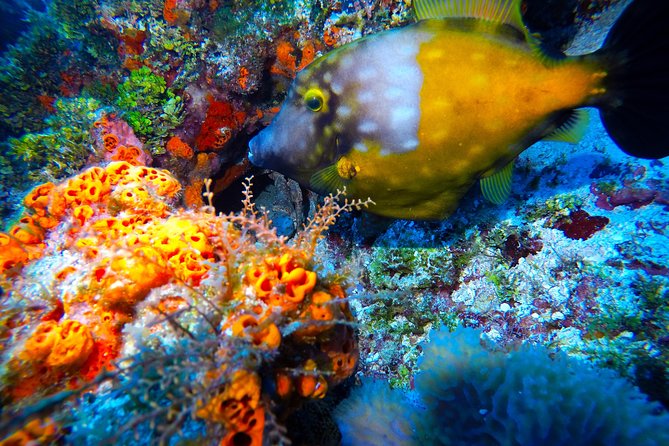
A 3-day course can feel like a sprint. That’s why the way the team adapts matters. The program runs with daily structure starting at 8:30 am, with pickup and drop-off built into the schedule.
If weather affects conditions, the course still aims to get all required training steps done. There’s evidence from the experience history that rough conditions don’t automatically cancel the learning plan, and instruction continues with safety first. Still, don’t treat the calendar like a guarantee of perfect conditions every day. It’s the ocean-adjacent reality of working in water.
Your best move: sleep well, eat early, and don’t overpack mentally. If you show up rested and willing to practice repeatedly, the 3-day flow usually feels productive instead of stressful.
Who This Course Fits Best (and who should reconsider)
This program is for people who want a real PADI credential quickly while visiting Playa del Carmen. It’s a good fit if you:
- want a structured certification path rather than informal practice
- like having equipment, course steps, and materials handled for you
- want cenotes on the itinerary, not just generic open water
- appreciate coaching in smaller groups (max 15)
Age minimum is 10 years old, so it can work for families with older kids who are ready for a multi-day training block.
Who should reconsider or at least confirm with a clinician before booking:
- anyone with conditions that may affect scuba participation (since a health questionnaire is required)
- anyone with concerns about flying timing: diving within 24 hours of flying is not recommended, so plan your travel schedule accordingly
Price and Logistics: Is $480 Good Value?
For $480 per person, you’re getting a full PADI Open Water Diver certification course package with multiple water environments: two pool sessions, two cenote sessions, and two open-water sessions. You also get the equipment, the digital manual, fees and taxes, and the underwater video.
That combination is what usually makes beginner certification feel worthwhile. When you compare against a “base course only” option, the real question is how many extras you’d otherwise pay for separately. Here, the big cost drivers—gear, certification steps, and underwater documentation—are already covered.
There’s also a practical value bonus: hotel pickup and drop-off means you’re not paying for taxis between training locations or spending your own time coordinating.
If you want to feel confident that you’re getting your money’s worth, this is the type of package that tends to deliver. But check the medical questionnaire requirements early, because that’s the one variable that can change the outcome before you even start.
Should You Book Diversland’s PADI Open Water Diver Course?
If your goal is to leave Playa del Carmen with a real PADI Open Water Diver credential (and not just a few fun moments in water), this is a strong booking choice. You get a clear training progression, multiple water settings, and instructor support—plus underwater video that gives you a tangible learning recap.
I’d book it if you want:
- a coached first certification with a structured 3-day timeline
- cenote time built into the course
- daily hotel pickup and a capped group size for attention
I’d hesitate only if:
- you’re worried about meeting scuba health requirements
- your travel schedule involves flying within 24 hours of your water training window
If you fall into the first group—most people do—this course is a smart value play. Three days is short, but the training plan is designed to help you graduate with skills you can actually use.
FAQ
What certification do I get?
You’ll earn PADI Open Water Diver certification. This is the first level of certification and allows you to dive up to 18 meters.
What is included in the 3-day course?
The course includes practice in the pool and four open water-related sessions, bottled water, all fees and taxes, PADI Open Water Diver certification, equipment, hotel pickup and drop-off, a professional certified multilingual instructor, a digital manual, and underwater video.
Do I have to study theory before the water sessions?
Yes. The course includes knowledge development, which can happen online (independent study) or in a classroom setting, to cover basic scuba principles and theory.
How does pickup work?
Pickup is offered for all hotels in Playa del Carmen, Cancun, and Riviera Maya. The start time is 8:30 am, and the meeting point is Plaza Palmeiras in Playa del Carmen.
Is the course offered in English?
Yes, the experience is offered in English.
Is diving insurance included?
No. Diving insurance is not included, though it is optional.
Are there health requirements before I can participate?
Yes. All participants must complete a health questionnaire before diving. Some pre-existing medical conditions may prevent you from diving, so it’s best to check with your doctor if you have concerns.