REVIEW · PLAYA DEL CARMEN
Cenote Diving – 2 Tank Dive Trip for Certified Divers
Book on Viator →Operated by Scuba Mobile Dive Center · Bookable on Viator
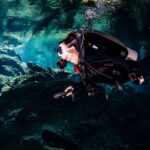
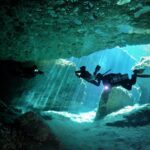
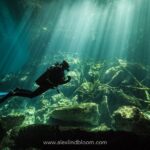
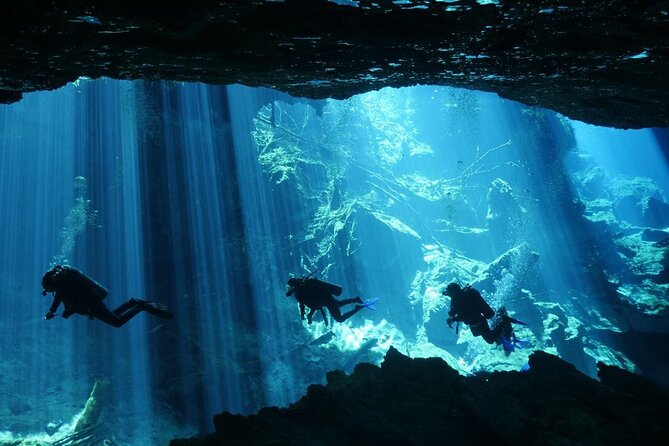
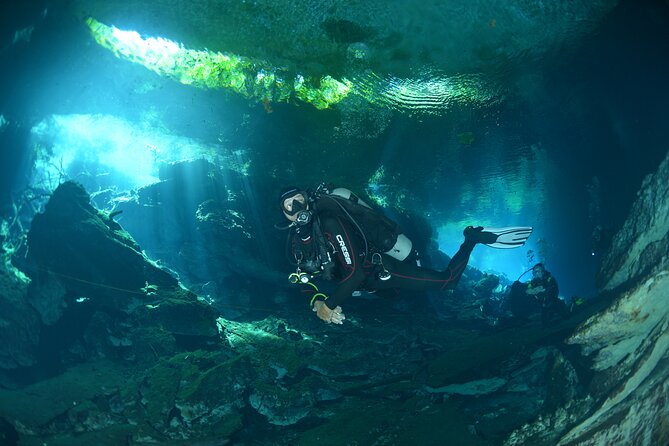
Cenotes can feel like a different planet. This 2-tank underwater trip takes you into the caverns of places like Chac Mool or Dos Ojos, with a clear plan, fixed lines, and a guide who knows these environments well. You’ll start on land, get set up fast, then head in for two structured underwater rounds.
What I love most is the permanent line setup inside the caverns, which makes navigation feel more controlled, especially when the environment is dark and close. I also like the pace: two ~45-minute underwater rounds, then a proper surface break with water, soft drinks, and a sandwich.
One thing to consider: camera access isn’t guaranteed. Cenotes are privately owned, some don’t allow cameras at all, and others charge extra (often paid in cash, and the price can vary).
In This Review
- Key highlights you’ll actually care about
- Meeting at Scuba Mobile and Getting Ready for Two Tank Sessions
- The 45-Minute Ride to Chac Mool or Dos Ojos
- Your Full Cave Diver Briefing and the Fixed-Line Plan
- Session One: 45 Minutes, 50 Feet Max, and a Clear Objective
- Surface Interval: Snacks, Water, and a Real Break
- Session Two: Another 45 Minutes With the Same Line System
- Price, Included Value, and the Fees You Must Plan For
- Who Should Book (and Who Should Skip) This Cenote Line-Guide Trip
- Timing, Weather, and Getting Back to Playa del Carmen
- Should You Book This Cenote Two-Tank Experience?
- FAQ
- What time does the experience start?
- How long is the total trip?
- Where do I meet, and where does it end?
- Which cenotes might I visit?
- What certification do I need?
- How deep will the sessions go?
- What’s included, and what costs extra?
- FAQ
- How many people are in the group?
- Is a full equipment rental available?
- Is there a camera fee?
- Do you provide a light?
- Is the trip dependent on weather?
Key highlights you’ll actually care about
- Fixed lines in the caverns help you stay oriented without relying on visibility
- Guide credentials include a Full Cave Diver + Open Water Scuba Instructor background
- Two underwater rounds (each about 45 minutes) with a ~45-minute break on top
- Max depth is 50 ft / 15 m, keeping the experience structured and within a known limit
- Dive light rental is included, so you’re not scrambling for illumination
Meeting at Scuba Mobile and Getting Ready for Two Tank Sessions
You’ll meet in downtown Playa del Carmen at Calle 4 Norte/Calle 4 Nte, right in the Centro area. The morning starts at 8:00 am, and the first part is all about getting you comfortable and legally checked in—paperwork first, then gear.
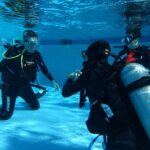
Then comes the quick-but-serious fitting process. If you’re traveling with your own kit, you can still expect a check and setup help. If you’re not, you’ll be directed through what’s needed before heading out. Tanks and weights are included, and you’ll also get a light rental. That detail matters more than people think: in cenote cavern environments, good illumination isn’t optional, and having it handled saves time and stress.
I also appreciate the small-group feel. This activity caps at 8 travelers, which usually means less waiting around and more attention during setup and briefings. In places where the environment is dim and the rules matter, that kind of hands-on attention helps you relax.
What you should bring mentally is a “team mindset.” Even though you’re on your own in the water, you’re moving through a guided system. You’ll want to listen, follow the plan, and keep your body and breathing steady.
You can also read our reviews of more tours and experiences in Playa del Carmen.

The 45-Minute Ride to Chac Mool or Dos Ojos
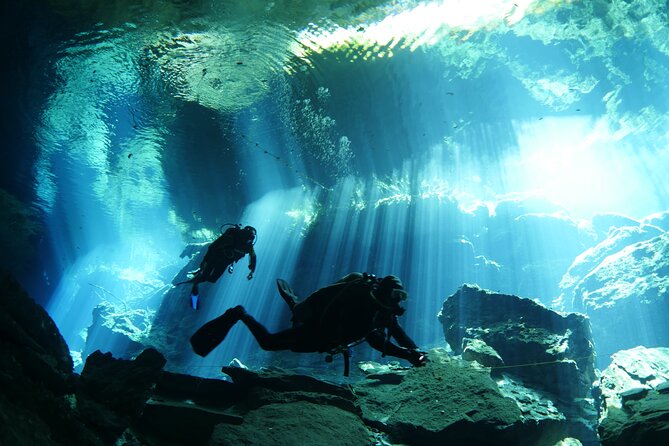
After you’re set, you’ll load into the truck and ride about 45 minutes to the day’s cenote. The operator may send you to Chac Mool or Dos Ojos.
Why the ride is part of the experience: cenote caverns aren’t just scenic spots. They’re managed underwater environments, and the transport time helps you go from city chaos into “okay, we’re doing this” mode. You’ll usually have enough time to get your bearings, use the restroom if needed, and double-check your essentials.
On the practical side, it also means you should plan to be ready early. This isn’t a “show up when you wake up” kind of outing. The 8:00 am start makes sense because you’ll want daylight, good conditions, and time for two underwater rounds.
Your Full Cave Diver Briefing and the Fixed-Line Plan
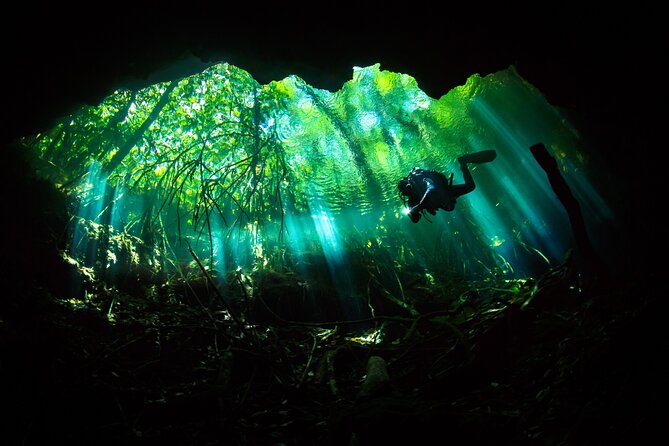
Once you arrive, you meet your guide for the briefing. The guide you’ll be with is a Full Cave Diver and also an Open Water Scuba Instructor, which is a useful combo. Cave diving experience matters for real-world decisions underwater. Teaching experience matters for how the plan gets communicated—especially for certified divers who may not do cavern-style work often.
During the briefing, you’ll get the procedures for the cenote environment and what you should expect. The big concept is the permanent lines inside the caverns. Those lines are already set up, and your sessions follow them. That means you’re not trying to “figure it out” in zero-visibility conditions.
For your comfort, pay attention to:
- how to hold your position and move along the line
- how your guide expects you to manage spacing and attention
- how the planned turnaround and safety habits work in this specific environment
If anything feels unclear, ask before you get into the water. In these settings, you don’t want guesswork. You want muscle memory plus calm.
This is also where your certification timing matters. You need to show proof of Open Water Diver certification, and you should have done underwater activities within the last 6–12 months (the requirement is explicit). If you’re rusty, the guide can still help you—but you’ll enjoy it more if your skills and breathing control are already warmed up.
Session One: 45 Minutes, 50 Feet Max, and a Clear Objective
Your first underwater round is about 45 minutes. The plan keeps things structured, and the max depth is 50 ft / 15 m. That depth limit is a comfort factor: it’s deep enough to feel like real cavern underwater travel, but it’s not pushing into “hard mode” depth work.
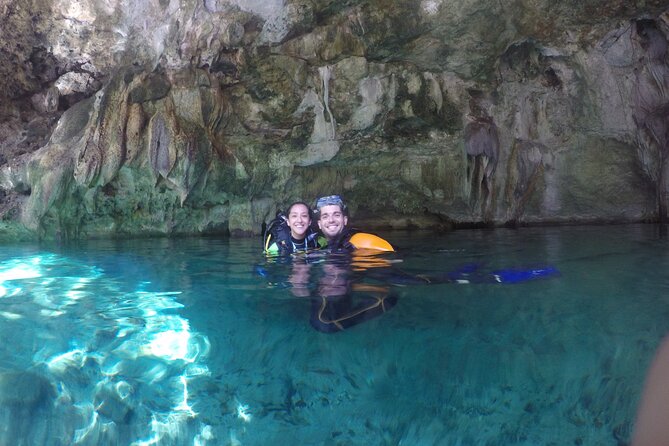
The experience itself is about following the system: you’re moving through caverns along fixed lines. Visibility in cenotes can be tricky, and the light you get rental-style is part of the reason you can actually see what’s in front of you. You’ll also be dealing with a confined underwater world—close walls, echoing acoustics (you’ll feel it), and that slow, careful motion divers learn to trust.
During this first session, your job is simple:
- stay calm and consistent
- keep your focus on the line and your guide’s cues
- maintain easy buoyancy (this matters a lot in confined spaces)
The best part of the first round is that it sets the tone. Once you’ve got your breathing and timing down, the second session often feels smoother.
Surface Interval: Snacks, Water, and a Real Break
After the first underwater round, you’ll surface and take a ~45-minute interval. This is not just “sit around.” You’ll have refreshments, snacks, and a sandwich offered, plus water and soft drinks.
Why this matters for you: a cenote day is a whole-body effort. Even if you’re an experienced diver, you’re still managing buoyancy work, attention, and cool-temperature exposure. The break gives you time to reset your breathing, warm up a bit, and eat something substantial enough to keep energy steady for the second round.
Also, this is a good moment to sanity-check your gear and comfort. If something feels off—bothering straps, a light that isn’t behaving, or mild discomfort—this is when it should get noticed and addressed before you head back in.



Session Two: Another 45 Minutes With the Same Line System
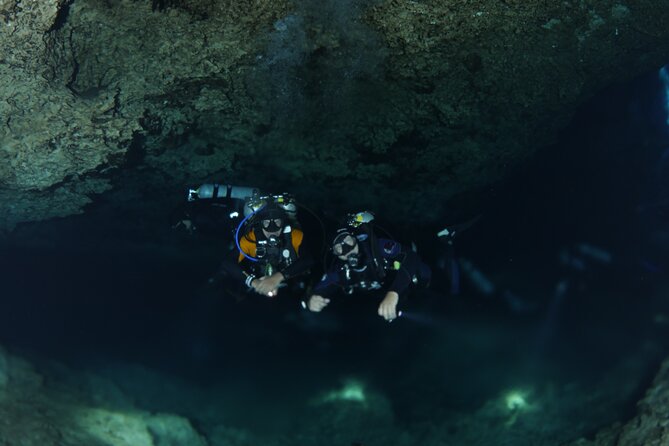
After the break, you head back in for the second underwater round, again around 45 minutes. You’ll follow the same fixed-line setup. That consistency sounds boring on paper, but underwater it’s exactly what helps you enjoy the environment rather than stress about orientation.
The difference between the first and second round tends to be mental. After you’ve already “learned the route” during session one, you can spend more attention on what you’re seeing—texture, cavern shape, and the way light behaves in water-filled spaces. You’ll likely feel more confident on the line.
Keep your expectations realistic: this is an environment that can be visually spectacular but also physically controlled. If you come in hoping for reckless freedom, you’ll miss the point. The value here is the structure that lets you see a magical place without turning it into a chaotic experiment.
Price, Included Value, and the Fees You Must Plan For
The deal on this trip is mostly about what’s already handled. Your tanks and weights are included, plus water and soft drinks, and the snack + sandwich during the break. You also get dive light rental, which can easily become a forgotten cost if you’re planning your day.
What costs extra:
- Full scuba equipment rental (BCD, regulator, dive computer, wetsuit, mask & fins) is $25 USD
- Cenote entrance fee is cash-only and varies: 300 MXN for Chac Mool and 600 MXN for Dos Ojos
- Camera rules and fees vary by cenote. Some don’t allow camera use. Others charge about 20–60 USD, depending on camera type. The price range is stated, and it’s safer to treat camera costs as potentially significant.
How I’d think about value: if you already own your full gear, you may only need to budget for the entrance fee (and possibly camera fees). If you don’t, the included structure plus light rental becomes more valuable, because you aren’t building a complicated shopping list. Even with the optional $25 USD equipment rental, you’re paying for convenience on a schedule-driven day.
One very practical tip: bring cash for entrance fees and any camera fees. The information is explicit that entrance fees are cash only, and you don’t want your day to stall at the last second.
Who Should Book (and Who Should Skip) This Cenote Line-Guide Trip
This tour is made for certified divers who are already comfortable underwater but may want a structured cavern-style experience. The minimum requirement is Open Water Diver, and you must have done underwater activities within the last 6–12 months. You’ll also want at least moderate physical fitness, because there’s gear handling, walking, and managing yourself calmly through a full morning.
It also suits divers who like clear limits:
- max 50 ft / 15 m
- planned time underwater (~45 minutes each round)
- a guided route using permanent lines
If you’ve been out of the water for a long time, I’d pause. You can still be capable, but the “recently dove” requirement exists for a reason: the trip depends on you moving confidently with buoyancy, situational awareness, and routine.
And if you’re a camera person, decide early whether you’re willing to adapt. Since some cenotes restrict cameras or charge varying amounts, it’s smart to ask what’s possible once you’re assigned the cenote of the day.
Timing, Weather, and Getting Back to Playa del Carmen
You’ll start at 8:00 am and return to the meeting point at about 3:30 pm. That’s a long day in the best way—two underwater sessions plus a meaningful surface break usually makes the day feel full, not rushed.
Weather matters. Cenote conditions depend on overall conditions, and this activity requires good weather. If conditions aren’t right, you’ll be offered a different date or a full refund.
This also means you should plan your schedule in Playa del Carmen with a bit of slack. If you’re trying to fly out the same day or stack multiple big activities, this might turn into stress.
Should You Book This Cenote Two-Tank Experience?
Yes, if you fit the certification and recency requirements and you want a structured cavern-style experience that focuses on safety, orientation, and being guided through a permanent line system. I think it’s a strong choice for divers who want to see the “another world” feel of cenote caverns without improvising.
Skip or reconsider if:
- you haven’t been underwater in the last 6–12 months
- you’re not comfortable with guided procedures and staying within a defined depth/time plan
- you’re relying on a camera and can’t afford the possibility of fees or restrictions
If you book, do two things to make it smoother: bring cash for the cenote entrance fee, and be clear about camera expectations before you arrive.
FAQ
What time does the experience start?
It starts at 8:00 am.
How long is the total trip?
The duration is about 7 hours.
Where do I meet, and where does it end?
You’ll meet at Calle 4 Norte/Calle 4 Nte in Centro, Playa del Carmen, and the activity ends back at the same meeting point.
Which cenotes might I visit?
You may go to either Chac Mool or Dos Ojos.
What certification do I need?
You must have proof of at least Open Water Diver certification from a recognized agency, and you must have done underwater activities within the last 6–12 months.
How deep will the sessions go?
The maximum depth is 50 feet (15 m).
What’s included, and what costs extra?
Included: 2 underwater rounds at one cenote, tanks and weights, roundtrip transportation, water and soft drinks, a snack and sandwich, and a rental light. Extra: full scuba equipment rental costs $25 USD, cenote entrance fees are cash-only (300 MXN for Chac Mool, 600 MXN for Dos Ojos), and camera access/fees vary by cenote.
FAQ
How many people are in the group?
The maximum group size is 8 travelers.
Is a full equipment rental available?
Yes. A full set rental (BCD, regulator, dive computer, wetsuit, mask & fins) is available for $25 USD.
Is there a camera fee?
Camera rules and fees vary by cenote. Some cenotes don’t allow camera use, while others may charge 20–60 USD depending on the camera.
Do you provide a light?
Yes, a dive light rental is included.
Is the trip dependent on weather?
Yes. The experience requires good weather; if canceled due to poor weather, you’ll be offered a different date or a full refund.