REVIEW · OAHU
Oahu Night Dive: Adventure for Certified Divers
Book on GetYourGuide →Operated by Dive Oahu Inc · Bookable on GetYourGuide
Nightwater on Oahu feels like a different planet. This 3-hour, PADI-guided night scuba outing takes you to two well-known south-shore underwater sites, one at twilight and one after it gets dark, so you see marine life changing moods right before your eyes. I especially like the way the trip mixes a calmer start with a true night experience, instead of treating the whole thing as the same low-light routine.
Two things I’d put at the top: the gear is included (you get the tanks, wetsuit, weights, fins, BCD, and underwater lights), and the itinerary is built around that day-to-night transition. You’re also likely to see big-name regulars like sharks, turtles, rays, and dolphins, plus smaller characters such as octopus, starfish, and crabs.
One consideration: this outing is only for certified scuba divers, and you’ll need to show proof on the boat. Also, parking isn’t included, and you should plan on not flying for 24 hours after your last underwater session.
In This Review
- Key highlights worth your attention
- Oahu after dark: why this south-shore setup works
- Boat time: what the 25-minute safety briefing really means
- Gear rental: what you don’t have to stress about
- First underwater session at twilight: reefs in transition
- The surface interval: snacks, refreshments, and a real reset
- Second underwater session in near-black darkness
- Price and value: what $248 gets you in real terms
- Who should book this Oahu night scuba outing
- What to pack (and what to plan for) before you go
- My honest take: should you book this night scuba program?
- FAQ
- Do I need to be a certified scuba diver?
- How long is the experience?
- What dive sites are included?
- What gear is included?
- Is there food and drink on the trip?
- Is the trip guided?
- Where do I meet the group?
- Is parking included in the price?
- Can kids or pregnant people join?
- Can I fly soon after the scuba sessions?
Key highlights worth your attention
- Two sites, two moods: twilight first, then near-black water with underwater lights.
- Full gear rental included: tanks and the whole kit, plus wetsuit, weights, fins, and BCD.
- Underwater lights provided: you’ll get guidance on using them for night viewing.
- Snacks and refreshments onboard: a real break at sunset between sessions.
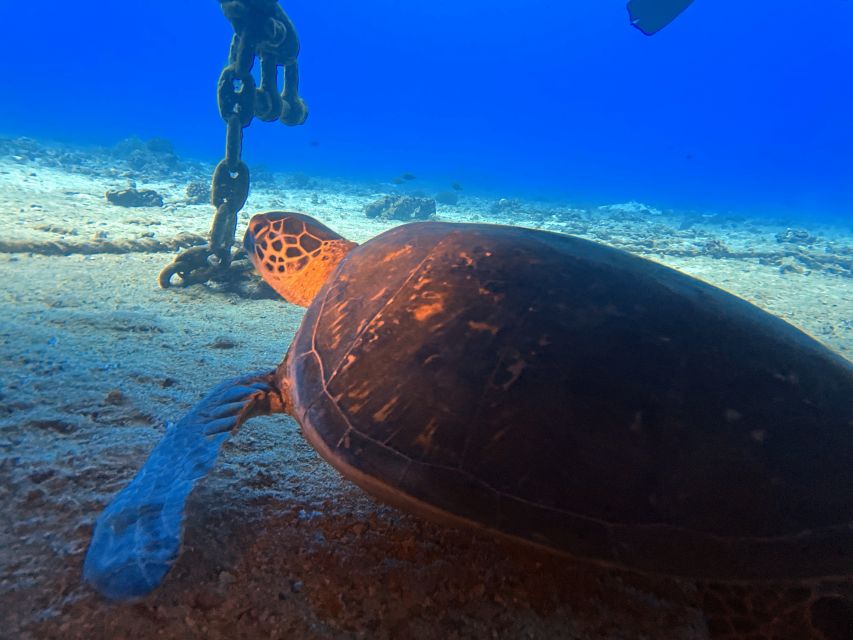
- Lots of marine life possibilities: sharks, turtles, rays, eels, octopus, starfish, and more.
- Small, guided structure: a PADI certified guide leads both underwater sessions.
Oahu after dark: why this south-shore setup works
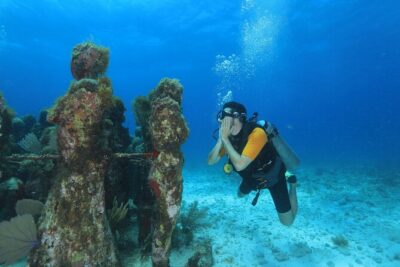
Oahu’s south coast has a special trick after sunset. The water shifts from daytime behavior into nighttime habits fast, and that’s what makes a guided night schedule so fun. Instead of just “seeing the same fish in the dark,” you get a real changeover: some animals settle in, while nocturnal life becomes active.
This outing is also paced for comfort. You start in twilight, when visibility is often easier and your brain still feels in daytime mode. Then you get a second session once conditions are darker, so you can experience what night changes look like underwater: the way everything seems closer, the way your light becomes the center of the universe.
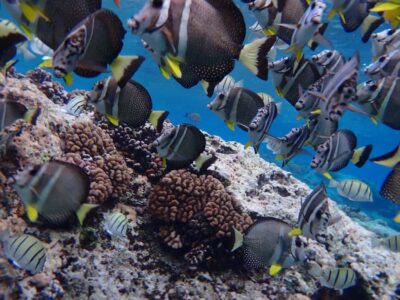
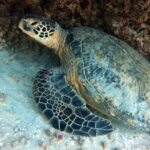
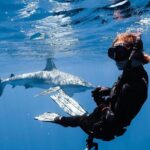
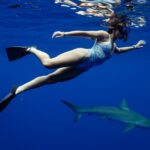
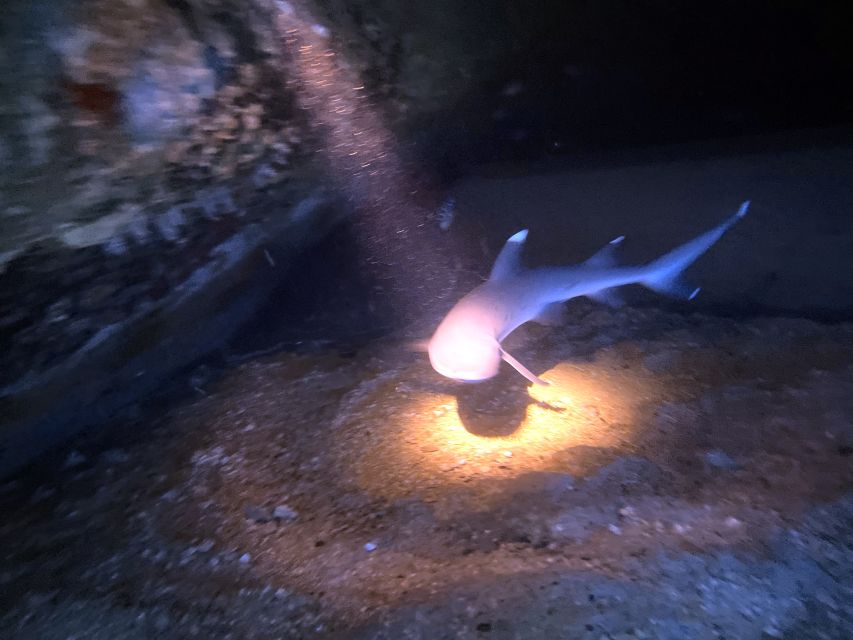
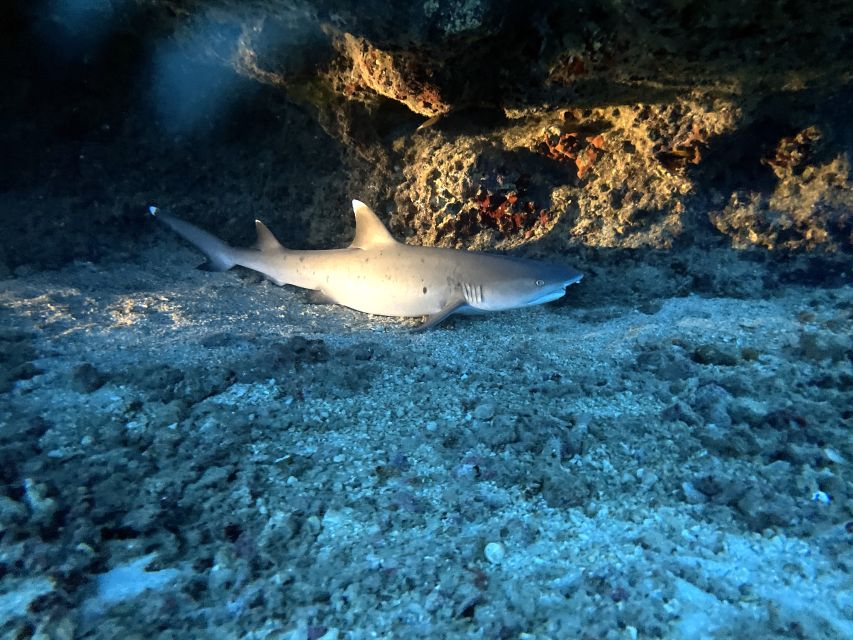
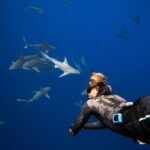
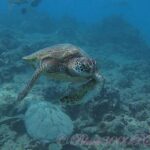
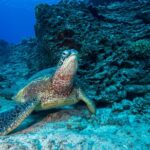
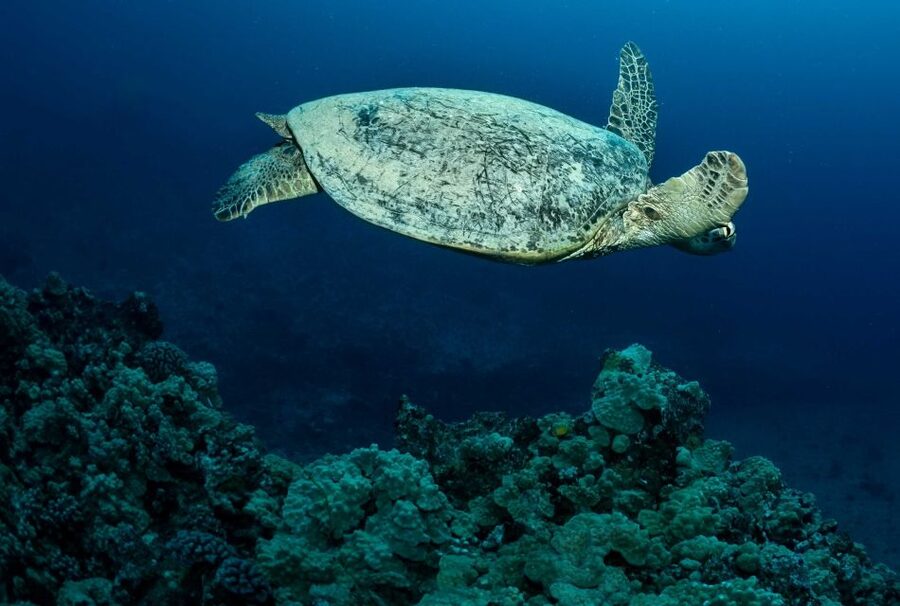
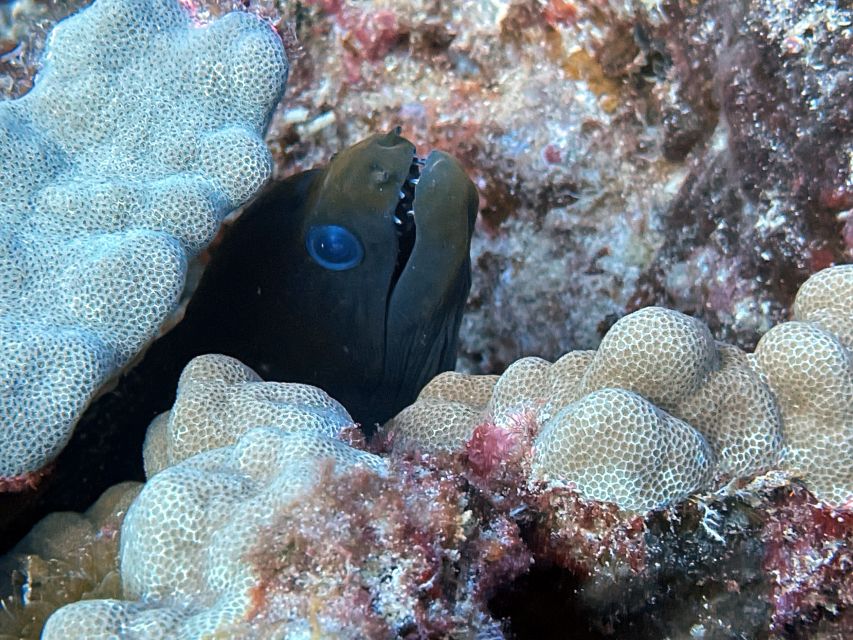
And yes, you’re on the hunt for the headline animals—sharks and turtles are part of the expected mix—but it’s equally about the variety. You might see rays, eels, octopus, starfish, crabs, and Hawaiian endemic fish. Dolphins also show up as a possibility, which is a nice reminder that you’re not only underwater.
You can also read our reviews of more tours and experiences in Oahu.

Boat time: what the 25-minute safety briefing really means
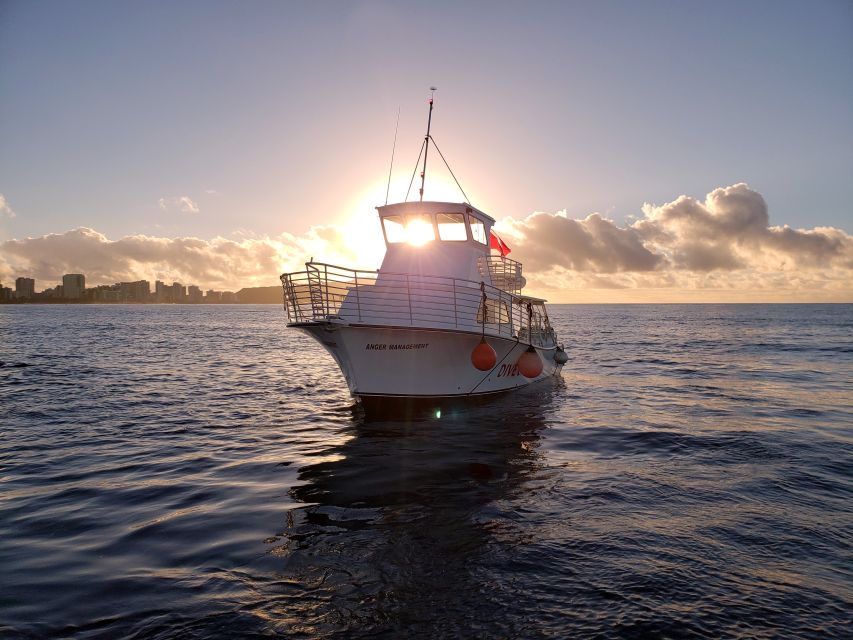
You’ll meet at the harbor in the front row, slip 8, and look for the large picture of a turtle. Arrive at least 30 minutes early. That extra time matters because the schedule has a 25-minute safety briefing before you gear up and get underway.
Here’s why I think that briefing is important even for experienced divers: night changes your planning. You’re managing buoyancy with different lighting, you’ll rely on your light more than you do during daylight conditions, and you’ll be navigating with less visual reference. A PADI certified guide running the process helps you stay aligned on group safety and what the plan is for each session.
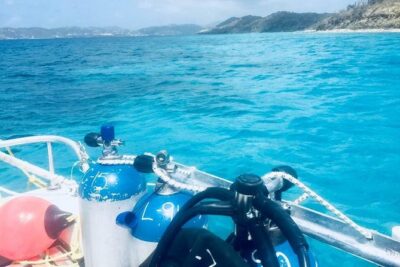
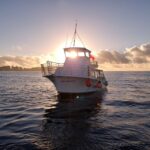
You’ll also be riding on a charter with a sun deck and a shaded deck, plus a restroom onboard. That’s more than comfort fluff. When you’re waiting for twilight and then waiting out the surface interval, the ability to sit somewhere cool and protected from wind or sun makes a difference in how enjoyable the whole trip feels.
Gear rental: what you don’t have to stress about
I like trips where the most annoying part of scuba planning is handled for you. This one includes premier gear rental with everything you need for both underwater sessions: 2 tanks, underwater lights, wetsuit, weights, fins, and a BCD.
That value adds up quickly on Oahu. Even if you already own some gear, having the operator supply the basics (especially tanks and lighting gear) saves time and reduces the risk of arriving with the wrong size or the wrong setup. It also means you spend your energy on the water instead of your car keys.
What to bring is simple: swimwear, a towel, and proof of your scuba certification. You’ll still want to think about comfort on the boat—dry towel, warm layer if you run cold, and a way to keep your stuff from getting damp—but the underwater equipment side is mostly handled.
First underwater session at twilight: reefs in transition
Your first guided underwater session happens at twilight. This timing is smart. You’re not fully in darkness, so you can get oriented quickly—often easier on the first step of a night program.
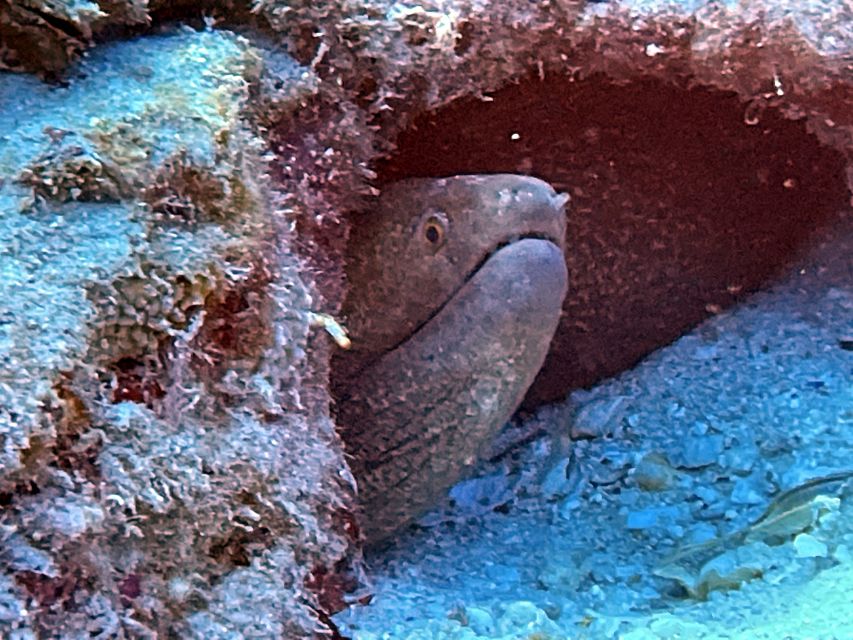
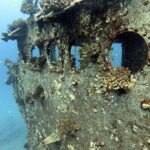
What you’re looking at is also specific: reefs in transition. Some marine life is off to rest, while nocturnal species begin to show up. That “shift” is exactly what makes twilight sessions feel different from both daytime and full night. It’s not just reduced light; it’s a changing cast list.
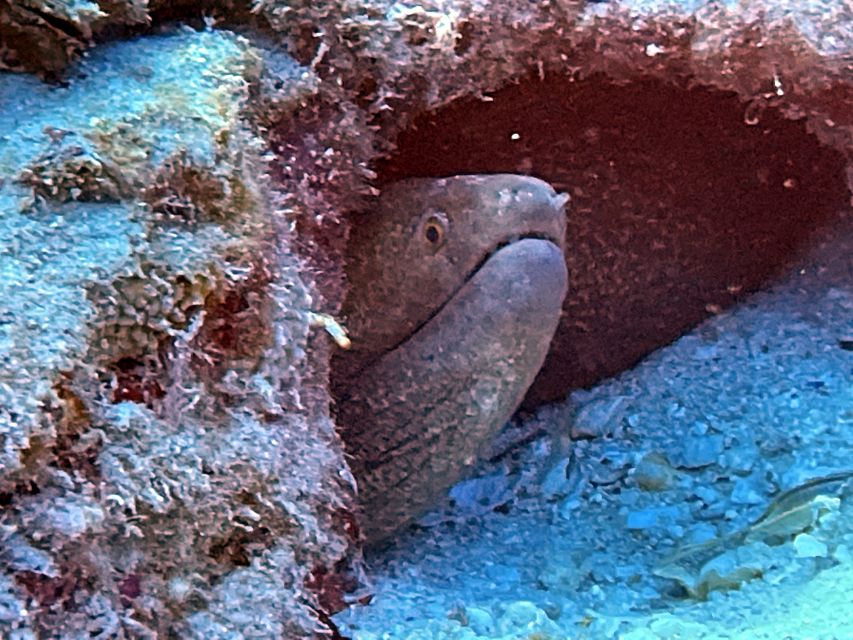
Your PADI certified guide leads the way, and the expected animal sightings are varied. You might encounter sharks, turtles, eels, rays, octopus, starfish, crabs, Hawaiian endemic fish, and more. Even if you don’t check off every item, the mix is broad enough that you should come away feeling you saw a full slice of what’s out there at nightfall—not just one or two predictable species.
One practical tip: manage your expectations and your breathing early in the session. At twilight, your eyes are adapting quickly, and excitement can make you forget good control. The faster you settle into smooth buoyancy and calm movement, the more likely you are to get those close-up animal moments without stirring up the bottom.
The surface interval: snacks, refreshments, and a real reset
After the first underwater session, you’ll get a 30-minute break at sunset. Snacks and refreshments are included, which is genuinely useful on a trip like this. Night schedules can make you forget meals, and hunger turns into impatience fast.
This is your moment to check gear, adjust anything you’ll want for the second session, and catch your breath. Also, if you get even a small break from salt air and spray, you’ll feel better about the darker water that comes next.
I like that the itinerary gives you time instead of rushing from one session to the next. On a night outing, your brain needs a short reset. That surface interval is part of the “value” you’re paying for, not just empty time.
Second underwater session in near-black darkness
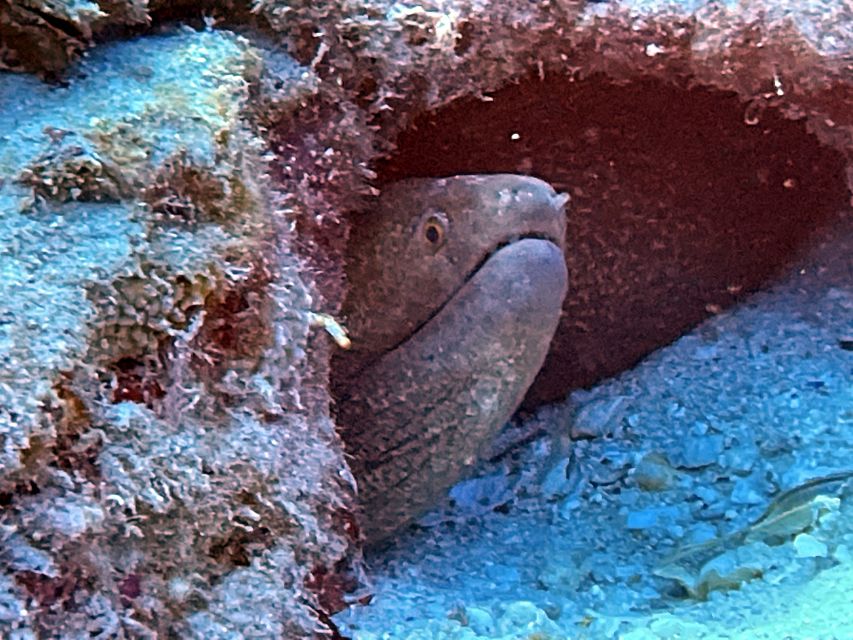
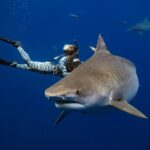
The second guided underwater session is where night scuba turns into something memorable. You’ll head out for oceanic nightlife on the south shore and experience a much darker setting than the first part.
The biggest difference is the lighting approach. Complimentary underwater lights are provided, and you’ll use them in coordination with your instructor. That matters because night viewing is all about where your light goes. Too much wandering means you miss things, and sweeping too aggressively can spook animals or cloud visibility.
This session is designed around complete darkness conditions, so your experience is more sensory: your light, your buoyancy, your guide’s signals, and the feeling of seeing shapes emerge from shadow. The same general animal list you might see on the first session can show up again, but at night you often get a different vibe—more active nocturnal creatures, different behavior patterns, and that eerie calm that makes good photos feel possible even when you’re not aiming for perfection.
If you’ve only done daylight scuba before, this is the part that convinces you scuba isn’t just about depth. It’s about time. Your second session is when you feel it.
Price and value: what $248 gets you in real terms
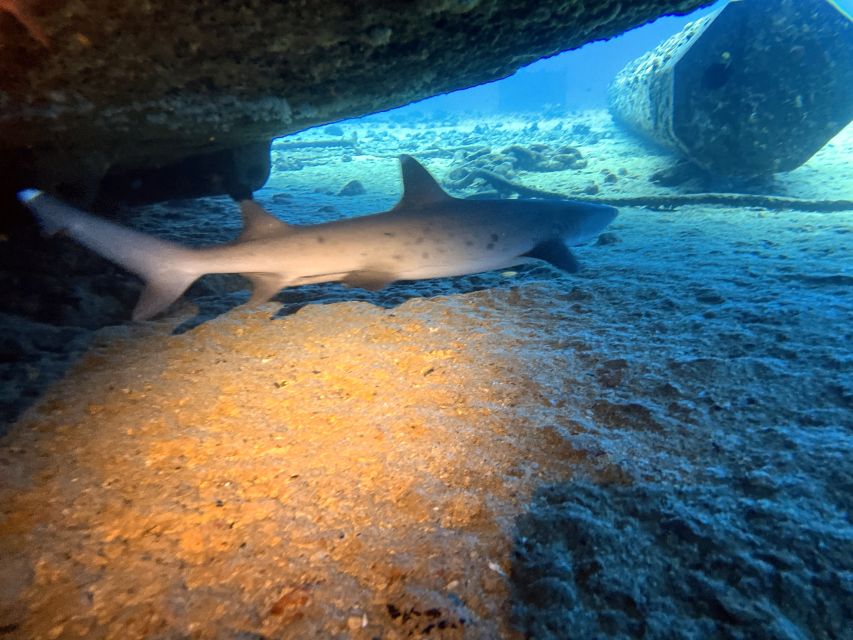
At $248 per person for about 3 hours, the price is best understood as a bundle. You’re not just paying for the calendar time. You’re paying for:
- A PADI certified guided experience (two guided underwater sessions)
- Two tanks and complete rental equipment
- Underwater lights
- Snacks and refreshments
- A charter setup with sun and shaded space plus a restroom
If you’ve ever priced out “tank + wetsuit + weights + BCD + lighting,” you’ll know rental costs can sneak up fast, and time spent organizing it yourself can eat into your vacation.
The one thing that isn’t included is parking. That’s usually easy to handle since meeting is at the harbor. You can park at Kewalo Basin for $1 an hour or at Ala Moana Beach Park for free, but you’ll want to factor in the time to get there and still make that 30-minute early arrival.
So is it a bargain? For a guided, two-session night program with lights and full gear included, it’s priced in the “fair for what you get” zone. It’s not a budget pool-lap activity. It’s an actual scuba outing with the equipment and guidance doing the heavy lifting.
Who should book this Oahu night scuba outing
This experience is a strong fit if you’re:
- A certified scuba diver who wants a structured night program with a guide
- Comfortable swimming and in good health
- Interested in marine life behavior, not only big animals
- The kind of person who likes doing something a bit different from standard beach time
It’s not suitable for children under 15, pregnant women, or people with pre-existing medical conditions. Also, you must be able to present proof of certification on the boat.
If you’re new to night conditions but not new to scuba, this can still work well because the schedule starts at twilight and you get guidance throughout. If you’re extremely sensitive to low light or anxiety in dark spaces underwater, you might want to think hard before booking since the second session goes into true darkness.
What to pack (and what to plan for) before you go
Bring swimwear and a towel. You’ll also want your certification proof ready to show when you meet at the slip. Since the charter includes gear like wetsuit, weights, fins, and BCD, you don’t need to travel with all the scuba kit.
Your bigger “plan ahead” item is the flight rule: you must not fly within 24 hours after your underwater session. That’s not optional, so build your Oahu timing accordingly.
Health-wise, you’re expected to be able to swim and be in good health. If you have any condition that affects pressure changes or breathing, you should treat the “not suitable” warning seriously.
Finally, plan for night temps and boat wind. The itinerary is short, but you will spend time on the water before and between sessions. A warm layer for after you return to the dock can make the whole end of the trip more pleasant.
My honest take: should you book this night scuba program?
Yes, I’d book it if you meet the certification and health requirements and you want a real night experience on Oahu’s south shore. The two-part timing—twilight first, then darker conditions—makes the outing feel like more than a gimmick. The included gear and underwater lights are also a big value win because they remove the hassle.
Skip it if you’re looking for a casual sightseeing boat ride, or if the idea of near-black water makes you uncomfortable. Also, if you’re in a rush to fly out soon, the 24-hour rule after your last underwater session can throw a wrench into your schedule.
If you want night marine life with a guided structure and equipment handled for you, this is a solid choice.
FAQ
Do I need to be a certified scuba diver?
Yes. You must be a certified diver and you’ll need to present proof of your certification at the boat.
How long is the experience?
It lasts about 3 hours total.
What dive sites are included?
You’ll visit two famous dive locations at night off Oahu’s south shore.
What gear is included?
The rental package includes 2 tanks, underwater dive lights, a wetsuit, weights, fins, and a BCD.
Is there food and drink on the trip?
Yes. Snacks and refreshments are included, and you’ll have them during the surface interval.
Is the trip guided?
Yes. It’s a PADI certified guided experience with a guide for both underwater sessions.
Where do I meet the group?
Meet at the harbor, front row, slip 8. Look for the large picture of a turtle.
Is parking included in the price?
No. Parking isn’t included, but there is parking at Kewalo Basin for $1 an hour or free parking at Ala Moana Beach Park.
Can kids or pregnant people join?
No. It’s not suitable for children under 15 and not suitable for pregnant women.
Can I fly soon after the scuba sessions?
No. You must not fly within 24 hours after diving/your underwater session.