REVIEW · CABO SAN LUCAS
Beginner Scuba Diving in Cabo San Lucas
Book on Viator →Operated by Manta Scuba Diving · Bookable on Viator
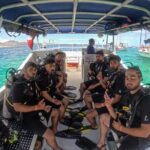
Waves plus underwater skills equals instant wow. Cabo San Lucas turns first-time scuba training into a guided, confidence-building 4-hour outing with real marine-life payoff. You get a short boat ride, a guided practice session, and then time in the water near two famous local spots—plus PADI-certified instructors who stay close.
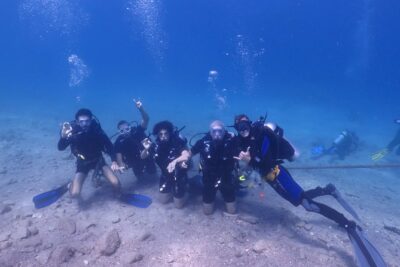
Two things I like a lot: you learn the basics before you go deeper, and the trip runs in a maximum group size of 4, so you’re not lost in a crowd.
One consideration: the safety rules are firm. If you have ear pressure or panic, you’ll communicate, but the team may not be able to change the plan fast if it conflicts with safe underwater procedures.
In This Review
- Cabo’s First-Time Scuba Session: Quick Key Points
- Cabo San Lucas: Why This First-Time Scuba Training Works
- Price and Value: What $142 Covers (and What Costs Extra)
- The 4-Hour Flow: Check-In to Water Time
- Two Underwater Spots: Manta Area and the Arch of Cabo San Lucas
- Your Instructor: What PADI Coaching Looks Like in Real Life
- Gear, Comfort, and the Extra Fees You Should Plan For
- What You Might See Underwater (Without Counting on One Exact Animal)
- Ear Pressure, Panic, and Why Safety Rules Feel Strict
- Who Should Book This Beginner Session (and Who Might Think Twice)
- Timing and Logistics That Matter in Cabo
- Photo and Memory Tips for First-Timers
- Should You Book This Cabo Beginner Scuba Training?
- FAQ
- How long is the beginner scuba training in Cabo?
- How much does it cost per person?
- What’s included in the price?
- What is not included?
- Does this work for people who are not certified?
- What’s the minimum age?
- Is the tour offered in English?
- Do I need to complete a health questionnaire?
- Is it safe if I flew recently?
- What if weather cancels the activity?
Cabo’s First-Time Scuba Session: Quick Key Points
- Max group size of 4 keeps the instruction personal and calming.
- PADI-certified guidance means clear safety talk, not guessing in the water.
- Includes tanks and weights so you’re not paying for the big stuff upfront.
- Two underwater areas (Manta area and the Arch of Cabo San Lucas) boost your odds of seeing wildlife.
- Optional upgrades are clear: a second underwater session costs extra, and full equipment rental costs extra.
- Ear pressure and nerves get handled often, with instructors described as patient and thorough.
Cabo San Lucas: Why This First-Time Scuba Training Works
Cabo San Lucas has a funny reputation: it’s easy to book, and it’s also easy to show up nervous. That’s exactly why this kind of beginner-focused training is a smart match. The format is built around teaching you how your body and gear work underwater, then giving you time to enjoy the sea life without turning the day into a stressful school exam.
The best part is how the day is paced. You don’t just step in and hope for the best. You meet your instructor, complete a health questionnaire, fit your gear, and get a structured safety briefing. Then it’s a quick boat ride to the water, instructions for the environment and communication, and a skills practice portion designed to build confidence before you settle into the experience.
Cabo’s location also matters. You’re working in a local marine area where instructors often point out wildlife and where the scenery can shift from day to day. One review even notes murkier water and how an instructor used a flashlight to help reveal what was around you. So if visibility isn’t perfect, you’re still set up to see interesting things.
You can also read our reviews of more tours and experiences in Cabo San Lucas.
Price and Value: What $142 Covers (and What Costs Extra)
The price is $142 per person for about 4 hours. For a first-time underwater session, that’s a solid value if you care about guided teaching and not just getting in the water.
Here’s the value math as I see it:
- Included: tanks, weights, bottled water, plus local taxes and national park fees, and a professional guide.
- Not included: using scuba equipment costs $40 per person, and an optional second underwater session costs $45 per person.
So your real total depends on what you need. If the $40 equipment fee is added, the day becomes closer to a “full guided package” price. Still, it can be worth it because the big piece you’re buying is instruction: safety coaching, underwater communication, and keeping you on track when you get nervous.
Also note that this activity is commonly booked about 25 days in advance. For popular dates, I’d rather book early than gamble on finding a last-minute slot that fits your schedule.
The 4-Hour Flow: Check-In to Water Time
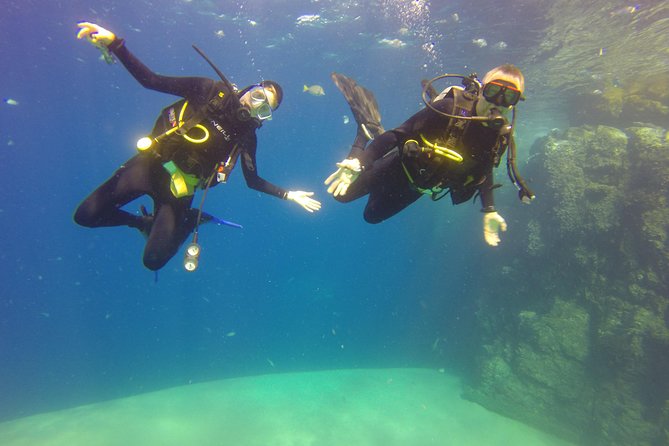
The day runs on a simple rhythm that makes sense for beginners.
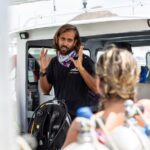
First, you check in and meet your PADI instructor. You’ll fill out a medical form and then get geared up. The medical screening isn’t paperwork theater. It’s there because underwater pressure and exertion can be risky for certain conditions. If you’re unsure, this is your moment to ask questions and to be honest about asthma, heart conditions, or other concerns.
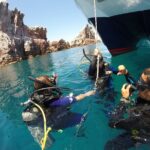
Next comes the boat portion. It’s a short ride—about 5 minutes—to the training and wildlife area. Then you receive a full rundown on what to expect: how gear works, how you’ll communicate underwater, what safety procedures look like, and how the environment may affect you.
Then you practice. Expect basic underwater skills that help you control buoyancy and respond to your instructor’s guidance. The goal is not to perform. The goal is to get comfortable fast. Multiple reviews praise instructors for being patient and calm during the first tries, especially for people managing anxiety.
Two Underwater Spots: Manta Area and the Arch of Cabo San Lucas
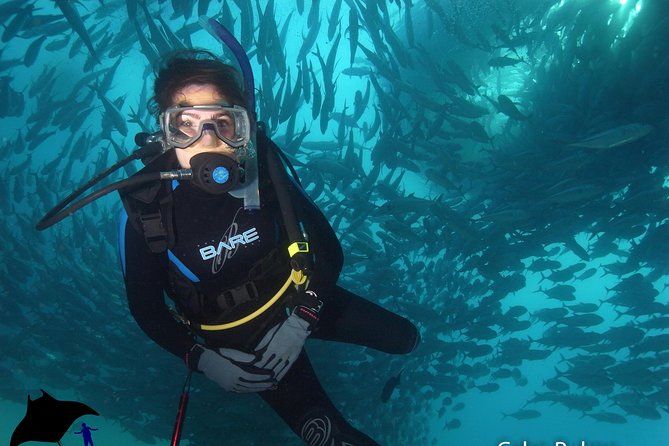
The trip gives you two different underwater locations, which helps your odds of seeing more varied life.
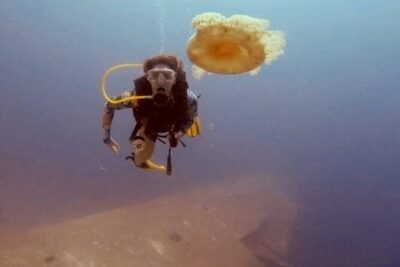
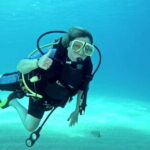
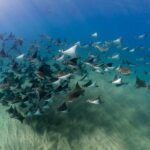
The first spot is tied to a Manta area—often the kind of place where instructors can show you how to look, not just where to go. In reviews, people describe seeing colorful fish and coral, plus “wow” wildlife moments. One diver mentions manta rays during their morning session. Another talks about seeing a mini shark, seals, octopus, and manta rays, all within the same kind of first-time experience.
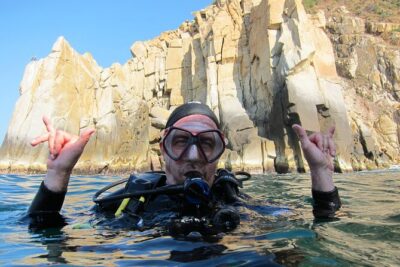
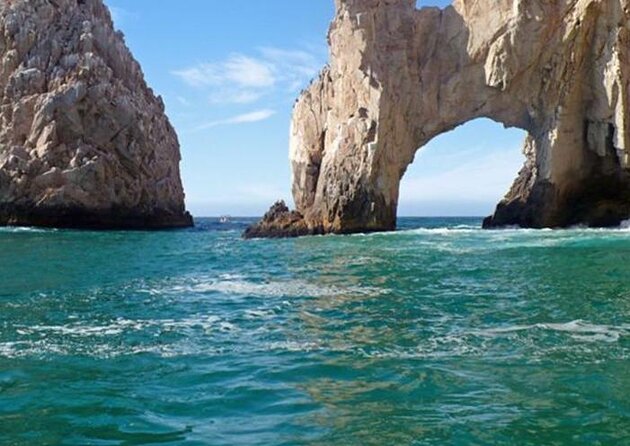
Then you move to the Arch of Cabo San Lucas, which is a well-known landmark underwater. Even if you don’t care about architecture, the arch area tends to concentrate life and creates variety in how you see the seascape and marine behavior.
One helpful reality check: water clarity varies. Some reviews note murkier water, but also note that instructors used tools like a flashlight to help you see what you might otherwise miss. Translation: if the water isn’t glassy, you’re not powerless.
Your Instructor: What PADI Coaching Looks Like in Real Life
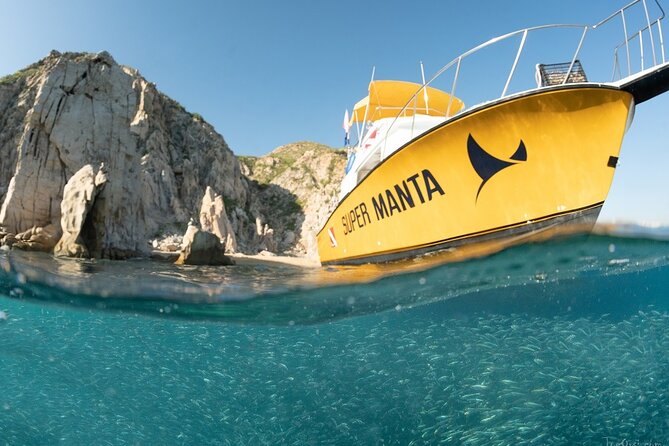
This is the part that drives the ratings. The instruction style described in reviews is consistent: clear explanations, patient coaching, constant check-ins, and careful safety management.
Different instructors get named by guests, and that’s useful because it tells you the team is experienced across personalities:
- Martin is described as calm and attentive, with frequent underwater check-ins.
- Monty is praised for thorough teaching and patience during a granddaughter’s first experience.
- Angela stands out in accounts for being detailed, safe-focused, and easy to communicate with underwater using signals.
- Julio is repeatedly praised for handling panic and teaching in small steps.
- Mercedes is mentioned for calming first-timers and answering questions.
- Lori is described as thorough and comfortable-making for first-time sessions.
- Cesar and Naul also appear in reviews as patient and clear.
Even when people were experienced divers, they still valued the way instructors reminded them of key skills and then gave space to try them. That’s a real strength for a beginner course.
One review also mentions communication underwater with hand signals being effective. That matters because good underwater communication reduces guesswork. You’re not just reacting. You’re following a system.
Gear, Comfort, and the Extra Fees You Should Plan For
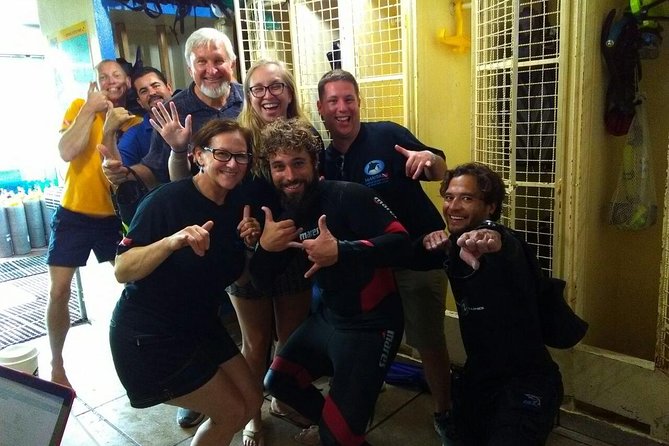
The trip includes tanks and weights, and it also includes bottled water. That’s great for comfort because you’re not scrambling to source or carry the heavy parts.
But you should plan for one additional line item: scuba equipment rental costs $40 per person. The data also says bottled water is included, but it does not specify whether wetsuits or all other gear are included in the price beyond tanks and weights. If you want a completely smooth day, I’d confirm what’s covered when you book—especially if you have any gear preferences.
A couple practical comfort notes that came up in real experiences:
- Many first-time participants feel nervous about breathing and ear pressure. Instructors often handle it by calming you down at the start and walking you through pressure regulation.
- Even in decent conditions, water temperature can shift quickly. One reviewer mentions warm water at entry, then colder water after going down. If you run cold easily, factor that in.
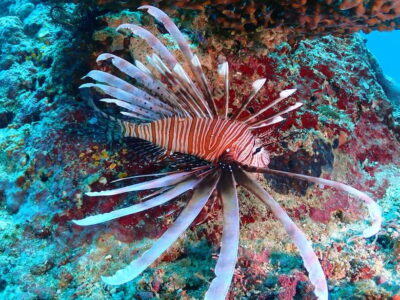
What You Might See Underwater (Without Counting on One Exact Animal)
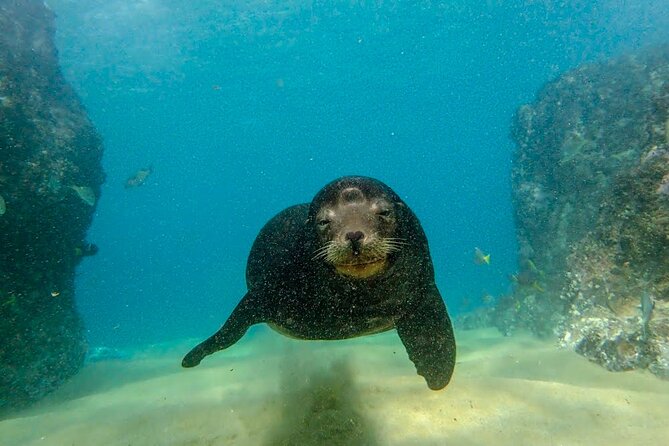
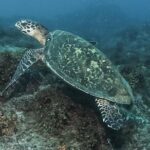
You’re not guaranteed a specific list of animals. But Cabo’s underwater life is active enough that many people leave with memorable sightings.
Across accounts, common highlights include:
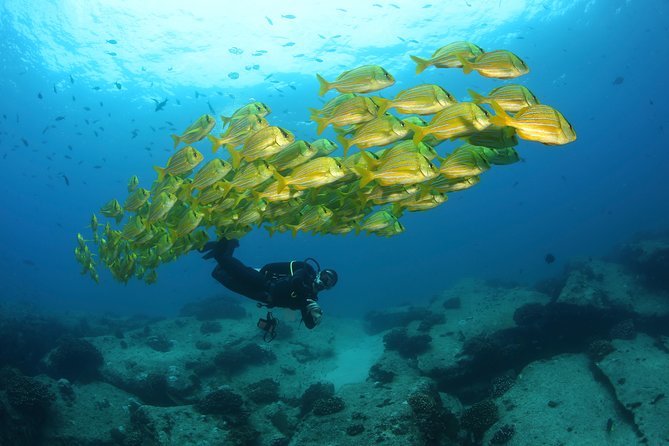
- Colorful reef fish and schools of fish
- Coral growth and marine structure
- Starfish and pufferfish (mentioned in one first-time family outing)
- Sea lions and ray species (including spotted rays and stingrays)
- Octopus and eels (including moray eels)
- Reef sharks and other larger fish, including grouper-like encounters
Some people also mention seal sightings and even a “mini shark” during their first session. That tells me the area can produce real variety, not just tiny fish close to the surface.
The big mindset shift for beginners: you’ll do better if you focus on slow scanning and listening to your instructor’s pointing. Your eyes need training too. The instructors often guide where to look and what behaviors mean.
Ear Pressure, Panic, and Why Safety Rules Feel Strict
Here’s the honest part. Underwater comfort can be personal. Some people glide through. Others get ear pressure.
In one less-perfect experience, a first-timer reported ear pain and asked to go up repeatedly. The instructor followed safety procedures and kept the ascent controlled. The person also said they wanted to inflate their jacket themselves, but the instructor didn’t allow it and followed protocol for a slow, managed return.
I take that to mean this: you should absolutely communicate early if you feel pain or panic. But you also need to accept that safety procedures govern your options underwater. The instructor may not be able to switch plans quickly if it increases risk.
What can you do to reduce the odds of ear trouble?
- Be proactive in telling your instructor at the first sign of discomfort.
- Follow their instructions on equalizing pressure.
- Don’t push past pain just to prove toughness.
And if you’re anxious, pick a calm mindset. One of the most consistent praise points is that instructors talk people down and keep them stable, especially with step-by-step coaching. Julio is specifically praised for taking baby steps and staying with the student the whole time.
Who Should Book This Beginner Session (and Who Might Think Twice)
This experience is designed for beginners. The tour is minimum age 10, and it’s suggested for people with moderate physical fitness.
It’s especially good if:
- You want a structured first underwater experience, not a self-guided try.
- You appreciate small groups and close instruction.
- You’re hoping to decide whether you want formal certification afterward. Many reviews describe leaving inspired to get certified.
It might be a poor fit if:
- You have medical conditions that could be affected by scuba parameters and you aren’t cleared by your doctor.
- You can’t safely fly close to the activity time. The data says diving within 18 hours of flying is not recommended.
- You’re likely to ignore instruction. Safety here is built on following procedures.
One small planning note: avoid alcohol at least 12 hours before your session. That’s not a vibe thing. It’s a body-and-safety thing.
Timing and Logistics That Matter in Cabo
This tour starts at Manta Scuba Diving Blvd. Paseo de la Marina 7D, Centro, Marina, 23450 Cabo San Lucas, B.C.S., Mexico and ends back at the meeting point.
A few practical tips from real-world experiences:
- If you’re coming from a cruise or a tender situation, allow time buffer. One review mentions a delayed tender and then a call with updated status so directions could be found quickly.
- If you use navigation apps, double-check the route. One guest warns that Apple Maps can send you the wrong way.
- The tour is near public transportation, but you’ll still want to be on time for check-in. The boat timing is part of the day flow.
Also remember the max group size of 4. Small groups mean schedules run tight. You won’t want to be the person trying to sprint in at the last second.
Photo and Memory Tips for First-Timers
Most people want one thing: proof. Underwater photos can be tricky, but you can still make it easy on yourself.
A few practical pointers based on what’s been suggested:
- Bring a camera if you want to capture the marine life. One reviewer specifically recommends having a camera with an SD card for recording the underwater scenery.
- You might not get perfect clarity every day, so be ready to shoot with patience. Murkier water still shows texture, fish movement, and shapes, especially when instructors help you find what to look for.
- If you’re nervous, focus first on control and breathing. Photos come second.
Should You Book This Cabo Beginner Scuba Training?
If you want a first-time underwater experience with patient PADI instruction, a small group, and included tanks and weights, this is a strong option for Cabo San Lucas. The price is reasonable for what you get, and the structure makes sense: briefing, gear, short boat ride, skills practice, then wildlife time near the Manta area and the Arch.
Book it if you:
- Want calm coaching and clear safety procedures
- Appreciate small group attention
- Plan to communicate early if you feel discomfort
Think twice if:
- You know you have medical constraints that might prevent you from scuba participation
- You’re likely to ignore safety protocol when you feel pressure or panic
If you’re on the fence, this is one of the better “try it first” formats. It’s designed to help you leave feeling capable, not just impressed.
FAQ
How long is the beginner scuba training in Cabo?
It’s about 4 hours, roughly.
How much does it cost per person?
The price is $142.00 per person.
What’s included in the price?
Included are local taxes, national park fees, bottled water, a professional guide, tanks, and weights.
What is not included?
Scuba equipment rental is not included and costs $40.00 per person. An optional second underwater session costs $45.00 per person.
Does this work for people who are not certified?
Yes. This is a beginner-focused experience with instruction for learning underwater skills.
What’s the minimum age?
The minimum age is 10 years old.
Is the tour offered in English?
Yes, it’s offered in English. It may also be operated by a multi-lingual guide.
Do I need to complete a health questionnaire?
Yes. You’ll be required to complete a health questionnaire prior to diving, and some conditions may prevent you from participating.
Is it safe if I flew recently?
Diving within 18 hours of flying is not recommended.
What if weather cancels the activity?
This experience requires good weather. If it’s canceled due to poor weather, you’ll be offered a different date or a full refund.