REVIEW · CABO SAN LUCAS
PADI Open Water Course in Cabo San Lucas
Book on Viator →Operated by Dive Ninja Expeditions · Bookable on Viator
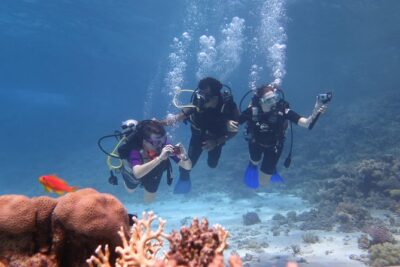
Cabo’s water makes learning feel real fast. This PADI Open Water scuba training is built around real skill practice: eLearning theory, guided skills in a pool, and four open-water sessions over two days. I like the mix of self-paced work and in-person coaching, and I especially like that you can get through it in a tight schedule.
Two things I’d bet you’ll like, too: the eLearning flexibility (6–10 hours when it works for you) and the patient, hands-on instruction people consistently praise, including instructors named Fabiano, Fabien, Johnny, Joy, Victoria, Le Roux, and Marcus. One consideration: ocean conditions can affect comfort, so if you’re prone to motion sickness or anxiety, plan for extra patience on the water day.
You’re also learning in one of the coolest places on earth for first-timers: Cabo San Lucas where the Sea of Cortez meets the Pacific Ocean, with a dramatic rock formation view that’s awesome both above and below the surface.
In This Review
- Key Things To Know Before You Go
- How the PADI Open Water Course Flows in Cabo
- Your “Homework” Phase: eLearning That Fits Real Schedules
- The Pool Day: Skills, Equipment, and Confidence Building
- Two Ocean Days Near the Sea of Cortez and Pacific
- Small Group Size (Max 4): Why It Can Feel Personal
- Price and Value: Is $620 Fair for This Course?
- Planning Your Cabo Timing: When Starting Early Helps
- Weather, Motion, and Safety: The Real Checklist
- Who This Course Best Fits (And Who Might Reconsider)
- Should You Book the PADI Open Water Course in Cabo San Lucas?
- FAQ
- What is included in the PADI Open Water course?
- How long does the practical part take?
- How long does the eLearning take?
- What time and where do we meet?
- How many people are in the group?
- When do the ocean sessions happen?
- How much does the course cost?
- Does the course depend on weather?
- What is the cancellation policy?
Key Things To Know Before You Go
- eLearning you control: plan roughly 6–10 hours, then finish quizzes/exams before your instructor review.
- Pool first, always: you’ll learn how the equipment works and practice core skills before open water.
- Four open-water sessions, not just one: the course ends after completing ocean training over two days.
- Tiny group size (max 4): more time for questions and skill-by-skill feedback.
- Instruction that handles first-timer nerves: many comments highlight patience, clarity, and confidence-building coaching.
- Cabo scenery adds motivation: you’re training near Cabo’s dramatic “two-oceans” meeting point.
How the PADI Open Water Course Flows in Cabo
The course is designed like a staircase: first you build the mental map, then you build the muscle memory, then you prove it in the ocean. You start with eLearning for the theory part. The good news is you can start anytime and finish on your own timeline, as long as you complete the quizzes/exams before you meet your instructor.
After that, you’ll do an instructor-led review of what you learned. This matters because scuba training isn’t just memorizing facts—it’s turning those facts into calm decisions in the moment. After the review, you’ll get hands-on with how the equipment works and what you need to manage underwater.
Finally comes the ocean portion: four open-water sessions across two days. The structure is simple on paper, but it’s a smart way to reduce first-day chaos. You’re not dropped into open water and hoped-for-the-best. You show up, practice what you’re supposed to control, and then you test those skills in the ocean.
You can also read our reviews of more tours and experiences in Cabo San Lucas.
Your “Homework” Phase: eLearning That Fits Real Schedules
If you’re traveling from elsewhere, this part is a big deal. You can knock out the theory before you ever step foot in Cabo. The course indicates the eLearning can take about 6–10 hours, and you can complete it any time by completing the quizzes and exams.
This is a value point because it lets you protect your vacation time. Instead of losing the whole first day to classroom talk, you go straight to instructor interaction and hands-on practice once you arrive. If you’re the type who learns better by reading and practicing quizzes, you’ll likely find this comfortable.
If you’re the type who gets stuck in screens, you can still make this work by planning a few focused blocks rather than trying to binge it all at once. The key is finishing before your instructor review so you can ask questions that actually matter to you.
The Pool Day: Skills, Equipment, and Confidence Building
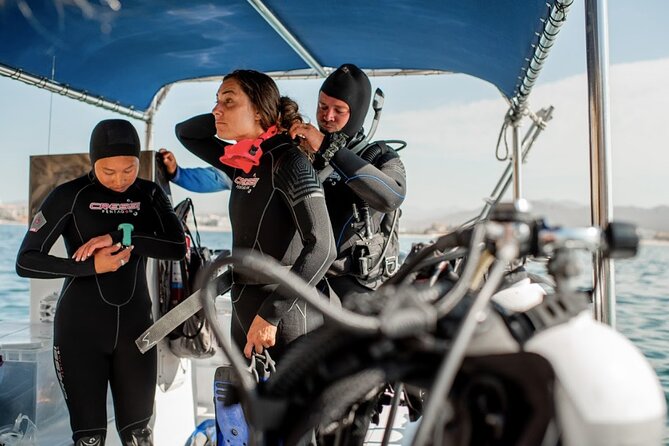
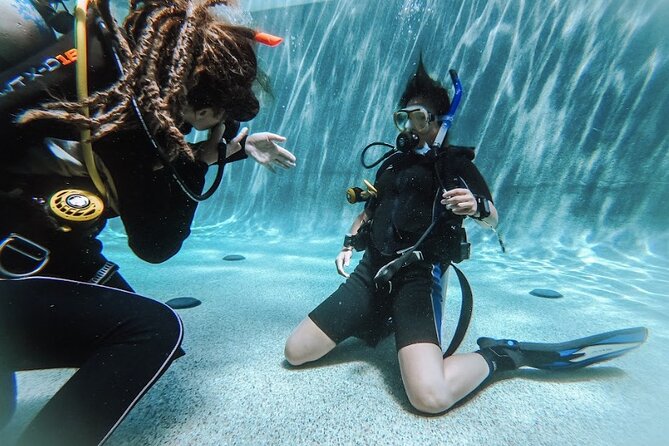
When you meet at the start time (8:00am), the day’s focus is on pool training. You’ll go to the pool with an instructor, and the process is meant to get you comfortable with the basics: how the equipment works and how the skills feel in a controlled environment.
This pool-first approach is exactly what you want for a first scuba certification experience. Water skills are weird at first. Your body has to learn new breathing rhythms, new ways to control buoyancy, and new ways to move without panicking. The pool removes a lot of stress. You can repeat, reset, and improve.
Based on the course structure, you’re also doing instructor-guided practice before you ever do the longer ocean sessions. That’s not just “nice to have”—it’s what makes the open-water part more likely to feel manageable.
In the comments, many people mention instructors who were patient, clear, and supportive—especially when it took a little time for comfort to click. If you’re worried about learning in front of others or you just need someone to slow things down, this pool portion is where you’ll feel that support most.
Two Ocean Days Near the Sea of Cortez and Pacific
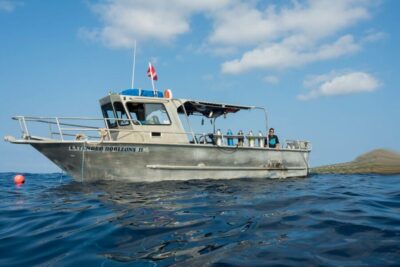
Once you’re ready, you’ll head out for the ocean training. The schedule is built around two big ocean blocks: you’ll go out around 1:00pm for ocean sessions after the pool work and lunch, and you’ll repeat this over the second day to finish the full set.
The course ends after you complete four open-water sessions across the two days. That’s a strong structure for learning because it gives you time to improve between sessions. Instead of one long try, you get multiple checks where you can apply instructor feedback immediately.
Where you’re training is part of the appeal. Cabo San Lucas is specifically described as being right where the Sea of Cortez meets the Pacific Ocean, near that iconic rock formation at the end of the peninsula. That means the view can be dramatic and the water context feels instantly special—like you’re not just doing paperwork training in a random place.
Practical reality check: ocean days can bring motion. The course requires good weather, but even with good weather you might still feel swell or chop. If you get seasick, be upfront about it. The course structure still gives you a learning path, but your comfort will shape how quickly you settle in.
Small Group Size (Max 4): Why It Can Feel Personal
One detail that changes the whole vibe is group size. The activity has a maximum of 4 travelers. In a course like this, small groups can mean less waiting, more time to ask questions, and more chances for corrections during skills.
That’s consistent with the kind of feedback people give about this operator. Many comments specifically praise instructors for being attentive and patient, including names like Fabien, Fabiano, Johnny, Joy, Victoria, Le Roux, and Marcus. The shared theme is simple: good scuba training is mostly about communication and calm repetition.
If you’re traveling solo and want a course that doesn’t feel like a factory line, this small limit helps. If you’re bringing a friend or two, the group size also supports more focused supervision.
Price and Value: Is $620 Fair for This Course?
At $620 per person, you’re buying a full training pathway: eLearning theory, instructor review, pool skills practice, and four open-water sessions over two days. You’re also buying the structure and coaching that help most people get through the certification steps safely and efficiently.
What makes it feel like value isn’t just the price. It’s the fact that the program is built for completion in 2 days of practical training plus your eLearning time. You’re not looking at a slow multi-week process.
Another value factor is the tiny group size and the emphasis on skills before open water. For first-timers, that’s where quality shows. You’ll likely appreciate that your instructor is there to guide equipment use and skill execution, not just count you as “present.”
Also, the course uses a mobile ticket, which tends to make arrival day smoother. And confirmation happens at booking, so you’re not left guessing.
If you want a short Cabo itinerary that still ends with an official certification, this price can make sense—especially when you compare it to the cost of cobbling together separate lessons and charter-style experiences.
Planning Your Cabo Timing: When Starting Early Helps
This course starts at 8:00am at the meeting point on Ignacio Zaragoza 345 Esq, 16 de Septiembre, in downtown Cabo San Lucas (Centro). That early start matters. It shifts the day from “vacation wandering” to “training mode,” which is exactly what keeps the course tight enough to finish in two practical days.
You’ll likely want to avoid scheduling anything demanding the night before. Even if you feel totally fine, your body needs rest to learn new physical skills.
One more timing note: the booking pace is listed as averaging 82 days in advance. That’s a hint that your preferred dates might fill up. If Cabo is your plan for a specific window, locking in earlier can save stress.
Weather, Motion, and Safety: The Real Checklist
The course requires good weather. If weather cancels the experience, you’re offered a different date or a full refund. That’s important for your planning because ocean training depends on conditions.
Also, consider the motion factor. One person in the feedback described feeling seasick and even having a small panic moment on day one, and they still completed the course thanks to patient support. That doesn’t mean it will happen to you—but it does mean instructors are prepared for nervous first days.
If you’re sensitive to motion, the best move is to plan mental flexibility. You might not feel “ready” on day one and still get there. Pool success often builds the confidence that helps with the ocean portion.
And because the course structure includes instructor review before pool practice, you’re not starting totally blind. That can reduce the fear factor that causes panic.
Who This Course Best Fits (And Who Might Reconsider)
This is a strong fit if you:
- Want a fast route to certification in Cabo with two full training days
- Like structured learning with theory, pool practice, and multiple ocean sessions
- Prefer a smaller group experience (max 4)
- Would benefit from patient, supportive coaching (names repeatedly mentioned include Fabien, Fabiano, Johnny, Joy, and others)
It might be harder if you:
- Have major fear of open water or motion and can’t slow down your expectations
- Need a super flexible schedule with no early mornings (the start time is 8:00am, and the ocean work is around 1:00pm after lunch)
If you’re in that second group, it doesn’t automatically mean “no.” It means you should go in with the right mindset: expect a learning curve, communicate your concerns early, and let the pool phase do its job.
Should You Book the PADI Open Water Course in Cabo San Lucas?
I think you should book if you want a clean, efficient path from theory to ocean training, with a tiny group and lots of coaching time. The combination of eLearning flexibility, pool-first skill practice, and four ocean sessions over two days is exactly how you set yourself up to succeed instead of luck out.
I’d pass or at least think hard if weather worries you or you know you get hit hard by motion. In that case, ask yourself if you can handle an uncomfortable first ocean day and still work through it with the support of your instructor.
If you want Cabo as more than a beach stop—and you want an official certification that sticks—this is one of the most practical ways to turn a short trip into a real skill.
FAQ
What is included in the PADI Open Water course?
The course includes theory through eLearning, an instructor review of that theory, pool practice to learn how the equipment works and build skills, and four open-water ocean sessions over two days to get certified.
How long does the practical part take?
The practical training runs for about 2 days, with a total duration listed as approximately 2 days 6 hours.
How long does the eLearning take?
The eLearning can take about 6 to 10 hours to finish, depending on how long you take with the quizzes and exams.
What time and where do we meet?
You meet at 8:00am at Ignacio Zaragoza 345 Esq, 16 de Septiembre, Downtown, Centro, 23450 Cabo San Lucas, B.C.S., Mexico.
How many people are in the group?
This experience has a maximum of 4 travelers.
When do the ocean sessions happen?
After meeting and pool training in the morning, the plan is to do ocean sessions after lunch, starting at 1:00pm, and you repeat this across two days to complete four open-water sessions.
How much does the course cost?
The price is $620.00 per person.
Does the course depend on weather?
Yes. The experience requires good weather, and if it’s canceled due to poor weather, you’ll be offered a different date or a full refund.
What is the cancellation policy?
You can cancel for a full refund if you cancel at least 24 hours in advance of the experience’s start time. If you cancel less than 24 hours before the start time, the amount paid will not be refunded.