REVIEW · BORA BORA
Aqua Safari Introductory Helmet Dive (Underwater Walk)
Book on Viator →Operated by Aqua Safari Helmet Dive · Bookable on Viator
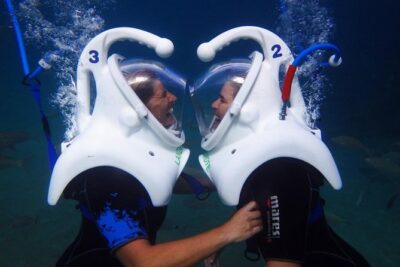
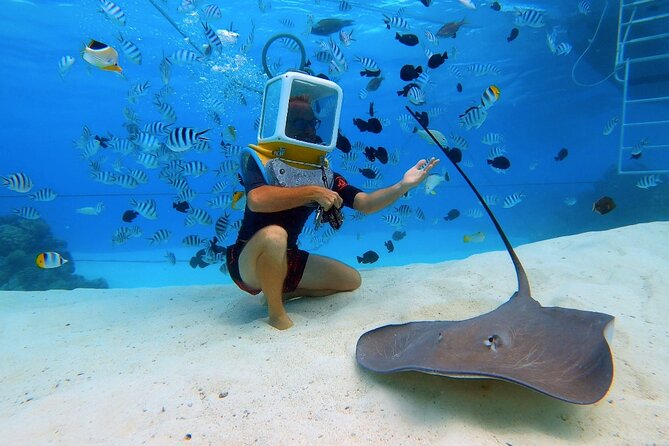
Walking underwater sounds impossible. In Bora Bora, it’s an easy, guided reality. This Aqua Safari helmet walk gets you into a coral garden at about 3 meters (around 10 feet) while keeping you calm with clear instructions and close support from the crew, including guides like Tama and JP. You’ll also get photos along the way, which turns a neat experience into something you can actually bring home.
I love how no swimming or scuba training is required. The helmet does the work, and you mainly focus on looking around (and letting the fish notice you). I also like the small-group feel, capped at 12 travelers, so the guides can keep an eye on everyone in the water.
One thing to consider: you’re enclosed and limited to the rope area, so this isn’t an open-water roam. You’ll still see plenty, but if you want a long, free-for-all underwater session, this is more of a short, controlled encounter.
In This Review
- Key points before you go
- Why Bora Bora’s helmet walk beats regular snorkeling
- What happens from the Ferry And Boat meeting point
- The helmet and briefing: your ear, breathing, and balance checklist
- The 30-minute lagoon floor walk: coral garden plus serious fish
- What the roped-off area means for your expectations
- Photos and the onboard camera: how you leave with more than memories
- Who this helmet walk is best for (and who should think twice)
- Price and value in Bora Bora
- How to plan your day around this experience
- Should you book the Aqua Safari helmet underwater walk?
- FAQ
- Do I need to swim or have snorkeling experience?
- How long do I spend underwater?
- How deep do you go during the helmet walk?
- Is pickup available?
- Are photos included, or do I need to bring a camera?
- Is the group size small?
- Where does the tour start and end?
- Is the underwater walk affected by weather?
- What if I wear glasses?
Key points before you go
- No experience needed: helmets and instruction mean you don’t need to swim or snorkel
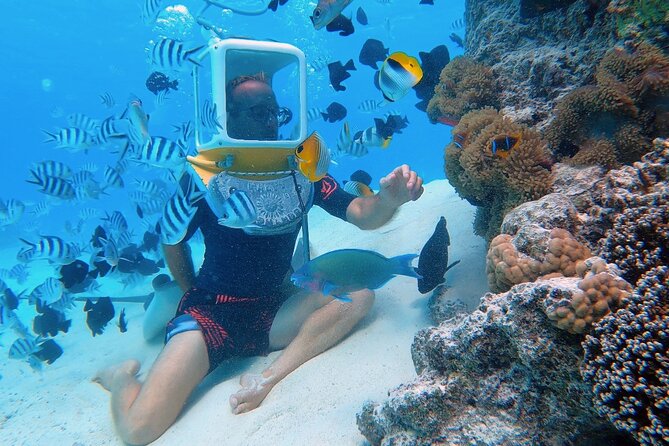
- 30 minutes underwater at about 3 meters with coral and fish right in front of you
- Photo support included: guides use a high-definition camera, with photos offered at the end
- Small groups (max 12) helps you feel watched, not lost
- Dry head + normal breathing under the helmet makes it less intimidating than it sounds
- Rope area and close guidance keep you in the safest zone for the lagoon floor walk
Why Bora Bora’s helmet walk beats regular snorkeling
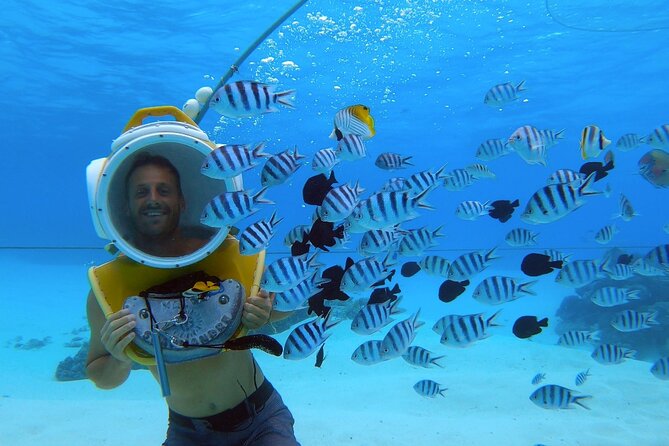
Bora Bora’s lagoon is famous for a reason. The water is clear, the fish are used to humans, and the scenery is so postcard-perfect it can feel a little unreal from the boat. This experience lets you step closer to that world without the usual learning curve.
Snorkeling is great, but it has two built-in problems for many people: you’re floating, and you need comfort with goggles (plus a little luck for seeing fish). The helmet walk fixes both. You go down with equipment fitted for you. Your head stays dry inside the helmet, and the whole setup is built for first-timers.
I especially like the way the crew turns the underwater part into a guided show. You’re not just dropped into the lagoon to fend for yourself. The guides help you get comfortable, point things out, and keep you moving at a safe pace around the reef.
This is also a smart choice if you wear glasses or you just don’t want to deal with snorkel masks. One of the best reasons to book is that the activity is designed for people who can’t (or won’t) do traditional snorkeling.
You can also read our reviews of more tours and experiences in Bora Bora.
What happens from the Ferry And Boat meeting point
Most days start at the Ferry And Boat Point (F6VX+53X) in Bora Bora. If you booked pickup, you’ll be collected and taken to the dock where your day switches from island air to lagoon life.
Then the routine goes like this:
1) Meet the crew and check your gear
You’ll handle the helmet setup and get fitted before you go into the water. The smoother this first step is, the calmer you’ll feel once you’re actually under.
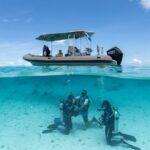
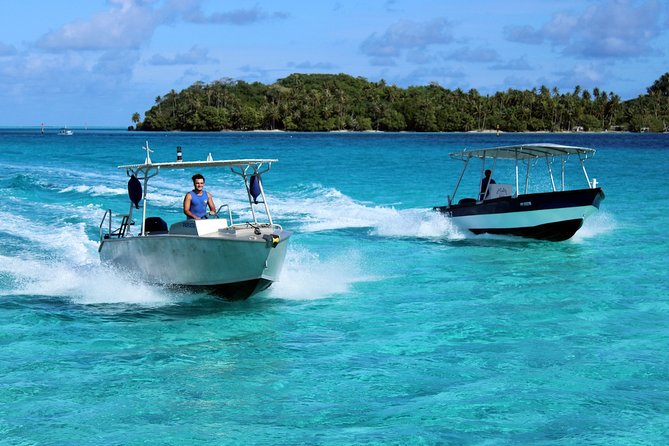
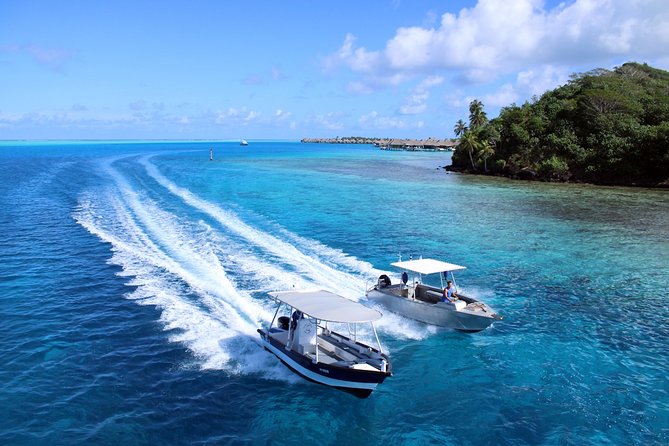
2) A scenic boat transfer to the site
Even if you’re eager to get underwater fast, don’t skip the boat time. It’s part of the fun, and it helps you build the vibe before you reach the reef area.
3) Safety briefing before you step in
A short safety talk happens before departure into the water. This matters, because the underwater walk is different from snorkeling. You’re wearing a helmet, your movement is guided, and your attention needs to stay on instructions.
The whole excursion runs about 2 hours to around 2.5 hours depending on timing. The actual underwater walk is about 30 minutes, so you’re not trapped for hours in a wetsuit situation. There’s plenty of time for the lead-up and boat ride.
The helmet and briefing: your ear, breathing, and balance checklist
This is where first-timers either relax or panic. Luckily, the crew’s job is to prevent panic.
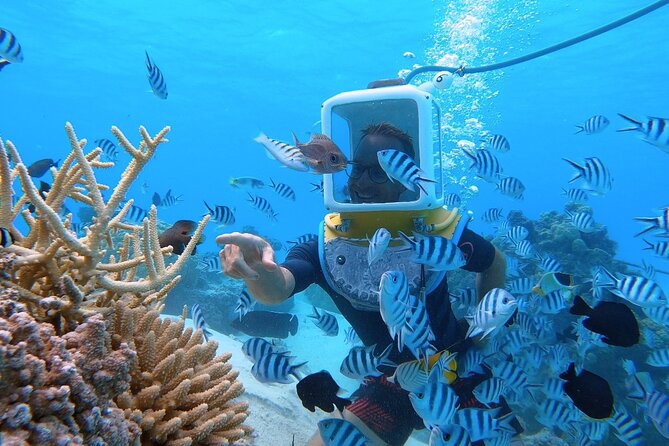
Inside the helmet, you can breathe normally. That’s huge if you’re worried about the under-helmet feeling. It also helps that the guides talk you through the process step by step, and they don’t rush. People mention feeling at ease once they’re geared up and in control.
Two practical notes to plan for:
- Your ears may feel pressure changes. Some people mention ear ache early on, and chewing gum is a common fix suggested during the activity. Bring gum if you want to be proactive.
- Peripheral vision is limited. Looking out of the helmet can feel different. If you feel disoriented, it helps to listen to the guide’s cues and keep your body oriented while you hold position as instructed.
Also, the walking is not a free-for-all. The area is roped off, and you’ll stay within a controlled zone. That’s not a drawback so much as a benefit. It’s the difference between exploring safely and going somewhere you shouldn’t.
The 30-minute lagoon floor walk: coral garden plus serious fish
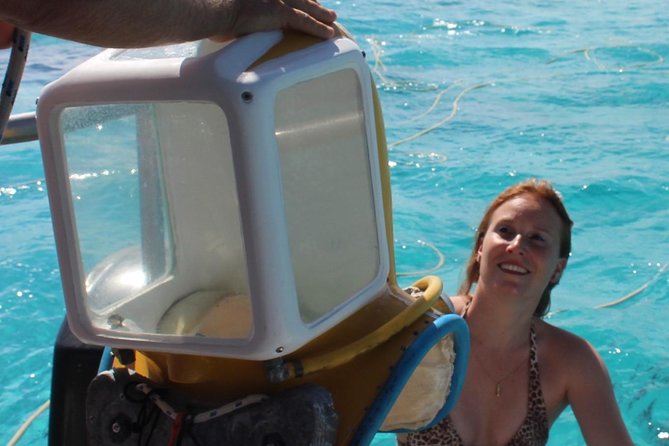
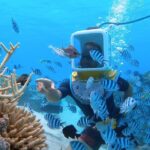
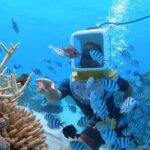
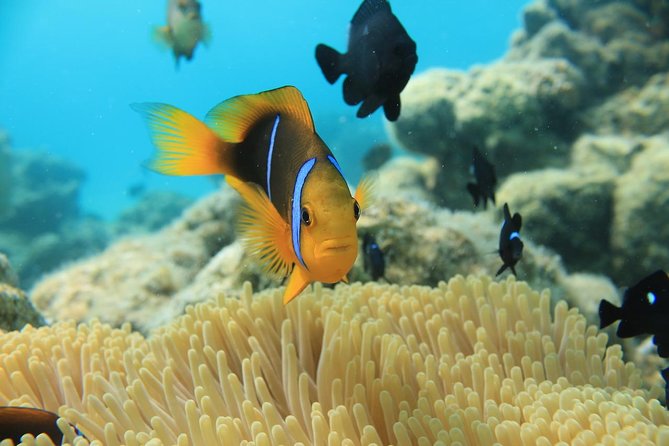
This is the heart of the day. After you descend to roughly 3 meters (around 10 feet), you’ll walk on the lagoon sand with a guide. The center of the experience is a coral garden where fish are used to feeding in the area.
What you can expect to see includes:
- parrot fish and butterfly fish
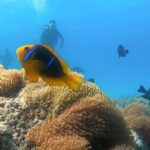
- clown fish
- moray eels
- stingrays (often close enough to feel like they’re part of your group)
- and lots of other tropical reef fish that swirl around you as you move
You’ll notice fish because your movement and the helmet create an easy visual target. More than one person says fish seem to swarm, like you’re walking through an underwater wonderland. The guides also help you locate interesting spots by showing what to look for—anemones are one example mentioned.
If you’re nervous about current or wind, don’t assume the experience becomes miserable. One review mentions wind and slight current, and the group used the rope to reduce being pulled around. The key is that the guides pay attention and help you maintain control in the water.
What the roped-off area means for your expectations
You are in an enclosed zone, so you’re not covering huge distances or chasing wildlife across the reef. But you get a higher chance of consistent sightings. You’re also protected from getting too far away from the guide or from the area best suited for the walk.
Think of it like: less wilderness, more a guaranteed, close-up reef visit.
Photos and the onboard camera: how you leave with more than memories
Bora Bora souvenirs are easy to find. The harder part is getting reef photos that look like the reef actually looked.
That’s why I like this part: the guides take pictures during your helmet walk using a high-definition camera. Photos are offered after the activity, right there at the end.
A few useful tips if you want great results:
- If you’re comfortable bringing one, a waterproof camera or even a GoPro can help you capture extra angles. One reviewer specifically recommends it for close-ups.
- Don’t fight the helmet view. Instead, let the guide help you position your body when they point out fish or coral.
Also, some crews use food to attract fish. People mention that bananas or bread can draw fish closer. If you don’t want to touch fish, you can simply watch—though the fish interaction is usually a huge part of the fun for many people.
Who this helmet walk is best for (and who should think twice)
This experience is one of the best matches for:
- Non-swimmers and first-timers who still want underwater time
- People who dislike snorkeling because they hate masks or goggles
- Families because it’s structured, guided, and not dependent on swimming ability
- Glasses wearers who want to avoid fitting issues with snorkel equipment
It’s also a good fit if you get anxious about open water. The helmet setup, the controlled depth, and the guidance reduce the uncertainty factor that makes some people hesitate.
Possible reasons to pause before booking:
- If claustrophobia hits you in enclosed spaces, the helmet could be uncomfortable at first.
- If you want maximum freedom and long underwater time, the walk is limited: about 30 minutes at shallow depth in a roped area.
- If you’re very sensitive to ear pressure, plan on gum and follow instructions closely.
In short: it’s built for comfort and access, not for the most extreme underwater adventure.
Price and value in Bora Bora
At $158.76 per person, it’s not the cheapest activity in Bora Bora. But it’s not random pricing either.
You’re paying for:
- the helmet and underwater-walk equipment
- trained professional guidance
- the boat transfer to the reef site
- and the included effort of taking high-definition photos
For many people, the value comes from what you avoid. You don’t need to learn snorkel technique, you don’t need scuba skills, and you don’t need to assemble your own reef plan for fish sightings. If you only have a few hours and you want a reliable underwater experience that works for non-swimmers, this often feels like the right purchase.
And the photo element matters. More than one review says the photo package is worth it. Even if you don’t buy everything, having the option right after the walk is convenient.
How to plan your day around this experience
You’ll want to give yourself some breathing room around timing. Pickup helps, and it sounds like a lot of days run smoothly, but one review notes a late pickup of around 40 minutes that was still workable.
To stay calm:
- Read any timing emails carefully if you’re using scheduled pickup.
- Build in a buffer so you’re not sprinting back to another commitment.
Also remember the activity depends on conditions in the lagoon. It requires good weather and safe sea conditions. The water can look fine from shore, but conditions underwater can differ. If it’s canceled for safety, you should expect a replacement date or a refund.
Should you book the Aqua Safari helmet underwater walk?
Yes, if your priority is a safe, close-up underwater experience without swimming or scuba skills. This tour is one of the simplest ways to get real reef time in Bora Bora, with a guided, controlled setup and plenty of fish action at shallow depth.
I’d especially book it if:
- you’re going as a family or with mixed swimming abilities
- you want something different from standard snorkeling
- you like the idea of photos captured during the experience
- you want the fish-and-coral moment with less stress than open-water activities
I’d think twice if you hate the feeling of helmets, you need tons of underwater time, or you expect a roaming reef adventure. For most first-timers and cautious swimmers, though, this is one of the most practical ways to see Bora Bora’s underwater world up close.
FAQ
Do I need to swim or have snorkeling experience?
No. The tour is designed for people with no diving or snorkeling experience needed.
How long do I spend underwater?
You spend about 30 minutes underwater.
How deep do you go during the helmet walk?
You’ll walk at around 3 meters deep (about 10 feet).
Is pickup available?
Pickup is offered.
Are photos included, or do I need to bring a camera?
An instructor takes photos during the activity with a high-definition camera, and the souvenir photos are offered at the end. You might also choose to bring a waterproof camera.
Is the group size small?
Yes. The maximum group size is 12 travelers.
Where does the tour start and end?
It starts at Ferry And Boat Point (F6VX+53X) in Bora-Bora and ends back at the meeting point.
Is the underwater walk affected by weather?
Yes. The experience requires good weather. If it’s canceled due to poor weather, you’ll be offered another date or a full refund.
What if I wear glasses?
The experience is described as a good option for people who cannot snorkel, including those who wear glasses, since you use the helmet instead of a mask.