REVIEW · KO PHI PHI DON
2 Days PADI Advanced Course from Phi Phi
Book on Viator →Operated by Blue View Divers · Bookable on Viator
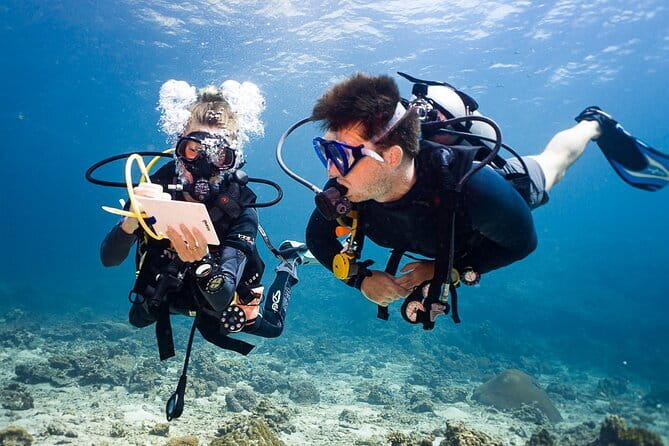
Two days later, underwater feels normal. I like the small classes (max 10) because it means you get real attention, and I also like the safety-first coaching that keeps you calm as you learn harder skills on the PADI Advanced Open Water program in Phi Phi.
One thing to factor in: the Phi Phi National Park underwater-site fees are not included. You’ll pay the rangers on the day, with the 2-day option listed as 800 THB.
In This Review
- Key highlights (worth planning around)
- Phi Phi Don makes an Advanced course feel more personal
- Price and what you’re really paying for
- Getting ready: eLearning the day before you hit the water
- Day 1 at Ko Bida Nok: learning with small-group focus
- Day 2 at Ko Phi Phi Le: deeper-water practice and 30 meters
- Safety habits you can feel in the way they teach
- The boat, the timing, and how they try to miss the crowds
- Marine life: what you might see, and how to not damage it
- Who should book this course (and who should pause)
- Booking reality check: weather and peace of mind
- Should you book the 2-day PADI Advanced in Phi Phi with Blue View?
- FAQ
- What is included in the 2-day PADI Advanced course?
- Are Phi Phi National Park underwater-site fees included?
- How big is the class group?
- Do I need to do eLearning before the course starts?
- Is this course recommended for asthma?
- What happens if the course is canceled due to weather?
Key highlights (worth planning around)
- Small group size (max 10): you’re not getting shuffled through a conveyor belt of buoyancy skills.
- PADI eLearning + certification fees included: less guesswork between home studying and course paperwork.
- Equipment and a dive computer rental included: you can focus on skills, not gear hunting.
- Extra fee to plan for: Phi Phi National Park fees are separate (800 THB for 2 days).
- Focused on conservation: the team teaches eco-friendly habits while you’re out on the water.
- Sites chosen to reduce crowding: the goal is to miss the busy routes when possible.
Phi Phi Don makes an Advanced course feel more personal
Phi Phi isn’t just a postcard place. It’s also a smart training base for an Advanced Open Water course, because you’re working from a real dive center with a setup designed for learning, not just sightseeing. The operator here leans hard into professionalism and safety, and it shows in how they run the program and how they talk about ocean-friendly diving habits.
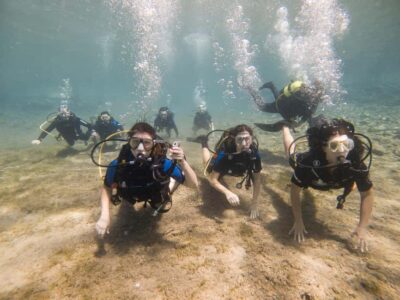
What I like most for you is the “small class” feel. With a maximum group size of 10, you spend less time waiting and more time practicing the exact skills you’re there to learn. And instructors such as Becca and Caroline get called out for being attentive and making people feel secure in the water, which matters a lot when the course asks you to go deeper than you may be used to.
There’s also an eco-minded angle that’s practical, not just a slogan. You’re not only shown coral and marine life—you’re taught how to protect fragile underwater ecosystems while you’re doing the training.
You can also read our reviews of more tours and experiences in Ko Phi Phi Don.

Price and what you’re really paying for
At $417.93 per person for a 2-day PADI Advanced course from Phi Phi, it’s not a “budget” activity. But it’s also not just a couple of fun underwater outings in disguise. You’re paying for structured training plus the key items that often cost extra on the island.
Here’s what’s included:
- PADI eLearning and the certification fees
- Scuba equipment
- Dive computer rental
- Lunch
- Coffee/tea at the center
- Basic insurance (basic redemption only policy)
- All fees and taxes from the operator side
The big add-on is the national park fee for underwater sites. You’ll need to budget that separately:
- 2-day option: 800 THB (paid to the rangers)
When you balance it out, the cost feels more like “training package value” than “tour price.” You’re not juggling rentals and admin on your own, and the computer rental is a nice help if you don’t already own one.
Getting ready: eLearning the day before you hit the water
The course doesn’t pretend you’ll be ready from scratch. Before the main training days, you meet your instructor to review the eLearning chapters so you’re not walking in blind. That’s a big deal on an island course, because it speeds up the time you spend actually practicing skills rather than stopping for basics.
Then, on the first morning, you’ll meet near Phi Phi Pier about 30 minutes before departure for a briefing. That briefing time matters. It’s where you confirm what you’ll do underwater, how you’ll manage depth goals, and what safety steps you’re using throughout the plan.
If you like a structured pace, this will suit you. If you’re the type who hates paperwork, you’ll still need to do the eLearning portion, but at least the course builds in a review session with an instructor.
Day 1 at Ko Bida Nok: learning with small-group focus
Day 1 is built around a real training site: Ko Bida Nok. The day isn’t just about going down and taking photos. It’s about applying the Advanced course concepts in a guided, safety-focused way.
You start with that pre-departure briefing near Phi Phi Pier. From there, the day runs long enough to feel like a full training day—about 5 hours listed for the day’s stop. Expect a mix of instruction, supervised underwater work, and time for you to get comfortable with the plan.
One thing I appreciate here is the way the operator frames learning. The team is safety-focused and professional, and instructors are known for boosting confidence while educating eco-friendly habits. That combo matters because Advanced training often asks you to be more aware of buoyancy control, depth management, and situational awareness.
Also, this center highlights having a training pool with a view. Even if you’re excited to skip straight to open water, a pool-style setup is a smart way to tighten up skills before you head out where it’s harder to fix things on the fly.
Day 2 at Ko Phi Phi Le: deeper-water practice and 30 meters
Day 2 shifts to Ko Phi Phi Le and is where the course tends to feel more “Advanced.” You begin at the pier just like Day 1, with a briefing before you go out for the deeper-water session.
On your first underwater session of the day, you’ll go to a maximum depth of 30 meters and work on comparing colors as depth increases. That sounds simple, but it’s the kind of sensory lesson that sticks. It helps you understand why depth affects how you see marine life and how your comfort and control need to change as the water column thickens.
Day 2 is listed at about 8 hours for the stop. That longer day usually means more structured stages: preparation, multiple guided underwater sessions, and time to review what you did and what you’ll improve next.
One review example notes that a diver even did their first night underwater session as part of the course. Night work can feel intimidating at first, but the consistent theme in feedback is that instructors keep you calm and guide you step by step.
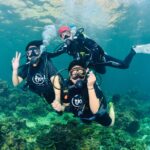
Safety habits you can feel in the way they teach
A course like this lives or dies on safety. Here, the center emphasizes safety & professionalism, and it’s not vague. You’re operating within an official PADI program, and you’re working with experienced PADI professionals who run the training with structure.
The operator is also officially set up as a 5* PADI dive center and is the first—and only—dive center in this area using the official PADI online program. That matters because it reduces random variation. You’re following a standard learning path, and your instructor isn’t freelancing the course content.
The small group size is your extra layer of safety. When there are fewer people, it’s easier for an instructor to notice if you’re over-squeezing your breathing, drifting off-plan, or getting tense. Multiple accounts praise instructors for making divers feel safe and giving clear guidance.
The boat, the timing, and how they try to miss the crowds
Phi Phi sites get busy. This operator is trying to avoid that problem. They aim to miss the crowd routes and sometimes choose underwater-site areas so you can get more space to practice and enjoy what you see.
They run longtail boat service as their specialty and also offer bigger boat options. Longtail boats can mean more flexibility when it comes to reaching sites, and bigger boats can reduce ride time stress when conditions allow.
Your day starts with a pier briefing, then you head out and come back to the same meeting point. That simple rhythm is easier than jumping between multiple pickup points, especially when you’re managing timing for two full training days.
Marine life: what you might see, and how to not damage it
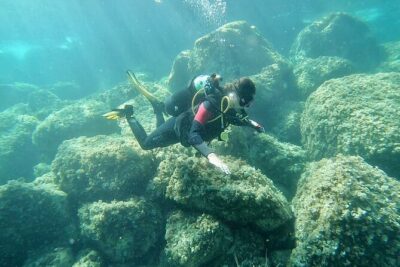
The goal here isn’t just to do the syllabus. The operator selects sites that show stunning marine life while respecting delicate underwater ecosystems. That’s a real difference in how you should think while you’re down there.
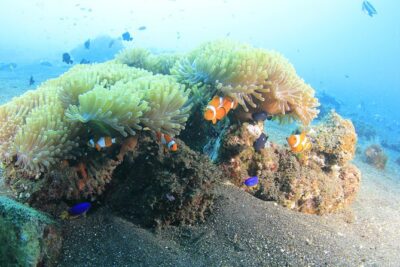
You may see the kinds of creatures that make people fall in love with the ocean: turtles and sharks are specifically mentioned in feedback, along with coral highlights. Even if your exact sightings vary day to day, the approach stays consistent: look, enjoy, and keep your movements controlled so you don’t kick up sediment or touch reef.
Eco-focused diving isn’t separate from the course skills. It’s built into how you’re trained. The instruction style aims to teach eco-friendly habits while you’re learning Advanced competencies, so you leave with a better technique and a better mindset.
Who should book this course (and who should pause)
This experience lists a moderate physical fitness level requirement. You’re also told it’s not recommended for travelers with asthma. If either of those applies to you, it’s worth checking with your doctor before booking.
This course is a great fit if:
- You already have the Open Water certification and want the next step
- You prefer guided structure and safety coaching
- You want fewer people and more attention in the water
- You care about conservation and want eco-friendly skills, not just check-the-box training
It may not be the best fit if you want a quick, casual day. This is a true Advanced course with eLearning and supervised underwater work across two days.
Booking reality check: weather and peace of mind
This activity needs good weather. If it’s canceled due to poor weather, you’ll be offered a different date or a full refund. That’s the key point to remember: you’re not gambling blindly.
Also, the booking terms are strict: it’s non-refundable and can’t be changed. So if your schedule is flexible, great. If it’s set in stone, be extra sure you can make it happen.
Should you book the 2-day PADI Advanced in Phi Phi with Blue View?
If you want an Advanced course that feels organized, safety-led, and not overcrowded, I’d book it. The price includes the important pieces—PADI eLearning and certification fees, equipment, lunch, a dive computer rental, and the training structure. The national park fee is the only clear extra cost you need to plan for.
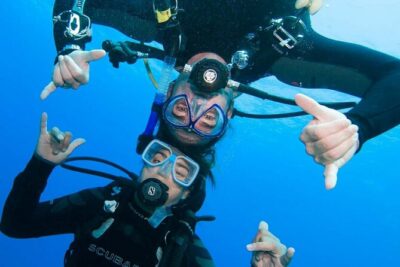
I’d book it especially if you appreciate instructors who build confidence instead of rushing people through. Names like Becca and Caroline show up with praise for being professional, attentive, and calm. And if you’re the type who wants to learn Advanced skills in a way that respects the reef, the operator’s conservation focus matches that goal.
Only pause if you have asthma or if you’re unwilling to pay the park fees on top of the package price. Otherwise, this is a solid choice for anyone serious about stepping up their underwater skills in a place that’s built for it.
FAQ
What is included in the 2-day PADI Advanced course?
It includes all fees and taxes, use of scuba equipment, lunch, PADI eLearning course plus certification fees, coffee/tea at the dive center, basic insurance (basic redemption only policy), and a dive computer rental.
Are Phi Phi National Park underwater-site fees included?
No. You pay Phi Phi National Park diving fees to the rangers. The 2-day fee listed is 800 THB (and 3-day is 1000 THB).
How big is the class group?
The experience has a maximum of 10 travelers.
Do I need to do eLearning before the course starts?
Yes. You meet your instructor to review the eLearning chapters before your training days so you’re prepared.
Is this course recommended for asthma?
No. It is not recommended for travelers with asthma.
What happens if the course is canceled due to weather?
If it’s canceled because of poor weather, you’ll be offered a different date or a full refund.