REVIEW · DUBAI
PADI Open Water Diving Course in Dubai for 3 Days
Book on Viator →Operated by Aladdin Lamp Tours - Dubai · Bookable on Viator
Three days to your scuba certification in Dubai. What makes this course interesting is the way it stacks confined water training first, then open-water sessions in the sea, all under PADI structure. I like that you can do the e-learning at home (or between sessions) so you aren’t burning your whole trip glued to a screen. I also like that your gear is provided and fitted for you, including the suit. The one real consideration: the sea portion needs good weather, so plan to be flexible.
I also appreciate the human touch. Instructors are often centered on Bashar (Boris), known for patient, professional teaching with strong support for complete beginners. This is a short, skill-heavy program, so you should be ready to learn fast—but not alone, especially with a maximum group size of 4.
In This Review
- Key highlights worth clocking
- Getting PADI Open Water certified in just 3 days
- Day-by-day flow: forms, briefing, fitting, then 3 training blocks
- Confined water training: the 5-skill session that builds real confidence
- Open-water sessions in the sea: four applications, not just one
- E-learning and the exam deadline: the easy part if you plan one day
- Equipment, suit fitting, and what’s actually included
- Meeting point, transfer to the training site, and start times
- The instructor factor: Bashar (Boris) and why small groups matter
- Price and value: what $430 really covers in practice
- Weather and reality: what to plan for in Dubai
- Who should book this, and who should pause
- Should you book this 3-day PADI Open Water course in Dubai?
- FAQ
- How long is the PADI Open Water course?
- What’s the training structure during the 3 days?
- Do I need to do the e-learning before arriving in Dubai?
- Is scuba equipment included?
- Where do we meet and when does the training start?
- What happens if weather is poor?
Key highlights worth clocking
- Small groups (max 4): you get more attention during the skill practice
- E-learning flexibility: do it before you arrive or between sessions, with exams finished before your last sea session
- Full gear provided: includes suit and appropriate scuba equipment with no extra charge
- Structured flow: forms and briefing → confined water training (5 skills) → sea training (4 sessions) → knowledge review
- Weather-dependent sea days: rescheduling or a full refund if conditions cancel the outdoor training
- Sustainability touch: water refill station, with an anti-plastic approach
Getting PADI Open Water certified in just 3 days
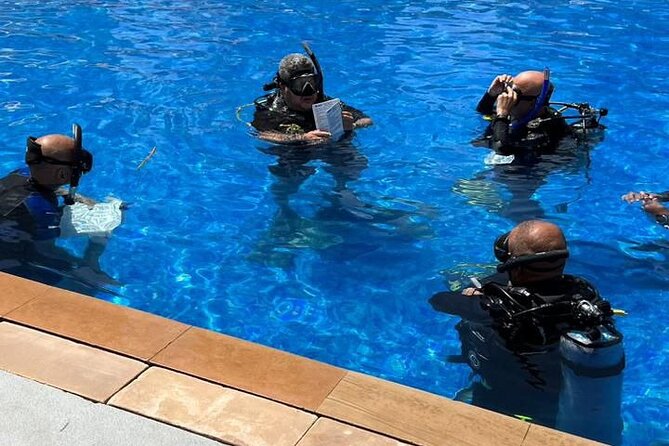
The big promise here is simple: you’ll work through the PADI Open Water steps in a tight 3-day window, and you should leave with the certification you came for. This format works well in Dubai because you can shift time slots, and you’re not stuck waiting days for the ocean part. You’ll start with forms, a course briefing, and equipment fitting. Then you move into the hands-on part right away.
What I like is that the course doesn’t treat beginners like they’re there to “watch first.” You do the basics, then you practice them—five confined water training skills in one session, followed by four open-water sessions in the sea in another session. After that, you finish with a knowledge review and congratulations (meaning: you wrap up the academic side too).
The timeline is also designed to protect your trip. You’re not required to sit through all the e-learning during the training days. You can complete modules and exams at home before you arrive. Or, if you need to, you can finish them during your time in Dubai. The only rule that matters: you have to complete the exams before your last sea session.
You can also read our reviews of more tours and experiences in Dubai.

Day-by-day flow: forms, briefing, fitting, then 3 training blocks
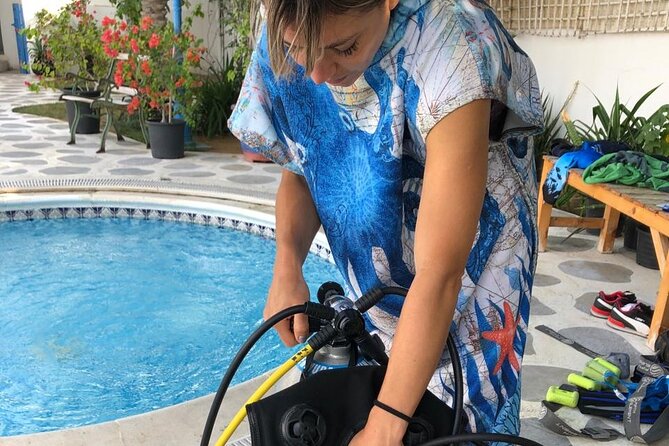
This course runs in a clear sequence. Expect the morning to start with the paperwork side: filling out forms, then getting a course briefing about how the training works and how your scuba equipment will fit and be used.
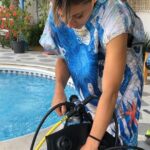
Next comes equipment fitting. This is not a small detail. If gear feels wrong, it changes everything—your comfort, your buoyancy control, and your confidence. Here, your equipment is provided by the operator, and the suit is included with no extra charge, which usually makes the whole setup smoother than chasing rentals at the last minute.
Then you get the first big practical block: confined water training. The course describes this as 5 training items done in one session. That’s the phase where you learn the “how” of scuba skills in a controlled environment—enough reps to get comfortable with your breathing, movements, and basic procedures.
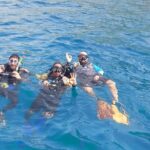
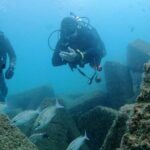
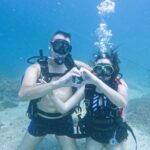
After that, you move to the sea training phase: four open-water sessions done in one session. This is where you’ll apply those skills with real water conditions outside the training area.
Finally, you do a knowledge review and get your completion confirmation. The goal isn’t just to get you to the water—it’s to make sure you understand what you did and why.
Confined water training: the 5-skill session that builds real confidence
Confined water training is often the make-or-break part for first-timers. You’re learning new gear habits while also getting used to the physics of being underwater. This course keeps it focused: 5 confined water training skills in a single session.
That structure helps because you’re not stretching practice out across many days. You’ll likely feel rushed if you show up without a basic mental readiness to work, but the upside is momentum. You’ll go from briefing and fitting into skill work quickly.
If you’re a complete beginner, this is where patience really matters. Multiple students praised Bashar (Boris) for being patient and supportive, especially for those who were new to scuba. That matters because beginners don’t just need instruction—they need reassurance while their body and brain adjust to the equipment and breathing pace.
Also, there’s a practical advantage for your schedule. If your e-learning isn’t fully done by the time you arrive, you still have time to finish modules and the exam as long as you meet the deadline before the last sea session.
Open-water sessions in the sea: four applications, not just one
The sea portion is structured as four open-water sessions in one sea day. That’s a good design for a short course. It gives you multiple attempts at applying skills without forcing you to spread sea training over several separate trips.
This is also where the weather matters most. The experience explicitly requires good weather. If the outdoor training is canceled due to poor conditions, you’ll be offered a different date or a full refund. In Dubai, weather shifts can happen, and the operator treats sea conditions seriously enough to change plans rather than push through unsafe conditions.
One more practical point: you should treat the sea day as the “exam day,” even if it’s not the formal exam. You’ll be expected to have completed the required e-learning exams before your last sea session. So if you’re tempted to rely on finishing everything on the morning of your final session, don’t. Build in time to finish exams earlier.
E-learning and the exam deadline: the easy part if you plan one day
PADI Open Water typically mixes online coursework with in-water training. What’s helpful here is how flexible the e-learning can be.
You can start the modules at home. Or you can finish during your time in Dubai, including between sessions. The operator also notes that this is usually easy to complete on your own time, and you can even finish the exam before you come.
The real rule is specific: you must complete all exams before your last sea session. That’s the line you don’t want to cross.
For your trip planning, I recommend treating e-learning like a “pre-flight checklist.” Pick a time before you arrive (if possible), then treat any remaining modules as a backup plan you can finish once you get to Dubai. This keeps you from getting squeezed by short-course timing.


Equipment, suit fitting, and what’s actually included
This is one of the stronger value points in the package. The course includes use of scuba equipment, and it also includes the suit as part of the provided gear. There’s no extra charge mentioned for the suit or equipment on your end.
You’ll also get all fees and taxes covered in the price. That matters because gear rentals plus local fees can quietly inflate the real cost of a “cheap” course. Here, the included items are broad enough that you can budget without guessing.
There’s also a small comfort detail: water refill station access, with an anti-plastic approach. It’s not a headline feature, but it’s the kind of thoughtful touch that keeps a short 3-day course feeling less wasteful and more practical.
What’s not included is meals. Breakfast and lunch are on you. For a 3-day course, that’s normal, but it does mean you’ll want to plan where you’ll eat between sessions and how you’ll handle hydration.
Meeting point, transfer to the training site, and start times
The meeting point is listed at 56RR+2MM – 546 Al Wasl Rd – Al Wasl – Dubai, United Arab Emirates. The activity starts at 10:00 am in the general schedule information, but there are also set availability slots at 9:00 am, 11:30 am, 1:30 pm, and 3:30 pm (described as the last group). Because of that, the exact start time can shift depending on your booking slot.
Also note an important instruction: you need to contact the operator to reconfirm the time and date for your confined water session. They’ll also help you proceed with your PADI registration form. This step is worth doing promptly. It reduces the chance of arriving at the right location but the wrong session window.
Transportation is partly handled. There’s one-way private transfer from Dubai to the scuba training site included. The experience ends back at the meeting point, which means you’ll still need to manage your own return plans after that end time.
The location is near public transportation, so you’re not completely dependent on a car or ride-hailing. Still, for a short course, the included transfer for the outbound leg is a real convenience.
The instructor factor: Bashar (Boris) and why small groups matter
Instruction quality is the difference between “cool experience” and “I feel safe enough to learn.” In the feedback you can see a clear pattern: Bashar (Boris) gets praised for being patient, professional, and supportive—especially for people who are completely new.
That lines up with what your body needs in early scuba skills. You’ll be learning unfamiliar procedures while wearing new equipment. If your instructor moves too fast, or doesn’t explain clearly, you lose confidence. If the instructor is patient, you can focus on technique instead of panic.
There’s also evidence that Bashar teaches other PADI specialties, including Enriched Air Nitrox and rescue diver training. That suggests he’s comfortable with more advanced course material too, not only entry-level basics. For you, that often translates into better explanations and stronger safety habits.
Finally, the maximum group size of 4 is a quiet advantage. Many short courses are taught in bigger groups. Here, with a cap at four, you’re more likely to get individual attention while practicing skills.
Price and value: what $430 really covers in practice
At $430 per person for a 3-day PADI Open Water course, the headline number can look either reasonable or steep depending on what you compare it to. The key is what’s actually included.
Your price covers:
- use of scuba equipment
- three practical classes
- all fees and taxes
- PADI e-learning and exam
- transfer from Dubai (one way) to the training site
- water refill station approach (anti-plastic)
Your price does not cover breakfast and lunch.
So what does that mean for value? For first-timers, the biggest cost risk usually comes from piecing together “course plus rentals plus paperwork plus local fees.” Here, those items are bundled. That makes the price more predictable.
Also, the course includes e-learning and the exam. If you’d have to pay separately for the online component elsewhere, that’s a meaningful portion of the total cost.
Is it perfect value? It’s best value if you can complete the e-learning in the flexible way described (either at home or between sessions). If you wait too long to do the modules, you might feel rushed on your final day. Still, the course is built around a specific exam deadline before the last sea session.
Weather and reality: what to plan for in Dubai
This experience requires good weather. That’s not a polite disclaimer. It’s part of the deal because the sea training depends on conditions. If sea training is canceled due to poor weather, you’ll either get a different date or a full refund.
In practical terms, you should keep your Dubai schedule flexible. If you’re the type who has a museum tour booked for every hour of the day, this course might feel like a stress test. If you can plan the rest of your days with some breathing room, you’ll handle schedule shifts better.
Also, remember that this is a 3-day course. Even if the structure is set, you want to be mentally ready to do your best work on each day. Short-course pacing doesn’t leave room for half-doing skills.
Who should book this, and who should pause
This course is a strong fit if:
- you want PADI Open Water certification on a short timeline
- you’re okay learning in a structured format with clear steps
- you like the idea of e-learning flexibility (home or between sessions)
- you’re a beginner who wants patient instruction and small-group attention
It might be less ideal if:
- you can’t change plans if weather cancels the sea portion
- you don’t want to manage e-learning and an exam deadline
- you need meals to be included in the package (breakfast and lunch aren’t included)
If you’re traveling solo, this can still work well. Small-group teaching and professional support help. If you’re traveling with a friend, the group size cap at 4 means you’ll still likely get attention during practical skills.
Should you book this 3-day PADI Open Water course in Dubai?
I’d book it if you want a straightforward path to a real scuba certification without wrestling with gear rentals or guessing at hidden costs. The biggest wins for you are the bundled inclusions (gear, e-learning and exam, fees, transfer) and the structured training flow from confined skills to sea sessions. Add in the small group size and the patient teaching reputation around Bashar (Boris), and it’s a strong package for first-timers.
I’d think twice if your schedule is tight to the point of no-flex. Weather can change. The sea sessions are the key part, and the course is honest about needing good conditions.
If you can handle the e-learning timeline and keep one day flexible for the ocean conditions, this looks like a smart, efficient way to earn your PADI Open Water certification in Dubai.
FAQ
How long is the PADI Open Water course?
The course runs for 3 days, with training structured across confined water practice and sea sessions, then a knowledge review.
What’s the training structure during the 3 days?
You start with forms, a briefing about the course and scuba equipment, and equipment fitting. Then you do 5 confined water training skills in one session, followed by 4 open-water sessions in the sea in one session, and finish with a knowledge review.
Do I need to do the e-learning before arriving in Dubai?
You can complete PADI e-learning modules before your trip or between training sessions during your time in Dubai. The important rule is that you must finish all exams before your last sea session.
Is scuba equipment included?
Yes. The course includes the use of scuba equipment, and equipment is provided from the operator side including the diving suit, with no extra charge.
Where do we meet and when does the training start?
The meeting point is 56RR+2MM – 546 Al Wasl Rd – Al Wasl – Dubai, and the start time is listed as 10:00 am. The operator also runs set group availability windows, so you should reconfirm your exact confined water session time.
What happens if weather is poor?
The experience requires good weather. If it’s canceled due to poor weather, you’ll be offered a different date or a full refund.