REVIEW · LANZAROTE
Museo Atlantico: Diving Class for Non-Certified Divers
Book on GetYourGuide →Operated by Atlantis Diving Lanzarote · Bookable on GetYourGuide
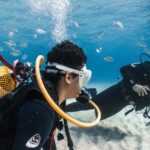
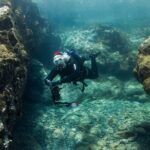
Scuba art underwater is a first for me. This 6-hour experience in Lanzarote turns underwater training into a real underwater art museum visit, with SSI-led guidance and sculptures by Jason deCaires Taylor.
I love how the team focuses on feeling safe fast: clear rules, tight supervision, and practical coaching for non-certified first-timers. I also like the value add of included equipment plus free photos and videos, so you leave with proof beyond your memory.
One consideration: you have to fully understand the instructor language (Catalan, Spanish, or English), and there’s a medical questionnaire on site. If you can’t follow the safety briefings, they won’t take you in the water, even if you booked.
In This Review
- Key highlights at a glance
- Why Museo Atlántico feels different from a regular first-timer course
- Price and time: what $176 buys you in real terms
- The meeting point setup: planning your morning without stress
- Getting ready: what to bring (and what not to)
- Morning session at Puerto del Carmen: your skills, your control, your first fish
- Transfers and the Playa Blanca stop: don’t underestimate the timing
- The Museo Atlántico session: Jason deCaires Taylor’s sculptures up close
- Safety and instructor support: what the instructor ratio means for you
- What’s included (and where you might spend extra)
- Who should book this course at Museo Atlántico
- Should you book this Museo Atlántico scuba training course?
- FAQ
- How long is the Museo Atlántico scuba training experience?
- Where does it start and end?
- Do I need prior scuba certification?
- What’s included in the price?
- What depth will I reach during the training?
- What language will the instructor teach in?
- Is there a medical questionnaire?
- What should I bring?
- Do I need to wait before flying?
Key highlights at a glance
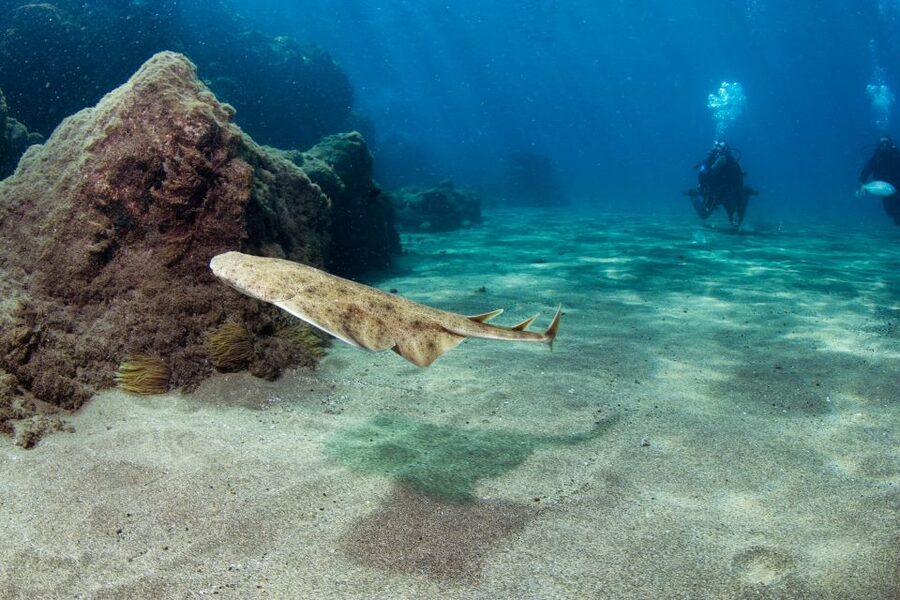
- Two-part schedule: a morning training session plus an afternoon visit to the Atlantic underwater museum
- Small group coaching: maximum two students per instructor for closer attention
- Skills built for first-timers: practice that tops out around 12 meters
- Jason deCaires Taylor sculptures: see the art during the museum session
- Boat Maresia: you’ll head out to the museum on the Maresia
- You keep the memories: included equipment, and free photos and videos
Why Museo Atlántico feels different from a regular first-timer course
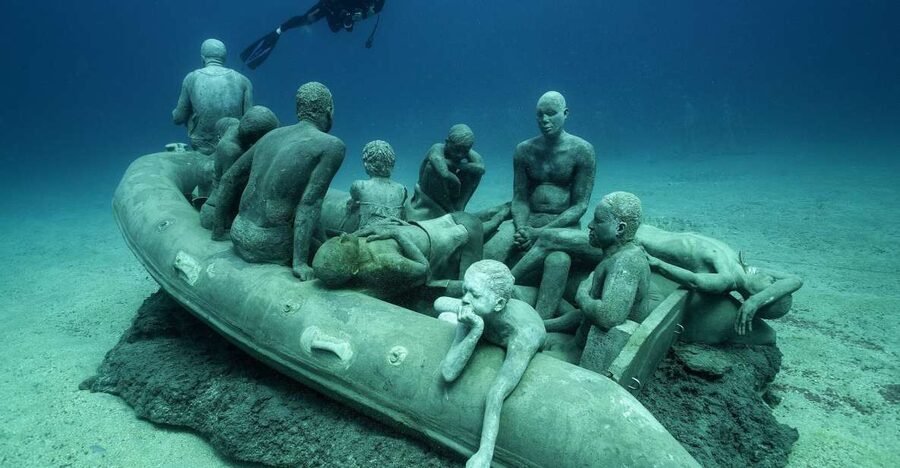
Most intro scuba experiences teach you the how—buoyancy, breathing, a calm checklist. This one teaches the how, then gives you something visual to look at. You’re not only practicing control underwater; you’re also staring at art below the Atlantic, including the work of Jason deCaires Taylor.
That’s what makes the day memorable. The experience is built around two separate underwater sessions in one day, and the second one is specifically about the museum setting. The art changes your perspective. Instead of thinking about your gear the whole time, your brain gets to relax and start noticing fish, light, and the sculptures themselves.
And because it’s an SSI Basic Diver-style program, you’re not just watching someone else handle the water. You’re working through essential skills with certified instructors, with safety built in from the start.
You can also read our reviews of more tours and experiences in Lanzarote.
Price and time: what $176 buys you in real terms
The price is listed at about $176 per person for a 6-hour outing. On paper, that might look like a premium compared to a short “try it once” session—but here you’re getting a full coaching arc plus the museum experience.
You’re paying for:
- Two guided underwater sessions in one day (training first, museum second)
- Included equipment so you don’t have to rent gear separately
- SSI-focused instruction with certified professionals
- Full insurance for the activity
- A digital course diploma at the end
- Free photos and videos, which can be hard to budget for on your own
The time breakdown matters too. You’re not stuck in a single pool-style lesson or a quick, shallow taste. The day includes a morning session and an afternoon session, with transfers between locations. That structure is part of the value.
The meeting point setup: planning your morning without stress
You’ll meet at Atlantis in Lanzarote, and the day runs back to the same meeting point. There’s no hotel pickup, so you’ll want to plan how you’ll get there and back on your own.
The good news: the group stays small—limited to 8 participants—and the instructor-to-student ratio is tight. That usually means you’re not standing around waiting your turn while someone else gets coached. Instead, you get more hands-on attention during preparation and in-water practice.
For the logistics-minded traveler, this is a straightforward format:
- short van rides between stops
- scheduled practice and briefing blocks
- a final return to the starting point
You’ll want to arrive with everything you need so you can focus on the water, not last-minute scrambling.
Getting ready: what to bring (and what not to)
This activity keeps the day simple, but it does ask you to show up prepared.
Bring:
- Swimwear
- A change of clothes
- A towel
Not allowed:
- Alcohol and drugs
Also be ready for the on-site medical step. You’ll need to complete a medical questionnaire before you start the scuba sessions. If you’re anxious about whether you qualify, it’s worth reviewing your personal situation with a professional before you travel. If you show up and the form flags a concern, the safe choice is always to delay or skip.
And since the instruction is in Catalan, Spanish, or English, you should book based on what you can actually understand during safety briefings—not just what you can “get by with.”
Morning session at Puerto del Carmen: your skills, your control, your first fish
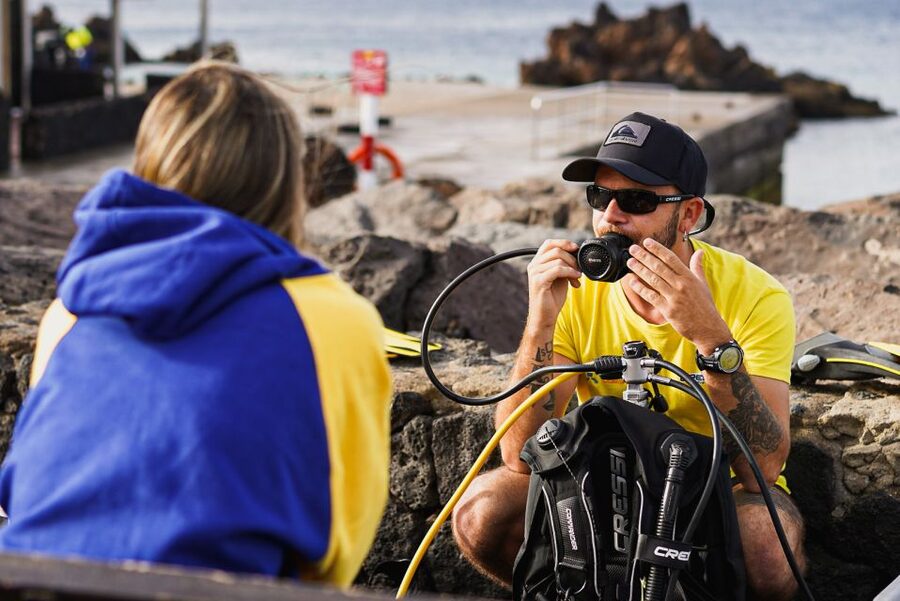
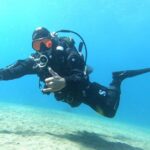
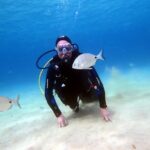
The day starts with a short transfer, then you head to Puerto del Carmen for the morning scuba session. Plan on about 2.5 hours there, which includes prep, instruction, and a long practice block.
Here’s the pace:
- You start with about a 20-minute lesson focused on essential scuba rules for non-certified participants.
- Then you go into the first long underwater practice session, listed at roughly 55–60 minutes.
- The target depth for this first session is until around 12 meters.
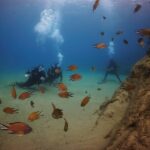
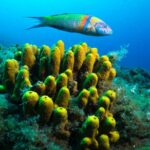
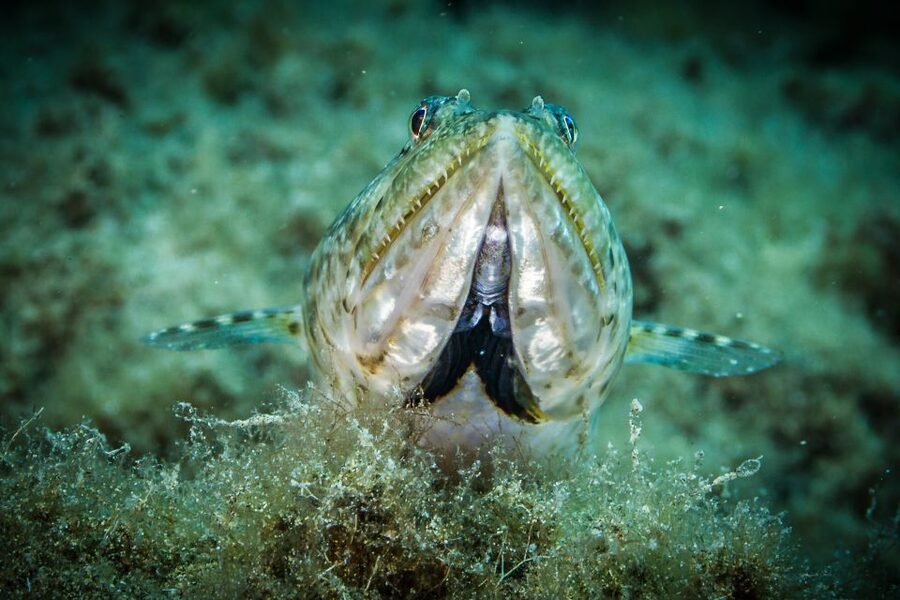
- You also get time for the fun part: looking at marine life while you practice.
I like how this structure works for first-timers. The quick theory block is long enough to set expectations, but not so long that you spend the whole day waiting. And that first long practice window is where you learn to coordinate breathing, body position, and calm decision-making—while still getting to see fish.
A useful mindset: treat the morning as skill-building, not performance. If you spend the whole time trying to prove you’re doing everything perfectly, you’ll miss the underwater world. The better approach is to focus on basics—slow breathing, stable body position, and listening closely to your instructor cues.
Transfers and the Playa Blanca stop: don’t underestimate the timing
Between the morning location and the museum, the schedule includes van time. You’ll have a transfer segment of about 30 minutes, and later there’s another van segment tied to a stop near Playa Blanca for about 30 minutes.
This likely gives you time to rinse off, regroup, and reset between the two underwater sessions. It’s also a good point to think practically about comfort. You’ll be in a wet gear cycle, so plan to hydrate and take a little personal space when you can.
One thing to remember: you need 24 hours between the water activity and flying. So if you’re doing a quick getaway schedule, check your return flight timing now—don’t treat it as something you’ll handle at the last minute.
The Museo Atlántico session: Jason deCaires Taylor’s sculptures up close
After lunch-time transit, you’ll head to Museo Atlántico in Lanzarote for the museum experience. The museum session is listed at about 2 hours on site.
Before the second underwater session starts, the instructor gives you a briefing about the museum. That matters. You’re not just learning how to handle equipment—you’re also learning how to look responsibly at the environment you’re visiting.
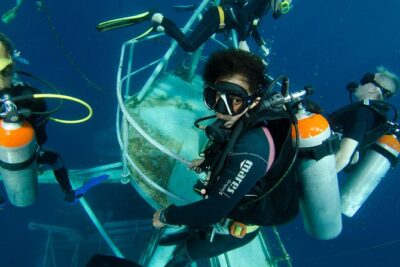
Then it’s time to get into the water for the museum-focused session, and this part includes a key detail: you’ll head out on a boat called Maresia. That adds a “day trip” feeling to the afternoon, even though the heart of it is under the surface.
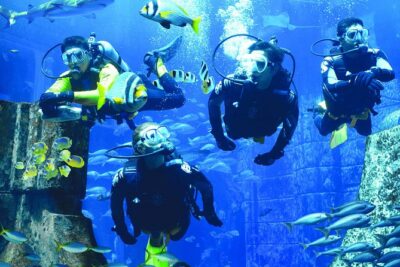
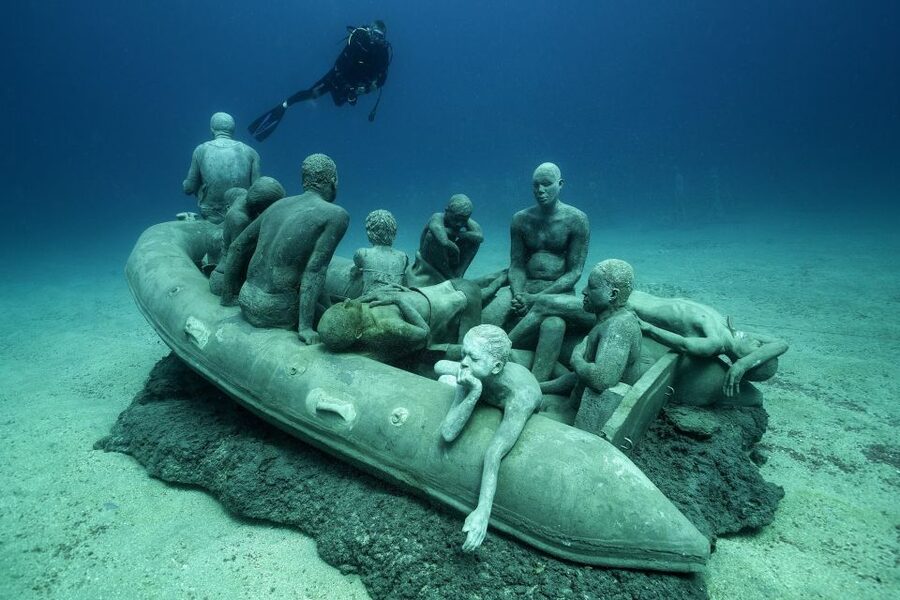
What makes this portion special is the art. The museum features underwater sculptures by Jason deCaires Taylor, and you’ll see them during the session rather than as something you only read about on land.
Practical note: the whole point of scuba training is safe movement and controlled breathing, so you’ll still be thinking about technique. But the difference is that now you’re also following shapes and forms. Art gives you something to focus on that isn’t just your fins and your gauge.
I find that combination helps first-timers enjoy the experience more. You’re more likely to stay relaxed when the underwater world has clear visual anchors—fish, light patterns, and the sculptures themselves.
Safety and instructor support: what the instructor ratio means for you
Safety is a major part of why this course is worth your time. You’re not handed a tank and wished luck. The program is designed for non-certified participants, with certified professionals from SSI.
Two important details show up in the information:
- it’s a small group
- there’s instructor coverage close to the students (listed as a maximum of two students per instructor)
That level of attention is exactly what you want for a first-time underwater education. If you get confused about a skill, you don’t have to wait for a distant instructor. You can get corrections quickly, while things are still fresh in your head.
You also start with essential rules. In your first block, you’ll spend time learning the basics before you go into the longer practice session. That sequencing reduces panic, because you’re not trying to learn everything while you’re already task-loaded underwater.
If you’re someone who gets anxious in new environments, this is the kind of structure that usually helps: short instruction, clear goal for the water practice, and ongoing supervision.
What’s included (and where you might spend extra)
This course is pretty plug-and-play for your first scuba day. Included items:
- all necessary scuba equipment
- one professional instructor for the group (and a close ratio)
- one long training session plus one museum session
- full insurance for the activity
- a digital course diploma
- free photos and videos
Where you might spend time or money:
- getting to and from the meeting point (since hotel pickup/drop-off isn’t included)
- changing clothes and drying time (bring your basics, not just swimwear)
- travel planning around the “no flying for 24 hours” rule
If you don’t want to hassle with rentals or extra vendors, this package is easy to appreciate. The included equipment is a big deal for first-timers, because choosing the right fit on your own can be surprisingly annoying.
Who should book this course at Museo Atlántico
This is a great match if you:
- are curious about underwater art as part of a real skills course
- want SSI-style instruction with certified professionals
- prefer a small-group setting with more direct coaching
- like the idea of two underwater sessions in one day (training first, then museum art)
It’s also a practical way to experience Lanzarote beyond just the beach scene. You get the water, you get the art, and you get a full day outside.
But it’s not for everyone. The information says it’s not suitable for:
- children under 10 years
- pregnant women
- people with heart problems
- people with epilepsy
If any of those apply to you, don’t try to “ask around” locally—stick to the stated suitability rules. Safety comes first.
Language matters too. You must be able to fully understand the language you select for instruction, because the provider won’t compromise on safety. If you’re not confident in comprehension during safety briefings, you should choose a language you really understand.
Should you book this Museo Atlántico scuba training course?
I’d book it if you want your first underwater training to include a strong reason to stay present. The museum setting makes the day feel like more than a checkbox. You’ll practice skills, yes—but you’ll also get to see Jason deCaires Taylor’s sculptures below the Atlantic, with a structured plan and certified instruction.
I’d skip it if you’re very language-limited, you’re unsure about the medical questionnaire, or you can’t meet the “24 hours before flying” timing. Also, if you’re traveling with an expectation of total freedom underwater, this is coaching-focused. It’s guided and structured for safety, not a casual sightseeing swim.
If you do book, my best advice is simple: show up early, follow the gear and briefing instructions closely, and treat the first underwater practice session as training—not a test. That mindset makes the museum portion way more enjoyable.
FAQ
How long is the Museo Atlántico scuba training experience?
It runs for about 6 hours, and the schedule depends on available starting times.
Where does it start and end?
It starts at Atlantis Lanzarote (Atlantis Diving Lanzarote) and ends back at the same meeting point.
Do I need prior scuba certification?
No. It’s designed for non-certified participants and includes a course-style training structure.
What’s included in the price?
Equipment, instruction with certified professionals, one long training session and one museum session, full insurance, a digital course diploma, and free photos and videos.
What depth will I reach during the training?
The first long training session is listed as going until around 12 meters.
What language will the instructor teach in?
Instructors teach in Catalan, Spanish, and English. You must be able to fully understand the selected language for safety briefings.
Is there a medical questionnaire?
Yes. You must complete a medical questionnaire on-site before you can start the scuba sessions.
What should I bring?
Bring swimwear, a change of clothes, and a towel.
Do I need to wait before flying?
Yes. The guidance is to leave 24 hours between the water activity and flying.