REVIEW · ST PAUL S BAY
Malta St Pauls Bay: PADI Discover Scuba Diving Experience
Book on GetYourGuide →Operated by New Dimension Scuba · Bookable on GetYourGuide
A quick way to feel Scotland Bay underwater. This PADI Discover Scuba session in Malta’s St Pauls Bay is designed for first-timers, with online theory first and guided coaching once you’re in the water. I like that you get a small group setup (max 3 people), so the instructor can spend real time correcting your breathing and body position.
What I also really liked is the pace: calm, patient instruction and a house-reef start with shallow skill practice before you move on to the open-water part. The main thing to consider is health and age rules are strict, so you’ll want to check the medical screening carefully before you book.
In This Review
- Key Things That Make This PADI Session Work Well
- Why St Pauls Bay Is a Great Place to Try Scuba in Malta
- Online Theory First: Your Head Start Before You Go In
- Meeting New Dimension Scuba in St Pauls Bay
- Gear Orientation and Pre-Underwater Briefing: The Part You Should Take Slow
- House Reef Skills: Shallow Practice That Builds Confidence
- The Open-Water Swim Around Malta’s Underwater Seascapes
- Optional Second Discover Scuba Session: A Bonus If You Want More
- Instruction Style: Safety-First Without Feeling Stiff
- Price and Value: What $88 Buys You in Real Terms
- What You Should Bring (and What You Should Skip)
- Timing, Group Size, and English-Language Instruction
- Who This Experience Is Best For (and Who Should Think Twice)
- Practical Tips to Have a Better First Underwater Session
- Quick Decision Check: Should You Book This?
- FAQ
- How long is the experience?
- Do I need to complete online theory first?
- What should I bring with me?
- Is it suitable for kids?
- How deep can I go?
- What group size and language should I expect?
Key Things That Make This PADI Session Work Well
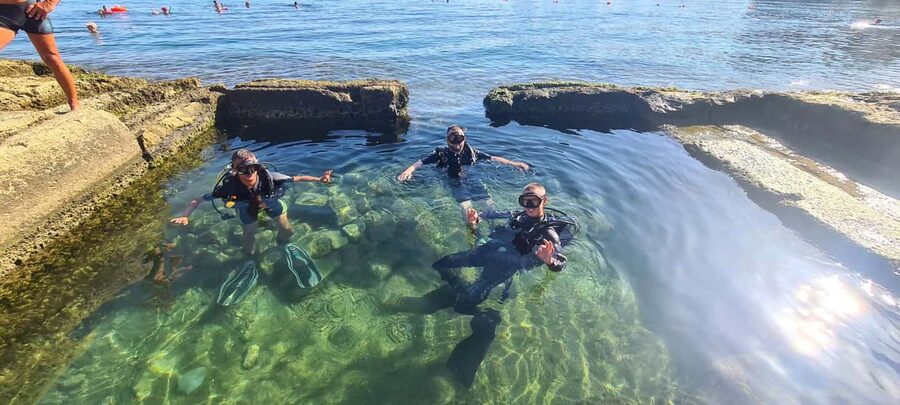
- Online theory before you arrive, so you’re not learning everything for the first time underwater
- Small group size (up to 3), which usually means quicker fixes and less waiting around
- House reef with shallow skills first, then a guided open-water swim
- All equipment provided, so you only need essentials like swimwear and a towel
- Safety-focused instruction led by an English-speaking PADI instructor
- Optional second Discover Scuba session (separate dive site), with a stated max depth of 12 meters
Why St Pauls Bay Is a Great Place to Try Scuba in Malta
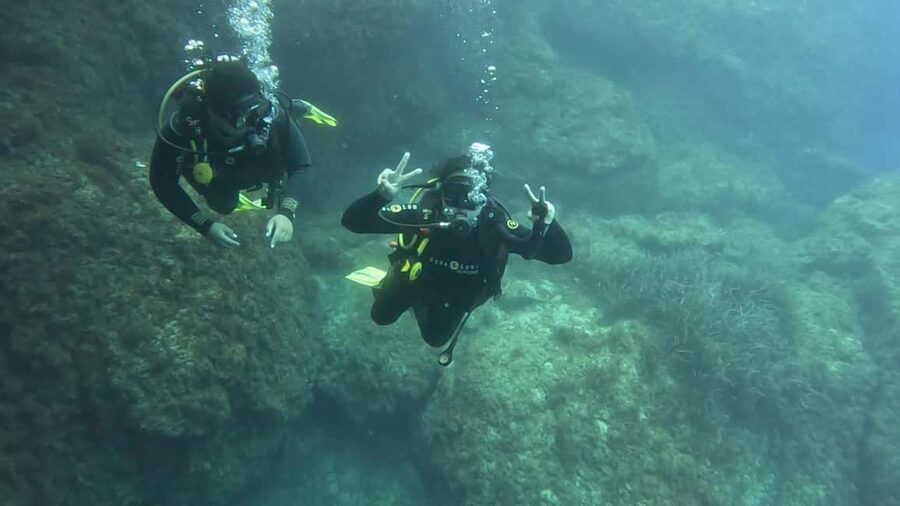
St Pauls Bay is a smart choice for a first underwater experience. It’s close to dive operations, and you’ll be working from a local house reef rather than doing a long transfer before you even feel comfortable. That matters. When you’re new to scuba gear, the fewer moving parts you have before going underwater, the better.
The format also feels built for real beginners. You start with online theory before you show up, then you get gear fitted and a briefing at the dive center. After that, the training flow is simple: shallow skill practice, then a guided open-water look around Malta’s underwater scenery. You’re not expected to be an expert. You’re expected to learn, relax, and follow instructions.
Also, the operator’s group size is tiny. With only up to 3 participants, you’re far less likely to feel rushed or ignored when something doesn’t click right away. It’s a big deal for confidence.
You can also read our reviews of more tours and experiences in St Paul S Bay.
Online Theory First: Your Head Start Before You Go In
One of the best parts of this experience is the rule that you complete the online theory before the activity. That means when you arrive, you can focus on the hands-on steps instead of trying to learn how scuba works from scratch in front of everyone.
This pre-work typically covers the fundamentals you need to understand what you’ll do and why you’ll do it. The practical result: your in-water time can focus on correct breathing, basic buoyancy control, and safe movement. And since you’re doing a guided tour with a PADI instructor, you’re also likely to get questions answered fast because you already have the background.
For you, this creates less stress. You’re not starting from zero the moment the water starts. Instead, you’re continuing a story you began at home.
Meeting New Dimension Scuba in St Pauls Bay
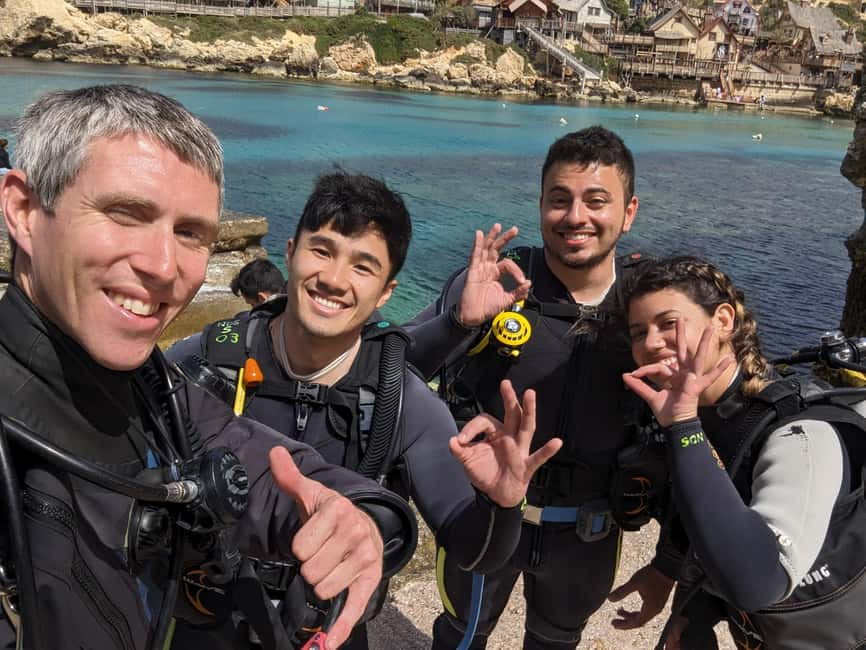
Your arrival point is New Dimension Scuba. Look for the grey and yellow logo above the door. It’s just up the hill from the swimming pool and in front of the tower.
That’s the kind of detail that saves time on a Malta day when you’re juggling weather, parking, and the timing of your small group. If you’re coming straight from another activity, I’d still give yourself a little cushion to find the door and get changed without feeling rushed.
Gear Orientation and Pre-Underwater Briefing: The Part You Should Take Slow
Once you’re at the dive center, you’ll get an equipment orientation and a briefing before you enter the water. This is where you should pay attention, even if you think you already understand your gear.
Here’s what you can expect from this kind of setup:
- Gear fitting and a quick walk-through of what each piece does
- Safety instructions and the plan for your session
- Expectations for calm, controlled movement (especially important in the shallow practice area)
This matters because scuba is more about coordination than strength. If you move correctly and breathe steadily, everything usually feels smoother. If you fight the process, it can feel harder than it needs to be.
Because this experience is built for first-timers, instructors are set up to keep the tone calm and patient. One of the most praised elements of this session is that teaching style.
House Reef Skills: Shallow Practice That Builds Confidence
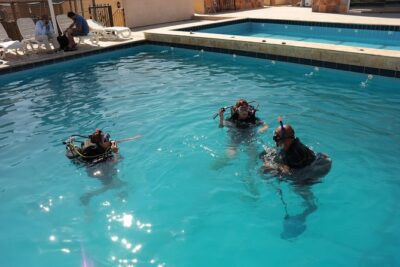
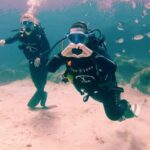
Your session starts on the house reef, and that sequence is one of the smartest parts of the plan. You begin with shallow confined skill practice. Only after you’ve done those basics do you head out further for the open-water part.
That structure helps you in two ways:
- You learn the mechanics where you can stay relaxed and stable.
- You get the instructor’s feedback while conditions are still predictable.
If you’ve ever imagined what it feels like to breathe underwater, the first time usually comes with nerves. The shallow skills part is designed to get that out of the way early, so you’re not spending the best moments of the experience trying to figure out what your body is doing.
And since the group is small, you’re not stuck waiting while someone else finishes basics. You stay in the flow.
The Open-Water Swim Around Malta’s Underwater Seascapes
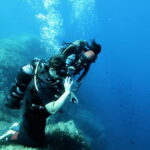
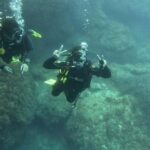
After the shallow practice, you move on to the guided open-water portion. This is where you get the payoff: a look at Malta’s underwater world with a PADI instructor.
Even without you needing to be an experienced diver, you’ll be guided through the experience so you can focus on what you came for—seeing and experiencing the underwater scenery. The operator promises guided exploration of local reef environments, which is typically where first-timers find the best balance of calm conditions and interesting marine life.
Two practical tips for this phase:
- Concentrate on slow breathing and gentle body movements. If you think too hard, your breathing often speeds up.
- Don’t reach for things. You’ll be instructed that touching marine life isn’t allowed, and it’s also better for you and the environment.
Optional Second Discover Scuba Session: A Bonus If You Want More
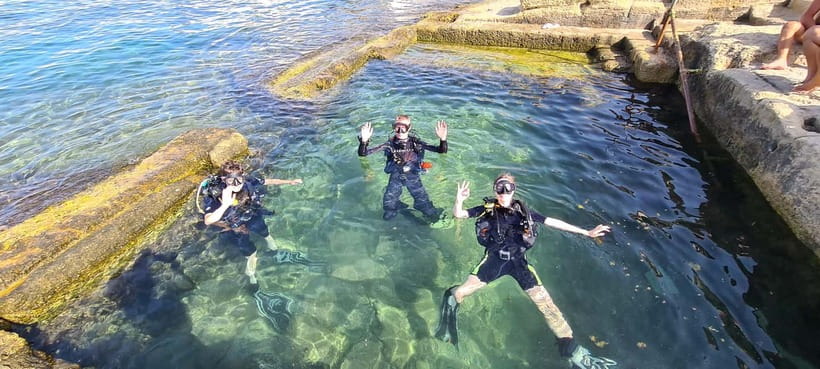
After your first introductory Discover Scuba experience, you can complete a second Discover Scuba session with your PADI instructor. The second option can happen at another dive site, and it has a stated maximum depth of 12 meters.
A key consideration: the main session duration is listed as 150 minutes, so if you add a second session, plan your day for more time. Ask about timing when you book, especially if you’ve got other Malta plans that afternoon.
The upside of doing a second session is simple. You get another chance to practice what you learned the first time—often where people feel the most confident growth.
Instruction Style: Safety-First Without Feeling Stiff
This experience is explicitly centered on safety and enjoyment. You’re working with a PADI instructor, and the overall coaching approach is calm and patient, with emphasis on your personal control and comfort.
The best part for you is that small group size makes instruction feel personal. Instead of competing for attention, you get feedback while you’re still learning. That can be the difference between an experience that feels confusing and one that feels fun.
If you’re worried about feeling awkward in gear or slow with new steps, this format is built to reduce that risk.
Price and Value: What $88 Buys You in Real Terms
The price is listed at $88 per person for about 150 minutes.
What you get for that money is more than just someone taking you in the water:
- Online theory completed before the activity
- Equipment orientation and a pre-underwater briefing
- All equipment needed for your scuba session
- A guided underwater tour on a local reef
What you don’t pay extra for is also a practical win. Many first-timer activities charge for gear rentals, but here the essentials are included. You mainly bring your own clothing and basics: swimwear, a towel, and water to drink.
What to keep in mind for value: this is limited to a very small group, so you’re paying for individualized coaching and a beginner-friendly training plan. If you’re going solo or as a pair, you’ll also appreciate that you’re not lost in a crowd.
What You Should Bring (and What You Should Skip)
You only need a few things:
- Swimwear
- Towel
- Water
That’s refreshingly simple. If you’re traveling light, this cuts down on packing stress.
What to avoid:
- Alcohol and drugs are not allowed
- You’re not allowed to touch marine life
Before you go, make sure you can move comfortably in swimwear and that you can dry off quickly afterward. Many people underestimate the “after” part of getting wet, changing, and getting back to their day.
Timing, Group Size, and English-Language Instruction
The instructor is listed as English, and the group size is limited to 3 participants. Duration is 150 minutes, with checkable start times.
This setup is great if you like clear structure and a short day. You get the experience without turning it into an all-weekend project. It also means the instructor can manage your learning pacing without rushing.
If you’re booking during a travel window when you have multiple activities planned, the 150-minute duration makes it easier to fit in.
Who This Experience Is Best For (and Who Should Think Twice)
This is for people who are medically fit to dive and at least 10 years old. It also lists not-suitable guidance that includes children under 14, so if you’re traveling with kids, check eligibility carefully before you assume it’s appropriate.
It’s not suitable for:
- Pregnant women
- People with back problems
- People with heart problems
- People with respiratory issues
- People with epilepsy
- People with diabetes
- People with a cold
- People with pre-existing medical conditions
- People with high blood pressure
- People with recent surgeries
There’s also a long list of medical screening topics you’ll need to answer during booking, including lung and breathing issues, heart/blood circulation concerns, certain eye/ear/nasal/sinus problems, recent surgeries, loss of consciousness, migraines with neurological symptoms, seizures, psychological or addiction treatment history within certain time frames, ulcers/diabetes/back/hernias, stomach/intestine problems or recent diarrhea, and prescription medications (with birth control as an exception).
If any of those apply, don’t guess. You’ll want to be honest in the screening. This is one of the best ways to protect yourself and still enjoy the experience.
Practical Tips to Have a Better First Underwater Session
Even with training and equipment provided, your mindset matters. Here are a few ways to make the day smoother, based on how this kind of first-time scuba session is structured:
- Do your online theory early. If you wait until the last minute, you’ll arrive distracted and slower to learn the in-water steps.
- Wear comfortable swimwear and plan for easy drying. You’ll likely be switching between wet and dry quickly.
- Keep expectations simple: your job is to listen, breathe calmly, and follow directions. Your reward is the scenery and the feeling of being underwater with support.
- Avoid touching marine life. It’s not just a rule; it’s the safe way to protect wildlife and keep conditions stable.
Quick Decision Check: Should You Book This?
Book this PADI Discover Scuba session if you want a beginner-friendly first underwater experience with small group coaching, full equipment included, and a learning path that starts shallow and builds up. It’s especially worth it if you like structure: theory before water, gear orientation on arrival, skills on the house reef, then open-water exploration.
Skip it or pause and check eligibility first if you’re dealing with any of the listed medical concerns, recent surgery, high blood pressure, respiratory problems, epilepsy, or diabetes. And if you’re traveling with kids, double-check the age suitability notes because the minimum age and the not-suitable guidance don’t match perfectly.
If you’re healthy, curious, and want an easy, well-taught way to see Malta underwater, this is a strong match.
FAQ
How long is the experience?
The duration is listed as 150 minutes. Start times depend on availability.
Do I need to complete online theory first?
Yes. The experience includes online theory, and it must be completed before the activity.
What should I bring with me?
Bring swimwear, a towel, and some water to drink. All scuba equipment is provided.
Is it suitable for kids?
The experience requires at least 10 years old, but it also lists not suitable for children under 14. Check eligibility carefully for children.
How deep can I go?
For the optional second session, the maximum depth is stated as 12 meters. The depth for the first introductory session is not specified.
What group size and language should I expect?
It’s a small group limited to 3 participants, and instruction is in English.