REVIEW · REYKJAVIK
Dive the Divide: Silfra Fissure Scuba Tour | Reykjavik Pickup
Book on Viator →Operated by Arctic Adventures · Bookable on Viator
Two continents are inches apart.
This Silfra Fissure dry-suit scuba tour pairs that mind-blowing geology with a small-group setup that keeps your guide’s attention on you (not a crowd). For me, the real pull is how the day is built around crisp, simple steps: pickup, warm-up on land, then guided underwater time in clear water.
You’ll likely love the visibility most—people describe it as so clear they can see forever—and the way the dry suit setup turns near-freezing water into something you can actually enjoy. One thing to weigh: this is not for first-timers. You’re required to have prior dry-suit experience (proof of certification or logbook), plus you’ll be carrying heavier gear than you might expect.
In This Review
- Key things to know before you go
- Silfra Fissure at Þingvellir: the geology that makes it worth the trip
- Reykjavik pickup to Þingvellir: how the 6-hour schedule tends to feel
- Dry-suit scuba setup: what’s included, what’s on you, and what can catch you
- The route through Silfra: Deep Crack to Hall, Cathedral at depth, then Lagoon
- Cold water reality check: temperature, visibility, and comfort strategy
- Guides, group size, and the pace: why the small setup helps (and when it doesn’t)
- Þingvellir as more than a transfer stop: UNESCO sites you actually see
- Value for $344.67: what you’re paying for and what you still need to cover
- Who should book this Silfra experience (and who should pass)
- Practical tips that make the day smoother
- Should you book the Silfra Fissure scuba tour from Reykjavík?
- FAQ
- What certification do I need?
- How many people are in the group?
- Is food included?
- What gear is provided?
- Can I wear glasses under the mask?
- How deep does the underwater route go?
Key things to know before you go
- Max 3 people: this stays hands-on and personal from kit-up to exit.
- Strict dry-suit requirement: your guide checks certification card or logbook (minimum dry-suit dives).
- Crystal-clear water: expect water described around 2–3°C and visibility that can reach ~100m.
- You’ll hit multiple Silfra sections: Deep Crack, Hall, Cathedral (down to 22m listed), then Lagoon.
- No glasses under the mask: bring contacts or your own prescription goggles.
- A fitness test on return: there’s a walk back (with weights/gear) after you get out.
Silfra Fissure at Þingvellir: the geology that makes it worth the trip
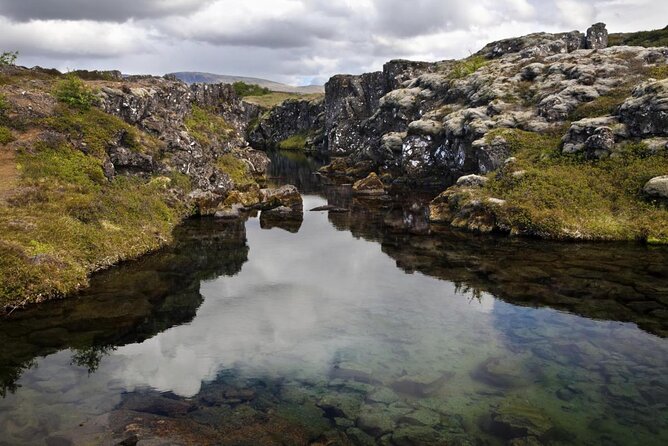
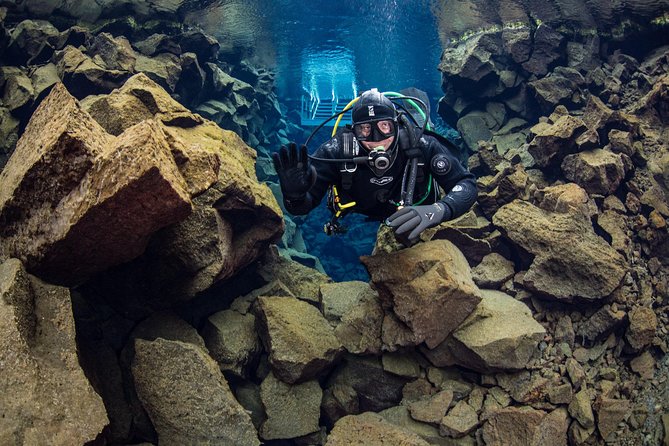
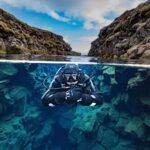
Silfra sits inside Þingvellir National Park, and that’s the magic combo. On the land side, you’re at a UNESCO World Heritage area formed by the split between the North American and Eurasian tectonic plates. Under the surface, you’re following a glacial fissure where the water is famously clear.
What I like about this setup is the storytelling is not artificial. You’re not just looking at pretty water; you’re seeing the physical reason Iceland looks the way it does. And because the water is so clean, the rock shapes and lava textures are easier to read than in most cold-water sites.
You’re also not there for marine life. The attraction is the geology: the crack, the halls, the cathedral-like deep point, and the final lagoon section. If you enjoy “place-based” travel—standing where something real happened—this fits your style.
You can also read our reviews of more tours and experiences in Reykjavik.
Reykjavik pickup to Þingvellir: how the 6-hour schedule tends to feel
The day starts with pickup from select Reykjavík hotels and accommodations. Transfer time to Þingvellir is part of the schedule, and the tour notes the pickup process can take up to 30 minutes—so don’t plan a tight dinner reservation right after.
In total, expect about 6 hours on the clock (approx.). The structure is simple: you spend around 4 hours at Þingvellir, then about 1.5 hours at the Silfra portion (time includes the underwater session and the on-site exit walk back to the car park area).
Why this matters: Þingvellir isn’t just a checkbox. The park itself is UNESCO, and you’ll be in the “between plates” setting on land before you go below. If you’re the type who likes to understand the setting you’re in, this pacing works.
Dry-suit scuba setup: what’s included, what’s on you, and what can catch you
The tour includes your gear, and that’s a big value point. You get a thermal undersuit, dry suit, BCD, regulator, weight system, tanks, hood and gloves, mask, and fins. You’re also guided by a PADI-certified professional guide.
But here’s what you must plan for before you show up:
- Bring your suit sizes when booking. You’re required to supply your sizing information.
- Have dry-suit experience proof. Your guide will ask to see your dry suit certification card or a logbook showing you completed at least 10 dry-suit dives.
- No glasses under the mask. There can be nothing that seals poorly or lets water in. If you wear glasses, you’ll need contact lenses or your own prescription goggles.
That last point is practical and easy to miss. Silfra is cold and very clear, so you’ll be doing a careful gear fit. If your eyewear plan is off, it can turn an amazing day into a frustrating one.
One more realism check from past groups: neoprene buoyancy can surprise people. If you’re used to different suit types, plan for needing extra weight for proper control. And if anything feels off during weighting or valve access, speak up early—your comfort underwater depends on it.
The route through Silfra: Deep Crack to Hall, Cathedral at depth, then Lagoon
This is the part you’ll remember.
You’ll go through multiple sections of Silfra in one planned route:
- Silfra Deep Crack
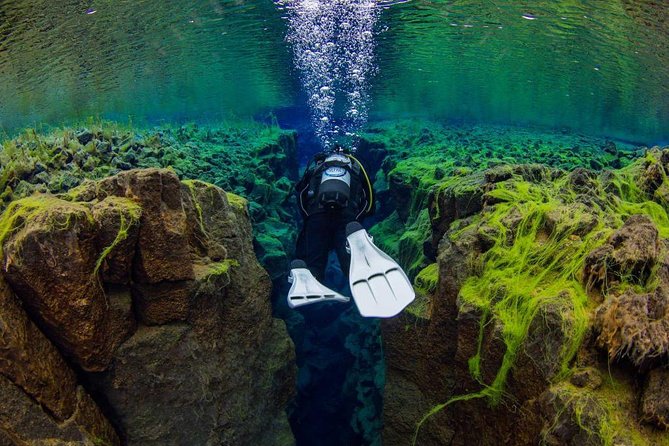
It starts narrow and winding near the entrance. This section rewards calm control because you’re working through a constricted shape where good buoyancy matters.
- Silfra Hall
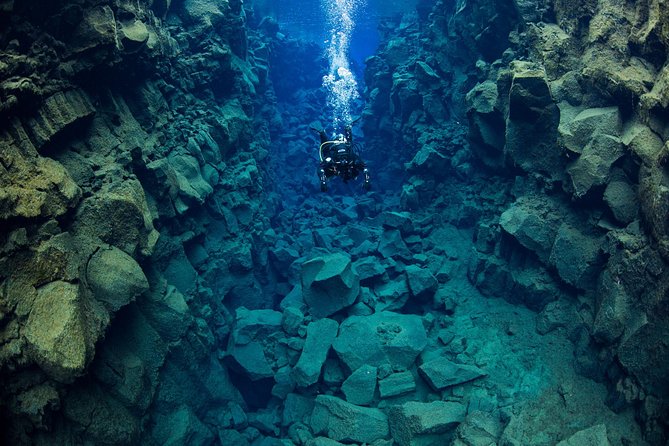
The crack opens a bit more. This is where the views usually get more theatrical. You’ll see lava formations and the “cut-through” nature of the fissure more clearly.
- Silfra Cathedral (listed deepest point: 22m / 72 ft)
This is the deep highlight. Even if you’re not chasing depth, the drop changes the feel of the dive. In one group, a guest noted their maximum allowed depth was 18m for a short time, while the listing describes 22m as the deepest point. Either way, it’s clearly built to take you to a true “cathedral” level rather than just skimming over rocks.
- Silfra Lagoon
After the deepest section, you head into the lagoon. Think of it as the softer landing—still stunning, but often less pressure than the deep part.
On exit, your guide helps you remove fins and you’ll do a short 300-meter walk back to the car park. If needed, the team can help you remove weights or make the walk easier. There’s also an option to rest at the visitor entrance along the way.
Practical tip: if you care about photos at the fissure split, don’t wait until you’re already underwater. Ask your guide before you start how they’re handling key photo moments at the rift.
Cold water reality check: temperature, visibility, and comfort strategy
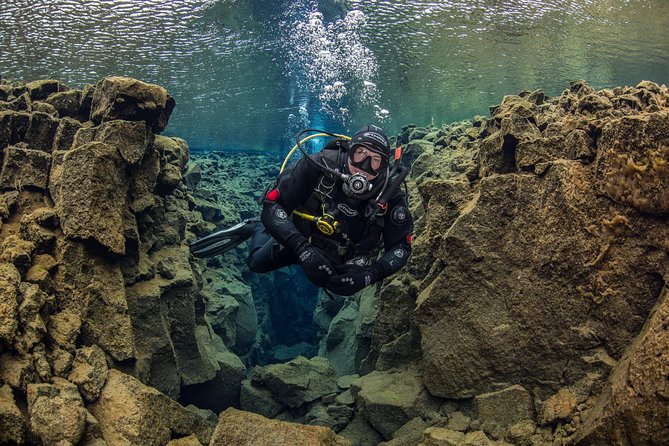
Silfra water is glacial. In past groups, people reported around 2–3°C. That’s cold enough that comfort depends on correct dry-suit use, good insulation, and not rushing gear fit.
The good news is the dry suit setup is central to the experience. When it fits right and you’ve been weighted and sealed properly, the cold becomes a managed background sensation, not a battle.
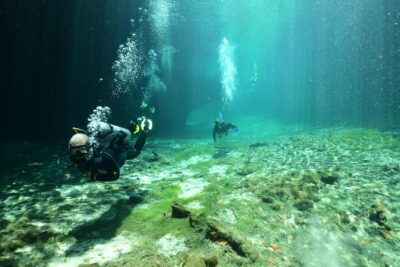
Now, the visibility—this is where people get emotional. Guests describe visibility around 100m plus and visibility so clear they can see as far as the eyes can see. With that kind of clarity, even without fish or coral, the rock textures and fissure shapes feel almost sculpted.
If you’re the kind of diver who gets distracted by “everything is too clear,” then you’ll love it. Your attention can stay on buoyancy, trim, and the geometry of the crack.
If you’re new to a dry suit: treat this as a coached day, not a solo experiment. The tour is aimed at experienced dry-suit participants, and you’ll have fewer variables to manage if your fundamentals are already solid.
Guides, group size, and the pace: why the small setup helps (and when it doesn’t)
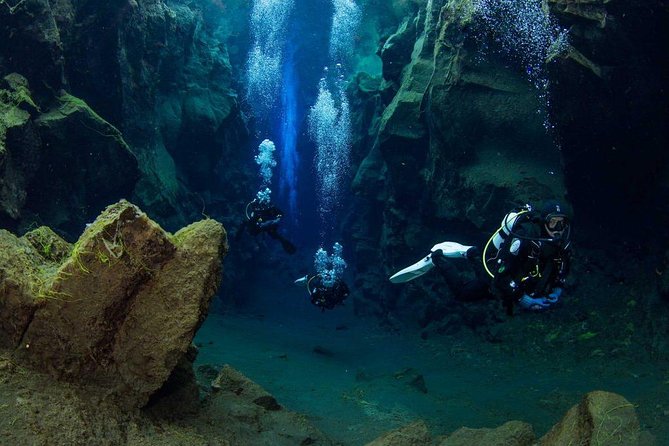
This tour caps at maximum 3 travelers, and that size difference shows. With fewer people, you typically get tighter spacing, clearer instructions, and faster help during kit-up and water exit.
In positive examples, guides like Maciek and Julian are described as attentive and helpful with dry-suit comfort. Other names that came up include Katja and Arturo, with comments about patient coaching and staff support.
That said, cold-water logistics are real, and the process can be affected by timing. One guest noted busy periods can create delays before you get in the water. Another described pressure to start quickly when there was a crowd behind them.
Also: gear quality is usually included, but it’s not guaranteed to be perfect. One guest reported issues like old velcro on a BCD hose and a weight belt release problem. Another noted they’d want to inspect and be ready if something behaves differently than you expect.
My advice to you:
- Do a careful pre-entry check of hoses and weight attachment points.
- If something feels wrong during weighting, say it immediately, before the water entry becomes irreversible.
- If you want specific photo stops at the rift, ask for it before you descend.
That’s how you protect the day.
Þingvellir as more than a transfer stop: UNESCO sites you actually see
Þingvellir National Park is not filler here. You’re there long enough to take it in: dramatic lava fields, the Þingvallavatn lake, and the historic Alþingi, Iceland’s first parliament established in 930 AD.
You’ll also be standing in a place shaped by the very tectonic plates that Silfra represents underwater. That makes the day feel connected. You’re seeing the “why” on land, then experiencing the “what” in the fissure.
If you care about history and geology together, this pairing is a strong fit. You get the scenery on land and the physics under water, without having to shoehorn in extra tours.
Value for $344.67: what you’re paying for and what you still need to cover
At $344.67 per person, this isn’t a budget activity. But the price stacks up when you look at what’s included:
- Round-trip transportation from select Reykjavík pickups
- Þingvellir National Park admission
- Small group experience (max 3)
- Full scuba gear for the day (including thermal undersuit, dry suit, BCD, regulator, tanks, hood/gloves, mask, fins)
- A PADI-certified professional guide
- Hot chocolate and cookies
What’s not included is also straightforward: food and drinks. So budget for lunch or snacks outside the included treat.
When this is “worth it” for you:
- You already have dry-suit certification and want a world-class, crystal-clear site
- You want small group attention rather than fighting for space in a larger operation
- You value geology and clarity more than marine life
When it’s not the best choice:
- You’re not dry-suit certified yet
- You need prescription eyewear solutions you haven’t planned for (since glasses under the mask aren’t workable)
- You’re worried about cold-water or heavy gear movement
Who should book this Silfra experience (and who should pass)
You’ll be a strong match if you:
- Have prior dry-suit diving experience (proof required, with minimum 10 dry-suit dives mentioned)
- Are comfortable managing equipment and buoyancy in cold water
- Can handle the physical side: the tour describes carrying heavy equipment up to 400m (1300ft) and notes the exit involves a 300m walk back
You should think twice or choose another option if:
- You’re a true dry-suit beginner
- You need to wear glasses under the mask (the tour rules are strict: use contacts or bring prescription goggles)
- You have medical reasons that affect participation and you’re not prepared with the required doctor’s note if asked
Also, plan for travel timing. The tour strongly advises waiting 24 hours after diving before flying.
Practical tips that make the day smoother
A few things I’d do to protect your comfort and your results:
- Bring both your certification card and your logbook (if you have both). One guest said they insisted on the plastic card and it took more than an hour to resolve a PADI spelling issue. Having extra documentation can save time.
- Plan your eyewear early. Contacts or prescription goggles, not “maybe it’ll work.”
- Wear contact lenses safely. Cold + wind + rinse water routines are easier when you’ve practiced before.
- Expect the gear walk. Put on sturdy footwear. Even with help removing weights if needed, you’re moving around with equipment.
- Ask about photo stops. If you want classic rift shots, be clear with your guide before the underwater portion starts.
Should you book the Silfra Fissure scuba tour from Reykjavík?
Book it if you’re dry-suit certified, comfortable in cold water, and you want a small-group experience in one of Iceland’s most distinctive underwater settings. The combination of exceptional visibility, multiple Silfra sections (Deep Crack → Hall → Cathedral → Lagoon), and the included transport and equipment makes this feel like a focused day rather than a chaotic tour circuit.
Skip it (or at least be cautious) if dry-suit rules, paperwork, or eyewear constraints would create stress. This is also not the place to “try it for the first time.” The better your fundamentals going in, the more you’ll enjoy the fissure itself.
FAQ
What certification do I need?
You need previous dry-suit diving experience. Your guide will check a dry suit certification card or a logbook showing you completed at least 10 dry-suit dives.
How many people are in the group?
The tour has a maximum of 3 travelers, which keeps it small and personal.
Is food included?
No. Hot chocolate and cookies are included, but food and drinks are not included.
What gear is provided?
The tour includes scuba gear such as a thermal undersuit, dry suit, BCD, regulator, weight, tanks, hood and gloves, mask, and fins.
Can I wear glasses under the mask?
No. You can’t wear glasses underneath the mask because there can be nothing in the way of the seal. Bring contact lenses or your own prescription goggles.
How deep does the underwater route go?
The deepest point is listed as 22 meters (72 feet) at the Silfra Cathedral section.