Three days to earn your open-water card.
I like the max four-person format, where you’re not shoved onto a giant boat and forgotten. I also love that lunches are included, so you can focus on learning instead of hunting for food between sessions. One consideration: this experience depends on good weather, so your schedule can shift if conditions are poor.
You’ll spend the course moving from classroom theory to real water practice near Koh Tao, then finish with open-water sessions and a final wrap-up. It’s a structured way to get your PADI Open Water Diver certification without having to guess how everything should work.
In This Review
- Key points before you commit
- Koh Tao is a smart place for PADI Open Water training
- Price and what you get for $437.37
- Small-group coaching plus private boat and transport
- Day 1: Theory first, then supervised shallow practice near the beach
- Day 2: More theory, then your first full open-water sessions
- Day 3: Final open-water sessions, certification wrap-up, and logging on the PADI app
- Instructors who keep you safe and comfortable (especially with ear pressure)
- Boat time, lunch breaks, and what to expect day to day
- Who this course fits best (and who should think twice)
- Should you book this 3-day PADI Open Water course with NAVA?
- FAQ
- FAQ
- What’s included in the $437.37 price?
- Do I need to bring my own scuba gear?
- Is accommodation included?
- Does the course provide transportation?
- What’s the group size?
- What time does the course start?
- What happens if the weather is bad?
- Is there a minimum age?
Key points before you commit
- Max 4 students keeps your instructor attention tight and practical
- Lunch included (3 days) means less logistics and more time on the water
- Private transport and private boat make the training feel calm and controlled
- Hands-on skills plus debriefs help you repeat what works and fix what doesn’t
- Equipment rental included so you’re not buying gear just to start
- Instructors who slow down can make hard skills (like ear pressure) feel manageable
Koh Tao is a smart place for PADI Open Water training
Koh Tao is one of the easiest places in Thailand to learn scuba skills for real. The island’s setup is built around training, so you’re not fighting your environment while you’re still learning control, buoyancy, and comfort. Instead, your course is staged so you can start with smaller, easier water skills close to where you can quickly get support.
What I like about this course in particular is that it doesn’t treat training like a checklist you just survive. You get repeated chances to practice key movements, then talk through what you did after each session. That rhythm matters, because open-water comfort comes from repetition plus feedback, not from one big moment.
Also, the course leans into the Koh Tao training vibe: lots of time outside the classroom, with supervised skills in progressively more “real world” conditions. You’ll be in the water, but not thrown in.
You can also read our reviews of more tours and experiences in Koh Tao.
Price and what you get for $437.37
At $437.37 per person for a 3-day PADI Open Water course, you’re paying for more than a label. The value is in what’s wrapped into the price:
- PADI certification is included
- Scuba equipment rental is included
- Insurance is included
- Private transportation is included
- Lunch (3) is included
When you compare that to the common alternative—booking certification, lining up gear rental, then adding insurance and transport separately—the bundled cost starts to look reasonable. You also avoid a lot of “where do I go next?” stress once you’re already on the island.
The main thing to watch is what’s not covered: accommodation and transport to/from Koh Tao (getting to the island itself). So budget for those first, then this course becomes a straightforward, all-in training package for the days you’re actually learning.
Small-group coaching plus private boat and transport
This is capped at four travelers, which is a big deal for a beginner course. In a small group, instructors can actually watch your body position, your hand signals, and your breathing rhythm. You’re less likely to feel lost or rushed, especially while learning basic control skills.
The course also includes private transportation, which cuts down on the usual island scramble. You’re not waiting around half the morning while vans shuffle between hotels. And the boat portion is handled with private logistics, so you’re not dealing with a chaotic mix of experience levels from different teams.
In the water, that matters. Beginners do best when there’s space to work and repeat. A “quiet” setup helps you stay calm when something feels new.
Day 1: Theory first, then supervised shallow practice near the beach
Your first morning starts with theory at NAVA PADI 5 Star Scuba Center. You’ll review essential scuba concepts, using your pre-completed PADI e-learning as the foundation. Then the instructor ties that knowledge to what you’ll actually do in the water—so you’re not learning terms in one place and movements in another.
After the classroom work, you’ll head out by boat to work with skills in a shallow, real-world setting near the beach. This is where the course earns its credibility. Instead of treating your first water time like a sightseeing trip, you get close instructor supervision while you master core movements.
Afterward, there’s a debrief plus step-by-step guidance for cleaning your equipment. That sounds like a “boring checklist” at first, but it’s a real skill. Cleaning and maintaining gear correctly is part of responsible diving (and it makes future rentals or your own gear a lot easier).
You finish the day able to explain what you did, why you did it, and what to focus on tomorrow.
Day 2: More theory, then your first full open-water sessions
Day 2 builds on Day 1 rather than starting over. You’ll continue with scuba theory at NAVA, covering additional concepts that set you up for more open-water practice. This day matters because it’s the bridge between “I understand it” and “I can do it while doing it.”
Then you’ll take a boat to two underwater sites around Koh Tao and complete your first open-water sessions. The goal is applying your theory in conditions that feel more like real scuba than training bubbles.
After those sessions, there’s another debrief, plus any remaining theory review. This makes the day feel like a progression, not a collection of disconnected moments. You’ll also be able to enter Day 3 with clear goals for what should feel smoother by then.
If you’re the type who gets nervous when things change, this structure helps. You’re given time to process between days instead of being forced to “figure it out” in the moment.
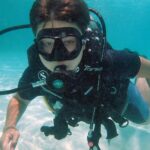
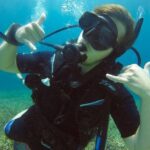
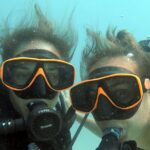
Day 3: Final open-water sessions, certification wrap-up, and logging on the PADI app
On the last morning, you’ll do your final two open-water sessions, putting everything together with your instructor guiding you through the same types of skills you practiced earlier. By now, the pressure is less about learning what to do and more about performing it consistently.
After you finish in the water, you’ll return to NAVA for a wrap-up debrief. This is the moment where you review what you learned and what you accomplished as part of getting your certification. Then you clean your equipment again and log your dives on the PADI app, so your certification journey has a digital record.
I like this ending because it connects your training to future use. You don’t leave with just memories. You leave with a certification outcome and a way to keep your log organized.
Instructors who keep you safe and comfortable (especially with ear pressure)
A beginner course lives or dies on instructor communication. The standout pattern here is patience. Instructors like Mo, Les, Sunae, Soonie, and Sam are repeatedly associated with careful, step-by-step teaching—especially when a student needs more time.
One common learning hurdle is clearing ear pressure. If you’ve ever had sinus or ear issues, tell your instructor early. The course style here supports going slowly and working through problems at your pace, instead of pushing you to “just do it.” That’s the difference between feeling tense underwater and feeling like you can breathe through the process.
Also, instructors don’t just instruct; they coach. You get feedback after each water session, and that feedback is part of why the small-group format works so well. When you only have a few students, you can actually tailor advice to what you’re doing wrong—and what you’re doing right.
Boat time, lunch breaks, and what to expect day to day
You’ll spend time on a private boat as part of each day’s water training. Because the group is small and the operation is handled for training rather than mixed tourist schedules, the day tends to feel organized and predictable.
Lunch being included (and provided across all three days) is a practical win. It means you can keep momentum without planning your own meals between theory and water sessions. You also avoid the classic “I forgot to eat and now I’m cranky and distracted” problem that can derail learning.
Between boat and classroom portions, you’ll likely have short downtime for your gear and mental reset. NAVA also focuses on equipment care—so you’re not guessing how to rinse and clean your kit properly after each day.
For your comfort, I’d plan for typical tropical conditions: sun protection, a rash guard or swim top you’re comfortable wearing often, and a dry change of clothes ready when you come back. You’ll thank yourself when you’re not scrambling at the end of a long training day.
Who this course fits best (and who should think twice)
This is built for people who want an organized path to PADI Open Water Diver certification. If you’re a first-timer, this format makes sense because it’s structured: theory, practice in controlled settings, then open-water sessions with instructor support.
It’s also a solid choice if you prefer calm logistics. The combination of small groups, private transport, and a training-focused boat setup reduces the noise that can make learning harder.
On age: it’s not recommended for travelers under 10. So if you’re traveling with kids, this might not fit younger ages.
Also, keep in mind that you’ll rely on good learning conditions. The experience requires good weather, and poor conditions can lead to rescheduling.
If you have ear pressure issues, sinus congestion, or you’ve struggled with discomfort in similar activities, this kind of patient instruction approach can still work—just be upfront about your concerns on the first day.
Should you book this 3-day PADI Open Water course with NAVA?
I’d book it if you want a beginner certification that feels controlled, with small-group attention and real feedback after each water session. The included gear rental, insurance, PADI certification, and three lunches make the total cost feel grounded—less admin work for you, more time learning.
I’d hesitate only if you’re dealing with schedule fragility. Since the course needs good weather, build in some flexibility around your travel days. And remember: you still need to handle accommodation and getting to the island yourself.
If you want a practical route to your Open Water card in Koh Tao—and you like the idea of learning with an instructor who slows down when needed—this course is a strong match.
FAQ
FAQ
What’s included in the $437.37 price?
The price includes use of scuba equipment, insurance, private transportation, PADI certification, and lunch for 3 days.
Do I need to bring my own scuba gear?
No. Scuba equipment use/rental is included in the course price.
Is accommodation included?
No. Accommodation is not included. You’ll need to arrange where you stay on Koh Tao separately.
Does the course provide transportation?
Yes. Private transportation is included, and pickup is offered. You’ll also use private transport for the course movements.
What’s the group size?
The course is capped at a maximum of four travelers.
What time does the course start?
The start time is 9:30 am.
What happens if the weather is bad?
The experience requires good weather. If it’s canceled due to poor weather, you’ll be offered a different date or a full refund.
Is there a minimum age?
It’s not recommended for travelers aged below 10 years old.