REVIEW · VITI LEVU
Ultimate Shark Encounter Two Tank Dive at The World Famous Beqa Lagoon
Book on Viator →Operated by Rosie Holidays · Bookable on Viator
Bull sharks show up fast, and close.
This is a two-tank shark encounter in Fiji’s Beqa Lagoon, run from Aqua-Trek Beqa at The Pearl South Pacific Resort in Pacific Harbour, where you spend time right on the reef with multiple shark species in view. I love that the experience is organized around a real, reef-side “Arena” feeding area (not a cage), and that you get a full morning with two separate water sessions under close guidance. One thing to keep in mind: it’s an active scuba day with age and skill rules, so it’s not for casual first-timers or snorkel-only travelers.
Two things I especially like. First, the plan gives you two oxygen tanks and two chances to catch that moment when the big sharks arrive. Second, the team focuses on shark behavior—how they approach, how they react when larger sharks show up, and how to stay calm and controlled around them. It’s basically a safety-and-skills lesson wrapped inside an unforgettable wildlife encounter.
The main drawback is that you’ll need the right background. You must be fully open-water scuba certified (no junior certification), at least age 15, and meet the comfort level for gear and buoyancy—because this is active, not a laid-back “sit and float” experience.
In This Review
- Key things to know before you go
- Beqa Lagoon’s Arena: why this shark encounter feels different
- The morning setup: meeting at Aqua-Trek Beqa and starting at 8:00 am
- Two oxygen tanks and a reef routine that’s timed for action
- The shark line-up: bull sharks, reef sharks, and tiger shark timing
- Photo and video opportunities: where the “wow” moments come from
- Reef life beyond sharks: corals, tropical fish, and the occasional extras
- Safety and your skill level: what you must be comfortable with
- Price and value: what’s included at $195.33 and what costs extra
- Logistics that affect your day: weather, rain, and travel timing
- Who should book this shark encounter (and who should skip it)
- Should you book Ultimate Shark Encounter Two Tank at Beqa Lagoon?
- FAQ
- Where is the meeting point for the Ultimate Shark Encounter?
- What time does the activity start?
- How long does the experience take?
- How much does this shark encounter cost?
- What scuba certification do I need?
- Is there a minimum age?
- Is this experience done from inside a cage?
- What’s included in the price?
- What extra fees should I expect?
- Can I hire scuba gear on site?
Key things to know before you go
- No cage, reef perimeter only: You’re positioned on the reef around the Arena site, not in a barrier.
- Two separate water sessions: Expect about 50 minutes underwater, then a surface interval, then another repeated session.
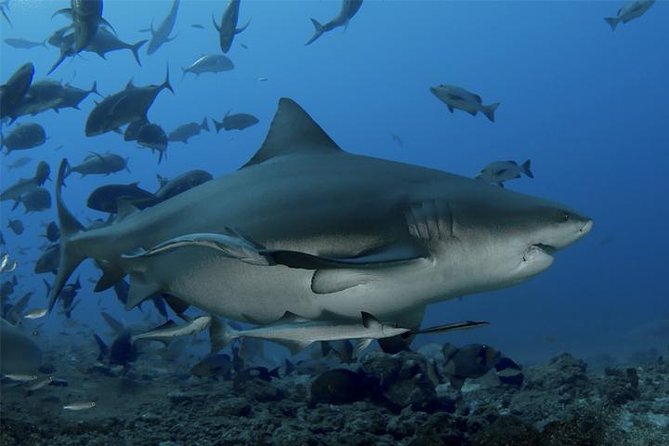
- Big-shark attention on purpose: The feeding area draws in bull sharks in numbers and can also bring tiger sharks when they’re around.
- Eight shark species plus lots of fish: Bull, white-tip reef, black-tip reef, nurse, lemon, grey reef, silvertip, and more.
- Team guidance is a big part of the value: You’re there for safety, instruction, and controlled placement—not just “see sharks.”
- Weather can affect visibility: Rain and wind can reduce how clear the water looks on the day.
Beqa Lagoon’s Arena: why this shark encounter feels different
If you’ve imagined a shark encounter as something staged behind glass, this one breaks that idea fast—in a good way. The action centers on a reef perimeter called the Arena, with sharks circling below as the feeding area attracts fish. Your timing matters here: the experience is set up so you’re in the water as the local population comes through rather than just dropping in randomly and hoping.
What makes this feel special is the way the shark “rhythm” plays out. Bull sharks often arrive in numbers and may circle close while moving with an obvious feeding rhythm—opening enormous jaws as food comes from the feeder area. Then, when tiger sharks show up, the mood changes. You may see everything slow down and quiet out as the bigger shark moves in deliberately to claim the area.
I also like that the experience is framed as education, not just thrill. You’ll learn shark biology and behavior, and that helps you understand what you’re seeing instead of just reacting to it. When you know why a shark is behaving a certain way, you tend to stay calmer—and calmer divers are safer divers.
You can also read our reviews of more tours and experiences in Viti Levu.

The morning setup: meeting at Aqua-Trek Beqa and starting at 8:00 am
This trip is built around an early start: you meet at 8:00 am at the Aqua-Trek Beqa scuba center at The Pearl South Pacific Resort, Queens Rd, Pacific Harbour, Fiji. It’s a straightforward meeting point, and the experience ends back at the same location, so you’re not worrying about complicated transfers late in the day.
You should plan for a day that moves at scuba pace. You’ll board a boat (boat transportation is included) and head out with your tanks and weights provided. Because the encounter happens from a reef site, you’ll likely spend time on the water and then time preparing and checking gear between the two sessions.
Group size is capped, which matters for comfort. There’s a minimum of 4 people required for the boat to operate, and a maximum of 26 travelers for the whole activity. That range can affect how quickly you get in the water and how much individualized attention you get.
Two oxygen tanks and a reef routine that’s timed for action
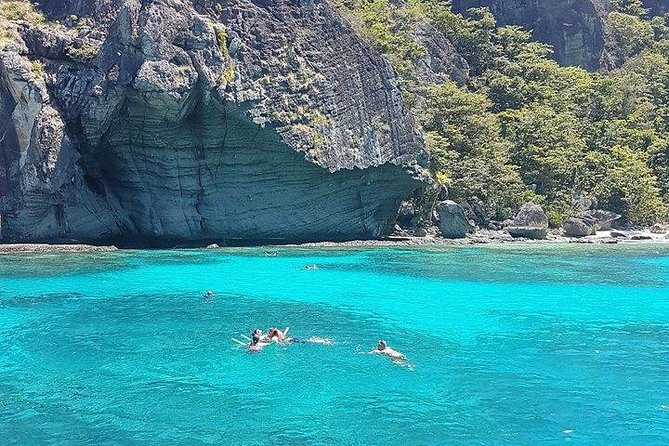
The whole experience runs about 4 to 5 hours. The key detail is that you’re not doing one short look—you’re doing two separate oxygen tank sessions with a surface interval in between. That increases your odds of seeing the sharks you’re most excited about.
Here’s the flow you can expect. You’ll descend through clear water to around a 25 metre / 80 foot landing. Once you’re on the reef and in the working area, you spend time watching sharks circle and feed-visit the area where fish are drawn in. After about 20 minutes of bottom time, you ascend along the reef ledge where reef sharks swim freely. The first water session is about 50 minutes total.
Then you shift to the surface interval (about one hour), and repeat the whole cycle again. After the second session, you return with roughly a 10 minute boat ride back to the dock. This kind of pacing is part of the value: sharks are not always in the exact same place at the same moment, and two sessions give you a second shot without turning it into a marathon.
If you care about photos and video, this rhythm helps. You’ll have multiple chances to line up the same feeding area shots as shark traffic changes.
The shark line-up: bull sharks, reef sharks, and tiger shark timing
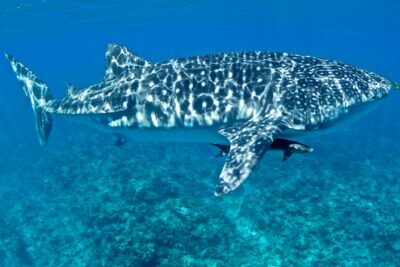
Let’s talk species, because this is what you’re really paying for. The encounter is designed to feature eight species of sharks, including multiple bull sharks—described as the largest shark species in the world—plus white-tip reef sharks, black-tip reef sharks, nurse sharks, lemon sharks, grey reef sharks, and silvertip sharks.
On top of that, tiger sharks can arrive regularly. The experience describes tiger sharks roughly 16–18 feet long when they come in to claim the area. You might not see a tiger shark on every day, but the whole point of the structured “Arena” setup is to maximize the odds when they are present.
You’ll likely also see major fish activity, which is part of why the sharks come close. Expect to see hundreds of jacks, snappers, and other fish swirling around the feeding area. That creates a busy, living underwater scene—fish movement plus shark presence—rather than one or two animals drifting by.
Also, your mental model matters. The encounter isn’t about chasing sharks. It’s about being in the right place while remaining controlled. The team is positioned to help guide the group when sharks come near, which is a huge theme in the strong safety-focused feedback from past participants.
Photo and video opportunities: where the “wow” moments come from
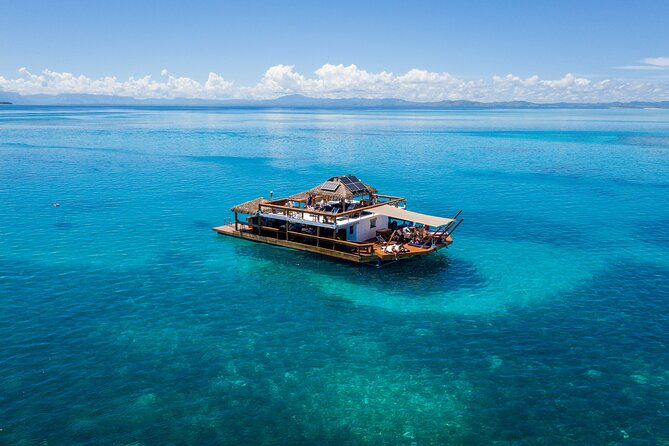
This experience is built for photography, and not just because sharks are photogenic. You’re working from a reef ledge and a feeding area, which gives you a consistent “set” in the water. As sharks circle below and the fish school tightens up around the action, you get that classic underwater contrast: bright reef and corals above, darker silhouettes below.
The experience also promises award-style photo and video opportunities, and in practice that kind of access usually comes from two things. One, sharks are arriving in noticeable numbers rather than being rare sightings. Two, you’re likely to return to the same area twice, letting you repeat your framing once you’ve learned the water flow and where the sharks tend to pass.
Reality check: visibility can vary. If rainfall and wind roll through, you may see moderate visibility on the day. One past experience described this exact tradeoff—less-than-straightforward clarity—while still delivering lots of shark action and reef life.
Practical tip: if you’re serious about shooting, make sure you’re comfortable with your breathing and buoyancy first. A stable body position gets you better photos than any fancy camera setting.
Reef life beyond sharks: corals, tropical fish, and the occasional extras
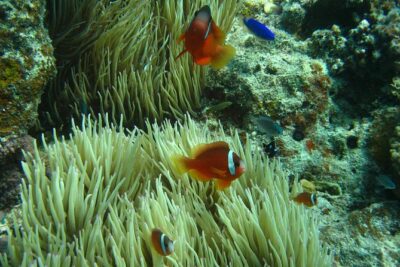
Sharks are the headline, but the reef scene around them is a real part of the experience. You’re on a reef ledge with soft corals and plenty of tropical fish in the ecosystem. If you’re someone who cares about the whole underwater picture—not just one animal—this works well.
There’s also mention of extra underwater features. One account specifically noted two wrecks with fish life and coral, along with shark sightings. That doesn’t mean you’ll always see the same wrecks in the same condition, but it suggests the area can offer more than just open reef and schooling fish.
You may also catch sightings of larger reef species like a Queensland grouper and a humphead wrasse, described as rarer possibilities during the encounter. Even if you don’t get those, the constant movement of jacks and snappers keeps the water visually active.
Safety and your skill level: what you must be comfortable with
This is where the trip earns its reputation. The operation emphasizes supervision by a certified professional scuba leader who manages spacing, air awareness, and how the group interacts with the shark traffic. A recurring theme in strong feedback is that people didn’t feel threatened, and that guidance was present when sharks got close enough to matter.
But you still need to bring the right personal readiness. The trip is described as very active, and advanced certification is recommended before the shark encounter. While the rules focus on open-water certification, they’re also telling you: if you’re not confident in control and buoyancy, this may feel too intense.
You also need specific requirements:
- You must be fully open-water scuba certified (no junior certification).
- Evidence of certification is required.
- You should be very familiar with your gear and comfortable with SCUBA.
- At least 10 open water dives beyond checkout should be logged.
- You’ll complete a health questionnaire; some medical conditions (like asthma or heart conditions) may prevent diving, so consult your doctor.
Physical fitness matters too. The trip asks for moderate physical fitness. If you’re recovering from injuries or you struggle with movement on boats, take that seriously.
Age rules are strict: minimum age is 15, and the diver must be fully open water certified and accompanied by a parent or guardian. That makes it more of a teen-and-up scuba adventure than a family outing for younger kids.
Price and value: what’s included at $195.33 and what costs extra
The listed price is $195.33 per person, and it can be a solid value when you look at what’s covered. Included in the price are professional guide/scuba leader services, the boat trip, two tanks, dive weights, and government taxes. That’s a lot of the usual “hidden cost” items handled up front.
What’s not included:
- Food and drinks
- Hotel pick-up and drop-off (transport can be arranged for extra cost)
- Scuba gear hire (available for a fee)
- Shark Marine Park fee (collected before the water session)
That shark marine park fee is FJD 25.00 per person, and it’s described as going directly to the village that owns reef rights for shark conservation and preservation of the marine protected area. In other words, it’s not just a random surcharge. It’s tied to local management and protection.
Gear hire is listed as about FJ 20.00 per piece per day, or about FJ 50.00 per day for full gear (and note: no dive computers). Nitrox is offered as an add-on at about FJ 50.00 per tank. If you rely on a dive computer, you’ll want to either bring your own or plan to hire one (since the “full gear” option is noted as not including computers).
So is it worth it? For many scuba travelers, the math comes down to two things: you’re paying for a high-probability, structured encounter with multiple shark species, and you’re getting two oxygen tank sessions rather than one. If sharks are your goal, this is priced like a specialty experience—and it aims to deliver like one.
Logistics that affect your day: weather, rain, and travel timing
This experience runs in a real marine environment, so conditions matter. One account called out moderate visibility due to rainfall and wind. Plan mentally for the fact that the water may not look like a postcard every hour.
There’s also a flying-timing rule: diving within 48 hours of flying is not recommended. If you’re building a Fiji itinerary with flights right after your water activity, schedule extra buffer time. Your health questionnaire is also part of the process, and that’s normal for scuba operators.
Finally, the cancellation policy is strict: no refunds and no changes for cancellations. The trip can also be impacted by weather, and the tour notes no refund if canceled due to inclement weather. That’s not unique to this operator, but it’s part of what you’re signing up for—so only book it if your schedule has some breathing room.
Who should book this shark encounter (and who should skip it)
This experience is best for:
- Certified scuba travelers who want an intentional shark-focused encounter
- People who like learning behavior, not just taking quick looks
- Divers who are comfortable with controlled, active sessions and changing shark traffic
Skip it (or consider a different option) if:
- You only snorkel or aren’t fully comfortable with your scuba gear
- You don’t meet the open-water and age requirements
- You’re not confident managing buoyancy and air use in active conditions
- You want a quiet, slow-going marine walk—this is described as active
If you’re a calm, experienced diver who likes structure and safety, you’ll probably enjoy this more than you expect. And if you’re chasing that bucket-list feeling of watching bull sharks circle close and tiger sharks arrive to change the whole underwater mood, the setup is designed to deliver those moments.
Should you book Ultimate Shark Encounter Two Tank at Beqa Lagoon?
I’d book it if sharks are your main reason to be in Fiji and you’re a comfortable, fully certified scuba diver. The combination of two oxygen tank sessions, no cage reef positioning, and a real focus on shark behavior makes it feel less like a stunt and more like a managed wildlife encounter. Add in the consistent praise for safety and professional attention, and it’s an easy “yes” for the right kind of diver.
I’d hesitate if you’re on the edge of certification comfort, you don’t meet the logged-dive expectations, or your schedule forces you to fly within 48 hours. In this kind of active shark environment, confidence matters.
If you want one reason to lean in: the “Arena” feeding area is built for shark interaction, and the day’s pacing gives you more chances to see the full cast than a single short visit.
FAQ
Where is the meeting point for the Ultimate Shark Encounter?
The experience starts at Aqua-Trek Beqa scuba center at The Pearl South Pacific Resort, Queens Rd, Pacific Harbour, Fiji. It ends back at the same meeting point.
What time does the activity start?
The start time is 8:00 am.
How long does the experience take?
Plan on about 4 to 5 hours total.
How much does this shark encounter cost?
The price is $195.33 per person.
What scuba certification do I need?
You must provide evidence of fully open water scuba certification. All divers need to be certified, and junior certification isn’t accepted.
Is there a minimum age?
Yes. The minimum age is 15, and the diver must be accompanied by a parent or guardian.
Is this experience done from inside a cage?
No. You are not in a cage. You are positioned on the reef around the perimeter of the dive site called the Arena.
What’s included in the price?
Included are the professional guide and scuba leader services, boat trip, tanks, weights, and government taxes.
What extra fees should I expect?
The Shark Marine Park fee is not included and is collected before the session at FJD 25.00 per person. Food and drinks are also not included.
Can I hire scuba gear on site?
Yes. Gear hire is approximately FJ 20.00 per piece per day, or about FJ 50.00 per day for full gear (not including dive computers). Nitrox is listed as an optional add-on at about FJ 50.00 per tank.