REVIEW · SICILY
Syracuse: Ortigia Deep Dive Cultural Tour (max 6 Guests)
Book on Viator →Operated by Viaggio a Sud-Est · Bookable on Viator
Ortigia tells its story in just 90 minutes. The big win here is flexibility: you pick the time of day to start, and the tour stays small at up to 6 guests. That combo makes it easier to fit into a tight Sicily schedule without feeling rushed.
I also like the question-and-answer style of the guide’s storytelling. The commentary is centered on what you can see on the street, and the guide’s delivery is upbeat and clear, with Enrica specifically noted for being friendly, energetic, and highly responsive. You end up with names, context, and practical wayfinding, not just a list of sights.
One thing to consider: the walk relies on decent weather, and Temple of Athena has an optional paid entry for the interior. If you’re trying to keep costs totally flat, plan for that choice.
In This Review
- Key highlights to expect on this Ortigia cultural walk
- Why Ortygia works so well for a short, smart tour
- Small group size and a pick-your-time meeting point
- A stop-by-stop walk of Ortygia’s most useful landmarks
- Temple of Apollo: the early Greek anchor
- Piazza Archimede and Diana’s Fountain: myth with a street-level lens
- Piazza Duomo: understanding what you’re seeing around the cathedral square
- Temple of Athena inside the Cathedral: optional interior entry
- Arethusa Spring: the mythic finish that feels like a local pause
- What you’ll learn (and what you’ll take away)
- Value check: free stops and one optional paid moment
- Practical details that make or break a walking tour
- Who should book this tour
- Should you book the Syracuse Ortigia cultural tour?
- FAQ
- How long is the Syracuse Ortigia cultural tour?
- What language is the tour offered in?
- What is the group size limit?
- Are tickets included for all stops?
- Where does the tour start and end?
- What happens if the weather is bad?
Key highlights to expect on this Ortigia cultural walk
- Pick-your-time start so you can match the tour to your day in Syracuse
- Up to 6 guests, which keeps questions from getting lost
- Greek and Christian layers explained through real Ortygia landmarks
- Free admission at most stops, with only Temple of Athena’s interior flagged as optional
- Ends at Arethusa Spring, a perfect capstone to the walk
Why Ortygia works so well for a short, smart tour
Ortygia is the historic center of Syracuse, and it’s made for walking. In a compact area, you can watch Greek-era structures, Baroque-era squares, and mythic references all show up within a stone throw.
What I like about this tour format is that it respects how travelers actually move. Ninety minutes is enough to get oriented and to understand why the places matter, without eating your whole day. You’ll also have time to ask questions, which is where a good walking tour becomes a great one.
The stop order also helps your brain connect the dots. You start with a major Greek temple, then you move through central piazzas and landmarks, and you finish at a famous spring tied to legend.
You can also read our reviews of more tours and experiences in Sicily.


Small group size and a pick-your-time meeting point
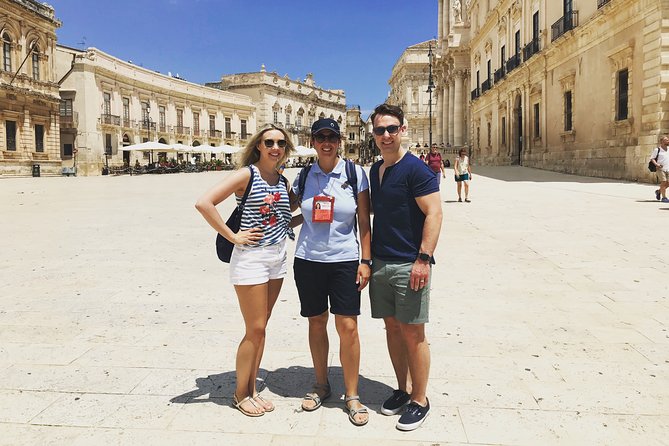
This tour caps at 6 travelers, which changes the feel fast. With a small group, it’s easier for the guide to pace the walk, slow down for photos, and keep explanations from turning into one-way lecturing.
You also have real scheduling freedom. You can choose what time of day you meet, which is a lifesaver if you’re coordinating with other plans in Sicily. It also means you’re not stuck feeling like you must do Ortygia at the most crowded hour.
It’s offered in English, and the tour uses a mobile ticket. For you, that usually translates to less hassle at the start and more time for the actual walk. The meeting points are clear: you begin at Temple of Apollo (Apollonion), 96100 Syracuse, and you end at Largo Aretusa, 96100 Siracusa.
A stop-by-stop walk of Ortygia’s most useful landmarks
Temple of Apollo: the early Greek anchor
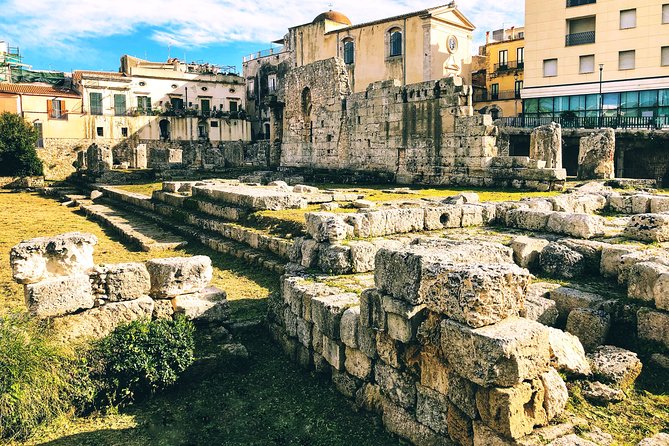
You begin at Tempio di Apollo (Temple of Apollo). The guide focuses on the temple as an early VI century BC Greek structure, which is a great way to set the timeline before you wander into later layers of the city.
Why this first stop matters: it gives you a reference point. Once you understand what you’re looking at here, it’s easier to interpret other buildings and squares you pass later. Even if you’re not a classical architecture specialist, you’ll leave with the big idea that Ortygia was shaped by Greek power and religious life.
This stop is about 15 minutes, and the admission is listed as free. That’s a nice balance at the start: enough time for context, without burning half your tour waiting around.
Piazza Archimede and Diana’s Fountain: myth with a street-level lens
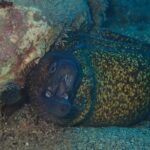
Next comes Piazza Archimede, with views of the historic buildings overlooking the square. You also get a specific reference point to look for: Diana’s Fountain at the heart of Archimedes Square.
This is where a tour earns its keep. The guide doesn’t just point out a fountain. You’ll get an explanation of the historic buildings around the square, which helps you read the street instead of drifting through it.
The timing is 10 minutes, and admission is free. For most people, that’s the sweet spot for a square stop: short enough to keep momentum, long enough for real orientation.




Piazza Duomo: understanding what you’re seeing around the cathedral square
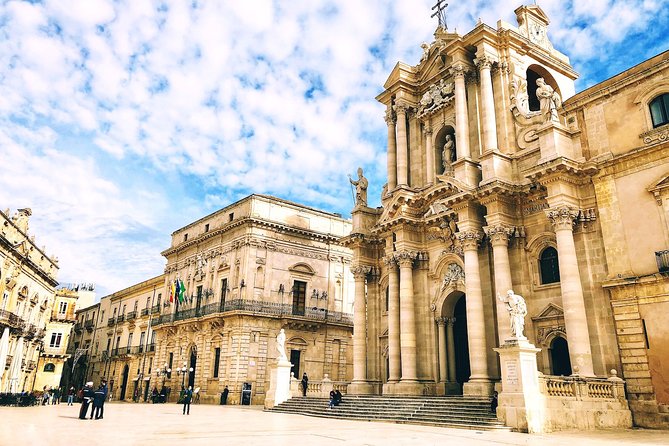
From Archimede’s Square, you move to Piazza Duomo. Here, the guide explains the important historic buildings that overlook the piazza.
This stop is useful even if you’re not planning to go deep inside churches. A piazza is a stage, and Piazza Duomo is one of Ortygia’s main showpieces. Learning how the buildings relate to each other helps you take better photos and understand the town layout without needing a map app every five minutes.
You’ll spend about 10 minutes on this stop, with free admission noted.
Temple of Athena inside the Cathedral: optional interior entry
The tour then reaches Temple of Athena, which is famously connected to the Cathedral. The guide explains the temple from both the exterior and the interior.
Here’s the practical catch: the tour description notes an optional entry for a fee for the interior. So you get flexibility. If you want only the exterior explanation, you can keep moving. If you’re curious and want to see more, you’ll know exactly where the extra cost may come in.
The time on this stop is about 15 minutes. Expect that this is one of the more involved stops, because there’s more to see and the exterior-to-interior story can be a key moment in making Ortygia feel layered, not random.
Arethusa Spring: the mythic finish that feels like a local pause
The walk ends at Arethusa Spring at Largo Aretusa. The guide explains the “mythical” side of Arethusa, which is exactly the kind of ending that sticks. You’re finishing at a real place tied to story, so the explanation lands better than it would at a generic viewpoint.
This stop is 7 minutes and admission is listed as free. Don’t treat it like a quick photo break, though. The short time is deliberate, and the guide’s explanation is meant to help you connect legend to the spot you’re standing on.
What you’ll learn (and what you’ll take away)
This tour is built for comprehension. You’re not just collecting stops. You’re building a simple mental model of Ortygia:
- Greek origins, starting with Temple of Apollo
- Civic and cultural centers around major piazzas like Piazza Archimede
- The cathedral area as a bridge between different eras, highlighted through Temple of Athena
- A myth tied to the land, ending at Arethusa Spring
The guide’s format also matters: you’ll get informative commentary and time to ask questions. That’s huge in places where there’s a lot to interpret, and where signs alone can feel incomplete. If you like hearing stories with details you can verify by looking up, this style fits well.
If you’re the type who asks why a square looks the way it does, you’ll probably leave feeling like you can navigate Ortygia with confidence. Even if your history background is light, the tour approach helps you recognize what you’re seeing.
Value check: free stops and one optional paid moment
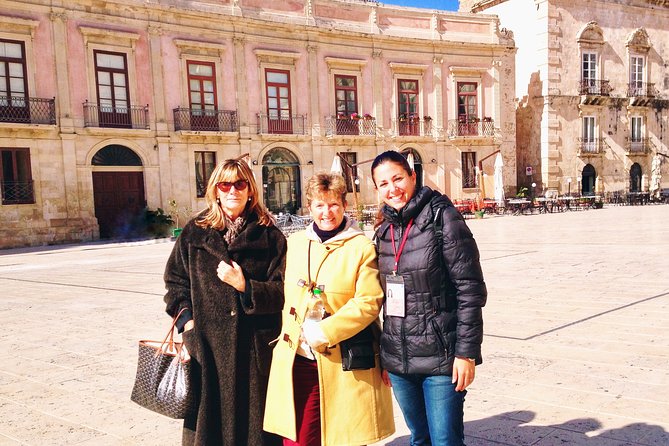
Value here is mostly about how the tour uses your time and what it doesn’t charge you for.
Most stops are listed with free admission: Temple of Apollo, Piazza Archimede, Piazza Duomo, and Arethusa Spring. That’s meaningful because it lets you spend your money on the tour itself, not on stacking extra entry fees.
The only flag for optional cost is Temple of Athena’s interior entry. If you do the interior, you’re choosing to pay for a closer look. If you skip it, you still get the exterior explanation and the core story.
Also, the group limit matters for value. Paying for a small group and getting space for questions usually feels more satisfying than a larger walk where the guide has to talk nonstop.
Practical details that make or break a walking tour
This is a 1 hour 30 minutes walking experience, so comfortable shoes are not optional advice. The tour is in Ortygia, where streets and stone surfaces can vary, and your feet do the work.
The dress code is smart casual. That’s easy to meet in Sicily. No need to overthink it, but do plan to look decent in case you want a quick stop for a drink afterward.
The route is described as near public transportation, and service animals are allowed. If you’re planning accessibility needs, it’s smart to check how your walking pace matches your comfort level, since the experience is still a walking format.
Weather also matters. This is explicitly noted as requiring good weather, and if it’s canceled due to poor conditions, you’ll be offered a different date or a full refund. In other words, don’t plan it as your only Ortygia plan.
Who should book this tour
This one fits best if you want:
- A fast, organized introduction to Ortygia
- A small group experience where questions are welcome
- A guided path through specific named places you can remember later
- A mix of Greek-era and later city storytelling
It’s a smart choice for first-time visitors to Syracuse who don’t want to spend hours just figuring out where to start. It also works well for travelers who already know some basics and want a guided framework to connect them.
If you’re a hardcore museum-goer who wants long interior time at multiple sites, you may feel the tour is short. But if your goal is understanding and orientation over sightseeing overload, this is a clean, efficient plan.
Should you book the Syracuse Ortigia cultural tour?
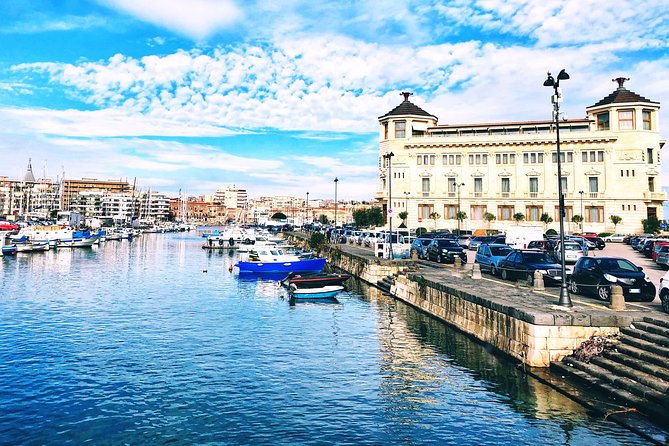
I’d book it if your priority is getting Ortygia to make sense quickly. The combination of 90 minutes, a max of 6 people, and an easy flow from Temple of Apollo to Arethusa Spring is exactly how to see a lot without feeling scattered.
Skip it only if you need long, unhurried interior visits as the main event, or if you strongly prefer all costs to be fully predictable with no optional paid entry. The optional Temple of Athena interior is the only extra decision point, and it’s clearly indicated.
If you’re choosing between a wandering day and a guided foundation, this tour is the foundation option.
FAQ
How long is the Syracuse Ortigia cultural tour?
The tour lasts about 1 hour 30 minutes.
What language is the tour offered in?
The experience is offered in English.
What is the group size limit?
The tour has a maximum of 6 travelers.
Are tickets included for all stops?
Admission is listed as free for Temple of Apollo, Piazza Archimede, Piazza Duomo, and Arethusa Spring. The Temple of Athena interior entry is not included (it’s optional for a fee).
Where does the tour start and end?
You start at Temple of Apollo (Apollonion), 96100 Syracuse, and you end at Largo Aretusa, 96100 Siracusa.
What happens if the weather is bad?
This experience requires good weather. If it’s canceled due to poor weather, you’ll be offered a different date or a full refund.