REVIEW · MUSCAT
Scuba Diving to Dimaniyat Islands Muscat Oman
Book on Viator →Operated by Global Scuba Oman · Bookable on Viator
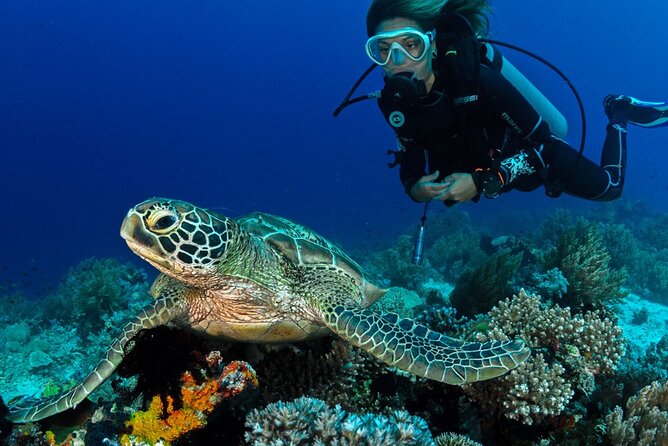
Turtles feel at home in Oman’s waters. This fast, well-run scuba outing heads out from Seeb to the protected Daymaniyat Islands, where coral gardens and reef walls bring you face-to-face with big wildlife like rays, sharks, and—during summer—whale sharks.
I especially like the focus on the Daymaniyat marine reserve and the fact that it’s protected for decades, since the Ministry of Environment put it under protection in 1996. I also love the variety you get in a single trip: hard and soft corals plus steady encounters with animals such as honeycomb moray eels, schools of fish, and black-tip and zebra sharks.
One thing to keep in mind: the experience depends on good weather, so if conditions are poor you may get a date change or a refund.
In This Review
- Key Things You Should Know Before You Go
- Daymaniyat Islands: Oman’s only marine national reserve
- The 5-hour schedule from Seeb and why the timing works
- What you’ll see underwater: coral gardens, reef walls, and pelagic life
- Wildlife checklist: turtles, moray eels, rays, sharks, and whale sharks
- Turtles in the mix, all year
- Honeycomb moray eel and reef characters
- Sting rays and steady schools of fish
- Black-tip and zebra sharks
- Whale shark possibility in summer
- The boats and guides with Global Scuba Oman
- Underwater route logic: why multiple spots beat one single stop
- Price and value: is $175 worth it for Daymaniyat?
- Who should book this Muscat to Daymaniyat experience?
- Should you book Global Scuba Oman to the Daymaniyat Islands?
- FAQ
- What time does the tour start in Muscat?
- How long is the experience?
- Where do I meet the group?
- When does the activity end?
- How far is the Daymaniyat area from the coast?
- What wildlife can I expect to see?
- How many people are on the trip?
- Is the tour suitable for most people?
- What happens if weather is poor?
- Can I get a full refund if I cancel?
Key Things You Should Know Before You Go
- Small group size (max 12) means more personal attention during the day
- 12 underwater spots around the islands give you options beyond one single area
- Year-round turtles: you can encounter 3 turtle species across the year
- Food-chain action: rays, eels, and shark sightings are part of the normal mix
- Summer bonus: whale sharks can show up during the warmer months
Daymaniyat Islands: Oman’s only marine national reserve
If you like your marine life with a side of conservation, this is a smart choice. The Daymaniyat Islands are part of an island sanctuary for migrating birds, and the water around them is Oman’s only marine national reserve. That matters because it’s not just a pretty place—it’s protected, so the reefs and animals keep showing up.
These islands sit about 18 km off the Batinah Coast, and that distance is exactly why the day feels like more than a quick local outing. You’re leaving the shoreline and heading into a dedicated nature reserve area, where the underwater world is built around coral gardens, reef structures, and pelagic fish movement.
Here’s what I think you’ll enjoy most: you’re not hunting for wildlife. You’re visiting a place that already has the animals. The trip is designed around that reality—turtles, rays, and sharks are part of what the site is known for, and you don’t need to be a wizard to have a good encounter.
You can also read our reviews of more tours and experiences in Muscat.
The 5-hour schedule from Seeb and why the timing works
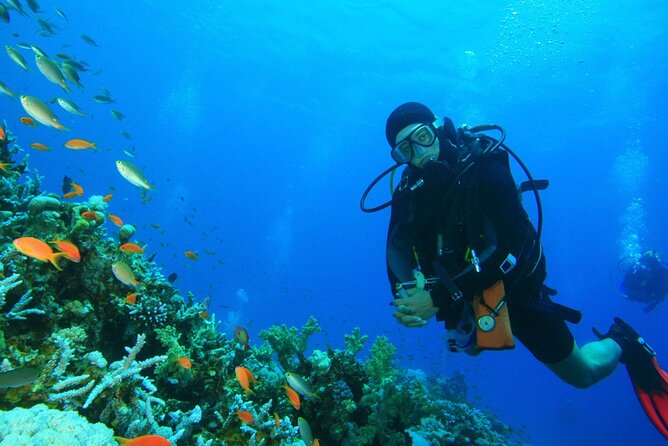
The meeting point is in Seeb, at M5QH+MC Seeb (and the tour starts at 8:30 am). The activity runs for about 5 hours, and it ends back at the meeting point.
In practical terms, morning timing helps. The day starts early, you get daylight for the best visibility, and you also avoid spending the heat of the day stuck waiting. The boat transfer to the islands takes about 20 minutes, so you’re not burning your limited time cruising on the water.
Once you arrive, the plan is built for variety. Over the course of the day, you can expect multiple underwater stops across different reef types—coral gardens, reefs, and walls—rather than doing one repeated route. That’s one reason this feels efficient: you’re packing ecosystem variety into a half-day outing.
What you’ll see underwater: coral gardens, reef walls, and pelagic life
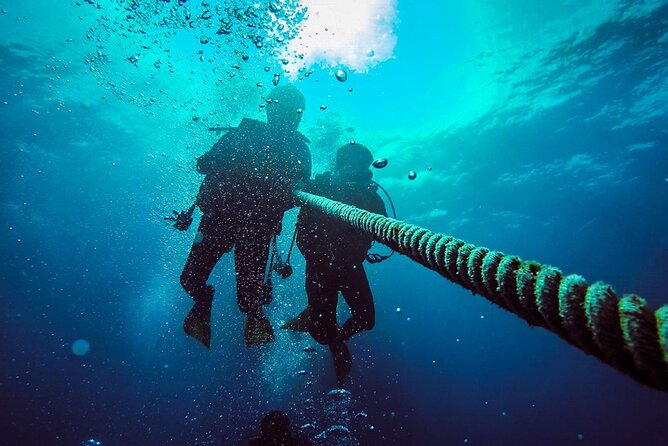
Daymaniyat’s underwater structure is a big part of why the islands are so highly regarded for scuba. You’re looking at hard and soft corals, plus reef walls and other habitat that lets different species use different parts of the system.
Instead of focusing on one dramatic feature, the experience is about how the area functions. Coral gardens and reef areas tend to hold lots of smaller life—fish schools, eels, and creatures that blend into the reef texture. Reef walls and more open sections help bring bigger wildlife into view, including rays and sharks.
Then there’s the pelagic side of the scene. You may see large fish moving through the water column, which is where the wildlife encounters can feel extra memorable. The tour’s structure—built around multiple sites across the islands—gives you a better shot at seeing animals that prefer different conditions and depths.
If you care about practical expectations: you should plan to be busy underwater and to come up with a full picture of the reserve, not just one corner of it.
Wildlife checklist: turtles, moray eels, rays, sharks, and whale sharks
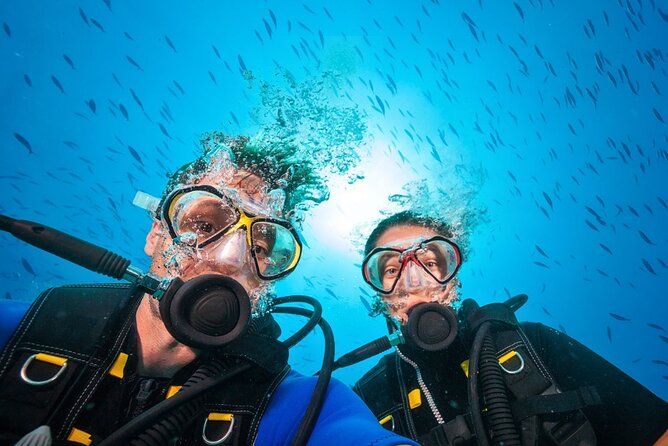
Let’s talk about what people actually want to see, and this place delivers.
Turtles in the mix, all year
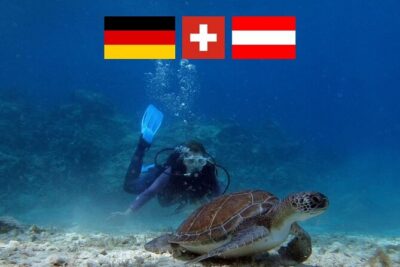
The islands are known for three different turtle species that you can see throughout the year. That means your odds don’t hinge on one narrow season. Even if you’re traveling outside peak turtle months, you still have a real chance of meeting them.
Honeycomb moray eel and reef characters
One of the standout mentions is the honeycomb moray eel. That’s exactly the kind of creature I love spotting because it feels like true reef life, not just a passing silhouette.
Sting rays and steady schools of fish
Sting rays are a frequent encounter, and schools of fish add constant movement. This combination matters because it helps the underwater experience feel alive, not empty. Even when you’re not locking onto a single animal, you’re watching the reef’s activity.
Black-tip and zebra sharks
Black-tip sharks and zebra sharks are part of the normal wildlife conversation for Daymaniyat. These encounters can shift your whole perspective underwater, because the reef becomes a meeting point for animals that roam and hunt.
Whale shark possibility in summer
If you travel during summer, keep an eye out for whale sharks. The tour information makes it clear that a whale shark is a frequent visitor in that season. If your travel style includes chasing a major species, this is where your timing can pay off.
My advice: don’t treat the whale shark as guaranteed. Treat it as a bonus your schedule unlocks. Your baseline success here is the year-round turtles and consistent reef life.
The boats and guides with Global Scuba Oman
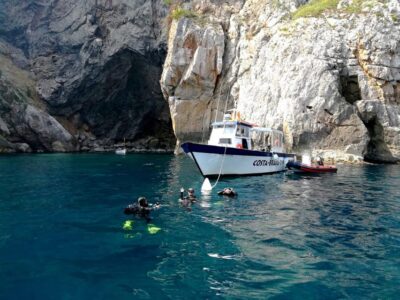
This trip is run by Global Scuba Oman, with a maximum of 12 travelers. That smaller cap matters. You’re less likely to feel like a number, and you get more consistent attention during the day.
From the service level described, the guiding is a core strength. Names that came up include Steven and captain Muhammed, both tied to the same theme: competent care and an organized, supportive experience.
Equipment and boat quality are also called out positively. That’s not a small detail. In places where wildlife encounters depend on calm, controlled conditions, a reliable boat and well-managed gear help you relax and focus on what’s around you.
Also, the boat can accommodate snorkelers. Even if you’re all in on scuba, it’s nice to know the day isn’t single-purpose. It suggests a setup that can handle different comfort levels above the water.
Underwater route logic: why multiple spots beat one single stop
Daymaniyat offers 12 underwater spots. The point isn’t that you visit all 12. The point is that the operator isn’t stuck with one location. If conditions or animal movement favor one area over another, the day can flex around that.
That matters for two reasons:
First, coral gardens, reefs, and walls don’t all hold the same species. Turtles may show up near one habitat type, while rays and sharks can show up based on current, depth, and hunting patterns.
Second, visibility and current can vary through the day. When a route is built across different site types, you’re more likely to have at least some sections that feel crisp and rewarding.
So when you think about what you’re paying for, don’t only think about the destination. Think about the ability to use the destination efficiently.
Price and value: is $175 worth it for Daymaniyat?
The price is $175 per person, with an average booking time of about 25 days in advance.
On paper, that may sound like a lot for a half-day. In reality, the value comes from three things you don’t usually get together:
- You’re going to a protected reserve with wildlife you can’t reliably recreate near the shore
- The schedule is packed into about 5 hours, including the offshore run
- The day is built around varied reef structures and a range of animal encounters
Small group size and competent staff also add value. If you’ve ever been stuck in a large group where you’re waiting and second-guessing your setup, you know how quickly that kills the fun. Here, the cap is 12, and the service reputation is strong.
If you’re the type of person who wants a straightforward, high-likelihood wildlife day without planning your own logistics offshore, this price starts to look fair.
Who should book this Muscat to Daymaniyat experience?
This fits best if you:
- Want a half-day plan that still feels like a real nature reserve outing
- Care about wildlife encounters—especially turtles, rays, and sharks
- Like structure: a known route, multiple sites, and a small team environment
- Travel in a season when whale sharks are possible (summer), but you’re okay with other highlights year-round
It’s also a good option if you want to keep it practical. The meeting point is near public transportation, and the tour returns to the start, so you’re not dealing with extra transfers at the end of the day.
If your main priority is something very specific that requires a certain certification level, you’ll want to confirm what the operator expects from you. The info here says most people can participate, but it doesn’t spell out technical requirements, so ask before you book if you have any limits.
Should you book Global Scuba Oman to the Daymaniyat Islands?
I’d book it if you want a protected-reserve experience that delivers wildlife variety in a tight time window. The Daymaniyat Islands have a strong reputation for turtles across the year, plus consistent chances at rays, eels, and shark sightings. Add the offshore distance, the reef-and-wall mix, and a small group setup, and the day makes sense for a first-timer or an experienced scuba rider looking for a high-likelihood day.
I’d hesitate only if weather patterns in your travel window make cancellations likely for you. This experience does require good weather, so keep your schedule flexible.
If you can go in the morning and you’re excited about seeing turtles and the larger reef community, this is the kind of Oman nature experience that feels worth planning around.
FAQ
What time does the tour start in Muscat?
The start time is 8:30 am.
How long is the experience?
It runs for about 5 hours.
Where do I meet the group?
You meet at M5QH+MC Seeb, Oman.
When does the activity end?
The activity ends back at the same meeting point.
How far is the Daymaniyat area from the coast?
The islands lie about 18 km off the Batinah Coast.
What wildlife can I expect to see?
You can see turtles (three species throughout the year), honeycomb moray eels, sting rays, schools of fish, black-tip sharks, zebra sharks. In summer, a whale shark may be around as well.
How many people are on the trip?
The maximum group size is 12 travelers.
Is the tour suitable for most people?
The tour information says most travelers can participate.
What happens if weather is poor?
If the experience is canceled due to poor weather, you’ll be offered a different date or a full refund.
Can I get a full refund if I cancel?
Yes. You can cancel for a full refund up to 24 hours before the experience starts.