REVIEW · MIAMI
Miami Guided 2-Tank Scuba Diving: South Florida’s Reefs & Wrecks
Book on Viator →Operated by Squalo Divers · Bookable on Viator
Wrecks and reefs are close to shore in Miami. This guided 2-tank small-group outing keeps things personal (up to six people) while you switch from a wreck site at about 60–70 feet to a reef site around 30 feet. I love the tight group size, and I also like how the Squalo Divers team seems focused on calm, attentive support, including help for people who are new to open-water scuba. One thing to keep in mind: you’ll need current scuba certification with a recent in-water check-in, and the schedule depends on good weather.
Here’s the real appeal for me: the operator plans variety on one morning. You’ll work wreck favorites such as the C-One wreck, the Army Tanks, and the Radio Towers, then move to reefs like Rockpile and The Trench. You can also take comfort in the fact that solo scuba participants are welcome, which is rare for some boat trips that feel more like a couple’s club.
Still, the setup isn’t fully plug-and-play. Scuba equipment isn’t included, so you’ll want to plan to rent it or bring your own, and that can affect how smooth your first morning feels.
In This Review
- Key things that make this Miami 2-tank trip worth your time
- A small-group morning on Miami Beach (with a real plan)
- The 2-tank structure: wreck first, then reef
- The first stop: wrecks at about 60–70 feet
- The second stop: reef around 30 feet (Rockpile and The Trench)
- What’s included, what’s missing, and what to plan for
- Solo-friendly and beginner-supportive: why the group size matters
- The realism factor: good weather is required
- Price and value: what you’re really paying for
- Who should book this Miami wreck-and-reef scuba tour
- Should you book this Squalo Divers 2-tank trip?
- FAQ
- What time does the tour start and how long is it?
- Where do I meet for the Miami Beach tour?
- How many people are on the trip?
- What depths are the two underwater sites?
- Is scuba equipment included in the price?
- Do I need scuba certification?
- What happens if the weather is poor?
Key things that make this Miami 2-tank trip worth your time
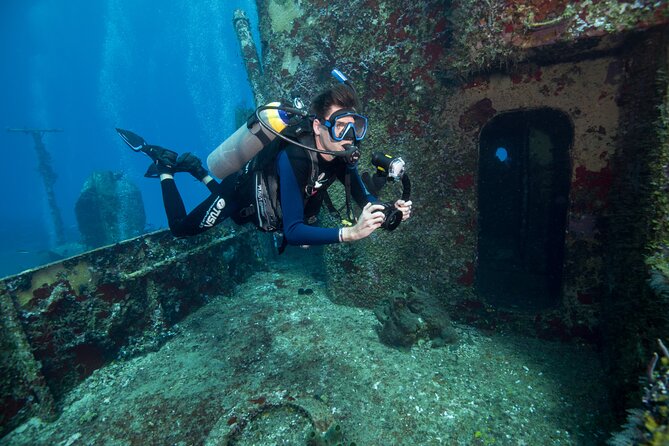
- Two very different sites: wrecks around 60–70 feet, plus reefs around 30 feet
- Small groups (max 6), so you’re not swallowed by the crowd
- Wreck and reef variety: C-One wreck, Army Tanks, Radio Towers, plus Rockpile and The Trench
- Air tanks and weights included, along with snacks and soda
- Attentive staff vibe: friendly, watchful, and supportive for people who are new to open water
- A realistic safety approach with a guide watching over you during the sessions
A small-group morning on Miami Beach (with a real plan)
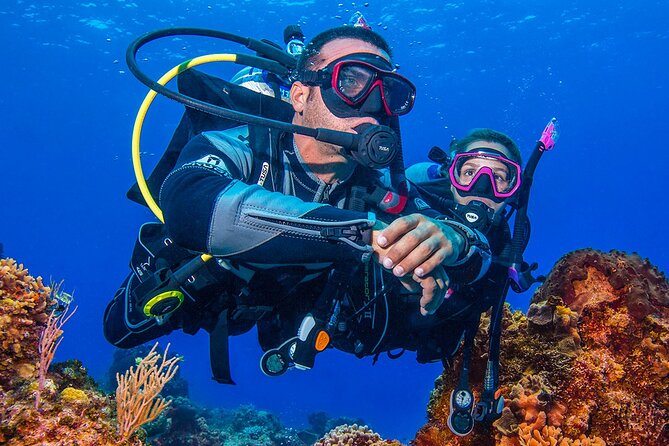
This trip is built for people who want an organized water day without feeling rushed or lost in chaos. The meeting point is at 13936 Collins Ave, Miami Beach, and the start time is 7:15 am, which usually means you’re getting out while conditions are still fresh. It runs about 4 hours 30 minutes and ends back at the same spot.
The “max six” part matters. On a boat, it changes everything: you get easier check-ins, clearer instructions, and less waiting around while someone else figures out where their gear goes. If you’re traveling solo, you’ll like that the operator explicitly welcomes solo participants—no awkward scrambling to find someone to share a bench with.
Another detail I appreciate is how direct the experience description is about where you’ll go underwater. You’re not doing one random site and hoping for the best. You’re getting two named targets: one wreck, one reef.
You can also read our reviews of more tours and experiences in Miami.
The 2-tank structure: wreck first, then reef
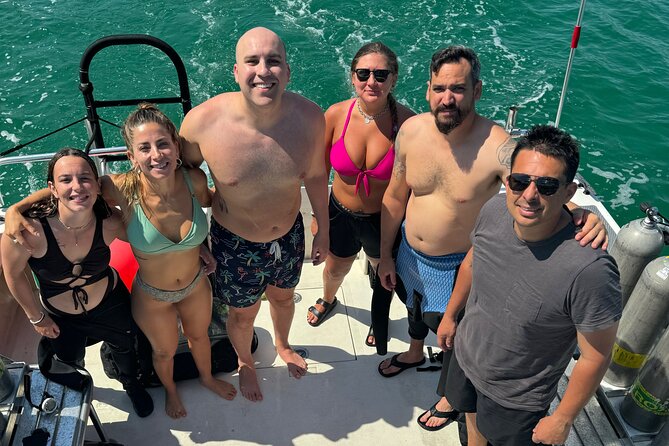
On paper, the plan is simple: two scuba sessions, two depths, two different underwater worlds. In practice, that split is what makes the morning feel efficient and satisfying.
First, you head to a wreck around 60–70 feet (18–21 meters). That deeper drop is where you often get structure, surprise, and that “how is there life here?” feeling that wrecks can deliver. Then you shift to a reef around 30 feet (10 meters), a more moderate depth where fish life can be easier to spot and your body often feels better for the second half of the morning.
Why this is good value: it’s not just two time blocks in the water. It’s two different kinds of habitat. A reef tends to show off fish movement and coral structure. A wreck tends to offer angles, shadowy spots, and the chance to see large congregations of marine life.
The first stop: wrecks at about 60–70 feet
The operator’s favorite wrecks include the C-One wreck, the Army Tanks, and the Radio Towers. Even if you don’t know the details of each site, the fact that the company has a shortlist tells me they run this route often and plan for conditions that work.
What you should expect at this depth:
- More time focused on control and buoyancy, because you’ll be working farther from the surface
- A stronger sense of “geometry” underwater—wreck structures create paths your eyes can follow
- The possibility of big-life moments, not just small fish flickers
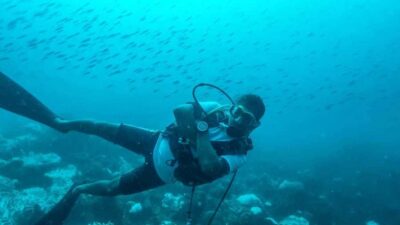
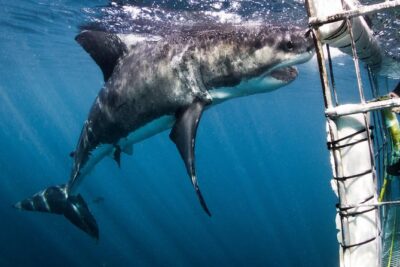
One highlight from feedback: someone reported seeing large schools of fish and nurse sharks. You shouldn’t count on any single species, but wrecks often attract larger life because they offer cover and a stable home base. If you’re hoping for more than scenery—if you want real underwater encounters—this wreck-first approach is a smart match.
A practical consideration: deeper sites can feel more demanding, especially if you haven’t been in open water recently. That’s why the certification requirement matters. It’s the operator’s way of keeping the day safe and enjoyable for everyone.
The second stop: reef around 30 feet (Rockpile and The Trench)
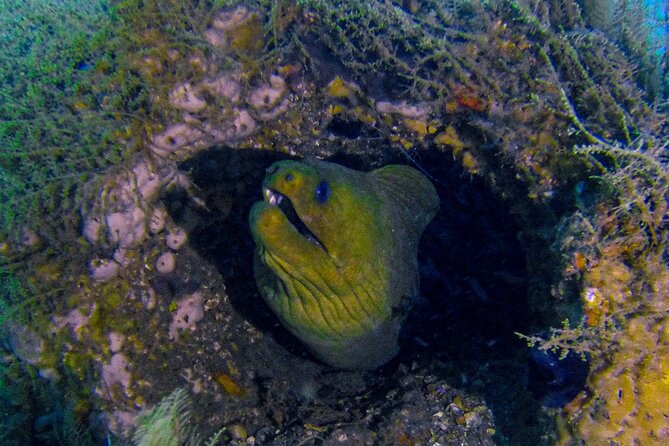
The reef portion includes favorites such as Rockpile and The Trench. A reef at around 30 feet is often a sweet spot: it’s shallow enough that you can see a lot without feeling like you’re spending your day fighting depth, and deep enough that marine life is usually active and varied.
What makes this reef leg valuable is the contrast. After the wreck’s heavier structure and deeper water, the reef is typically where people relax into the trip—more time scanning for fish, more stable viewing, and less of that “deep breath and focus” feeling.
The reef names also signal that the operator is targeting classic South Florida habitats, not just generic underwater locations. If you’re the kind of scuba participant who enjoys seeing schooling fish, reef structure, and ongoing movement across a site, this second session is the one that often sticks in memory.
What’s included, what’s missing, and what to plan for
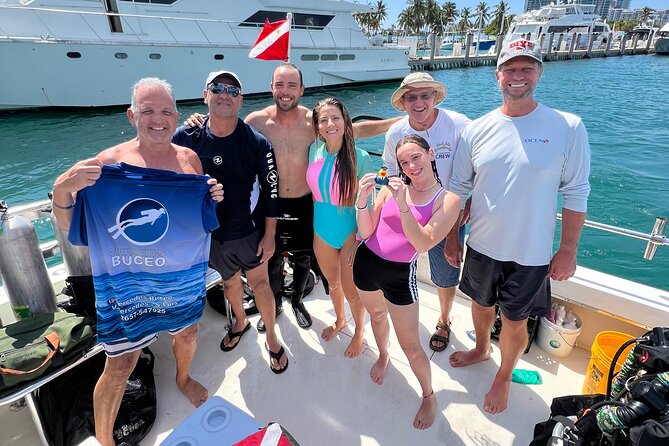
Let’s talk money worth: the price is $126.00 per person, for a total time around 4 hours 30 minutes. The included items are practical—air tanks and weights, plus snacks and soda/pop. That’s a real time-saver and comfort boost. You don’t need to worry about lining up basics right before you go.
What’s not included is the biggest potential surprise: scuba equipment use isn’t included. So when you budget, don’t just think about the ticket price. Plan for rental equipment or bringing your own gear.
How this affects value:
- If you already have your own kit, this can be a straightforward, good deal for two planned sites and a small group.
- If you need rentals, you’ll want to price that out ahead of time, so the total cost doesn’t creep up.
The plus side is that feedback highlights rental gear in top condition. That doesn’t change the fact that equipment use isn’t included in the tour price, but it does suggest you’re less likely to get stuck with worn-out gear.
Solo-friendly and beginner-supportive: why the group size matters
This is one of those tours where the small-group number isn’t just marketing math. Maximum six people means the guide can actually keep an eye on each participant. That’s what you want when you’re trying to enjoy the experience instead of managing anxiety.
Feedback also points to a staff approach that feels friendly and attentive, with help that can make a big difference for people who are new to open-water scuba. If you’ve done the classroom work but your confidence still feels shaky once you’re underwater, a calm guide and a controlled group size can turn the day from stressful into smooth.
And yes, solo participants are explicitly welcome. That matters because some “guided” experiences silently assume you’ll join someone else’s bubble. Here, the structure seems built to handle individuals.
The realism factor: good weather is required
This trip depends on good weather. That’s not unusual in Miami, but it’s worth taking seriously because it affects whether your schedule actually happens as planned.
If the operator cancels due to poor weather, you’ll be offered either a different date or a full refund. That’s a fair safety net. It also means you should keep the morning flexible in the sense that you might not be able to treat this as a rigid, no-alternative part of your itinerary.
One more timing detail: it’s started at 7:15 am. Early mornings are great for a calm start, but they also mean you’ll want to be on time and ready. When weather shifts, early departures give the operator more options to adjust.
Price and value: what you’re really paying for
$126 for a guided, two-site scuba outing is competitive in a market where boat trips and gear logistics can add up fast. You’re paying for:
- A guided experience with a watchful team
- Two different underwater habitats (wreck and reef)
- Air tanks and weights included
- Snacks and soda included
- A small group capped at six
The value equation turns on one thing: equipment. Since scuba equipment use isn’t included, your total cost depends on whether you already have gear or need rentals. If you already own your equipment and you’re certified recently, you’re likely to feel like this is a clean, well-run morning.
If you need rentals, you may still have a good day here, but your best move is to confirm what equipment options you’ll have through the operator and what that adds to your budget.
Also, this activity is often booked about 20 days in advance on average. That doesn’t mean you can’t find space later, but it does suggest planning ahead is smart if your dates are tight.
Who should book this Miami wreck-and-reef scuba tour
You’ll likely be happiest if you want:
- A guided morning with two planned underwater targets
- A small group experience instead of a crowded one
- A wreck-and-reef contrast rather than one site only
- A supportive, attentive staff vibe (especially helpful for people who are new to open water)
This tour may not be the best fit if:
- You don’t meet the scuba certification rule or you haven’t been in the water recently (the requirement is scuba certified and have gone diving within the last 12 months)
- You don’t want to deal with equipment logistics, since equipment use isn’t included
- You’re counting on perfect weather no matter what, since good weather is required
If you’re into South Florida’s classic underwater spots and you like the idea of named targets like C-One, Army Tanks, Radio Towers, Rockpile, and The Trench, this tour reads like a solid hit list.
Should you book this Squalo Divers 2-tank trip?
Yes, I’d book it if you want a well-organized Miami morning that mixes wreck structure with reef life, and you care about keeping the group small. The included tanks and weights, plus snacks and soda, make it feel practical rather than nickel-and-diming you at every step.
Do your homework on one point before you commit: equipment. Since scuba equipment use isn’t included, decide whether you’ll rent or bring your own. If that part is handled, the rest of the formula looks strong—small group, guided support, and two different underwater worlds in one outing.
If you’re flexible on weather and you can meet the certification requirements, this is the kind of tour that tends to leave people satisfied because it’s structured, not random.
FAQ
What time does the tour start and how long is it?
It starts at 7:15 am and runs about 4 hours 30 minutes.
Where do I meet for the Miami Beach tour?
The meeting point is 13936 Collins Ave, Miami Beach, FL 33154, USA. The tour ends back at the same meeting point.
How many people are on the trip?
The experience has a maximum of six travelers.
What depths are the two underwater sites?
The first site is a wreck around 60–70 feet (18–21 meters) deep, and the second site is a reef around 30 feet (10 meters).
Is scuba equipment included in the price?
No. Air tanks and weights are included, but use of scuba equipment is not included.
Do I need scuba certification?
Yes. You must be scuba certified and have gone diving within the last 12 months.
What happens if the weather is poor?
If the experience is canceled due to poor weather, you’ll be offered a different date or a full refund.