REVIEW · SESIMBRA
Lisbon: Try Dive in Arrábida Marine Reserve Setubal Sesimbra
Book on GetYourGuide →Operated by WIND · Bookable on GetYourGuide
Want to go underwater near Lisbon? In the Prof. Luiz Saldanha Marine Park, you get a real first-timer scuba training experience in reef and coral gardens, with guided help to spot 1,000+ sea species close by. I like the hands-on structure (safety briefing, gear fitting, practice before you go below the surface) and the emphasis on certified leadership so you’re not left guessing. A possible drawback: the schedule can shift due to weather or safety conditions, and there’s a medical screening that may rule some people out.
This is the kind of outing that feels practical, not showy. You start at Creiro’s Beach, do an adaptation session focused on breathing and basic underwater control, then head out with a guide to learn the marine life of this protected area.
And for the price, it’s not just a quick taste. You’re getting the full setup plus tank air, ballast, water, and a participation certificate, all tied into speedboat transfer and safety support. That’s why this works well if you want a first-time experience without extra rentals or guesswork.
In This Review
- Key takeaways before you book
- Where Arrábida’s protected reefs fit into a Lisbon trip
- Creiro’s Beach meeting point and the speedboat transfer
- Safety briefing and gear fitting: what you’ll actually do first
- The guided underwater tour: reefs, coral gardens, and the animals to look for
- The leadership style you want for a first session
- Price and value: is $100 per person a fair deal?
- Who this is best for (and who should skip it)
- What to pack for a smooth morning-to-water day
- When conditions change: how weather affects your plans
- Should you book this first-time scuba session?
- FAQ
- Is this suitable for beginners?
- What’s included in the price?
- What equipment and tank air are provided?
- Where do we meet?
- How long is the experience?
- What languages are available?
- Who shouldn’t participate?
- Is transportation to the meeting point included?
Key takeaways before you book
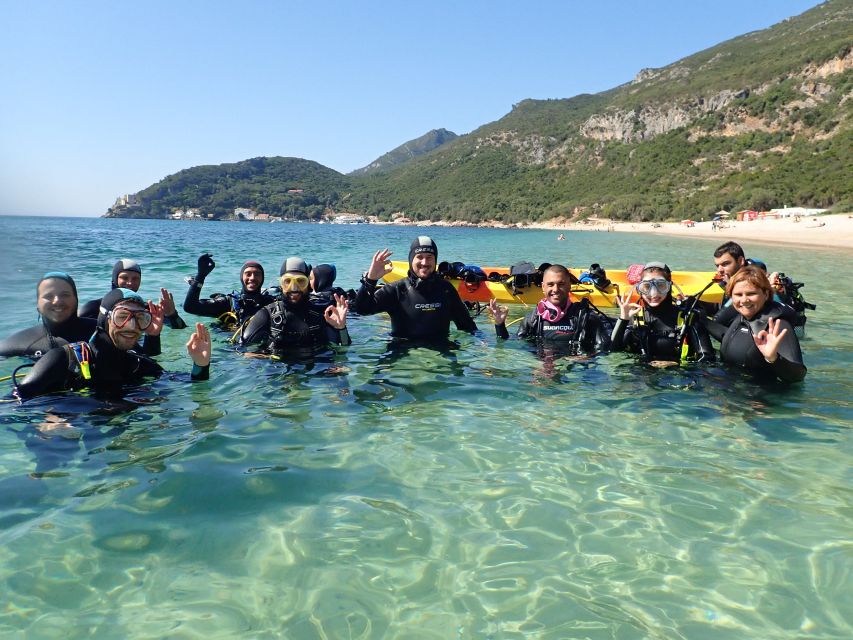
- Prof. Luiz Saldanha Marine Park: reef and coral gardens along the Setúbal coast, under an hour from Lisbon
- Practice first: you learn how to breathe underwater and handle basic gear moments before the guided part
- Certified leadership: instructors and underwater guides certified via SSI and CMAS training organizations
- You get your own setup: the experience is built for hands-on learning, not a tethered, passive ride
- Included gear and safety: full equipment, tank (12l/15l, 200 bar), ballast, water, and liability insurance
- Real marine-life focus: you’re looking for sea life like anemones, gorgónias, lobsters, octopuses, stingrays, sea horses, sea stars, and sea urchins
Where Arrábida’s protected reefs fit into a Lisbon trip
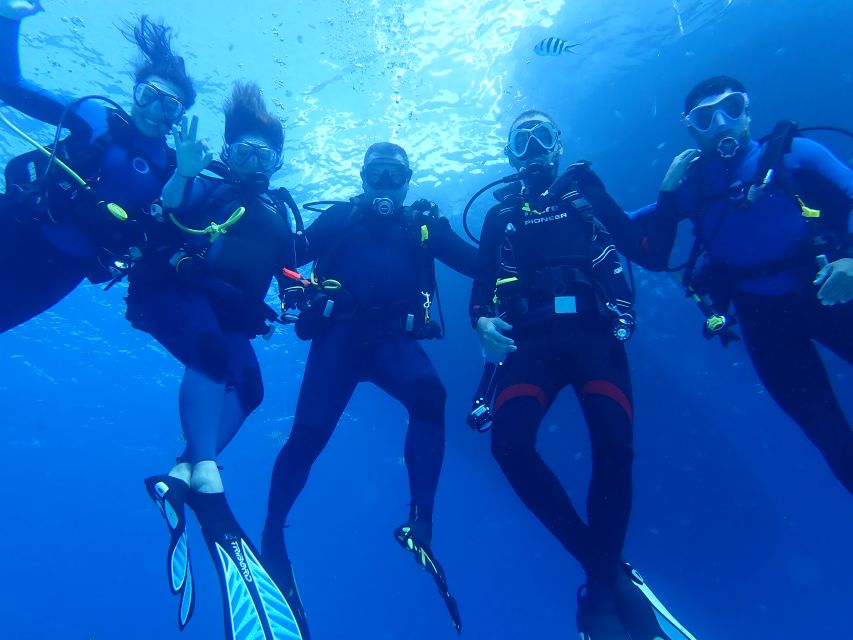
If you’re basing yourself in Lisbon, this is a smart day-trip choice because it lands in a conservation zone with real underwater habitat—not just a postcard setting. The Arrábida–Cabo Espichel coastline is known for strong biodiversity, and this specific site (Prof. Luiz Saldanha Marine Park) is set up to showcase it.
What I like about this kind of destination for a first session is the setting does the heavy lifting. Reef and coral gardens are visually interesting even before you start recognizing individual animals. And because the park is designed as a reserve and conservation area, the underwater tour is more educational than entertainment.
Two more reasons it fits well with your time:
- The ride is short enough to stay a “half-day feeling,” not an all-day slog.
- The overall training plan is built for speed—about 2 hours from meeting to return.
You can also read our reviews of more tours and experiences in Sesimbra.
Creiro’s Beach meeting point and the speedboat transfer
You meet at Creiro’s Beach. When you reach the beach area, turn right, and you’ll find the operator after Anicha Bar. From there, you’re set up for the next phase with speedboat transfer and safety support.
This matters more than people think. A speedboat gets you to the right water quickly, which helps keep the session focused and reduces the time you spend waiting around in gear. It also means the underwater experience starts sooner, once you’re fitted and ready.
One practical note: parking can be complicated in this area. Plan for the possibility that you’ll need to follow local rules for authorization. In one real-world example, someone found they had to notify the local authority (GNR) about the activity to access parking. If you’re driving, give yourself buffer time and be ready to ask on arrival what’s required that day.
Safety briefing and gear fitting: what you’ll actually do first
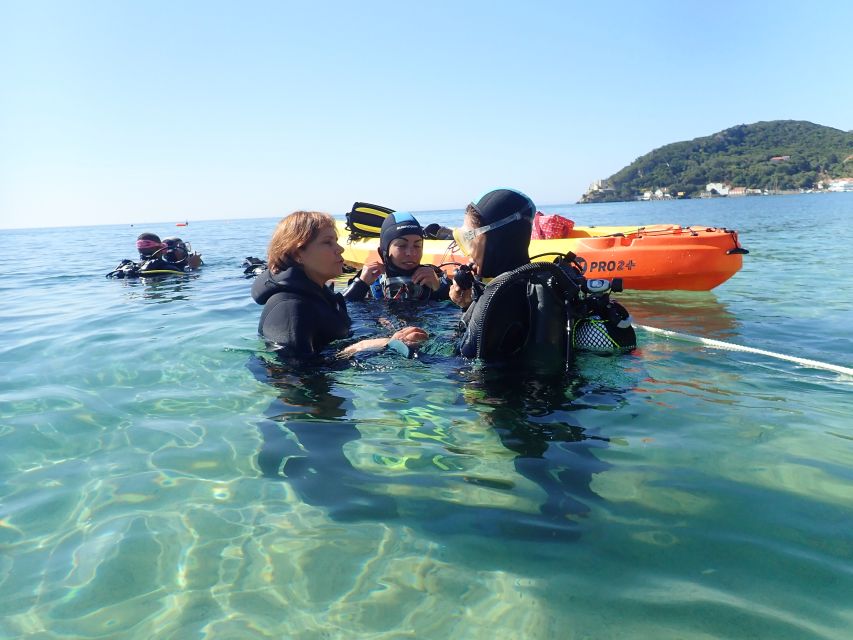
Your session begins with a safety briefing and an introduction to your instructor and scuba setup. That’s followed by gear fitting—think suit, mask, and fins—plus a short orientation to how everything works together.
Then comes the adaptation session, and this is the part that makes or breaks a first-timer experience. The training is designed to help you learn to:
- breathe underwater in a controlled way
- apply basic recreational scuba techniques
- clear water from your mask and manage the common early hiccup moments
This is why the experience can feel more confidence-building than scary. You’re not dropped in at the deep end—literally or emotionally. You’re learning the fundamentals where you can get corrections right away, before the guided underwater portion.
Languages are also a real factor here. Instruction is available in English, Portuguese, French, and Spanish, so if you’re not fully fluent in English, you can often still get comfortable explanations.
The guided underwater tour: reefs, coral gardens, and the animals to look for
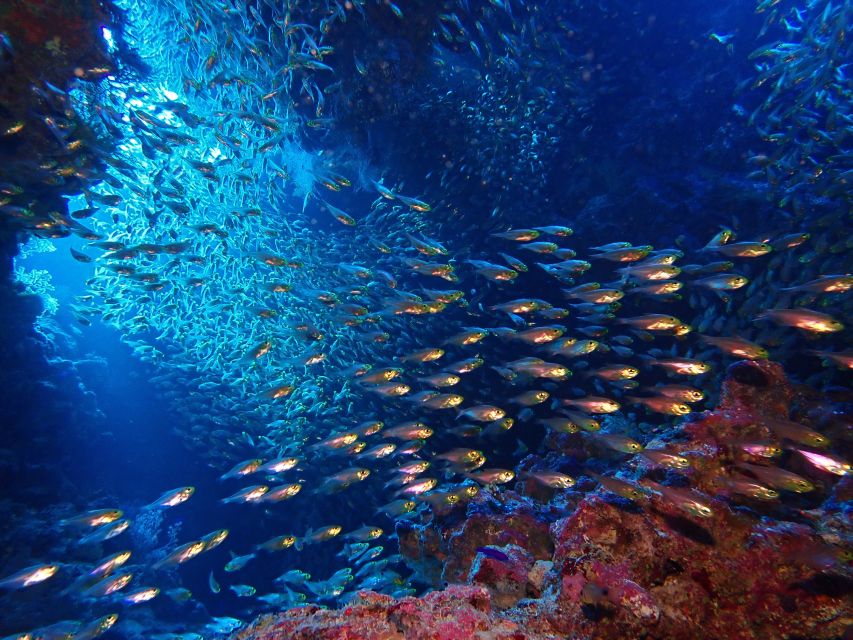
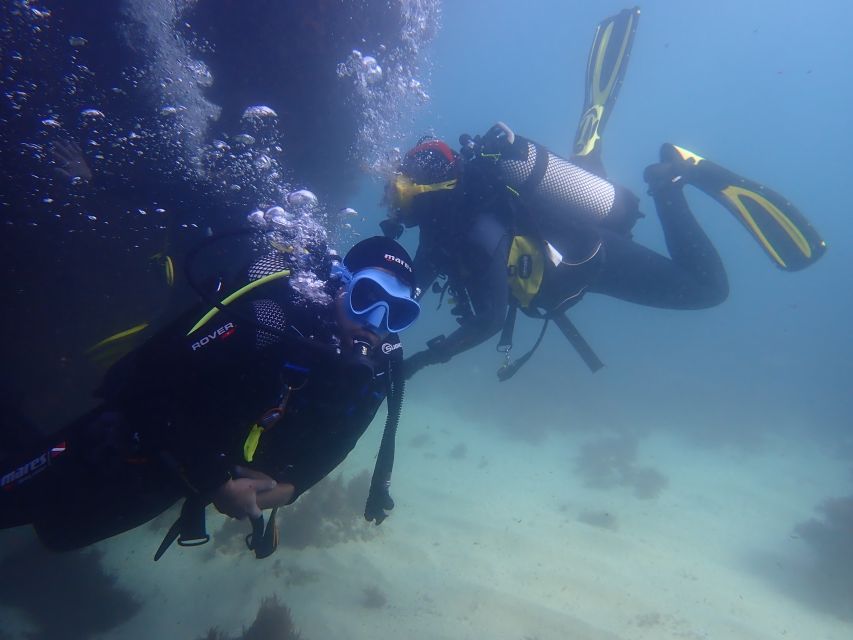
Once you’re trained enough to stay calm and in control, you move into the guided underwater part. This is where you increase your understanding of the reserve’s endemic marine life—animals that are part of what makes this coastline special.
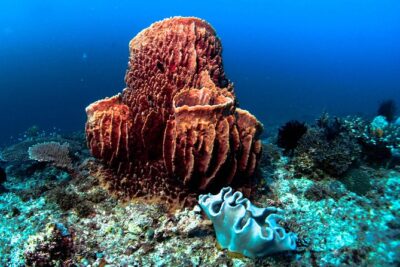
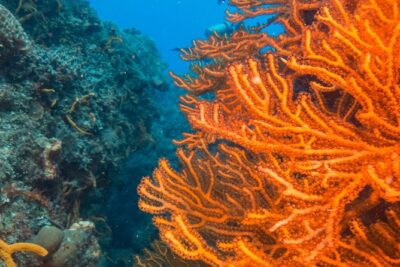
The habitat is described as reef and coral gardens, and the species list is one of the most helpful parts of the pitch because it tells you what to keep an eye out for. Expect to look for animals such as:
- anemones
- gorgónias
- lobsters
- octopuses
- stingrays
- sea horses
- sea stars
- sea urchins
A useful way to think about this section: you’re not just seeing “fish.” You’re training your eyes to notice different life strategies—some animals cling, some roam, some hover, and some look like they belong in the reef structure itself.
You’ll also get the conservation angle. This is a protected biodiversity area along the Setúbal coast between Serra da Arrábida and Cabo Espichel, so the guide’s focus is on the life in the sanctuary and how it survives there. For many people, that’s what turns a first-time session into a lasting memory.
The leadership style you want for a first session
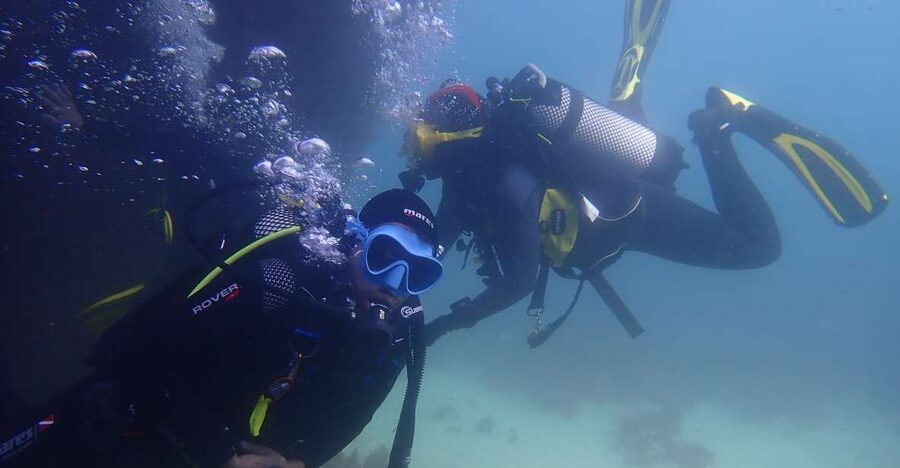
For first-timers, the most important “feature” is the human part. This program is led by instructors and underwater guide leaders certified through SSI and CMAS, and that certification matters because it ties to safety standards and training methods.
What you should look for in a great first session is patience when your body decides to learn slower than your brain. In one example from a father-and-son trip, the child struggled during the early practice stage—especially with breathing moments and getting water out of the mask. The instruction approach was calm and repeated, with extra reassurance until he could make the best decision for himself. In the end, he didn’t continue underwater, but the parent did—and the training still felt supportive the entire time.
Another strong signal from real experiences: guides tend to be communicative and encouraging, with explanations that help you understand what you’re doing while you’re doing it. That’s a big deal when you’re learning underwater basics under time pressure.
Price and value: is $100 per person a fair deal?
At $100 per person for a 2-hour experience, the value depends on what you’d otherwise pay to try scuba training. Here, the included package is substantial:
- certified instructor and underwater guide leadership (SSI/CMAS)
- full scuba equipment
- tank with air (12l/15l, 200 bar)
- ballast
- water
- speedboat transfer and safety support
- certificate of participation
- experience liability insurances
So you’re not just paying for an activity. You’re paying for a full safety-and-training service, including gear and a tank. That usually saves money versus piecing it together with rentals, instruction time, and transport.
What’s not included is transportation to the meeting point, though there’s an option for a transportation service at extra cost if you request it. If you’re staying in Lisbon proper, you’ll likely handle the ride yourself unless you prefer a managed pickup.
Also remember: the session operates with weather and safety limits. If conditions aren’t suitable, you might be offered a different experience or a reschedule. That’s not a “gotcha”—it’s part of why the training environment is treated seriously.
Who this is best for (and who should skip it)
This experience is designed for beginners and also works for people who want a structured refresher. It’s suitable for individuals or groups, including friends, couples, and family events—plus it can be used for birthdays and even school or corporate gatherings.
But it’s also very clear about who should not go:
- children under 10 years old
- pregnant women
- people with heart problems
- people with respiratory issues
There’s also a medical form you’ll need to fill out. If you have any health concerns, this is the moment to be honest. Even when you feel fine on land, underwater training can change how your body reacts.
What to pack for a smooth morning-to-water day
The packing list is simple, which is nice:
- swimwear
- towel
- hair tie
That’s it for the personal items. The operator supplies the scuba gear and the tank air, and you’ll get water. Still, I’d treat the session like you’re getting wet and then drying off soon after.
If you want the gear-fitting part to go quickly, come in comfortable clothing and avoid anything that’s hard to manage with a quick change.
When conditions change: how weather affects your plans
This experience can be subject to restrictions due to meteorological conditions or other logistic and safety conditions. If that happens, the operator will propose an alternative experience or reschedule.
The practical takeaway for you is to avoid booking this as your only “flex-free” plan on a day. Build in some breathing room if you can, especially if you’re juggling other Lisbon activities.
There’s also a minimum attendance requirement of 2 people per course. If that minimum isn’t met, the operator works to adjust with an alternative or reschedule.
Should you book this first-time scuba session?
Yes—if you want a first underwater experience that’s structured, instructor-led, and built around learning the basics before going off on your own. The combination of reef-and-coral-garden habitat, the long list of potential animals to spot, and the adaptation session is exactly what makes this a good “learn safely, see real marine life” choice.
Book it especially if:
- you want an organized training plan with safety briefing and underwater breathing practice
- you’re comfortable with (or prefer) clear instruction in English, Portuguese, French, or Spanish
- you like the idea of being close to a highly diverse protected seabed
Skip or double-check if:
- you fall into the listed health restrictions
- you’re traveling with someone very young
- you’re allergic to schedule changes due to weather and safety limits
If you’re on the fence: treat this as a high-value day trip because the total package includes equipment, tank air, instruction, and transport by speedboat. That’s usually what turns a “maybe later” dream into an actual checked-off experience.
FAQ
Is this suitable for beginners?
Yes. The session includes a safety briefing, an introduction to scuba gear, and an adaptation session where you practice learning to breathe underwater before the guided underwater part.
What’s included in the price?
The experience includes a certified instructor/underwater guide leadership (SSI/CMAS), full scuba equipment, tank air (12l/15l 200 bar), ballast, water, speedboat transfer and safety support, a certificate of participation, and experience liability insurances.
What equipment and tank air are provided?
You’ll get full scuba equipment, including a tank with air (12l/15l at 200 bar) and ballast.
Where do we meet?
Meet at Creiro’s Beach. When you reach the beach, turn right and look for the operator after Anicha Bar.
How long is the experience?
The duration is about 2 hours.
What languages are available?
Instruction is available in English, Portuguese, French, and Spanish.
Who shouldn’t participate?
It’s not suitable for children under 10, pregnant women, people with heart problems, or people with respiratory issues. You’ll also need to complete a medical form.
Is transportation to the meeting point included?
Transportation service isn’t included, but it may be available on request for an extra cost.
![[PRIVATE] Negril Sightseeing Tour with RickS Cafe Cliff Diving - Rutland Point Craft Centre and Orange Hill: a quick culture stop that doesn’t drag](https://8.scubadivelover.com/wp-content/uploads/private-negril-sightseeing-tour-with-ricks-cafe-cliff-diving-400x267.jpg)