REVIEW · KOH SAMUI
Discover Scuba diving with 2 dives on Koh Tao
Book on Viator →Operated by Tropic sun co., ltd. · Bookable on Viator
Two sessions, one easy first step. This Koh Tao discover scuba day is a tidy way to try the underwater world without the hassle: you get round-trip hotel pickup from Koh Samui and you’re provided all scuba gear.
What I like most is how it mixes structure with fun. You’ll get guided practice for an intro feel, then two separate underwater outings, each giving you time to adjust and actually enjoy the experience. One thing to consider: this is for trying scuba, not finishing with certification, so it’s best if you want a taste and a smooth start rather than a signed-off qualification.
In This Review
- Key things to know before you go
- From Koh Samui pickup to a full day on the water
- Gear included: the real value is less stress
- What you learn on land before you head out
- Two underwater outings in one day (and why that’s smarter)
- The itinerary moment: your first underwater entry at the open-water site
- Lunch and breaks: don’t underestimate the fuel
- Who this experience fits best (and who should choose another plan)
- Price and what you actually get for $245.27
- Weather, health, and flying: key practical notes
- Small details that make the day feel friendly
- Should you book this Koh Tao intro scuba day?
- FAQ
- How many underwater sessions are included?
- Is scuba gear included?
- Do I need to be certified to join?
- How deep do the sessions go?
- Is lunch included?
- What time does the experience start?
- What’s the minimum age?
Key things to know before you go
- Hotel pickup and shared transport: round-trip from Koh Samui hotels saves you from figuring out rides.
- All gear included: regulators, buoyancy tools, tank, and the rest are taken care of so you can travel lighter.
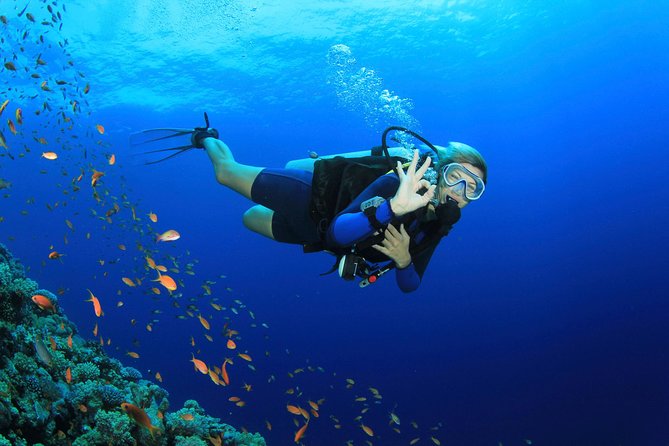
- Two different underwater outings: you’ll try two sessions in one day, which helps you learn faster than just one.
- Small group size: up to 15 travelers, so you’re not stuck with a huge crowd.
- Up to 12 metres: plan on a guided, controlled progression rather than anything extreme.
- No certification at the end: you’ll leave with experience, not paperwork.
From Koh Samui pickup to a full day on the water
Your day starts with a start time of 8:00 am, and the main advantage is that it begins for you. If you’re staying on Koh Samui, this kind of shared pickup removes the usual time sink of coordinating scooters, taxis, or finding a meeting point. You show up, get checked in, and the team handles the pacing so you can relax into the plan.
A full day is usually the reality with intro scuba because there’s time for briefing, paperwork/health checks, fitting equipment, and then the actual water time plus a lunch break. In practice, expect something around 7 hours total for the whole experience, with your two underwater sessions lasting roughly 40–50 minutes each. That timing matters because it means you’ll have enough time to get comfortable, not just a quick splash-and-go.
Also, keep an eye on how the day feels in the morning. Intro experiences work best when you’re calm and not rushing. If you tend to get nervous with schedules, this pickup-based flow helps.
You can also read our reviews of more tours and experiences in Koh Samui.
Gear included: the real value is less stress
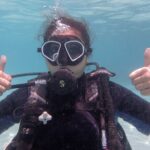
Let’s talk about what you don’t have to think about. The package includes all scuba gear, which is a huge quality-of-life win if you’re traveling light or you’d rather not rent and transport equipment in addition to everything else.
In an intro setup, gear handling is half the battle: getting the fit right, learning how the regulator feels in your mouth, and understanding how your buoyancy reacts. When the kit is already handled for you, you can spend your energy on the part that actually matters—breathing steadily, staying relaxed, and following your instructor’s cues.
It also means you can arrive with less mental load. You don’t need to wonder whether your mask strap fits, whether your rental is worn out, or whether you’ve packed the right size. That kind of uncertainty is what turns “fun first time” into “why is this so hard.”
One more small but real benefit: bottled water is included, which helps you stay comfortable before and between sessions.
What you learn on land before you head out
You don’t just get dropped in and told good luck. This experience is designed as an intro program under supervision, built to teach you some core scuba skills before you go open water.
You’ll cover basics like:
- mask clearing
- regulator recovery
- sharing air
You might notice how those specific skills show up again and again across scuba training because they build confidence fast. Mask clearing helps you understand what to do if water gets in. Regulator recovery matters because it reinforces calm, practiced responses. Sharing air is a key safety concept and also helps you understand what buddy teamwork looks like underwater.
There’s an important distinction for your planning: this program does not end with certification. Still, the skills you practice may credit toward future scuba levels, depending on what you continue with later. If you’re curious about earning certification, this is a practical “start here” step.
And yes, an instructor matters. In one of the standout comments, the guide Yuan was described as friendly and kind, with the kind of instruction that helps you refresh scuba vocabulary and feel ready. That’s exactly what you want on a first attempt: someone who can explain, not just perform.
Two underwater outings in one day (and why that’s smarter)
The big headline here is two different underwater sessions in a single day. Instead of only learning what it feels like once, you get to try again with what you learned the first time.
That second run is where you tend to feel the change. You already know what your gear feels like, you’ve heard the standard cues, and you’re less mentally busy. So even though the total time is the same day, the experience often feels more complete.
The sites mentioned for calm, clear conditions are Mango Bay or Japanese Garden. Those names are useful to you because they hint at what the organizers aim for: clear water, manageable conditions, and a setting where beginners aren’t fighting the environment.
In terms of depth, your open-water session can reach up to 12 metres. For a first time, that’s a reasonable threshold: enough to feel the underwater world shift, but still within an intro-friendly range where instructors can guide you closely.
And because you’re doing two outings, you also get better odds of a smoother day if conditions change slightly. You’re not banking the entire trip on one short window.
The itinerary moment: your first underwater entry at the open-water site
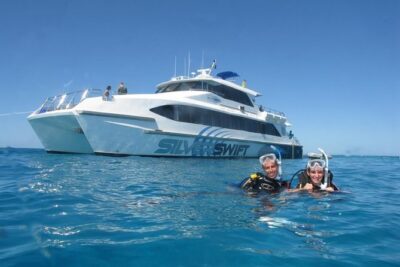
Once you’re geared up and briefed, the day moves into the open-water portion. Your instructor guides you through controlled entry and the fundamentals of staying relaxed underwater.
This is where calm matters more than toughness. If you go in trying to force yourself to feel fearless, you’ll probably tense up. The better approach is to treat it like learning to ride a bike: slow breaths, listening carefully, and trusting that your buoyancy is something you can control with practice.
You’ll spend your time in the water in a supervised setting, keeping within the intro limits set for the program. Your instructor will monitor how you’re doing and adjust pacing if needed. With an experience like this, you’re not hunting perfection—you’re building comfort.
One of the notes from the day-of experience is that people found it cruisy and low-stress, especially for beginners or those still building their scuba skills. That’s the target vibe: confidence through guidance.
Lunch and breaks: don’t underestimate the fuel
After time in the water, lunch becomes more than a checkbox. You’re working a little bit physically, even if you don’t feel like you are, and you’re burning energy in cool, airy conditions.
Lunch is included, plus bottled water. A meal during a long day helps you avoid the classic mistake: feeling fine right up until the second session, then feeling drained or stomach-wonky. With two underwater sessions in one day, that second round is when you want steadier energy.
If you get car-sick or feel off on boats, this is also where you’ll appreciate having time and food rather than rushing from one thing to the next.
Who this experience fits best (and who should choose another plan)
This works best if you want:
- a first taste of scuba with structure
- two separate underwater outings in the same day
- an instructor-led experience without the pressure of finishing certification
It’s also a solid pick if you’re returning to scuba after time away, because the guidance includes refreshing core skills. The mention of Yuan helping someone refresh scuba vocabulary is a good clue that the instruction isn’t only for true first-timers.
On the other hand, if your goal is certification completion, you’ll be disappointed. This doesn’t conclude with certification. You can still use the skills gained as a stepping stone, but you should plan to continue elsewhere for the paperwork.
Minimum age is 13 years, and the tour asks for moderate physical fitness. That’s less about athleticism and more about being comfortable with the process and staying coordinated.
Price and what you actually get for $245.27
At $245.27 per person, this is not a bargain you’d call cheap. But it can still be good value because the cost is bundled into the day, and the bundling is where your savings usually come from.
You’re getting:
- round-trip shared transfers from Koh Samui hotels
- all scuba gear
- two different underwater sessions
- lunch
- bottled water
- taxes/fees/handling charges
- driver/guide support
When you add those pieces up separately, the total often climbs fast. The group format is there to keep costs down, and the small group size (max 15) helps keep the experience from feeling like an assembly line.
So for me, the value argument is simple: you’re paying for a ready-to-run day with equipment and supervision included, plus enough water time to feel like it wasn’t a drive-by experience.
One more practical note: on average it’s booked about 18 days in advance, which suggests demand is steady. If your dates are firm, booking ahead gives you more control.
Weather, health, and flying: key practical notes
This experience requires good weather. If conditions aren’t right, you’ll be offered a different date or a full refund. That matters because scuba is weather-dependent in simple ways: calm seas and good visibility are part of the plan.
Health and safety also come up clearly. You’ll complete a health questionnaire before diving. If you have pre-existing medical conditions—like asthma or heart conditions—scuba may not be allowed, so it’s smart to consult your doctor before you go. Also, scuba within 48 hours of flying is not recommended, so if you’ve just arrived from somewhere far, give yourself a buffer day if possible.
If you’re bringing a first-timer friend, this is where you can help: remind them to be honest on the health questionnaire and don’t try to push through if there’s a medical reason you’re not cleared.
Small details that make the day feel friendly
A good intro day isn’t only about safety. It’s also about how welcomed you feel when you’re nervous.
The comments I kept noticing were about the staff being welcoming and supportive, with prompt pickup. One review also mentioned the staff singing Happy Birthday for a birthday group. That’s not required for the program to work, but it shows the team pays attention to the day as an experience, not just a service transaction.
You’ll also get photos taken by staff that you can purchase. That’s useful if you don’t want to risk your own camera setup in the water or you want something keepsake-ready.
And if your guide is someone like Yuan, that matters because a friendly, competent instructor makes the learning curve feel normal instead of scary.
Should you book this Koh Tao intro scuba day?
Book it if you want an organized, low-stress way to try scuba with two underwater sessions, gear handled for you, and a clear intro structure. It’s especially good for beginners who want confidence-building skills like mask clearing and regulator recovery, plus enough time underwater to enjoy it.
Skip it if you specifically want certification completion in one package. Skip it too if you’re likely to ignore health guidance—this experience is built around screening and supervision for good reason.
If you’re deciding between doing only one quick try versus giving yourself two chances, this is the one that makes learning feel smoother. Your second underwater session is where you’ll likely feel the biggest improvement—and that’s a great payoff for a day spent in the water.
FAQ
How many underwater sessions are included?
You’ll do two different underwater sessions in one day.
Is scuba gear included?
Yes. All scuba gear is provided for you.
Do I need to be certified to join?
This is an intro experience. It does not conclude with certification.
How deep do the sessions go?
Your open-water session takes you as deep as 12 metres.
Is lunch included?
Yes. Lunch is included, along with bottled water.
What time does the experience start?
The start time is 8:00 am.
What’s the minimum age?
The minimum age is 13 years.