REVIEW · BARCELONA
Discover PADI Diving in Barcelona
Book on Viator →Operated by iDive Barcelona Diving School · Bookable on Viator
Going underwater in Barcelona is surprisingly doable. This beginner-friendly PADI-style intro gives you step-by-step gear training, sign-language communication, and a protected shoreline spot where you can focus on confidence, not chaos.
I especially like how structured it is: the first hour is clear theory and practice with the equipment, then you get your 30–40 minutes in the water. I also like the small group format, with up to six people, so your instructor isn’t juggling the whole beach at once.
One consideration: the underwater area is safe and controlled, which means you might feel like you’re in a sheltered “setup,” not a big open-ocean show. Add variable visibility from weather, and you’ll want to manage expectations for wildlife and clarity.
In This Review
- Quick Hits Before You Go
- A Beginner-Friendly Scuba Session by Barcelona’s Shore
- Where You Meet: Passeig Marítim del Bogatell (Then Back Again)
- The 2-Hour Plan: Theory First, Then Your Time Underwater
- Hour one: equipment + communication practice
- Then you get the water time
- Where You’ll Go In: A Protected Area Off the Beach
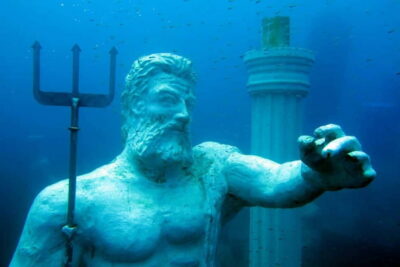
- What You’ll See Underwater: Fish, Wildlife, and Visibility Reality
- The Instructor Factor: Small Group, Lots of Care
- Souvenirs: Underwater Videos (and the Photo Question)
- Gear and Comfort: What You Don’t Have to Bring
- Who This Suits Best (and Who Should Skip It)
- Price and Value: Is $83.27 Worth It?
- Timing Tips: How to Avoid the Most Common Friction Points
- Should You Book This Barcelona Intro Underwater Session?
- FAQ
- How long is the experience?
- Is this suitable for complete beginners?
- What happens in the first hour?
- How long will I be underwater?
- What souvenirs are included?
- Can I fly right after?
Quick Hits Before You Go
- Small group (max six) means you get hands-on attention when you’re learning buoyancy and breathing
- First hour is classroom-to-water prep, including how you’ll communicate underwater
- Sign language is part of the plan, so you’re not guessing when things feel new
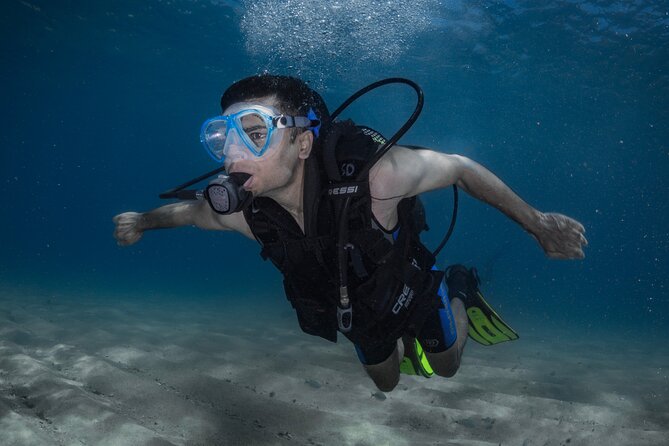
- You stay underwater about 30 to 40 minutes, not rushed, not stretched too long
- Souvenir underwater videos are included, with extra support focused on safety
- It’s scheduled for first-timers, so experienced divers may find it more basic than they want
A Beginner-Friendly Scuba Session by Barcelona’s Shore
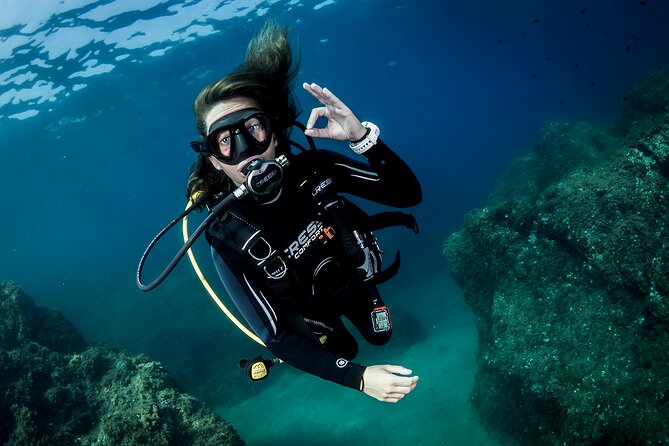
Barcelona isn’t the first place people picture for an intro scuba experience. But the setup here makes a lot of sense for first timers. You’re not thrown into the unknown—you’re guided into the water with training that’s designed around nerves, questions, and learning control.
This is built for people who have never done it before and want to feel what underwater life is like without needing prior skill. That matters, because the hardest part for newcomers is usually not the fear—it’s the equipment, breathing, and staying calm enough to move smoothly.
The vibe is also practical. Expect a focus on safety and body position, and don’t be surprised if the instructor spends extra time getting you comfortable before any longer underwater time.
You can also read our reviews of more tours and experiences in Barcelona.


Where You Meet: Passeig Marítim del Bogatell (Then Back Again)
Your meeting point is Passeig Marítim del Bogatell, 3574, Sant Martí, 08019 Barcelona, Spain. The activity ends back at that same spot, so you’re not stuck figuring out a second transfer.
It’s also described as near public transportation, which is a big deal in Barcelona. You can do this without planning a whole day just to get there.
Timing matters. You must arrive 15 minutes early. If you show up late, entry can be denied and there are no refunds or rescheduling if you’re late. That’s not meant to be harsh—it’s how they keep the gear fitting and safety checks on schedule.
The 2-Hour Plan: Theory First, Then Your Time Underwater
This experience runs about 2 hours total, and it’s broken into a clear two-part flow.
Hour one: equipment + communication practice
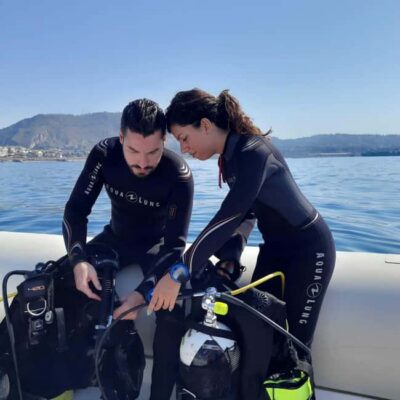
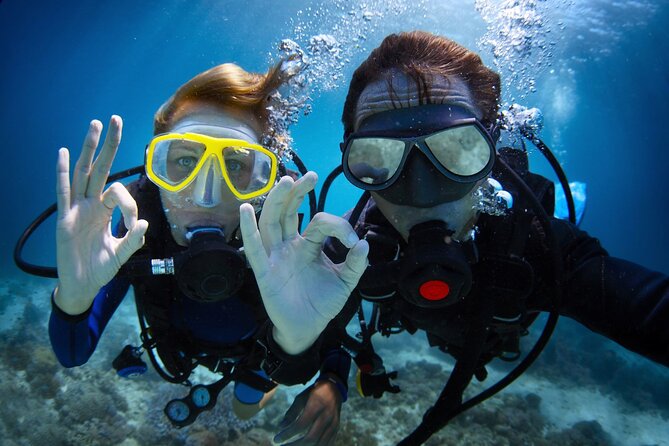
In the first hour, you’ll get a theory explanation about how the equipment works. You’ll also learn how you’ll communicate underwater—sign language is explicitly part of the plan. That’s useful because it reduces the mental load. When something changes, you’re not trying to remember what you were told 30 minutes earlier.
You’ll also learn what the activity will feel like. That might sound basic, but it helps a lot when your brain is doing that classic first-timer math: Will I panic? Will I sink? Will I understand the instructor?
Then you get the water time
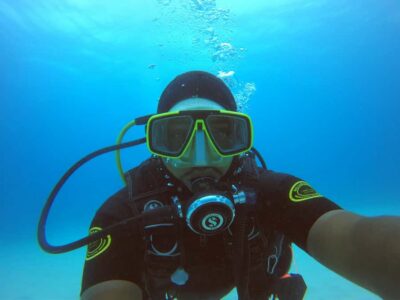
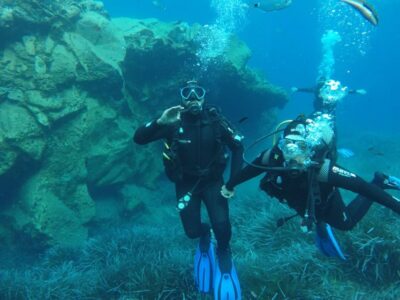
After the intro, you’ll remain underwater for about 30 or 40 minutes. During that time, you’ll have instructors guiding and checking in constantly, and they’ll also make underwater videos for you.
One practical point from the structure: you’re not meant to sprint through the experience. The time underwater is long enough to feel real, but short enough that they can prioritize learning and safety.

Where You’ll Go In: A Protected Area Off the Beach
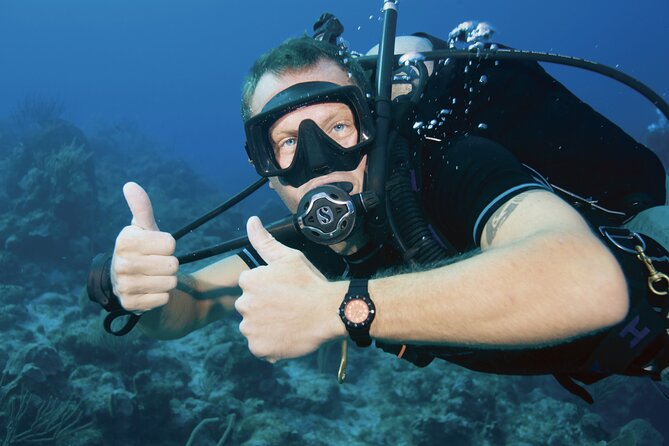
This takes place in a protected area near the sea. The big advantage for you is simple: it’s designed to avoid boats during the activity, which keeps the environment calmer for learning.
You’ll be able to focus on your breathing, your buoyancy, and your movement instead of worrying about traffic on the water. Reviews also describe the experience as being within a controlled zone, and that’s exactly what helps beginners learn without distractions.
That said, controlled sites can be a mixed bag. If your dream is a wide open-water panorama with big-current conditions, this won’t match that. Many people love it for the learning safety; some people find it less exciting if they expected a more dramatic “expedition.”
What You’ll See Underwater: Fish, Wildlife, and Visibility Reality
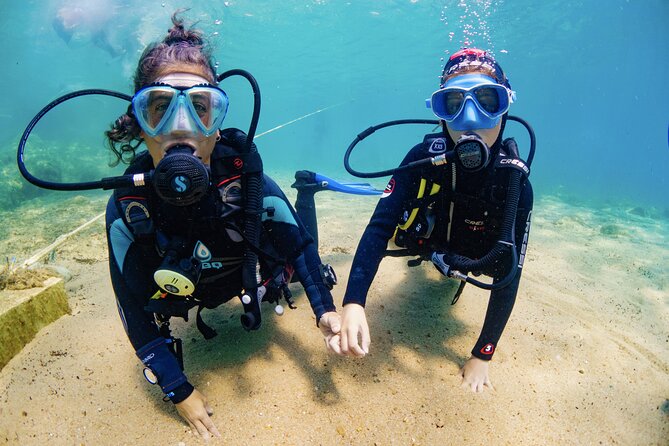
Here’s the truth of any first-time underwater intro: what you see depends on the day.
The experience is often described as suitable for beginners even in less-than-perfect conditions. Some participants report clear sea life like fish and sea creatures close to the goggles, even when visibility wasn’t ideal from recent weather.
On the flip side, there are also lower-star comments saying the experience felt like a sheltered area and that they didn’t see much. You also might hear references to a “pond-like” feeling by the beach. That’s not necessarily a safety issue—it’s a setup choice.
So how should you plan your expectations?
- Go for the feeling of learning and being underwater, not guaranteed big wildlife sightings.
- If the water is a little murky, you’ll still have the main value: controlled training, underwater communication, and that first successful glide.
The Instructor Factor: Small Group, Lots of Care
One of the strongest reasons to book this is the people running it. Multiple instructors are named in participant feedback: Pau, Julia, Hugo, Alex, David, Christian, and Oscar show up across experiences.
The common theme is patience. First-timers usually need time to process the steps: getting geared up, breathing steadily, and staying calm when things feel unfamiliar. In a small group (max six), the instructor can actually watch your body position and help you correct quickly.
You’ll also notice a safety-first coaching style. One lower-star story describes an instructor holding position for buoyancy issues. While that didn’t match the guest’s expectations, the underlying point is important: if you can’t stay controlled, they prioritize keeping you safe over “getting photos done” or “finishing the whole plan exactly.”
In plain terms: if the instructor slows you down, it’s often because you need it—not because they’re being difficult.
Souvenirs: Underwater Videos (and the Photo Question)
You get souvenir underwater videos included. That’s a smart choice for first timers, because trying to capture your own footage usually adds stress.
Many participants also say photos are taken, and that you don’t need to bring a waterproof camera. That’s helpful if you’re traveling light.
Still, there are a couple of complaints about photos not being received or not usable. So if souvenirs are a dealbreaker for you, I’d recommend confirming what’s included and how delivery works at booking time. The one thing that’s clearly stated is the included video.
Also, keep in mind that if your focus on buoyancy needs more time, the team may adjust how much filming they can do. Safety controls the schedule.
Gear and Comfort: What You Don’t Have to Bring
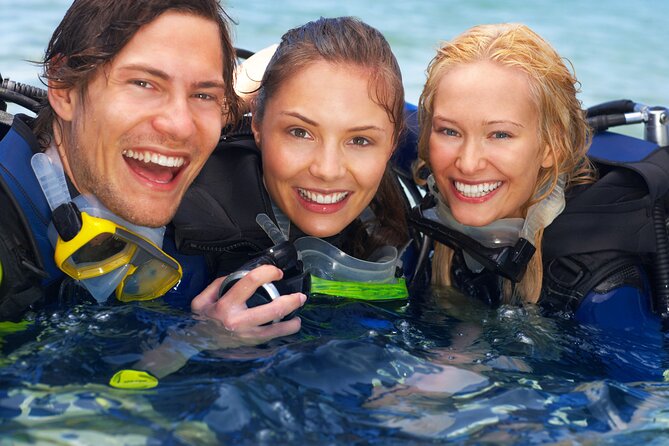
You’re not expected to arrive with scuba gear. Equipment is provided, which is a big time-saver in Barcelona, where you’re juggling plans, heat, and metro lines.
What should you bring?
- Swimwear you’re comfortable in
- A towel and basic swim clothing are mentioned as helpful
- If you’re prone to getting cold, bring extra layers for after (the information doesn’t claim this is a warm water experience)
If you’ve never done this before, assume it’ll feel a bit like learning a new rhythm. The most comfortable sessions come from staying relaxed during setup, not from rushing through it.
Who This Suits Best (and Who Should Skip It)
This is made for people who are complete beginners. If you want your first underwater experience to feel guided, this is a strong match.
It’s listed as suitable for most travelers, but there are clear limits:
- Not recommended for people with respiratory or ear diseases
- Not recommended for travelers taking prescription medicines
- Not recommended if you plan to take a plane within 12 hours after the activity
That last one is practical and easy to overlook. Plan your day so you have at least a 12-hour buffer after finishing. If you’re flying later, build that into your itinerary. Your body needs time to adjust.
If you’re unsure whether your situation fits, ask before booking. This is one of those cases where “maybe” isn’t the best answer.
Price and Value: Is $83.27 Worth It?
At $83.27 per person for about two hours, the value is strongest if you want a guided first experience.
Here’s what you’re getting for your money:
- A beginner-focused lesson structure (theory + underwater time)
- A small group (max six)
- Underwater sign-language communication
- Included underwater video souvenirs
- Equipment provided
The cost is also competitive for what you’re actually buying: trained coaching, time in the water with a controlled site, and safety oversight. In Barcelona, many outdoor activities are priced higher once you factor in guide time and equipment.
Where the value can feel weaker is if you expected a full-on “ocean adventure” with spectacular marine life and lots of visual drama. The setup is designed for learning and safety, not for cinematic wildlife. If your goal is to check the box and feel comfortable, it’s excellent. If your goal is seeing big creatures in crystal water, you may leave wanting more.
Timing Tips: How to Avoid the Most Common Friction Points
A few details matter more than they sound.
- Arrive 15 minutes early. You’ll avoid last-minute stress and keep the session running.
- Plan around the 12-hour no-flight rule. If you’re flying, treat this like a real scheduling constraint.
- Be honest about your health. Respiratory/ear issues and prescription medicines are explicitly not recommended for this experience.
Also, mental preparation helps. First-timers do best when they treat this as training, not performance. You’re learning buoyancy and control. The best sessions are the calm ones.
Should You Book This Barcelona Intro Underwater Session?
I’d book it if you want a structured first underwater experience with real coaching and a safety-first team. The small group size, sign-language system, and included underwater videos are the kind of practical details that make a first attempt much less stressful.
I’d think twice if:
- You’re specifically chasing an open-water spectacle with guaranteed marine life
- You’re very sensitive to murky conditions (visibility can vary)
- You strongly care about photos and delivery reliability—because a couple of participants reported issues there
- You don’t have the 12-hour flight buffer after your session
One smart decision rule: treat this as your confidence builder. After this, you’ll know whether you want to get certified and pursue bigger sites. If you go in with that mindset, the experience usually lands perfectly.
FAQ
How long is the experience?
It’s about 2 hours total.
Is this suitable for complete beginners?
Yes. It’s specially designed for people who have never done it before.
What happens in the first hour?
You’ll get a theoretical explanation of how the equipment works, how you’ll communicate underwater with sign language, and what the activity will be like.
How long will I be underwater?
You’ll be underwater for around 30 to 40 minutes.
What souvenirs are included?
Souvenir underwater videos are included.
Can I fly right after?
No. A flight is not possible until 12 hours after the activity.