REVIEW · BORACAY
Boracay: Helmet Diving Experience with Photos and Videos
Book on GetYourGuide →Operated by VIAJE · Bookable on GetYourGuide
A helmet reef-walk is a clever way to see the underwater world. In Boracay, you get guided helmet time on the ocean floor at about 10 feet down, plus photos and videos to keep.
I really like how this is built for beginners who aren’t set on scuba—no suit pressure, just follow the team step by step. I also love that the English-speaking PADI-certified instructors guide you closely and that you get free souvenir photos and videos uploaded to your phone.
The main trade-off is time: the whole outing is about 20 minutes, with 15 minutes on the reef. If you want a long, slow underwater session, this one might feel short.
In This Review
- Key highlights I’d prioritize
- Helmet Reef-Walk in Boracay: What makes it different
- Getting there from White Beach: the first easy win
- Speedboat ride to the site: fun, but expect sharing
- Safety briefing + helmet setup: how they calm nervous energy
- What 15 minutes of reef walking feels like
- The team’s role: why it feels guided, not risky
- Photos and video included: what you should expect
- What to bring (and what not to assume)
- Price in context: is $22 really good value?
- Who this helmet reef-walk is best for
- Health and safety limits you should take seriously
- Practical tips that make the experience smoother
- Should you book this Boracay helmet reef-walk?
- FAQ
- How long is the helmet reef-walk?
- How deep do you go?
- Do I need to be a strong swimmer?
- What photos and videos are included?
- Is the instruction in English?
- Who can’t participate?
- Are there health or medical rules?
- Can I cancel and get a refund?
Key highlights I’d prioritize
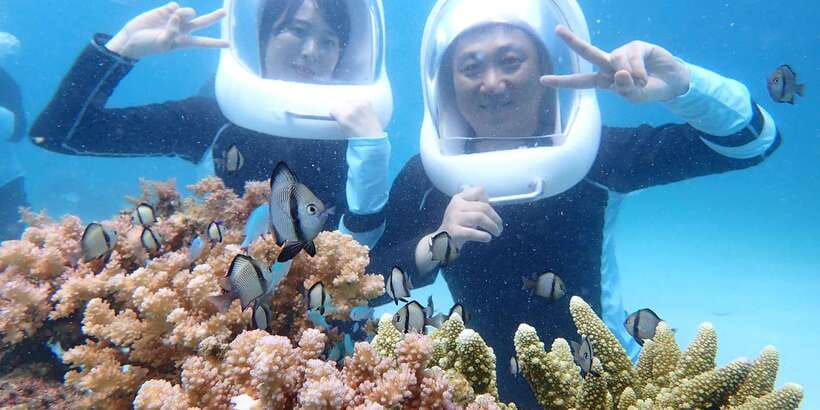
- Speedboat to the dive site: a quick, fun transfer before you even get wet
- Walk-like movement at 10 feet down: you explore on foot, not as a strict swim session
- PADI-certified English guidance: someone is always coaching you on what to do next
- Free photos and video to your phone: you don’t have to risk your camera underwater
- Colorful reef and fish viewing: coral and fish are the whole point of the trip
- Beginner-friendly setup: this is designed for people who feel nervous about standard scuba
Helmet Reef-Walk in Boracay: What makes it different
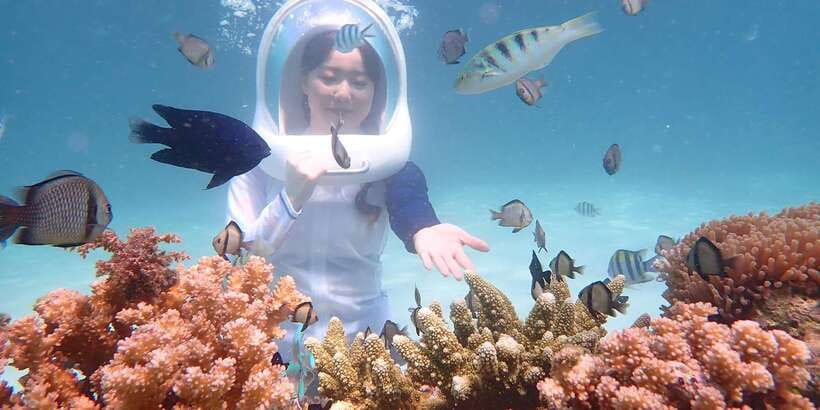
This is one of those activities that feels like a shortcut to the good part of the sea: the reef. Instead of gearing up for classic scuba, you use an oxygen-pumped helmet filled with compressed air and explore the seafloor under close supervision.
The result is that you can focus on seeing things—coral, fish, and the feeling of standing on the bottom—without the full mental load of scuba skills. It’s also short enough that you won’t spend half your day traveling and waiting.
Also, you get your underwater moments captured. The included photo and video setup matters because reef conditions and bubbles can make it hard to take good shots yourself.
You can also read our reviews of more tours and experiences in Boracay.
Getting there from White Beach: the first easy win
Your meetup is simple: go to White Beach in front of Astoria Boracay, then look for a guide holding a GetYourGuide sign. If you’re staying nearby, you can take an e-trike to reach the beach quickly.
Once you arrive, you’re not left wandering. There’s a local guide escorting you to the activity area, and the pace stays organized from the start—helpful if you’re not sure what to expect on the sand.
One practical note: the meeting time and schedule can shift with traffic and weather. I’d plan buffer time around your booking so a late start doesn’t ruin the rest of your day.
Speedboat ride to the site: fun, but expect sharing
After you’re sorted at the shore, you head to the water on a speedboat. The thrilling speedboat ride is part of the excitement, and it’s also a real convenience: it gets you to the reef area without a long trip.
This portion tends to be quick, and you’ll likely be part of a group transfer. If you’re thinking about privacy or a totally exclusive experience, keep your expectations realistic. The experience is guided, not private.
The upside is momentum. You’re moving fast from “vacation mode” to “ocean time,” and that keeps the whole thing feeling like an adventure, not a chore.
Safety briefing + helmet setup: how they calm nervous energy
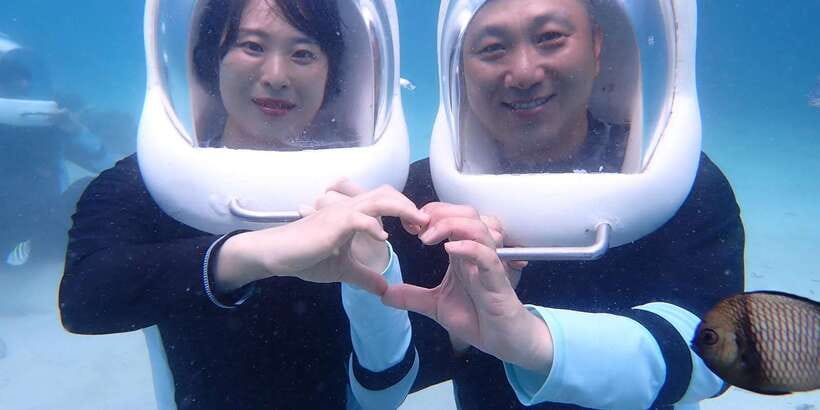
At the water, you’ll get a safety briefing, then you’ll put on the helmet. The system is straightforward: the helmet is pumped with oxygen/air, so you’re breathing through the gear while you’re on the ocean floor.
A big reason people feel comfortable is that the team doesn’t just hand you equipment and disappear. You get instructor assistance in English, and the guidance continues as you prepare to enter the water.
Expect your ears to react when you go down. One of the most common body cues people mention is that your ears may pop as you descend—normal, and the team should check in while you’re making that move. The key is to stay relaxed and follow directions instead of fighting the process.
If you’re nervous, make it easier on yourself: listen once, then do exactly what they say. Most of the stress you might feel comes from uncertainty. Their job is to remove uncertainty.
What 15 minutes of reef walking feels like
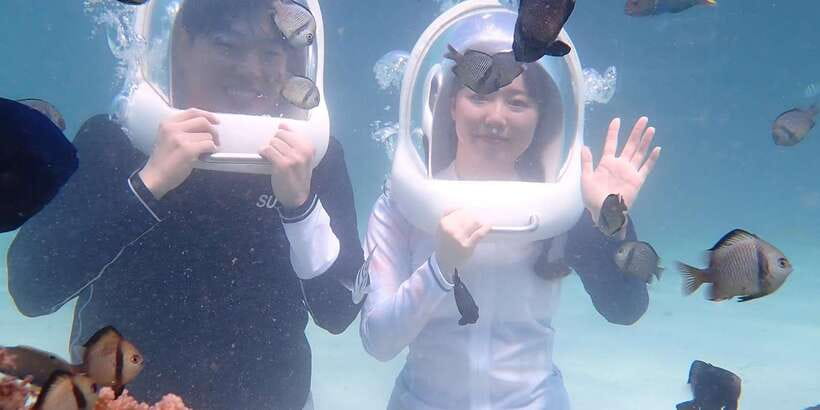
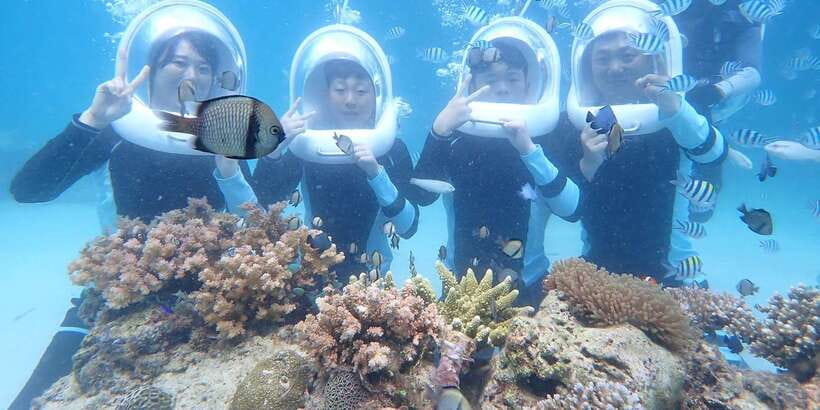
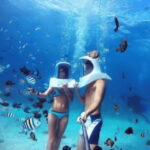
Your reef time is built around the idea of exploring without scuba-style swimming. Once you’re in, you slowly start your helmet reef walking experience for about 15 minutes, reaching around 10 feet below the surface.
The “walk-like” part is important. You’re not trying to master buoyancy or complicated fin kicks. Instead, you can stand and view coral and fish while the helmet keeps your breathing consistent.
Here’s what you’re there to see:
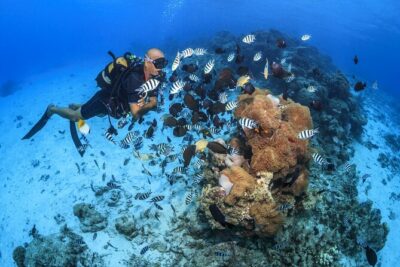
- coral reefs up close
- fish in lots of color patterns
- the seafloor view from a steady, guided position
You may also see hands-on marine moments. Some people specifically call out feeding fish from their hands as part of their experience. If that’s offered, it’s usually a guided, controlled activity—just follow the team’s pace.
Depth is usually not the scary part here. For most first-timers, the helmet and the guided entry are the bigger adjustment. Once you’re down and your body understands the rhythm, the reef becomes the main event.
The team’s role: why it feels guided, not risky
This is built around close supervision. You’ll have assistance of English-speaking certified PADI instructors, and you’re not just paired with one person and told good luck.
Many first-timers feel safer because there are multiple support points in the water—meaning you’re more likely to be checked on if anything feels off. That includes the descent, your comfort level, and any question you have mid-activity.
If you’re the type who gets overwhelmed by ocean conditions, this structure helps. You’re given clear instructions, and the team stays attentive during the key moments—getting in, getting down, and moving around on the reef.
Photos and video included: what you should expect
One of the best value parts here is that your souvenir media is included. You get free souvenir photos and videos that are uploaded on your mobile device.
This is genuinely useful. Underwater footage is hard to capture with a phone, and messing with cameras often makes first-timers lose their focus. With a dedicated photographer process, you can spend your energy actually looking at the reef.
A practical expectation: the photo mix can lean toward portraits and you in the helmet. That’s not bad—it’s part of the “I did this” memory. If you want more corals in your shots, just know you’ll probably get a mix rather than a pure reef photo series.
Either way, it’s a lot easier to share instantly with family and friends, and it saves you the stress of trying to manage your gear underwater.
What to bring (and what not to assume)
The experience provides the helmet and core diving equipment for the activity time, but it’s not a total “come as you are” situation. At the dive area, you’ll still want to be comfortable transitioning between wet and dry.
Bring what helps you stay sane:
- a small towel
- reef shoes if you have them (or anything with traction)
- a swim shirt or something you’re okay getting wet
One small warning: at some spur-of-the-moment setups, people sometimes show up in basic swimwear and end up wishing they had more drying comfort afterward. It’s not about being fancy; it’s about staying comfortable at the jetty and on the walk back to dry land.
Also, for the health side, remember that the activity includes rules about timing after you fly—plan your schedule accordingly.
Price in context: is $22 really good value?
At $22 per person for a roughly 20-minute outing (15 minutes on the reef), the value comes from what’s bundled.
You’re paying for:
- guided reef walking with helmet equipment
- support from English-speaking PADI-certified instructors
- free photos and video uploaded to your phone
- a speedboat transfer to reach the reef efficiently
If you’ve ever priced scuba gear rentals plus a guide plus underwater media, the math usually gets expensive fast. Here, the helmet setup and the media are part of the package, so you’re not scrambling to add extras once you’re already at the beach.
The trade-off is the short duration. You’re not buying a long underwater day. You’re buying a tight, well-supported taste of reef life—good for first-timers and for anyone who wants a memorable experience without committing to a full training course.
Who this helmet reef-walk is best for
This is a great fit if:
- you’ve always wanted to experience the ocean floor but don’t feel confident with scuba
- you’re not comfortable with the idea of wearing a full scuba suit
- you want an activity where instruction is constant and the plan is simple
- you care about photos/videos and want them included
It’s also especially friendly if you’re sensitive to the usual scuba learning curve. The helmet approach changes the whole experience. Instead of controlling your breath and staying perfectly weighted, you focus on exploring the reef while the system handles breathing.
It may not be the best choice if you want a long session or if you need an activity with lots of physical freedom. The experience is guided, and that structure is part of what makes it easy for beginners.
Health and safety limits you should take seriously
This isn’t a casual water game. There are real restrictions based on health and risk management.
Know these key limits:
- Do not fly for at least 24 hours after the activity for health and safety reasons.
- Age rules: participants must be 18+ to participate (with a waiver). If someone is 13–17, an adult must be present to sign the waiver.
- Seniors 60+: medical clearance is required from a hyperbaric doctor. If needed, you may get cleared at the island’s Metropolitan Doctors Medical Clinic.
- Not suitable for children under 13, pregnant women, people with mobility impairments, or people with heart problems.
If any of those apply to you, this is a “skip it and ask for alternatives” situation. It’s not the kind of activity to stretch rules for.
Practical tips that make the experience smoother
If you’re going in nervous, you’ll get a better time by planning for the moments that cause stress.
Here’s what helps:
- Go slow during descent and follow the team’s instructions exactly—ear pressure changes can happen.
- Keep your body relaxed. Panic makes everything harder, especially when you’re learning a new breathing rhythm in a helmet.
- Listen on the shore once, then don’t reinvent the plan mid-water.
- Treat the helmet like the main tool—don’t try to adjust things on your own.
One more practical idea: plan your next part of the day with the 24-hour no-fly rule in mind. Even if you don’t plan to fly, it’s good to know the activity has a travel impact.
Should you book this Boracay helmet reef-walk?
Book it if you want a beginner-friendly way to see coral and colorful fish without scuba training, and if included photos/videos matter to you. At $22, the value is strong because the instructor time, helmet setup, speedboat transfer, and media are all part of the package.
Skip it (or get medical advice first) if you fall into the health limits: pregnancy, heart problems, mobility restrictions, or anyone who needs hyperbaric clearance. And if you want a long underwater session, you’ll likely feel the 20-minute total time is more of a quick taste than a full reef day.
If you want a safe, guided, memory-making ocean experience with minimal complexity, this is one of the easiest “yes” choices in Boracay.
FAQ
How long is the helmet reef-walk?
The total experience is about 20 minutes, including 15 minutes of reef walking with the helmet diving equipment.
How deep do you go?
You’ll explore the ocean floor about 10 feet below the surface.
Do I need to be a strong swimmer?
This activity is designed for people who aren’t confident swimmers and for those who aren’t comfortable with scuba suits, with instructors guiding you step by step.
What photos and videos are included?
Free souvenir photos and videos are included, and they are uploaded on your mobile device.
Is the instruction in English?
Yes. The tour includes a live guide in English, and instructors are English-speaking.
Who can’t participate?
It isn’t suitable for children under 13, pregnant women, people with mobility impairments, or people with heart problems.
Are there health or medical rules?
Guests should not take a flight for at least 24 hours after the activity. Seniors aged 60+ are required to have medical clearance from a hyperbaric doctor.
Can I cancel and get a refund?
Yes. Free cancellation is available up to 24 hours in advance for a full refund.