REVIEW · PAPHOS
Paphos: Discover Scuba Diving Half-Day Tour
Book on GetYourGuide →Operated by Cydive · Bookable on GetYourGuide
Your first underwater descent starts with training. This half-day scuba experience in Paphos is set up for beginners, starting in the pool with real skills you’ll use right away, then moving to the sea to explore the Roman harbour underwater world.
I really like how structured the coaching is, from equipment basics to controlled buoyancy practice. One possible drawback: this isn’t for everyone—you must be comfortable swimming and you need to pass a medical questionnaire (including strict limits for pregnancy, epilepsy, and heart or lung conditions).
In This Review
- Key Highlights to Know Before You Go
- Pool Training First: How the Session Sets You Up for 5m
- A 3-Hour Timeline That Feels Busy, But Not Rushed
- What You Learn in the Pool (and Why It Matters)
- Under the Water at Paphos Harbour: Roman Walls, Amphorae, Anchors
- Coaching Style: Patient Instructors, Clear Explanations, Real Backup
- Equipment and What’s Included (So You Don’t Overpack)
- Price and Value: Is $106 Fair for What You Get?
- Who This Works For (and Who Should Plan Another Option)
- Practical Tips for a Smoother Session in Paphos
- Should You Book This Scuba Experience in Paphos?
- FAQ
- How long is the Paphos half-day scuba experience?
- What depth do beginners go to?
- Is there pool training before the sea portion?
- Do I need to complete eLearning before the tour?
- What’s included in the price?
- What should I bring with me?
- Are towels and sunscreen included?
- Can I bring a camera or take underwater videos?
- Are there medical or health restrictions?
- Do I need to avoid flying right after?
Key Highlights to Know Before You Go
- Pool-first learning so you feel capable before you enter open water
- First descent to 5m with guided equalizing and clear hand-signal communication
- Roman harbour shore site on foot, with amphorae, anchors, and chances to see turtles in summer
- Small group size (up to 8) for more hands-on attention during skills practice
- PADI Discover Scuba eLearning required before your scheduled session
- On-site coaching with patient instructors (names you’ll hear tied to success include Pavlos, Mick, Emma, Eva, Sophie, and Kris)
Pool Training First: How the Session Sets You Up for 5m
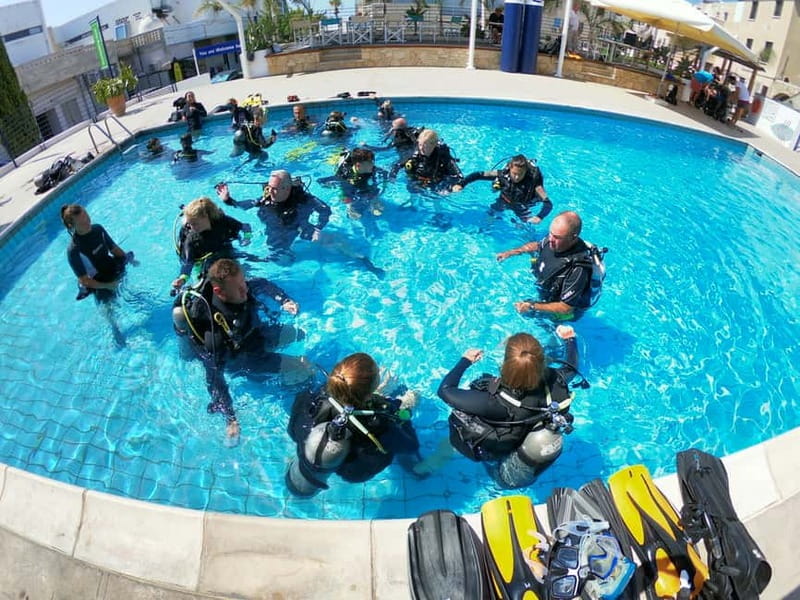
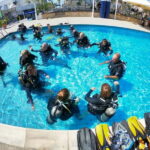
The smart thing about this Paphos scuba experience is that it doesn’t throw you straight into the ocean. You’ll begin with a structured skills session that teaches the core stuff you need to stay relaxed: how the kit works, how you communicate underwater, and how to manage your ears as you go down. For first-timers, that order matters a lot. If you can handle your gear and your breathing on dry land and in the training pool, the sea part feels much less scary.
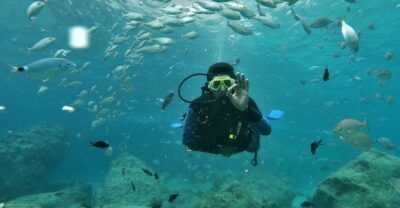
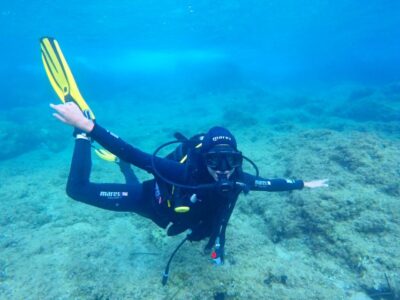
Then comes the key milestone: your first open-water descent to 5m. It’s deep enough to feel like a real underwater experience, but controlled enough to be beginner-friendly. The instructors are also there to keep the pacing calm—especially useful if you’re the type who gets nervous when you picture being far from the surface.
You can also read our reviews of more tours and experiences in Paphos.

A 3-Hour Timeline That Feels Busy, But Not Rushed
This is a tight half-day, and you can expect a clear sequence of moments that go from briefing to learning to water time to wrap-up.
It starts at the Cydive location near Paphos harbour. You’ll get a short welcome and refreshments (about 10 minutes), which helps take the edge off before you put on a wetsuit.
Next is a longer safety briefing (around 30 minutes). This is where you’ll learn how the session will work and how the team plans to keep you safe and coordinated. You’ll also cover the basics of hand signals and the part of equalizing that helps you manage pressure changes comfortably.
After that you’ll have a photo stop (about 10 minutes) and then head into the class portion (about an hour). This is the hands-on chunk where you’ll learn equipment use and practice the skills in a controlled way.
Then you walk (about 3 minutes) to the shore training area, and the underwater portion runs for about an hour. After your time in the water, you’ll have another photo stop (around 20 minutes), then a short wrap-up class (about 15 minutes). The session ends with tea and coffee (about 15 minutes), which is genuinely nice if you’re feeling chilly after being in the sea.
What You Learn in the Pool (and Why It Matters)
Before you ever go out, you’ll practice in the pool with your full scuba kit. That usually means two big payoffs for you:
1) you learn how it feels to breathe with the regulator, and
2) you practice moving and controlling yourself while wearing the wetsuit, mask, and buoyancy gear.
The equalizing practice is a standout part of the training. They’ll show you how to manage your air spaces and help you practice the technique so ear pressure doesn’t become the main thing you’re thinking about once you’re in open water.
You’ll also learn the key underwater communication system—specifically the hand signals used during the session. When you’re new, this reduces mental load. You don’t have to guess. You can trust the plan and follow what you’ve already practiced.
And yes, you’ll be practicing in the training pool down toward the deeper end. That’s not just to get you used to depth—it’s to help you get comfortable with the feeling of being lower in the water while you still have the training environment around you.
Under the Water at Paphos Harbour: Roman Walls, Amphorae, Anchors
The underwater location is a shore site near the centre, so there’s no long boat ride. That’s a big deal for beginners. Less travel time means more energy for learning and more time in the water once you’re set up.
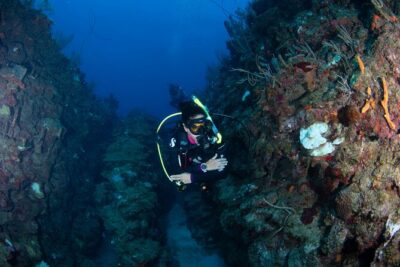
Expect the underwater Roman setting. The goal is to show you an ancient harbour environment and underwater structure, including the Roman wall area and features like amphorae (the pottery jars) and lost anchors. The water is described as clear, so visibility often helps you make sense of what you’re looking at.
In summer, there’s also a possibility of seeing green sea turtles. That doesn’t mean you’ll guarantee one every day, but it’s the kind of moment that makes people remember the trip. Even if you don’t spot a turtle, the Roman harbour atmosphere is still the main draw, because you’re not just staring at sand—you’re seeing remnants of a working ancient coastline.
Coaching Style: Patient Instructors, Clear Explanations, Real Backup
This is the part that shows up repeatedly in successful sessions: instructors who stay calm and thorough while still moving you forward.
Across the team, you’ll hear names like Pavlos, Mick, Emma, Eva, Sophie, Kris, and Chris mentioned in connection with patient teaching and clear instruction. What you should take from that, as a potential first-timer: you’re not just getting a checklist. You’re getting a person who explains what you’re doing and why, then keeps an eye on you while you practice.
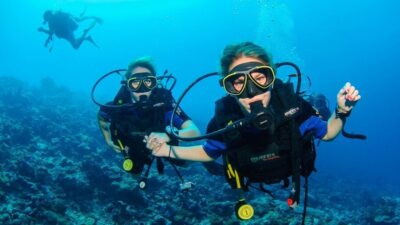
You may also have a helper in the mix, which matters if you’re the person who gets anxious during the first sea time. Instructors can focus on the class rhythm while the helper gives extra hands to someone who’s struggling with mask comfort, breathing adjustments, or nerves.
One practical note: cameras aren’t allowed for participants. The team will handle photo capture instead. So if your goal is to leave with images, plan on going along with their approach rather than trying to film or photograph yourself.
Equipment and What’s Included (So You Don’t Overpack)
This experience includes scuba equipment plus a wetsuit and boots. That’s an underrated part of value for first-timers. Getting started becomes a lot easier when you’re not guessing what to buy (or renting the wrong thing).
The kit you’ll use includes what you need to practice the core skills: regulator breathing setup, mask, and the gear used during training for buoyancy and controlled movement.
What’s not included: underwater pictures and videos, plus towels and sunscreen. So bring your towel and sunscreen, even if you’re just planning a few hours by the sea.
Also bring:
- swimwear
- towel
- sunscreen
- hair tie
And skip:
- high-heeled shoes
- cameras (and waterproof cameras)
- smoking indoors, alcohol, and drugs
- feeding animals
Price and Value: Is $106 Fair for What You Get?
At $106 per person for a 3-hour half-day, the value comes from three things you actually use:
1) Gear and wetsuit/boots included
2) A structured PADI Discover Scuba eLearning requirement (completed before your session)
3) A small group format capped at 8 participants, which usually means more direct coaching during skill practice
You also get refreshments—water, tea, coffee, and fresh fruits—so you’re not scrambling for snacks before or after the water time.
What could affect your personal value: if you want photos and videos, those aren’t included. Some groups offer an after-session chance to review purchase options, but the cost of that will be extra on your side.
If your goal is a first taste of scuba with solid instruction (not just a quick splash), this price can make sense—especially compared with situations where you’d otherwise pay separately for gear plus an instructor plus a structured lesson.
Who This Works For (and Who Should Plan Another Option)
This is designed for people who are ready to learn and can handle being in the water confidently.
You should consider booking if:
- you’re a comfortable swimmer
- you want a beginner-friendly introduction with step-by-step instruction
- you want to see the Roman harbour underwater setting at a manageable depth (5m)
You should not book if:
- you’re under 10 years old
- you’re pregnant
- you have heart problems
- you have respiratory issues
- you have epilepsy
- you can’t swim comfortably (the team won’t be able to include non-swimmers)
Also plan timing carefully. Diving in this context can’t be done on the same day as a flight. Wait at least 12 to 24 hours after the session before flying. If you have tight travel days, check your schedule early.
And if you’re feeling congested, you’ll be asked to reschedule until you’re clear of your cold. That’s not just bureaucracy—it’s about keeping your breathing and comfort stable underwater.
Practical Tips for a Smoother Session in Paphos
A few small moves can make a big difference:
- Finish the eLearning first. You’ll get access after booking confirmation, and you must complete it before the activity date. If you don’t, you’ll need to reschedule.
- Plan what to wear: swimwear under your wetsuit plan, and bring a hair tie.
- Expect some downtime between steps. The day has briefing, class, walking to the shore site, water time, then wrap-up. Bring patience.
- Be honest about your swimming comfort. If you’re unsure, you’ll have a better time choosing a different activity than struggling through a session that requires comfort in the water.
- If weather turns rough, sessions may be rescheduled. With a shore site, conditions matter.
Should You Book This Scuba Experience in Paphos?
Book it if you want a beginner-first scuba session with clear instruction, a controlled 5m milestone, and an underwater Roman harbour setting where the sights are part of the payoff. The small group format is a plus, and the repeated praise for patient teaching (names like Pavlos, Mick, Emma, Eva, Sophie, and Kris come up often) suggests you’re likely to feel guided rather than rushed.
Skip it if you’re not a confident swimmer, you’re dealing with any disqualifying medical conditions, or you have a flight the same day. Also factor in what’s not included—if you want underwater photos/videos, budget for extras and bring your own towel and sunscreen.
If your timing works and you meet the comfort and medical requirements, this is one of those “learn skills, then see something you can’t see from land” Paphos experiences.
FAQ
How long is the Paphos half-day scuba experience?
It runs for about 3 hours.
What depth do beginners go to?
The first open-water experience includes a descent to 5m.
Is there pool training before the sea portion?
Yes. You’ll practice in a pool first, including using the equipment and equalizing.
Do I need to complete eLearning before the tour?
Yes. You’ll receive a link after booking confirmation, and the digital PADI Discover Scuba eLearning product must be completed before your activity date.
What’s included in the price?
Scuba equipment plus a wetsuit and boots, the PADI Discover Scuba eLearning product, and water, tea, coffee, and fresh fruits.
What should I bring with me?
Bring swimwear, a towel, sunscreen, and a hair tie.
Are towels and sunscreen included?
No. Towels and sunscreen are not included.
Can I bring a camera or take underwater videos?
Underwater pictures and videos are not included, and cameras (including waterproof cameras) are not allowed.
Are there medical or health restrictions?
Yes. You must complete a medical questionnaire, and pregnancy, epilepsy, and heart or lung conditions cannot join.
Do I need to avoid flying right after?
Yes. You can’t do this same day as a flight, and you should wait at least 12 to 24 hours after diving.