REVIEW · TOKYO
Deep Dive into the World of Daruma Dolls
Book on Viator →Operated by beautiful day tours · Bookable on Viator
A wish in cloth, painted by hand. In Chofu, you’ll craft your own Daruma good-luck doll, including writing a personal wish and decorating it your way. It’s a hands-on, cozy class that feels like real local culture, not a rushed shopping stop.
Two things I like a lot: you’ll leave with a truly one-of-a-kind souvenir, and you also get a break to relax with Japanese tea/refreshments during the class. One thing to consider is logistics: Chofu is about an hour from central Tokyo by train and bus, so plan extra time to get there and back.
In This Review
- Key Things to Know Before You Go
- Where to Start: Daru-chan No Ouchi by Jindaiji Temple
- Choosing Your Fabric: the Fun (and Hard) Part
- Wishes and Face Painting: make the Daruma Real
- Cut, Paste, and Let the Glue Dry
- Games, Daruma Senbei, and Tea While You Wait
- Take-Home Luck: placing your Daruma where it watches you
- Why This Workshop Feels More Japanese Than a Souvenir Stop
- Value and Practicalities: time, group size, and what’s included
- Who Should Book This (and Who Might Skip It)
- Should You Book This Daruma Workshop?
- FAQ
- Where does the workshop start?
- How long is the Daruma doll class?
- What’s included in the price?
- How many people are in a group?
- Is this workshop good for families?
- Do I get my ticket electronically?
- Is the booking refundable or changeable?
Key Things to Know Before You Go
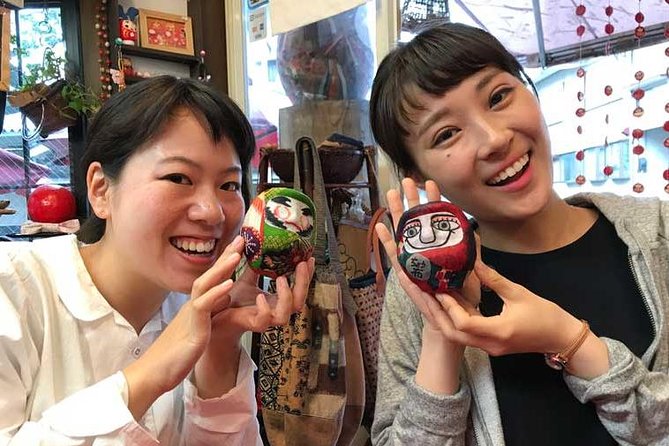
- Small group (max 4): more hands-on attention and a calmer workshop pace.
- Near Jindaiji Temple: you meet right by the temple area at Daru-chan No Ouchi.
- Personal wish on the doll: you’re not just decorating—you’re adding intent.
- Fabric choices drive the look: the hardest part is picking among beautiful patterns.
- Hands-on crafting + rest time: cutting, pasting, then games and snacks while glue dries.
Where to Start: Daru-chan No Ouchi by Jindaiji Temple
Your session starts in the daruma shop Daru-chan No Ouchi near the entrance of Jindaiji Temple in Chofu. The meeting address is だるチャンのおうち5-chōme-5-1 Jindaiji Motomachi, Chofu, Tokyo 182-0017. Plan on arriving a few minutes early so you’re not stressed while you find the exact spot.
The best part about this location is the mood. You’re crafting right in a neighborhood setting, not tucked inside a mall. Also, Jindaiji Temple is a natural reference point, so once you’re in that area, you won’t feel completely lost.
One practical note: your class includes a mobile ticket. Have it ready on your phone, then treat this as a simple meetup—show up, get matched with your materials, and jump in.
You can also read our reviews of more tours and experiences in Tokyo.


Choosing Your Fabric: the Fun (and Hard) Part
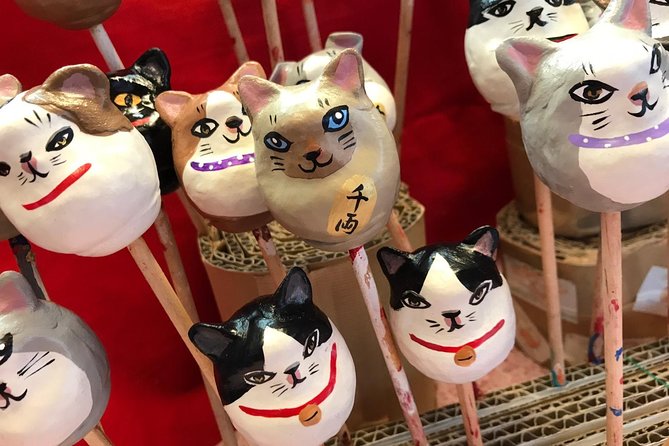
Step two is choosing your fabric, and yes, it’s genuinely the toughest part. You’ll have a wide array of traditional and modern fabrics to pick from, with different colors and patterns. This matters because the look of your Daruma comes from the material itself—your choices will define the final “personality” of the doll.
You’ll also be guided here, so you’re not expected to “know how” before you arrive. Still, give yourself time to decide. If you’re the type who wants everything perfect, this can take longer than you think.
If you’re going as a group—friends, couples, or a family—this is a great moment to collaborate. You can point at patterns you like and talk through how the finished doll might look. It’s one of those rare craft activities where chatting actually improves the result.
Wishes and Face Painting: make the Daruma Real
Once you choose your fabric, you’ll write your wishes on the body of the Daruma. This is the heart of the whole ritual. The doll isn’t just a cute craft; it’s a good-luck charm meant to support what you hope for.
Then you’ll paint the Daruma face on the fabric. The face is what gives the doll its famous expression—those sharp eyes and the serious, protective look. It’s also the part where your design stops being “just materials” and becomes a character with attitude.
A helpful detail: the workshop flow gives you enough structure to finish even if you don’t speak Japanese. The instructor leads the steps, and the process is very visual. If you’re coming with someone who’s nervous about crafts, this is the kind of class that helps them feel capable fast.
Cut, Paste, and Let the Glue Dry
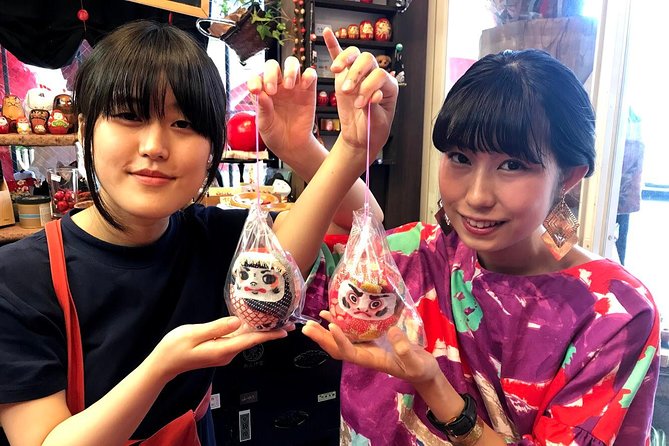
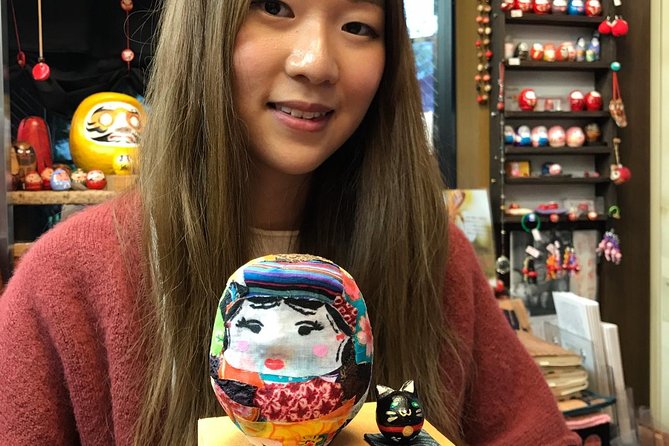
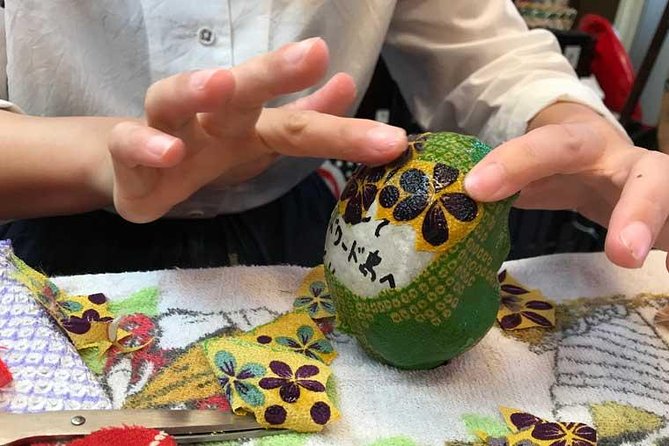
Now comes the hands-on magic: you cut the fabric into various-sized pieces depending on the print and pattern. Then you paste the pieces onto the Daruma’s body. This is where you get to be creative in a very real way—your choices in cutting and placement are what turn a kit-like craft into something personal.
You’ll use glue and let it dry. While that part works in the background, you’re not left sitting around waiting. The schedule builds in a break, which keeps the class from feeling like a long, dry crafting marathon.
This is also where you’ll see the workshop style used for Chofu-style Daruma come through. The process emphasizes fabric patterns and how they work together, so your doll won’t look like generic mass-produced Daruma shapes. It’ll look like you.
Games, Daruma Senbei, and Tea While You Wait
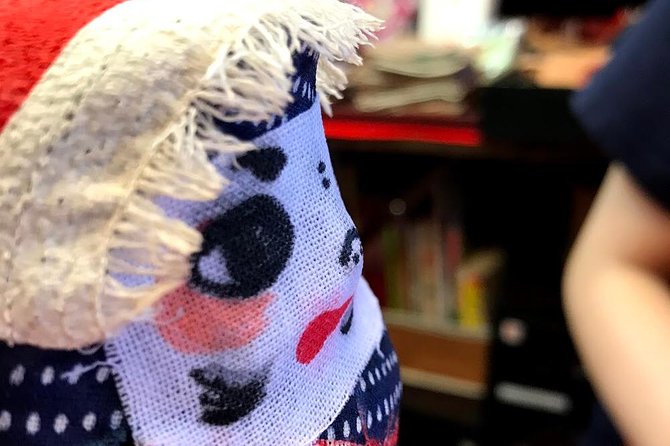
While the glue dries, you’ll shift into Daruma-themed games and photo time. You get a chance to step back, move around a bit, and enjoy the experience instead of feeling stuck at the table.
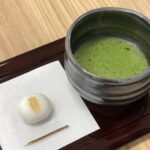
Refreshments are part of this stage too. You’ll have tea and daruma senbei (those snack crackers made to match the Daruma theme). The class also includes tea or coffee as refreshments, so you can keep hydrated and energized while your craft sets.
This part is oddly important for value. It turns the “waiting for glue” time into actual fun, and it keeps the energy up for the full 1 hour 30 minutes.
If you’re photographing, take a few minutes here to capture your half-finished doll and the fabric details. Those close-up patterns are the kind of thing you’ll want later when you remember what you made.


Take-Home Luck: placing your Daruma where it watches you
When the session wraps up, you’re finished with your own Daruma doll. The idea is simple: Daruma’s sharp glance is believed to repel bad luck. So the recommendation is to place it somewhere near you so it can always watch over you and help protect you.
This isn’t just “store it on a shelf.” Treat it like a daily reminder. Put it where you’ll actually see it—at home, near your entryway, or in a spot connected to what you wrote your wish for.
Also, since you’re crafting it yourself, the doll has extra emotional weight. You didn’t just buy a charm—you built it from fabric choices, wish-writing, and your own hands cutting and pasting.
Why This Workshop Feels More Japanese Than a Souvenir Stop
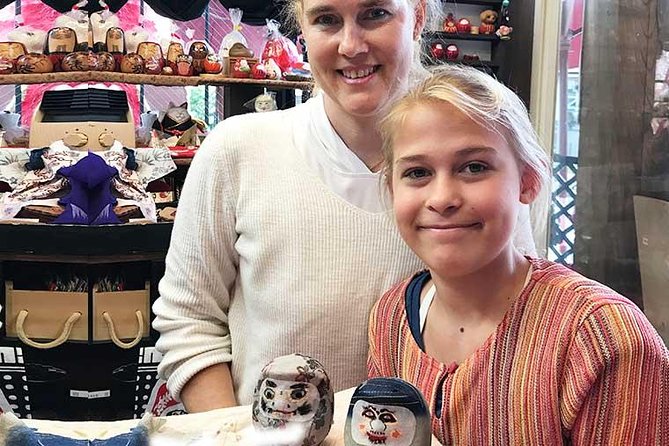
Daruma dolls are one of those Japan crafts that people instantly recognize, but it’s easy to miss the meaning when you only buy a finished one. This class connects the dots. You handle the materials, write the wish, and paint the face—so the charm becomes a process, not a product.
I also like that the workshop teaches context. The instructor gives an overview of the history and context of the Daruma tradition and the specific Chofu-style approach. That means you’re not walking away with only a cute object—you’re leaving with a clearer sense of what the charm represents.
For me, that’s the big value: you get the cultural “why” while still getting the fun part, which is making something you can take home and use as a reminder.
Value and Practicalities: time, group size, and what’s included
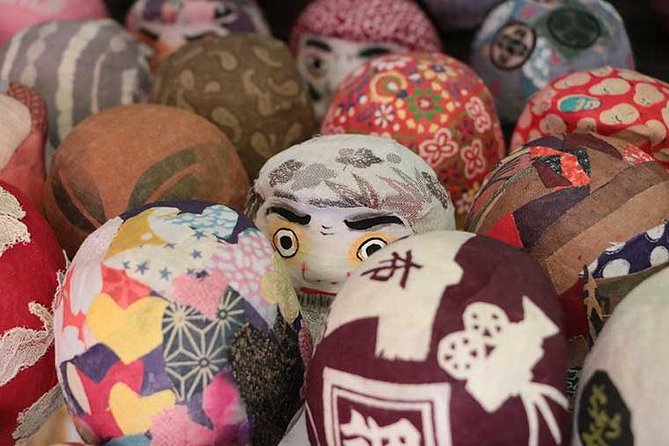
Let’s talk about value in plain terms. The class price shows as $0.00 in your booking details, and the included costs cover the instructor, the material fee, Japanese tea, and tax. In other words, you’re not likely to face surprise add-ons for the hands-on parts.
You’re also looking at about 1 hour 30 minutes total. That’s short enough to fit into a day trip, but long enough to actually complete a doll with details and proper drying time.
Group size is capped at 4 travelers, which is a big deal for craft classes. Fewer people means more attention, less waiting, and less “hovering” from staff who need to rotate around a big group. It’s the kind of setup where you can ask simple questions and get help without feeling rushed.
A few more practical facts:
- You’ll get confirmation within 48 hours, subject to availability.
- Children under 13 must be accompanied by an adult.
- This activity ends back at the meeting point.
One thing to keep in mind: the experience is non-refundable and cannot be changed. If your schedule is still uncertain, double-check dates before you lock it in.
Who Should Book This (and Who Might Skip It)
Book this if you want a hands-on cultural activity that’s also relaxing. It’s perfect for:
- Couples who want a shared project
- Small groups of friends who like crafts and photos
- Anyone who likes making personalized souvenirs rather than buying something generic
You might skip it if you have very limited time and don’t want to travel to Chofu. You could also feel out of place if you hate slower, careful handwork, since cutting and pasting are central to the process.
That said, the workshop structure is friendly. You’re guided through each stage, and the class includes breaks with snacks and games, so it doesn’t feel like a test.
Should You Book This Daruma Workshop?
If you’re choosing between another photo-and-shopping activity and an actual craft you can keep, I’d lean toward booking this. It’s one of those rare experiences where your wish becomes part of the souvenir, not just decoration. Plus, with a small group size and all materials handled, you’re paying for a real, guided making time—not for uncertainty.
Make the call if:
- You want a personalized keepsake from Japan
- You enjoy fabric crafts or are curious about them
- You’re okay planning about an hour of travel each way to Chofu
Don’t book if:
- Your schedule is too fragile (since it’s non-refundable)
- You’re trying to pack in Tokyo sights with zero flexibility
FAQ
Where does the workshop start?
You meet at Daru-chan No Ouchi near the entrance of Jindaiji Temple in Chofu, Tokyo (address: だるチャンのおうち5-chōme-5-1 Jindaiji Motomachi, Chofu, Tokyo 182-0017, Japan).
How long is the Daruma doll class?
The experience lasts about 1 hour 30 minutes.
What’s included in the price?
The included items are the instructor, the material fee, Japanese tea, and tax. Refreshments like tea and coffee are also provided during the class.
How many people are in a group?
The maximum group size is 4 travelers.
Is this workshop good for families?
Children under 13 must be accompanied by an adult, and most travelers can participate.
Do I get my ticket electronically?
Yes. The tour uses a mobile ticket.
Is the booking refundable or changeable?
No. The experience is non-refundable and cannot be changed for any reason.
If you want, tell me when you’re visiting Tokyo and what neighborhood you’re staying in—I can suggest a realistic way to fit the Chofu area into your day without turning it into a scramble.