REVIEW · KEMER
Antalya/Kemer: Scuba Diving Experience with Lunch & Pick up
Book on GetYourGuide →Operated by Ginza Travel · Bookable on GetYourGuide
Two bays, one seriously fun sea day.
This Kemer trip takes you to Aquarium Bay and Kiris Bay for two guided underwater sessions, with instructors who focus on clear skills and calm reassurance. I especially like the hands-on fish feeding moment and how smoothly the crew runs the whole day.
The main trade-off: your time underwater is short.
You’re on the boat for a full 7–8 hours, and the actual bottom time is typically around 20–25 minutes total, so it’s more about learning and seeing fish than chasing long, deep sightseeing.
Still, you get plenty of time off the rig.
You’ll swim, snorkel, sunbathe, and even enjoy breaks like rock-and-cove exploring between the two underwater parts, then wrap up with lunch onboard.
In This Review
- Key things that make this day work
- Kemer’s boat day: why these bays hit the sweet spot
- Getting on the water: pick-up, timing, and what to watch for
- The “before you go” briefing: how first-timers usually feel supported
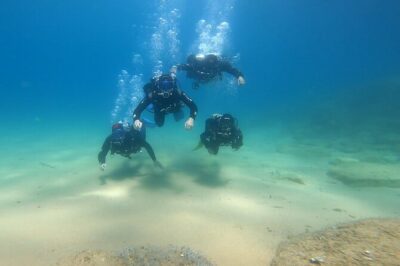
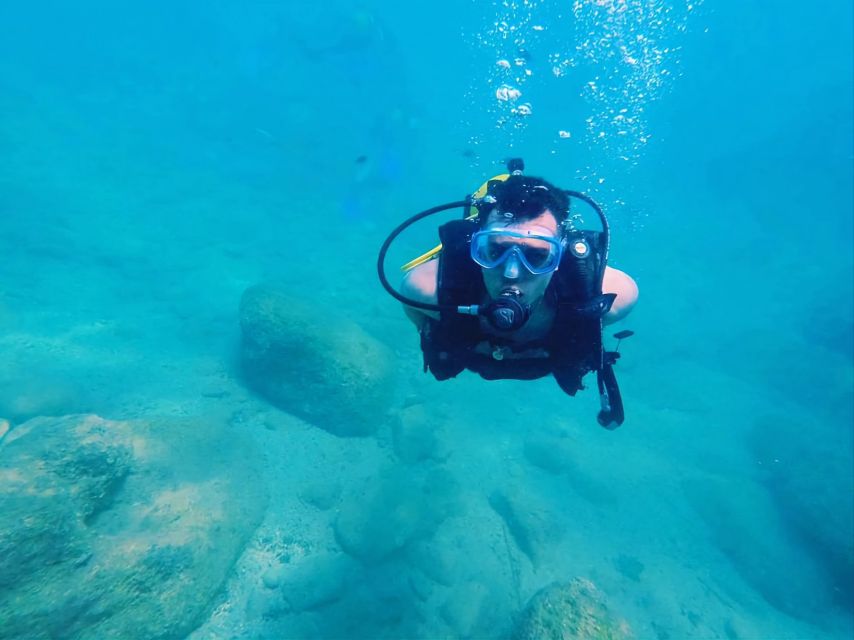
- Underwater session #1 at about 5 meters in Aquarium Bay
- Underwater session #2 at 10–15 meters in Kiris Bay
- Snorkeling, swimming, and the boat breaks that make the day feel longer
- Lunch onboard: simple, filling, and timed for an active day
- What about safety and instructor quality in real life?
- Price and value: does $29 make sense?
- Who should book this, and who should skip it?
- FAQ
- FAQ
- How many underwater sessions are included?
- How long do I spend underwater?
- Is lunch included?
- Is hotel pickup available?
- What language do the instructors speak?
- Are cameras allowed during the activity?
- What’s included in the price, and what’s not?
- Should you book this Kemer scuba-and-snorkel day?
Key things that make this day work
- Aquarium Bay + Kiris Bay: two different coast vibes in one outing
- First-timer friendly: instructors teach you what to do before you go underwater
- Short but focused underwater time: expect quick sessions with plenty of water fun around them
- Lunch onboard: a real mid-day reset while you’re out on the water
- Safety-first coaching: frequent mentions of patient, hands-on instruction
- Photo add-ons sold onboard: plan for extras if you want underwater pictures/videos
Kemer’s boat day: why these bays hit the sweet spot
Kemer sits on one of Turkey’s prettiest stretches of Mediterranean coastline, with cliffs, small coves, and that clear-water feeling you want for a sea day. What I like about this experience is it doesn’t just toss you into the first place that looks good—it sends you to two bays with different character.
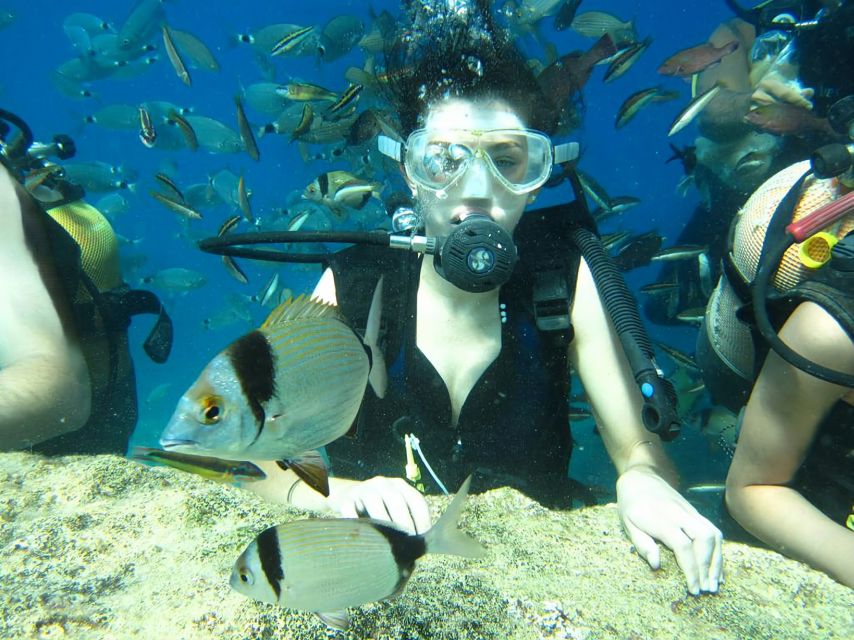
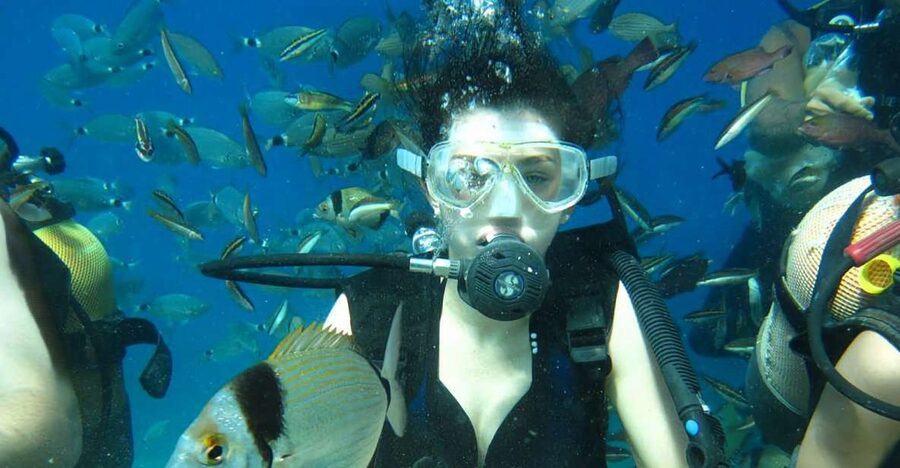
Aquarium Bay is the easygoing, fish-friendly stop. You’ll spend time learning the gear and basic moves, then you’re given the chance to meet the sea life in a more personal way—especially during the fish feeding moment that many people remember most.
Kiris Bay brings the next change of scenery. It’s where you get a deeper second underwater session, and you’ll usually find more time to enjoy the water around the boat—swimming, snorkel breaks, and time to soak in those mountains-and-coves views from the deck.
You can also read our reviews of more tours and experiences in Kemer.
Getting on the water: pick-up, timing, and what to watch for
If you choose hotel pickup, you’ll be asked to wait outside your hotel’s security gate about 10 minutes before your scheduled time. The pickup team won’t wait long after the set time (they mention a 5-minute window), so show up early and keep your phone charged.
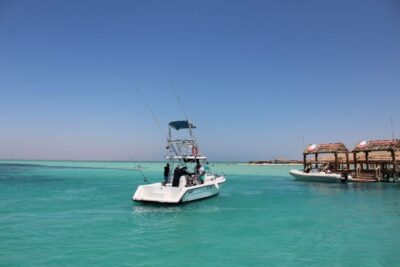
If you’re going independently, the meeting point is Kemer Marina. Either way, the day starts with a simple rhythm: get to the boat area, get sorted with your group, then you’ll be briefed and kitted out.
One practical thing I’d plan for: your day is long. Even if the underwater parts are timed well, the rest of the schedule—waiting your turn, traveling between bays, and taking breaks—adds up to that 7–8 hour block. The good news is you’re not stuck sitting the whole time. There’s swimming and snorkel time built in.
The “before you go” briefing: how first-timers usually feel supported
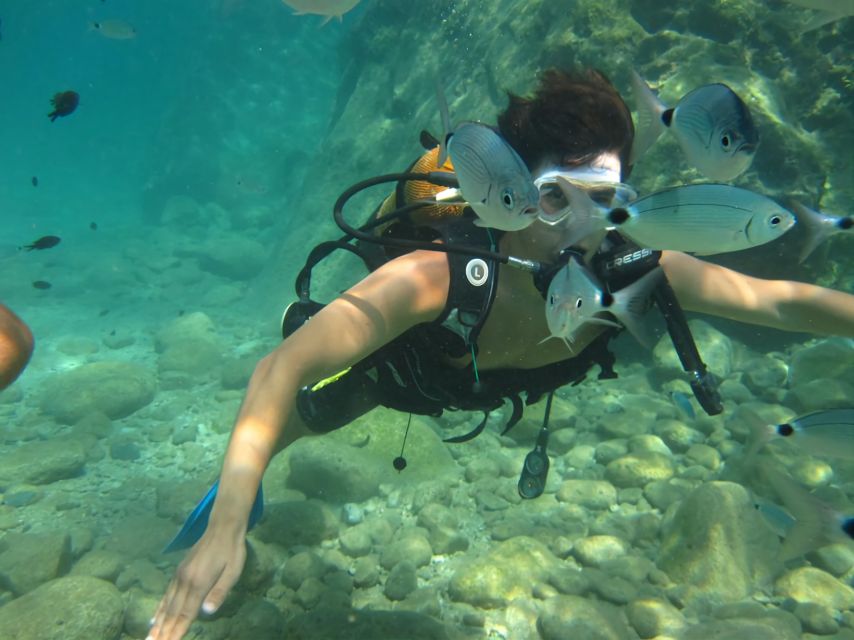
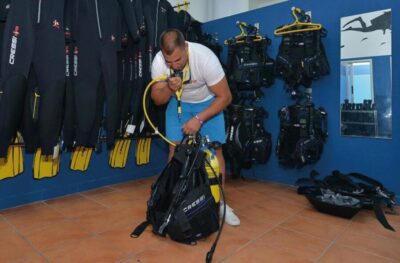
This outing is designed for people ranging from true first-timers to more experienced underwater hobbyists. The crew provides instructions at the start, covering equipment, boat routine, and safety steps before anyone goes in.
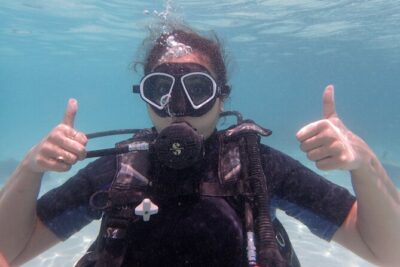
Based on what comes up again and again, the most reassuring part isn’t just the talk—it’s the hands-on coaching. People describe feeling calmer once they’re shown what to do step by step, and some mention being paired very closely with an instructor on each underwater session.
You should also know the structure: the first underwater session is around 5 meters, then the second is deeper, about 10–15 meters. Total time underwater is generally around 20–25 minutes, split across those two parts.
If you tend to get nervous in water, this format helps. You’re learning in stages, and the instructors have a routine for calming panicky moments and restarting the process if needed.
Underwater session #1 at about 5 meters in Aquarium Bay
The first stop is where you get the “learn it, then try it” setup. You’ll use new, high-quality scuba gear, and you’ll be guided through the basic skills you need for a comfortable experience.
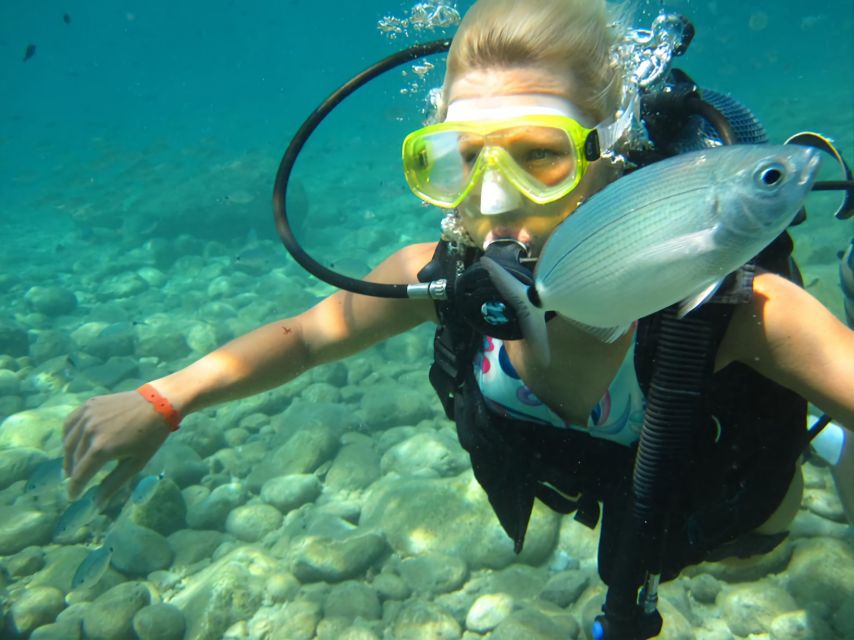
In Aquarium Bay, that learning phase gets bonus points because the water tends to be inviting and fish life is active. One of the standout moments is the chance to feed fish directly from your hands. It’s a small action, but it makes the underwater experience feel real fast.
You’ll be in water for a shorter, controlled period—enough to practice the skills and look around without rushing you into a long session. Some people end up under water closer to the shorter end of the expected timing, especially if there’s a larger group, so mentally frame it as a taste plus training, not a full-length underwater adventure.
Underwater session #2 at 10–15 meters in Kiris Bay
The second underwater session is where you get the deeper experience. The plan calls for something roughly 10–15 meters, again with professional instruction and guidance.
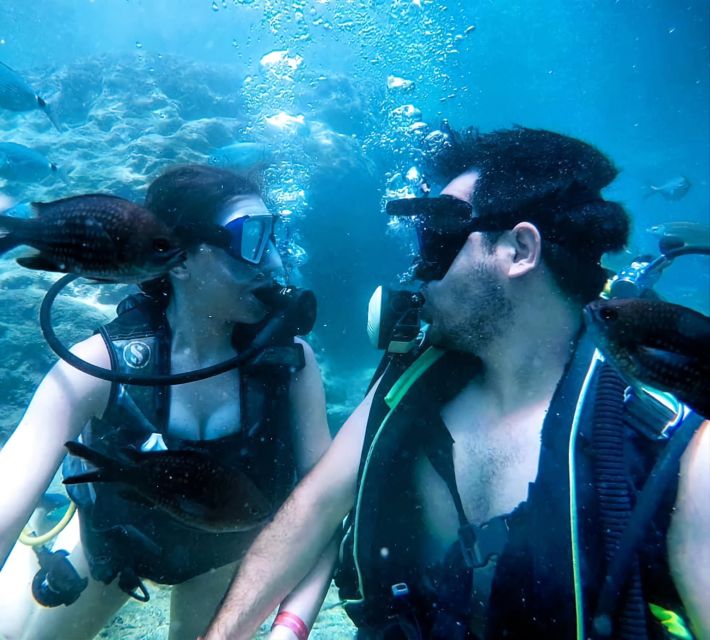
This is usually where people feel a stronger sense of achievement. You start to recognize what you’re doing—breathing with the regulator, controlling your buoyancy, and moving at the right pace. Since the crew repeats the safety basics, you’re not going into the deeper water blind.
Kiris Bay also pairs nicely with the day’s “sea time” theme. Between the two underwater sessions, you’ll typically have chances to swim, float, and snorkel from the boat. Some people mention jumping from the rocks or swimming into caves, depending on conditions and what’s safe at the moment. So even if you’re not underwater at every second, you still get that active coastal feel.
Snorkeling, swimming, and the boat breaks that make the day feel longer
This isn’t only about the underwater work. The schedule gives you space to enjoy the Mediterranean surface conditions and keep your energy up.
Between the two underwater sessions, it’s common to spend time:
- swimming around the boat
- snorkel browsing above the seafloor
- sunbathing on deck while you wait
One tip that keeps coming up in a practical way: bring the gear you’re comfortable with for surface time. People suggest having your own snorkel and beach shoes for easier rocky entries/exits. If you plan to spend time in and out of the water, it helps a lot.
Also, note the camera rule: the activity states cameras aren’t allowed. If you want underwater photos/videos, plan for the onboard photo service as your main option.
Lunch onboard: simple, filling, and timed for an active day
Lunch is included, and that matters because you’re out for most of a workday. The food is described as straightforward and filling rather than fancy—think pasta with breaded chicken and salad-type portions.
The best part of the onboard lunch is timing. It helps you reset before the second underwater session and keeps you from going too long on snacks alone.
If you’re sensitive to what you can eat, this is the one part you should take seriously. A few people mention the lunch being basic, so if your dietary needs are strict, you may want to consider bringing small backup snacks you can safely eat—just keep in mind any boat rules about food.
What about safety and instructor quality in real life?
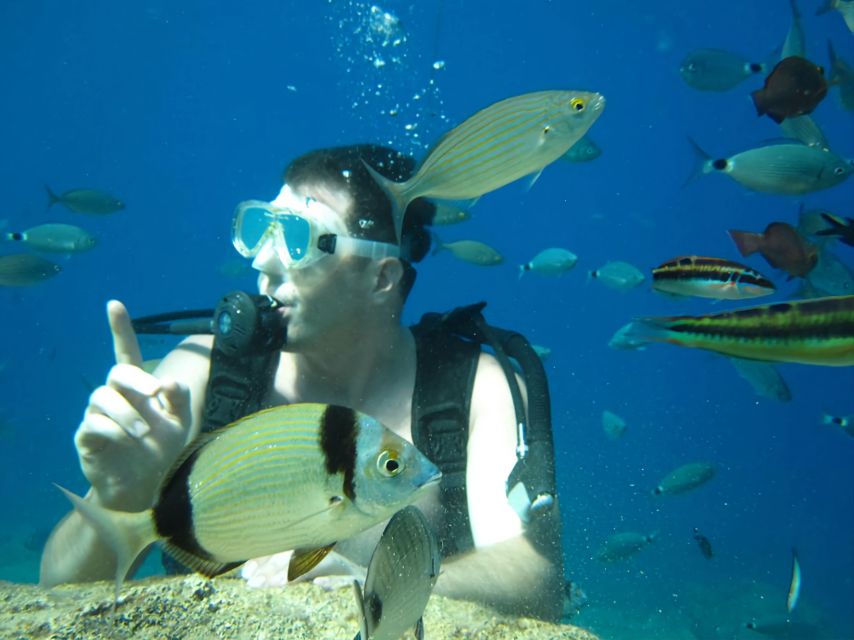
This is the big reason the experience gets such strong ratings. In many accounts, people describe instructors who are patient, calm, and clear, especially for nervous first-timers.
A few instructor names show up in positive ways—people mention feeling safe with instructors such as Kirim, Karim, Marat, Adriam (spelling can vary), Dovi, and Oliver. Even when the exact pairing changes, the consistent theme is close coaching and safety attention.
You should still treat scuba as a skill-based sport, not a casual swim. Do the practice steps you’re given, follow the boat’s routine, and keep close to your instructor during every part of the process. That’s how you get the fun without the stress.
One caution from the provided information: it’s not suitable for people with high blood pressure. If you fall into that category, skip this activity and ask your doctor about safer alternatives.
Price and value: does $29 make sense?
At $29 per person, the value is strong if you want a first taste of scuba with proper guidance and don’t need an all-day underwater marathon.
Here’s why the price works:
- You’re paying for two instructed underwater sessions, not just one trial
- Equipment and a licensed instructor are included
- Lunch is included, so you’re not adding a full meal cost on top
- Optional hotel pickup/drop-off can reduce friction
What’s not included is also worth noting. Drinks aren’t included, and photos/videos are paid separately. If you want underwater photos, budget for the add-on. One person estimated around 20 USD/euro for photo/video options, and another mentioned spending around £70 when adding extras like photos and a course.
So my value verdict is simple: it’s a great deal if you’re happy with a short underwater experience plus lots of sea time. If you’re chasing longer bottom time, you might want to look at a longer course option instead of this taster format.
Who should book this, and who should skip it?
This is a smart fit for:
- first-timers who want instruction without feeling thrown in
- people who want to pair underwater time with lots of swimming and snorkeling
- families or mixed-skill groups who like a structured boat day
- anyone who wants fish-life moments like hand feeding
It’s less ideal if:
- you strongly prefer longer underwater time per session
- you need strict dietary control for lunch (it’s basic)
- you have high blood pressure (not suitable)
- you can’t follow rules like the camera restriction
Language-wise, the instructors can work in English and Russian, so you’ll usually be able to understand the key safety steps clearly.
FAQ
FAQ
How many underwater sessions are included?
You get two underwater sessions. The first is around 5 meters, and the second is about 10–15 meters.
How long do I spend underwater?
The total underwater time is about 20–25 minutes across the two sessions.
Is lunch included?
Yes. Lunch is included onboard.
Is hotel pickup available?
Pickup is optional. If selected, you wait outside your hotel’s security gate about 10 minutes before the pickup time, and the driver won’t wait longer than 5 minutes after the scheduled time.
What language do the instructors speak?
The instructors speak English and Russian.
Are cameras allowed during the activity?
No. Cameras are listed as not allowed.
What’s included in the price, and what’s not?
Included: hotel pickup/drop-off if you choose it, scuba equipment, a licensed instructor, and lunch. Not included: drinks, and photos/videos.
Should you book this Kemer scuba-and-snorkel day?
If you want an affordable, well-run sea day where you learn the basics, see real marine life, and still have plenty of time to swim and snorkel, I think you should book it. The strongest selling points are the patient instruction and the chance to experience two bays in one day, with lunch included so you stay fueled.
Book it if you’re excited by fish-life moments like hand feeding and you’re okay with short, guided underwater sessions rather than long bottom time. Skip it if you need longer underwater hours, have high blood pressure, or you’re determined to bring your own camera for underwater shots—since cameras aren’t allowed and photos/videos are sold separately.