REVIEW · AGIA PELAGIA
Agia Pelagia: Introduction to Scuba Diving (2 Dives)
Book on GetYourGuide →Operated by Stay Wet Diving Center in Crete · Bookable on GetYourGuide
Agia Pelagia is a simple place to start scuba, fast. This intro program is built for first-timers: a 30-minute briefing, then two scheduled 45-minute underwater sessions with a trained instructor close by. I like that the limits are clear and conservative for beginners, with a first try capped at -6m and a second at -12m. I also like the small-group feel, with close supervision and no one left alone in the water. One thing to consider: this experience comes with specific health and age limits, and transfers from your hotel may be optional depending on what you choose.
You’ll meet your instructor at the diving center, then make the short van hop to the Mononaftis area. Expect a calm pace: teach the basics, fit you with gear, then get you breathing and buoyant before you’re asked to go further.
The bottom line for value is that you’re buying structure. Not just time underwater, but coaching that helps you feel safe enough to enjoy the silence and the strange weightlessness.
In This Review
- Key things that make this intro special
- From meeting point to first breath underwater
- Mononaftis bay schedule: two sessions with a real break
- Depth targets: -6m first, then -12m
- Gear, coaching, and the small-group advantage
- What you actually feel underwater (and why it’s worth it)
- Logistics in Agia Pelagia: pickup, return, and timing
- Price value: what you’re paying for at $153
- Who this is best for (and who should skip it)
- Packing and day-of tips that make it easier
- Should you book this two-session intro scuba experience in Agia Pelagia?
- FAQ
- How long is the experience?
- Do I need experience?
- How deep will I go?
- Are the underwater sessions supervised?
- What’s included in the price?
- Is pickup from my hotel included?
- What should I bring?
- How big are the groups?
- What languages are available?
- Who is this not suitable for?
Key things that make this intro special
- 30-minute briefing focused on basics and comfort, before you ever enter the water
- Two underwater sessions (45 minutes each) so you get repetition, not just a one-and-done try
- Clear depth progression: first at -6m, second at -12m
- Small groups (max 8 overall, split into groups of 4) with 1 instructor supervising
- Strict supervision: at no time are you alone in the water
- English-speaking instruction plus other language options, so you don’t have to guess what to do
From meeting point to first breath underwater
Your day starts at the diving center. That matters, because the session is organized like a mini course, not a random activity. You’ll typically settle in, then take the safety briefing (about 30 minutes) with your instructor. For a beginner, this is where the whole experience either clicks or feels stressful. The good part here is that the briefing is explicitly meant to teach you the basics and introduce you to the Mediterranean’s flora and fauna, so you understand what you’re seeing as well as how to move.
You also get the sense that the instructors keep things grounded. The program is designed for people with no particular knowledge to follow along, learn how the gear works, and build confidence. And that confidence is not just for fun; it helps you stay calm while managing your breathing and buoyancy.
Then comes the transition from classroom to sea. You’re not handed equipment and left to figure things out. You’re guided through the process so you know what to do before you step in. That’s a big deal when you’re learning something new in salt water, where every sensation feels amplified.
You can also read our reviews of more tours and experiences in Agia Pelagia.
Mononaftis bay schedule: two sessions with a real break
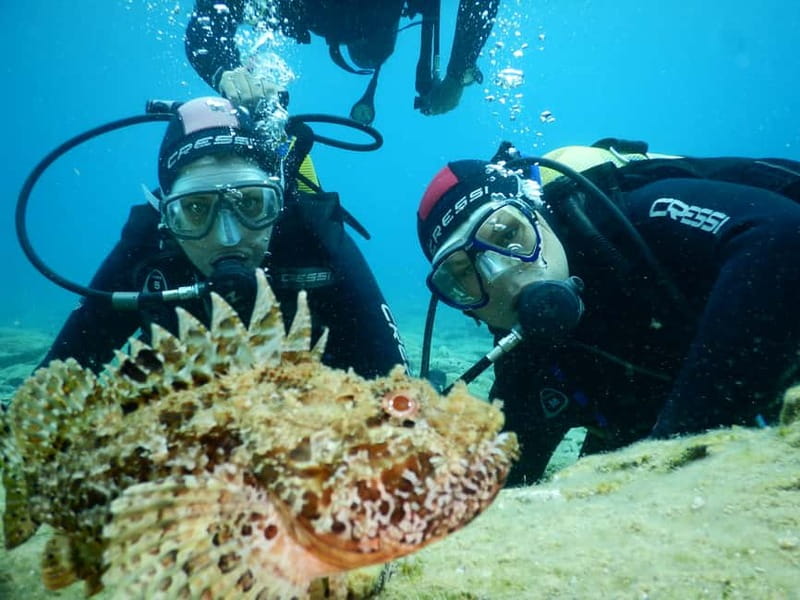
Most of the action happens around the Mononaftis area. The day includes a transfer by van (about 40 minutes each way in the itinerary structure), then you’ll spend time at the water site.
Here’s how the pacing usually works:
- First underwater session (about 45 minutes) after the briefing
- Break time (about 1 hour) to rest and regroup
- Second underwater session (about 45 minutes) later in the day
- Free time (about 2 hours) after the second session, plus the return van
The second underwater session is listed around 2 PM, with transport back to your hotel leaving at 4 PM. That timing is practical. You get two tries, then you’re not stuck feeling rushed afterward. You have enough time to enjoy the beach and grab a meal at the restaurants around the bay before you head back.
If you’re the type who worries about being cold or exhausted, this schedule helps. Two 45-minute sessions with a break in between means you can reset. You can also eat and hydrate before the second one, which makes the deeper portion feel more manageable.
Depth targets: -6m first, then -12m
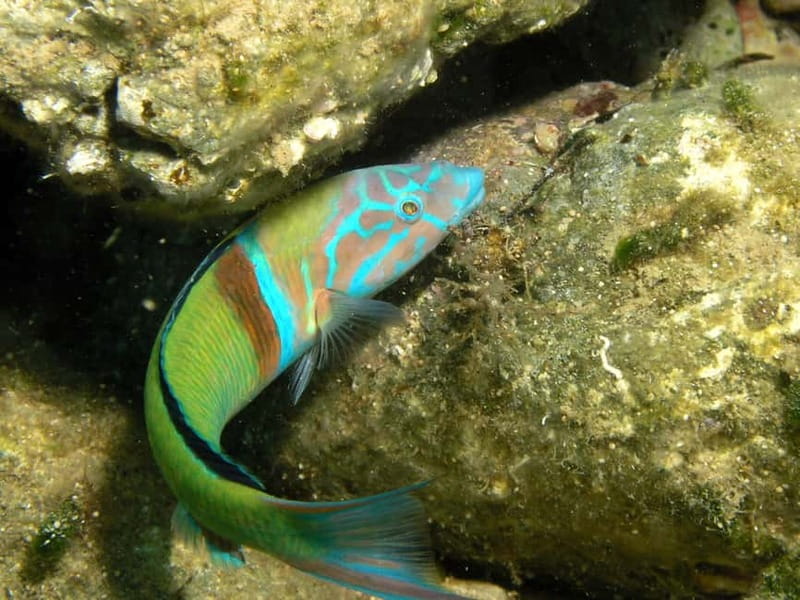
One of the smartest parts of this program is the step-up in depth. The first session is capped at a maximum of 6 meters, described as the regulatory depth for a first run. The second session goes to 12 meters, where you can observe new fish types and a different underwater relief.
Why you should care about these numbers:
- At -6m, you’re learning control: how to breathe steadily, how to keep your position, and how to stay relaxed even with reduced light.
- At -12m, you’re building on that control. You’re going a bit deeper, so you’ll notice changes in visibility, color, and how your body feels in the water.
The best part is the progression is built into the plan. You’re not just hoping you can handle it. The structure is meant to get you comfortable on the first run, then earn the second run.
Also, the program says you’ll be supervised and that you won’t be alone in the water. That reduces the mental load on a beginner. When you’re new, calm is part of technique.
Gear, coaching, and the small-group advantage
This is a gear-included experience, which removes a big headache. You don’t need to rent fins, mask, regulator setup, or figure out sizing. You show up with beachwear, and the center provides the rest.
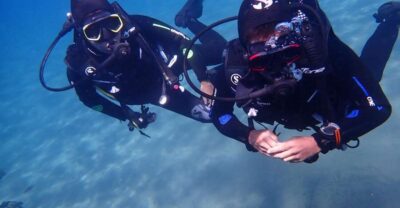
The coaching setup is another plus. You’re divided into groups of 4 people maximum, supervised by 1 instructor. At the same time, the overall group size is limited to 8 participants. That combination matters because it keeps your instructor’s attention closer and reduces the “everyone for themselves” feeling.
If you want to practice something new, the ratio is everything. In a tiny group, you can ask questions, get adjustments, and get reassurance fast if you feel unsure. One recent theme in the feedback is how instructors take time to make people feel comfortable and how the teaching makes beginners feel prepared.
Language support is also built in: your instructor can be Dutch, English, French, German, or Spanish. If English is your comfort language, you’re not stuck with hand signals. Clear communication speeds up learning and helps you feel safe when things feel unfamiliar.
What you actually feel underwater (and why it’s worth it)
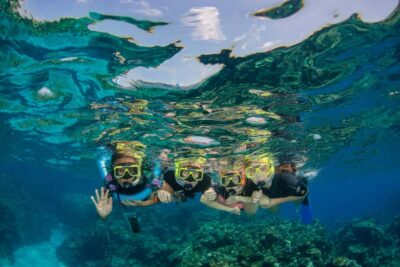
Scuba’s magic is not the photos. It’s the sensation. This program explicitly promises the feeling of weightlessness and silence, and you should expect that. Underwater, your pace changes automatically. Movement becomes slower. Breathing becomes the rhythm. Even when you’re excited, the water forces you to stay present.
Because this is a beginner course, the focus is not on exploring every corner of the sea. It’s on helping you understand the basic underwater experience:
- breathing smoothly with the equipment
- staying relaxed enough to enjoy the environment
- noticing marine life without turning it into a sprint
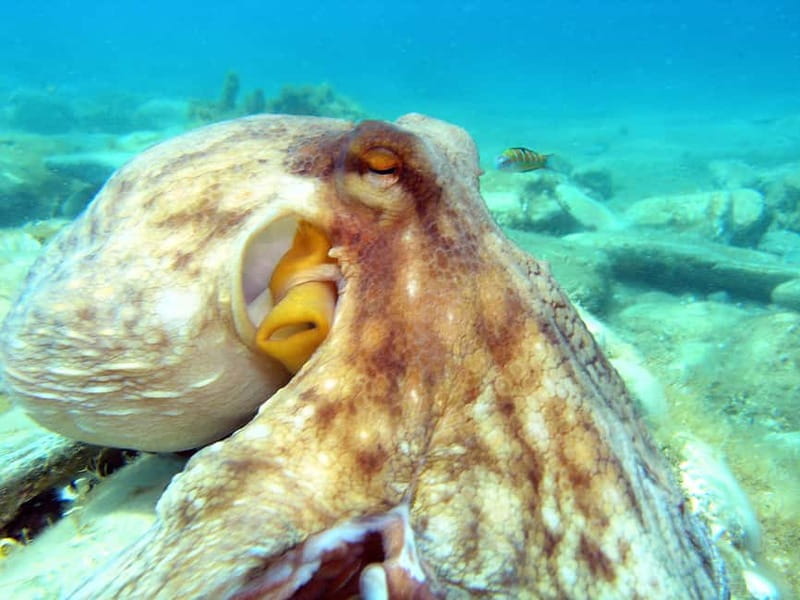
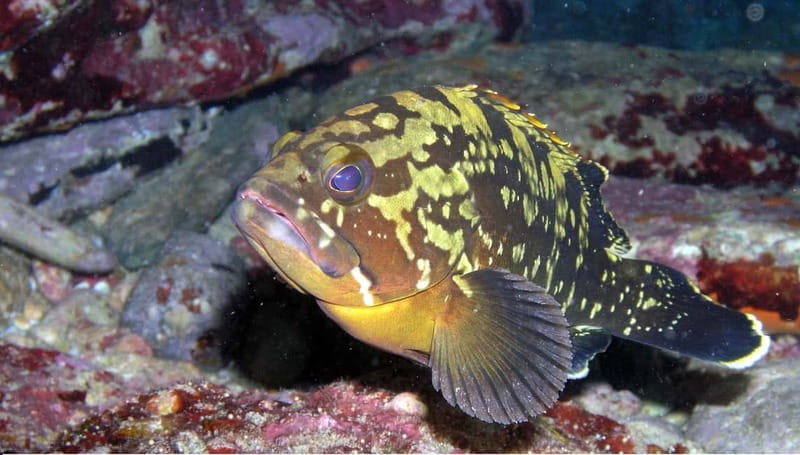
The program also mentions that you’ll learn about the Mediterranean’s flora and fauna as part of the briefing. That gives context for what you see, which can turn random fish sightings into real recognition.
And the second session being done slightly deeper and leaving the bay adds variety. The relief and fish types can feel different. Even if you’re still learning how to manage yourself in the water, variety keeps the day from feeling repetitive.
Logistics in Agia Pelagia: pickup, return, and timing
If you’re staying around Agia Pelagia and the neighboring towns, the transfer setup is straightforward. Pickup is optional, and it uses a 9-seat van. Drop-off locations include Malia, Hersonissos, Agia Pelagia, Fodele, Stalida, Gazi, Kokkini Hani, Heraklion, and Ligaria.
Here’s what to keep in mind:
- If you want less hassle, choose the pickup option so you’re not coordinating your own ride to the center.
- The itinerary suggests about 40 minutes by van each way, plus time on site.
- You’ll likely be done and back around 4 PM, which is convenient for dinner plans.
One more practical note: the listing says transfer from your hotel is not included, but pickup can be available as an option. So treat it like this: instruction and gear are covered, and transport depends on the option you select.
Weather and sea conditions can affect how long you’re out on the water, and the total duration is listed broadly as 2 to 7 hours. Plan for the whole window, not just the underwater time.
Price value: what you’re paying for at $153
At $153 per person, this isn’t a cheap gimmick. It’s closer to paying for a real training-and-supervision package.
Here’s the value breakdown based on what’s included:
- a 30-minute safety briefing
- two supervised underwater sessions (45 minutes each)
- all diving gear
You’re also paying for the structure of learning in a small group, plus the fact that someone is actively supervising you during both sessions. That matters more than people think. In water, skill and calm don’t appear on their own. A good instructor setup is what keeps the experience comfortable instead of chaotic.
If you’re comparing options, look for two-session formats. A single try can feel like a teaser. Two sessions gives you repetition: you learn, you improve your comfort, then you get to apply it again the same day.
So for first-timers who want an actual taste of scuba and a second chance to do it better, this price can feel fair.
Who this is best for (and who should skip it)
This program is for people over 8 years old. It’s also described as a fit for people who lack diving experience, since you get a briefing and follow guided instruction.
It is not suitable for:
- pregnant women
- people with heart problems
- people with respiratory issues
- people with epilepsy
- people with diabetes
That’s not paperwork fluff. Those restrictions often tie to safety concerns and how your body handles changes during underwater activity. If you’re unsure where you fall, it’s worth checking directly with the operator before you book.
This experience is also listed as wheelchair accessible, which is a good sign for smoother logistics at the center. (You’ll still want to confirm how the water access works for your specific needs.)
Packing and day-of tips that make it easier
The simple requirement is beachwear. Beyond that, use common sense for a sea day:
- Bring something to dry off in afterward
- Keep valuables minimal
- If you get cold easily, consider how you’ll feel between the two sessions during the break
Day-of, lean into the briefing. If you treat the 30 minutes as real instruction time, the underwater sessions feel easier. If you skip the details, you’ll spend the first minutes wondering what you’re supposed to do.
Also, mentally prepare for two separate experiences: the first session builds your baseline, and the second session is where the day feels more like exploration. The second one goes to 12 meters and happens around 2 PM, so you’ll want to be well-rested after the break.
Should you book this two-session intro scuba experience in Agia Pelagia?
Book it if you want a guided, beginner-friendly intro with two chances underwater, clear depth progression, and tight supervision in a small group. If your goal is to leave Crete with a real sense of what scuba feels like, the structure here is exactly what you want: briefing first, repetition second, and enough time afterward to enjoy the bay.
Skip it if you’re in any of the listed medical risk categories, if you’re under 8, or if you strongly prefer independent activity over coaching. This is a supervised learning format. It’s not built for going off-script.
If you’re planning your Cretan week and want one day that feels both relaxed and memorable, this is a solid choice.
FAQ
How long is the experience?
The total duration is listed as 2 to 7 hours, and the day structure includes van time, a briefing, two underwater sessions of about 45 minutes each, a break, and free time.
Do I need experience?
No. The program is designed for people with no particular knowledge. You’ll get a briefing (about 30 minutes) teaching the basics.
How deep will I go?
The first underwater session has a maximum depth of 6 meters. The second session goes to a maximum depth of 12 meters.
Are the underwater sessions supervised?
Yes. You’ll be accompanied by an instructor, and the program states that at no time will you be alone in the water.
What’s included in the price?
Included are the 30-minute briefing, two supervised sessions, and all diving gear.
Is pickup from my hotel included?
Transfer from your hotel is listed as not included, but pickup is optional by van. It mentions pickup in a 9-seat van and lists multiple possible drop-off locations.
What should I bring?
The only specific requirement listed is beachwear.
How big are the groups?
The overall group is limited to 8 participants, and you may be split into groups of 4 people maximum with 1 instructor supervising.
What languages are available?
Instructors are listed as Dutch, English, French, German, and Spanish.
Who is this not suitable for?
It is not suitable for children under 8, pregnant women, and people with heart problems, respiratory issues, epilepsy, or diabetes.