REVIEW · TENERIFE
ADVANCED OPEN WATER CERTIFICATION – Improve your scuba diving skills up to 30m !
Book on Viator →Operated by LJ Diving Tenerife · Bookable on Viator
Want real progress, not just a stamp? In Tenerife, LJ Diving Tenerife helps you work through the PADI Advanced Open Water path up to 30m with a plan built around your time off.
I really like the small-group format (max 2 per course). You get real attention from your instructor, and that matters when you’re practicing skills like buoyancy control and navigation. I also like that the program is built around five defined in-water challenges, including the required deep-water session and a peak performance buoyancy session—so you’re not guessing what to train next.
One thing to consider: this course assumes you already have at least 10 logged dives and a moderate fitness level, and it needs good weather to run smoothly.
In This Review
- Key highlights you’ll feel during the course
- Tenerife’s LJ Diving Tenerife: attentive training with a family feel
- PADI Advanced Open Water to 30m: what you’re really training
- Your 3-day plan up to 30m: five structured skill sessions
- The required deep-water session (your confidence builder)
- Navigation practice (so you stop guessing)
- Night water session (learning calm in lower visibility)
- Wreck-site session (work with structure, not chaos)
- Peak Performance buoyancy (the skill that improves everything)
- Small group coaching with Ludovic and Julie
- Theory options: e-learning or support materials
- Gear, comfort, and the little things that matter
- Price and logistics: what $596.12 buys you
- Meeting point and timing: Las Galletas, keep it simple
- Who should choose this Advanced Open Water course to 30m
- Should you book this Advanced Open Water course in Tenerife?
- FAQ
- How long is the Advanced Open Water course in Tenerife?
- What’s the minimum experience I need before starting?
- How many people are in the course?
- What training sessions are included?
- Can I do the theory part online?
- Where do I meet for the course?
- What should I do if the weather is bad?
- Is the booking refundable?
Key highlights you’ll feel during the course
- Max 2 students per course means you get coaching time, not just a group briefing
- Five required skill sessions cover deep-water confidence, navigation, night work, wreck practice, and buoyancy control
- E-learning option for the theory keeps the course flexible if you want to study before arriving
- Instructor-led planning means you’re not stuck following a rigid script while you’re on holiday
- Clean gear habits stand out, with masks and regulators reported as disinfected
Tenerife’s LJ Diving Tenerife: attentive training with a family feel
LJ Diving Tenerife is the kind of place where the vibe is calm and personal, not assembly-line. The club runs Advanced Open Water training out of Las Galletas (meeting point on Calle Consuelo Alfonso Diaz-Flores, 16). And because the course is private for your group and capped at two students, you’re less likely to feel like you’re slipping between other schedules.
What makes this setup work is simple: you can slow down when you need to. Advanced training isn’t only about going deeper. It’s about managing yourself underwater—breathing rhythm, posture, planning, and staying aware. With fewer people in the water, your instructor can correct small habits that normally take longer to notice in larger groups.
I also like that this feels like a club, not a churn machine. The center is described as comfortable, and the instructors (Ludovic, often called Ludo, plus Julie) are repeatedly praised for being friendly and professional. That matters when you’re working on skills that require focus, because comfort helps you learn faster.
You can also read our reviews of more tours and experiences in Tenerife.
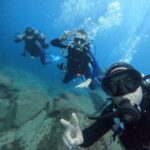
PADI Advanced Open Water to 30m: what you’re really training
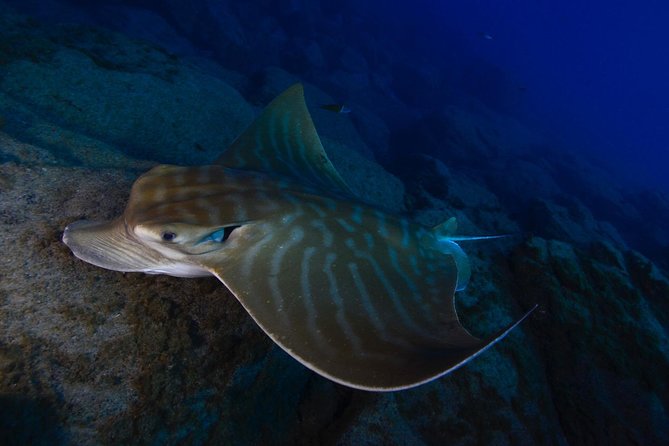
This isn’t just a ticket to deeper water. The Advanced Open Water program is designed to broaden your scuba skills and confidence so you can handle more situations responsibly. The course is specifically aimed at getting you training toward 30m, but the real goal is control: you learn how to plan, how to orient yourself, and how to move efficiently.
If you already have the minimum experience requirement (a diver with 10 logged dives), you’ll benefit most from what the program targets:
- decision-making under changing conditions
- staying relaxed when things get harder
- using navigation and buoyancy skills so you don’t fight the water
There’s also a nice reality check built in. Advanced training follows standards of training and safety, with an experienced instructor leading the way. You’re not left to figure things out on the spot, and you’re not rushed through the hard parts.
The course is managed by an instructor with PADI Elite experience for 5 years, which signals that this is a coach-led program rather than a purely logistical operation. You’re on holiday, and the team’s approach is to define the plan with you so you can actually enjoy the trip, not just grind through lessons.
Your 3-day plan up to 30m: five structured skill sessions
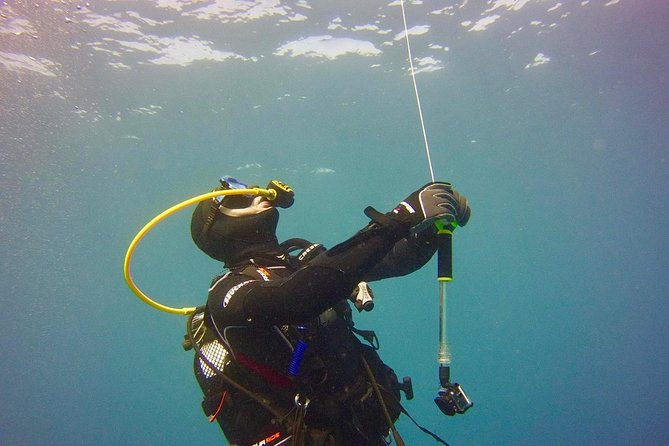
The program runs about 3 days and centers on five adventure-style in-water sessions. The exact day-by-day flow can shift a bit with conditions, but the skill set is defined. Here’s what you can expect, and why each item is worth your attention.
The required deep-water session (your confidence builder)
The course includes a required deep-water session. This is where you practice comfort and awareness in deeper conditions and learn how your body and planning change as depth increases.
Why it matters: depth training isn’t only about depth. It’s about staying calm, monitoring breathing and depth properly, and respecting time and limits. If you’ve felt uneasy about going deeper before, this session is often the one that turns uncertainty into a routine.
Navigation practice (so you stop guessing)
Navigation is another mandatory skill. You’ll work on techniques to keep track of direction and orientation, and you’ll practice using references rather than relying on luck.
Why it matters: good navigation reduces stress. When you can plan and follow a route, you spend less mental energy panicking and more on enjoying what you’re seeing. It also supports safer decision-making later, because you learn to know where you are instead of hoping you’ll end up fine.
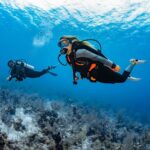
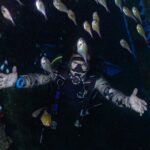
Night water session (learning calm in lower visibility)
The program includes a night water session. Expect lower visibility and a different feel in the water, which makes this a great test of control.
Why it matters: at night, habits become more obvious. Buoyancy, trim, and awareness matter even more because you can’t rely on seeing everything clearly. It’s the kind of session that makes your daytime skills feel sharper afterward.
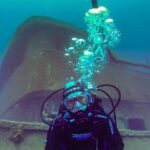
Wreck-site session (work with structure, not chaos)
There’s also a wreck-site session. Wreck environments can add complexity, and the goal isn’t thrill-seeking. It’s learning how to move with purpose and stay controlled around structure.
Why it matters: wreck practice is a great way to refine positioning and buoyancy. You train yourself not to bump, not to hover wildly, and not to lose orientation.
Peak Performance buoyancy (the skill that improves everything)
Finally, you’ll do a peak performance buoyancy session. This is one of the most valuable parts of Advanced Open Water because buoyancy affects everything: comfort, safety, energy use, and even how you look underwater.
Why it matters: once your body position improves, you stop burning energy fighting the water. You move more smoothly, and you’ll likely notice that your navigation and other skills get easier too.
Small group coaching with Ludovic and Julie
A lot of scuba training sounds similar on paper. What changes the experience is how the instruction actually feels. Here, the instructors—Ludovic (Ludo) and Julie—are repeatedly described as dedicated, flexible, and professional.
The small-group structure (max two students per course) shows up in the coaching style. You’re not waiting your turn to ask questions. You can get feedback on your posture and timing while it still feels fresh in your brain. That’s how you improve, not by memorizing theory, but by correcting in-water habits quickly.
You’ll also appreciate the “planning with you” approach. That means the schedule and training feel holiday-friendly rather than rigid. It’s easier to stay relaxed when your instructor isn’t treating you like a conveyor belt machine.
And there’s a practical detail that shows up in reviews: equipment is kept clean, with masks and regulators reported as disinfected. That’s not a luxury. It’s part of feeling comfortable and safe, especially if you’re doing multiple sessions in a short window.
Theory options: e-learning or support materials
The theoretical portion can be done with e-learning, or you can use provided support material instead. That flexibility is useful if you want to arrive already prepared, or if you’d rather study at your own pace once you get there.
Either way, the point is the same: you should arrive understanding what you’re going to practice. When theory and in-water skills line up, you get faster improvement because the session has context. You’re not only learning what to do—you’re learning why.
If you’ve ever had the experience of doing training where theory felt disconnected from the water, this course’s approach should feel more grounded. The “standards of training and safety” emphasis and the structured skill list suggest a clear link between knowledge and each in-water session.
Gear, comfort, and the little things that matter
In-water training is physical and mental. So comfort matters more than people expect.
From the feedback, the center keeps gear clean and uses disinfected equipment like masks and regulators. If you’re using their setup, that’s a comfort boost. If you bring your own gear, it still helps to work with a professional operator who treats cleanliness seriously.
The training environment is also described as comfortable, with an atmosphere that feels friendly and not stressful. That’s important for Advanced training because some skills can feel like a lot at first—especially the combination of deeper planning, navigation, and maintaining calm during lower-visibility conditions.
And yes, there’s also the social side. One reviewer gave a special shoutout to Daniel for local food and drinks recommendations (including ceviche and mojitos). That might sound like a side quest, but it reflects the way the club works—helpful, welcoming, and invested in your whole day, not only the hours in the water.
Price and logistics: what $596.12 buys you
At $596.12 per person for an approximately 3-day program, you’re paying for more than a calendar slot. You’re paying for:
- an instructor-led certification track with structured required skills
- limited group size (max 2)
- coaching across five defined in-water sessions
- theory support (either e-learning or provided materials)
- a professional center with attention to equipment hygiene
You can do cheaper scuba activities elsewhere, but Advanced certification coaching has a cost. You’re not just observing. You’re practicing skills that require feedback and safety oversight, and you need enough time to correct mistakes.
Also, the price can feel more reasonable because the group stays small. If you’ve ever tried to get quality instruction in a crowd, you already know the hidden cost: you pay the same, but you learn slower.
One more practical note: this experience requires good weather. If conditions are poor, the operator should offer a different date or a full refund. That matters for budgeting your trip days.
Meeting point and timing: Las Galletas, keep it simple
You’ll meet at LJ Diving Tenerife, Calle Consuelo Alfonso Diaz-Flores, 16, 38631 Las Galletas, Santa Cruz de Tenerife, Spain. It’s near public transportation, which helps if you’re planning to base yourself locally without needing complicated transfers.
Hours are listed as 9:00 AM to 6:00 PM (with the operating window covering 2020 through 2026). After booking, you should receive confirmation within 48 hours depending on availability. The activity uses a mobile ticket, so keep your phone handy.
Because the course depends on weather and training flow, you’ll want to avoid booking a bunch of other “must-do” plans right next to your training window. Build in breathing room. Advanced skills improve when you feel rested and not rushed.
Who should choose this Advanced Open Water course to 30m
This course is a strong match if you:
- already have 10 logged dives and want to level up your skills
- want guided practice in navigation, buoyancy control, and deeper water comfort
- prefer a small-group approach with an experienced instructor
- like the idea of doing theory via e-learning or supported study
It may not be your best choice if you’re looking for a first-timer experience. The program assumes you have a baseline. There’s also a moderate physical fitness requirement, so if you’re dealing with major mobility constraints, you’ll want to think carefully.
If you’re the kind of diver who wants a clear structure—required sessions, defined goals, and coaching feedback—you’ll probably feel at home here.
Should you book this Advanced Open Water course in Tenerife?
If your goal is real skill improvement up to 30m, I think this is an easy “yes” for the right diver. The combination of max two students, a structured five-session training plan, and instructors like Ludovic and Julie creates the kind of learning environment where corrections happen quickly.
Book it if you’re ready for Advanced training and you can align your schedule with good weather. Also, mentally plan for the course to be work, not a casual sightseeing swim. The payoff is that you’ll come away with techniques you can reuse on future trips.
Skip it if you don’t meet the minimum experience (10 logged dives) or if you know you’ll struggle with the moderate fitness demand. And if your travel dates are rigid, keep in mind the weather dependency.
FAQ
How long is the Advanced Open Water course in Tenerife?
It runs for about 3 days (approximately).
What’s the minimum experience I need before starting?
You need at least 10 logged dives.
How many people are in the course?
The group size is limited to a maximum of 2 per course.
What training sessions are included?
The program includes a required deep-water session, navigation (mandatory), a night water session, a wreck-site session, and peak performance buoyancy.
Can I do the theory part online?
Yes. The theoretical part can be done via e-learning, or you can use the support materials provided.
Where do I meet for the course?
Meet at LJ Diving Tenerife, Calle Consuelo Alfonso Diaz-Flores, 16, 38631 Las Galletas, Santa Cruz de Tenerife, Spain.
What should I do if the weather is bad?
This experience requires good weather. If it’s canceled due to poor weather, you’ll be offered a different date or a full refund.
Is the booking refundable?
The experience is non-refundable and cannot be changed for any reason. If the activity is canceled due to poor weather, you’ll be offered a different date or a full refund.