REVIEW · ACI CASTELLO
Aci Castello: Underwater Scooter Diving Tour
Book on GetYourGuide →Operated by Etna and Sea Excursion · Bookable on GetYourGuide
A scooter makes Sicily’s underwater world effortless. In Aci Castello, you’ll get guided time in the Gulf of Catania and the protected Cyclopean Isles, with a marine biologist explaining what’s living and growing on the volcanic floor. I really like the focus on learning while you swim, not just the scenery.
One key consideration: you must have the proper scuba certification or license before you go. If you do, great. If you don’t, you’ll lose time sorting it out.
I also like how the underwater scooter changes the effort level. You can glide along basalt columns and lava pillows without constantly kicking your legs for every meter. In many groups, you’ll start with equipment help and some shallow-water practice so you can feel steady before the scooter part.
In This Review
- Key things I’d plan around
- Where you’ll go: Aci Castello’s volcanic seabed and the Cyclopean Isles
- How the underwater scooter + scuba gear actually works
- The 4-hour flow: from meeting point to return
- Underwater stops: basalt columns, lava pillows, and white sand
- Wildlife you can realistically expect to spot
- Who should book this (and who should think twice)
- Price and value: is $113.29 worth it?
- Practical tips to make the most of your scooter swim
- Should you book this underwater scooter tour?
- FAQ
- Do I need a scuba certification to take part?
- How long is the Aci Castello underwater scooter tour?
- What’s included in the price?
- Where do I meet, and where does the tour end?
- What languages are offered?
- Is there free cancellation?
- Can I reserve now and pay later?
Key things I’d plan around
- Marine biologist guidance while you’re underwater so you know what you’re seeing.
- Underwater scooter assist to cover more area with less strain.
- Volcanic formations in the Gulf of Catania and Cyclopean Isles including basalt columns and lava pillows.
- Canyons, volcanic faults, and white-sand stretches for variety in what you observe.
- Patient, attentive staff including Andrea and her team with clear pacing for the group.
- On-the-boat extras like drinks and melon after the underwater time.
Where you’ll go: Aci Castello’s volcanic seabed and the Cyclopean Isles
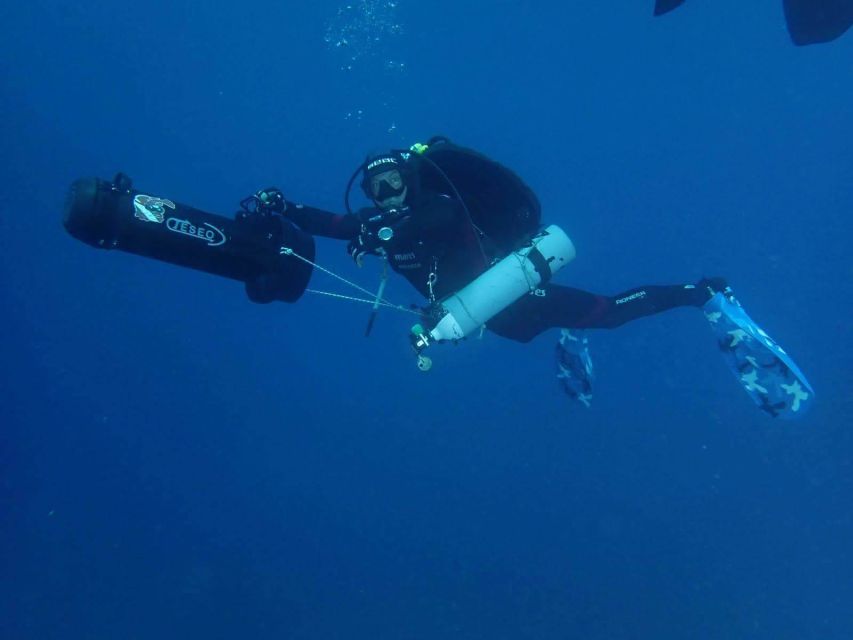
Aci Castello sits on Sicily’s east coast, facing the Gulf of Catania. The big reason this tour is special is the mix of volcanic geology and marine life. You’re not just looking at fish in open water; you’re moving through an underwater world shaped by ancient lava flows.
The protected area of the Cyclopean Isles is part of the magic here. Expect time over a lava seabed with structures like basalt columns, lava pillows, and stretches of white sand. That combo matters because it gives your guide real “talking points” and gives you different visuals in a single session.
You’ll also pass through places described as underwater canyons and volcanic faults. Those features tend to create sheltered pockets where animals can hang out, and where you can spot different textures of the seabed. Even if you’re not a marine-life expert, the environment itself does a lot of the explaining.
And yes, there’s a human layer to the scene too: you pass near wrecks connected to the Second World War. That’s not about ghost stories. It’s about seeing how life and reef growth often take hold around man-made structures.
You can also read our reviews of more tours and experiences in Aci Castello.

How the underwater scooter + scuba gear actually works
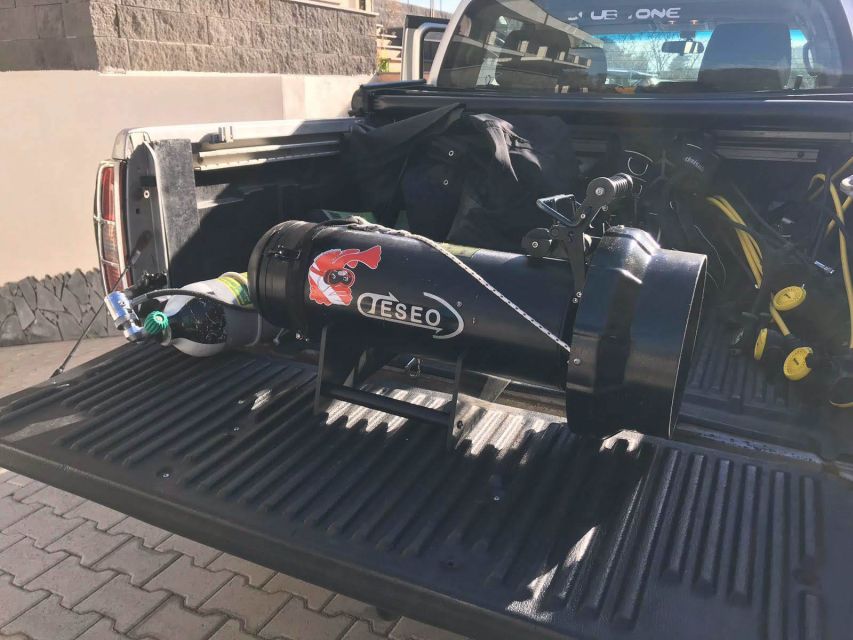
The underwater scooter is the main “why” for this experience. With the scooter providing propulsion, you spend less time fighting water resistance and more time observing. If you’ve ever done a standard scuba session where you’re hyper-focused on breathing and buoyancy, this setup can feel like a different sport.
That scooter doesn’t remove the need for solid scuba fundamentals. You still need your scuba certification or license, and you should expect a qualified setup and instruction. The goal is safe, controlled movement so you can enjoy the tour instead of managing stress.
Plan on a brief rhythm before the scooter section. Based on the way the team runs things, you may start with an equipment walkthrough, then do some shallow-water practice to get used to gear and movement. In other words, it’s not all one big leap from boat to scooter in open water.
The scooter also helps with pacing. You can glide past formations at a steady speed, which is ideal for spotting smaller life forms like sponges and sea fans. If the group is mixed, this pacing tends to work better than relying on everyone to kick at the same rate.
And the equipment is described as the latest generation. That’s a practical point: newer gear often means easier handling and more reliable comfort during a 4-hour experience.
The 4-hour flow: from meeting point to return
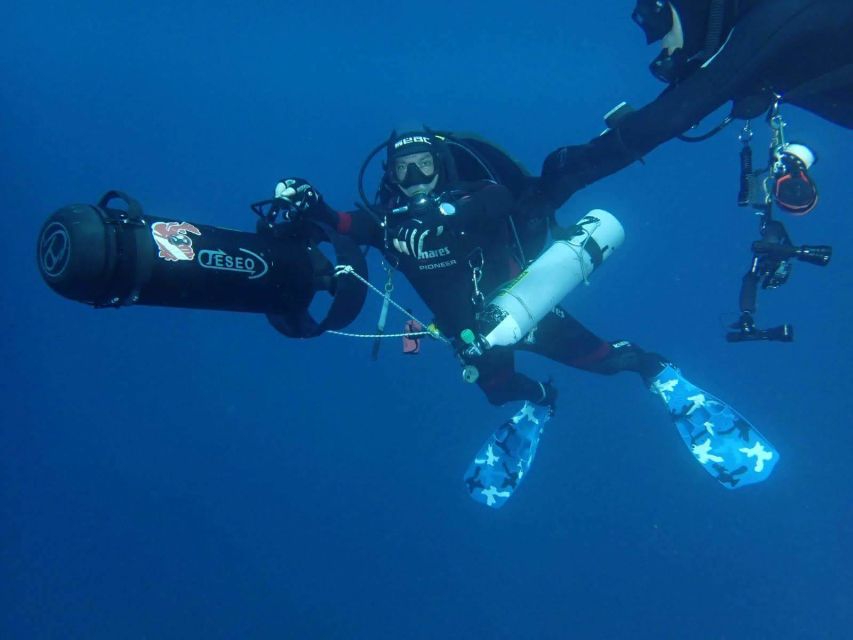
This is a 4-hour tour, and it’s structured like a classic boat-day outing: meet, gear up, go out together, then return to the starting spot. It ends back at the meeting point, so you won’t be stuck figuring out transport at the end of the day.
You meet at Associazione Turistica Pro Loco Aci Castello. That’s your anchor for the day. From there, you’ll head out by boat with the guide and group.
Once you’re on the water, you’ll likely get a short briefing about the area. The setup is meant to help you understand what you’re about to see before you go underwater. It also gives the guide a chance to adjust the plan if you have beginners in the group.
After the underwater portion, there are small onboard touches. One of the more charming details: drinks and melon after the scooter and underwater time. People also mention photo-friendly moments from the roof of the boat, plus a chance to swim before heading back to harbor. Whether you’ll have that exact moment can depend on the day’s conditions, but it’s part of how the outing is typically run.
Underwater stops: basalt columns, lava pillows, and white sand
This tour is built around volcanic structures, and that’s what makes it more interesting than a generic reef swim. You’re guided through areas described as basalt columns, ropes, and lava pillows—plus the “in-between” spaces like white sand.
Basalt columns and lava pillows are the kind of underwater geology that instantly changes how you look at the seabed. Instead of a flat sandy bottom, you get vertical and rounded shapes that influence currents and create natural nooks. Those nooks often bring in small life: sponges, sea fans, and other slow-growing organisms.
The presence of ropes in the description also matters. It suggests there are fixed reference points used for safe navigation and control. That’s helpful for buoyancy and orientation, especially if you’re still getting used to the scooter.
Then you have white-sand expanses. That contrast is important. If everything underwater is dark rock, it’s harder to notice animals and hard to take clear photos. White sand gives you visual breathing space and makes it easier to spot movement when something crosses your line of sight.
You’ll also explore areas described as underwater canyons and volcanic faults. Those features tend to create changes in depth and structure that help the guide point out different zones. Expect the guide to talk about why those areas are good for marine life, not just what they look like.
Wildlife you can realistically expect to spot
This is where the marine biologist angle becomes more than a marketing line. The Gulf of Catania has a mix of organisms that show up well when you move calmly and slowly.
The tour’s highlights specifically mention sea bream, octopus, sponges, and sea fans. Those are solid “what might I see” categories because they represent different body types and different ways of living—fish that cruise, octopus that hide and react, and invertebrates like sponges and sea fans that anchor to the substrate.
In practice, the best wildlife viewing usually comes from steady movement and good positioning. The scooter helps with that. Instead of constantly kicking to keep up, you can maintain a controlled glide while the guide points out what’s worth watching.
You’ll also travel through zones described as between ancient lava flows and volcanic features. That environment tends to support more varied microhabitats. That’s why you might spot different organisms as you move from rock structures to sandy areas and back again.
If you’re hoping for a “wow” moment, don’t only chase the biggest fish. I’d focus on the slow stuff too: sponges and sea fans can be easier to miss if you’re rushing, and they’re often the most interesting once you slow down.
Who should book this (and who should think twice)
This is a great match if you want a guided underwater experience that feels more like exploration than endurance. The scooter component especially suits travelers who want to see more without burning energy every minute.
It’s also a good choice if you like learning from a specialist. A marine biologist guide adds context to what you’re seeing, which can turn random underwater sights into real understanding. If you’re the type who likes to know what something is and why it’s there, you’ll get more out of the session.
You should think twice if your biggest goal is purely the sensation of a challenging physical workout. This tour’s design prioritizes comfort and controlled movement. It’s not about struggling through tough currents or competing for fastest bubbles.
The other “don’t skip this” factor is certification. You must be in possession of a scuba license. If you’re not, sort that first; otherwise the tour becomes an administrative project instead of a vacation highlight.
And language-wise, you’re covered. The instructor is listed in English, Italian, Spanish, and French, so you won’t be left guessing during the safety and equipment parts.
Price and value: is $113.29 worth it?
At $113.29 per person for a 4-hour outing, this can be good value if you count what’s included and what you’re paying for.
What you’re getting:
- a professional guide, including a marine biologist focus
- scuba gear
- an underwater scooter rental
- the guided underwater session through specific volcanic areas
In other words, you’re not just paying for a spot in the water. You’re paying for equipment and a guided setup that’s meant to make the experience accessible and safe. The scooter rental alone changes the cost comparison versus a basic scuba-only session.
Is it expensive? Compared with boat trips that don’t include scuba gear and scooter time, yes. But compared with booking gear and paying for guided underwater instruction separately, it often looks more reasonable.
The value also depends on your comfort level with scuba. If you already have certification and know you’ll enjoy calm, guided underwater movement, this is a straightforward buy. If you’re missing certification, the time and cost will turn into a headache fast.
Practical tips to make the most of your scooter swim
I’d go in with the mindset that preparation is part of the fun. Even if your confidence is high, you’ll get more from the underwater time if you pay attention during the briefing and practice stage.
Bring a simple plan for photos. People mention being able to take good photos from the roof of the boat. That helps a lot because you’ll get images of the coastline and boat ride too, not only underwater shots.
Wear what’s comfortable for boat time and expect you’ll get wet depending on sea conditions and how the team handles transitions. The session is short enough that you likely won’t need to overthink outfit choices, but comfort beats fashion here.
If you’re nervous, that’s normal. One of the best-rated themes is that the team is friendly and patient, with careful attention to participants. That patience matters most during equipment explanation and early practice, when confidence is still building.
And double-check your scuba certification before the day arrives. The requirement isn’t optional, and it’s been a surprise for some people due to how information is presented on certain platforms. Save yourself stress: confirm your documentation level ahead of time.
Should you book this underwater scooter tour?
Book it if you want a guided underwater experience in a volcanic setting with a marine biologist, and you’re excited by the idea of using an underwater scooter to move smoothly. The best part is the combination of geology and learning: you glide over lava structures while getting real explanations of what lives there.
Don’t book it if you’re missing your scuba certification or if your goal is strenuous, independent diving without instruction. This tour works best when you can follow guidance, use the scooter safely, and focus on observing.
If you match the certification requirement and you like guided learning, I’d call it a smart Sicilian adventure. The underwater scooter makes the experience approachable, and the volcanic seabed makes it memorable.
FAQ
Do I need a scuba certification to take part?
Yes. You must be in possession of a diving license (scuba certification) to be able to join the tour.
How long is the Aci Castello underwater scooter tour?
The duration is 4 hours. Starting times vary, so you’ll need to check availability for the time options.
What’s included in the price?
The tour includes a professional guide, scuba equipment, scuba activity, and underwater scooter rental.
Where do I meet, and where does the tour end?
You meet at Associazione Turistica Pro Loco Aci Castello. The activity ends back at the meeting point.
What languages are offered?
The instructor is available in English, Italian, Spanish, and French.
Is there free cancellation?
Yes. You can cancel up to 24 hours in advance for a full refund.
Can I reserve now and pay later?
Yes. The tour offers reserve now & pay later, so you can book a spot and pay nothing today.