REVIEW · GARDEN ROUTE
Gansbaai: Shark Dive & Whale Watching Combo Boat Trip
Book on GetYourGuide →Operated by Ivanhoe Sea Safaris · Bookable on GetYourGuide
A day in Gansbaai can be equal parts adrenaline and awe. This combo takes you to Dyer Island for close-up shark viewing from a cage, then shifts to Walker Bay for Southern Right whale spotting.
I especially like the straightforward setup: a purpose-built cage boat for the shark time, and a dedicated whale-watching boat for the whale part. You’re also not left guessing about timing, since departures run multiple times daily during the season.
One thing to keep in mind: wildlife is never guaranteed, and weather can shut down one section. That means you’ll want to go in with flexibility, not with a fixed promise in your head.
In This Review
- Key points at a glance
- Gansbaai’s Two-Wildlife Day: Shark Cage Viewing Meets Whale Watching
- Kleinbaai Harbour to Dyer Island: Why Shark Alley Matters
- Inside the 8-Person Cage: What Your Time on the Water Feels Like
- Beyond Great Whites: Extra Marine Life You May Spot
- What You’ll Do Before and After the Shark Portion
- Packing for Cold Water: The Small Things That Make a Big Difference
- Southern Right Whale Watching in Walker Bay: Timing That Actually Helps
- Weather Reality Check: When the Whale Boat Doesn’t Go
- Combo Planning: One Day Together or Split Across Two
- Price and Value: Is $292 Worth It?
- Best Fit: Who Should Book This, and Who Should Rethink It
- Should You Book This Shark-Cage + Whale Combo?
- FAQ
- Where is the shark portion meeting point?
- Where is the whale portion meeting point?
- How long is the combo experience?
- Can I split the shark and whale activities into two days?
- When do the whale watching trips run?
- How long is the whale watching trip?
- Is transportation included?
- Do I need diving experience for the shark cage viewing?
- What should I bring, and what’s not allowed?
Key points at a glance
- Shark Alley off Dyer Island: you’re headed to the channel between Dyer Island and Geyser Rock where great whites are frequently seen
- 8-person floating viewing cage: you get real water-level views with gear provided via a wet suit
- Bonus focus on whales: Southern Right whales are the target, often seen along Walker Bay’s calmer stretches
- Real seasonal scheduling: whale trips run roughly June–December, and departures adjust when conditions change
- Weather can affect outcomes: wind can cancel or delay the whale portion, while shark sightings can vary by day
- Combo value option: bundle both activities in one outing, or split them across two days
Gansbaai’s Two-Wildlife Day: Shark Cage Viewing Meets Whale Watching
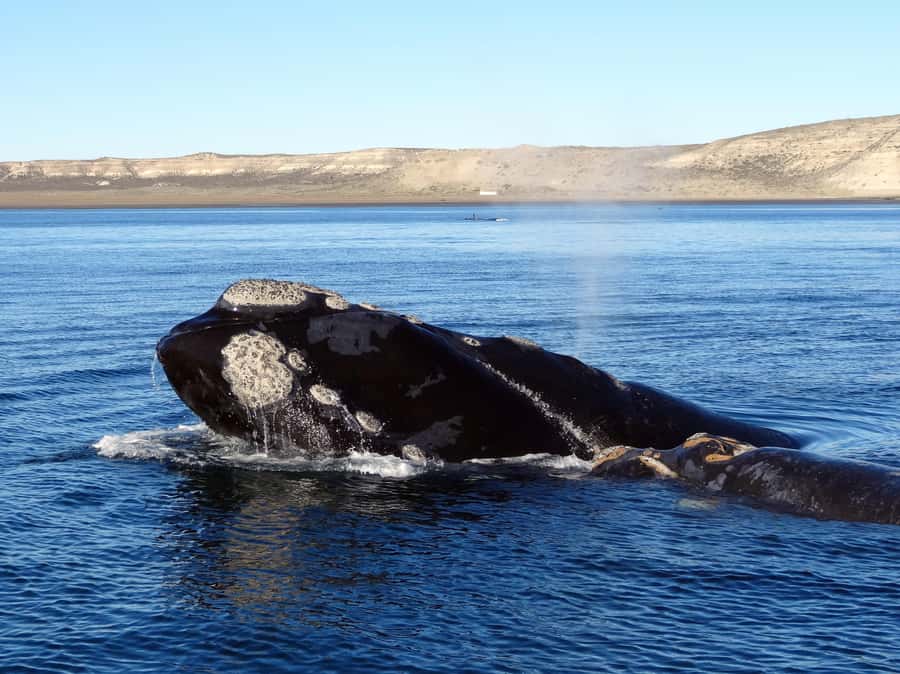
This is one of the most focused wildlife combinations in South Africa’s marine belt: great white shark viewing from inside a cage, then Southern Right whale watching off Walker Bay. The big draw is that both activities happen in areas that are known for repeat sightings, not random guessing in open water.
I like that the trip is built around two separate boats and two separate goals. You’re not trying to do “a little of everything” on one crowded vessel; each segment has its own setup, timing, and purpose.
The best part for most people is the contrast. Shark viewing is tense and fast—salt air, metal bars, and sudden motion—while whale watching is slower and grand. You’ll likely switch from hold-on-something mode to watch and listen mode.
Kleinbaai Harbour to Dyer Island: Why Shark Alley Matters
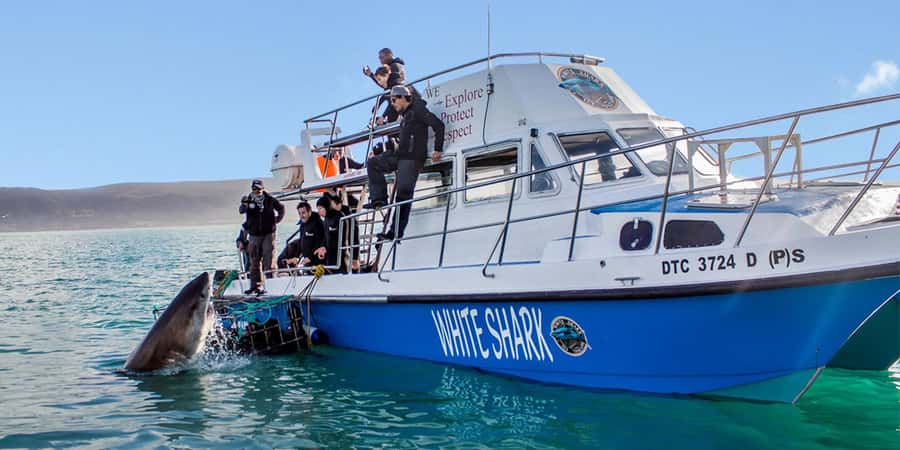
The shark portion starts out of Kleinbaai Harbour at 9 Kus Drive (also listed with the local area name). It’s only about a 15-minute boat ride to the action around Dyer Island.
Here’s the geography you should understand before you go: the key area is the channel between Dyer Island and Geyser Rock. That stretch has a nickname—Shark Alley—because great whites are so regularly sighted there.
You also get a useful bit of context right up front. Dyer Island hosts a large Cape fur seal colony, and seals are a major food source for great whites. So when you’re anchoring in this channel, you’re not just hoping for luck—you’re going where the food chain tends to funnel.
Inside the 8-Person Cage: What Your Time on the Water Feels Like
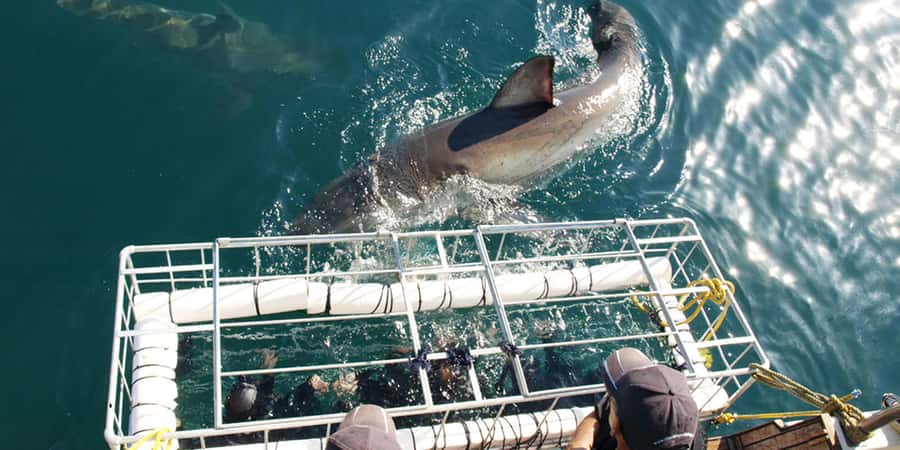
Once you reach the shark-viewing spot, the setup is simple and intentional. You’ll be kitted up in a wet suit and given gear before you take your turn inside the cage.
The cage seats about eight people for the viewing experience. That’s a big deal because it keeps the group manageable and helps you rotate smoothly without turning it into a long wait. Your turns are typically short, and some schedules run around two separate cage sessions of roughly 15 minutes each.
From the cage, you get that rare, water-level perspective where the animal’s size suddenly becomes real. When a shark glides past at close range, the scale hits you in a very physical way—like your brain has to recalibrate.
That said, I also think it’s important to say this plainly: seeing a great white is a privilege, not a guarantee. Some days can be quiet, and other days can be busy.
Beyond Great Whites: Extra Marine Life You May Spot
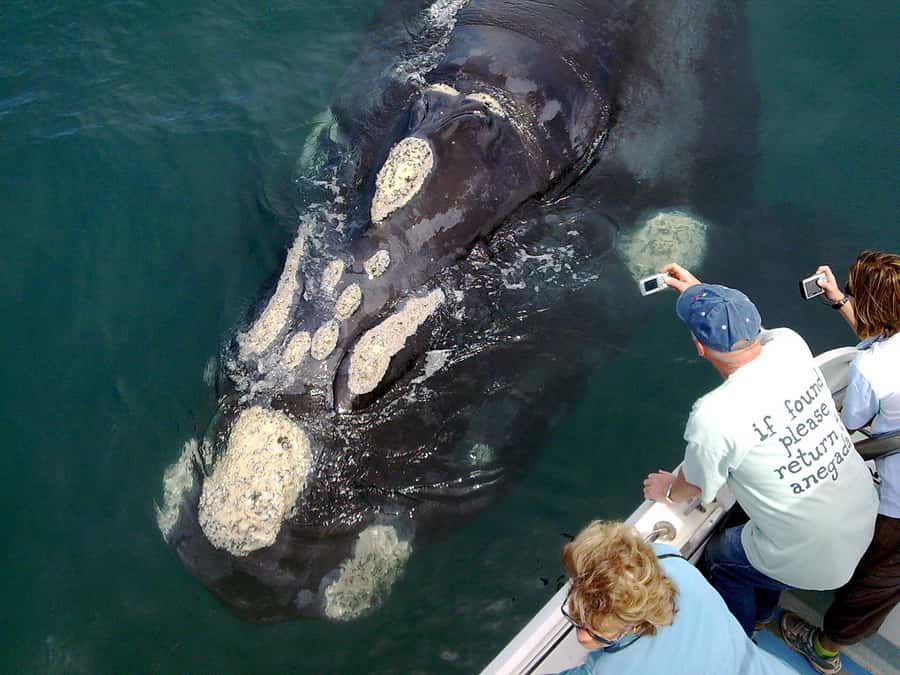
Not every shark encounter is the target species only, and the ocean doesn’t always play by the booking page. On some departures, you might see additional sharks and other sea life as you watch from the boat’s viewing deck too.
One reason I like this tour concept is that it doesn’t trap you in one single moment. Even if the cage time is short, you’re still on the water looking. And if the marine action is active, you can often pick up more than just the main attraction.
In other words: you’re not paying only for a single animal photo. You’re paying for a day in a known hotspot with multiple chances to spot movement, behavior, and passing wildlife.
What You’ll Do Before and After the Shark Portion
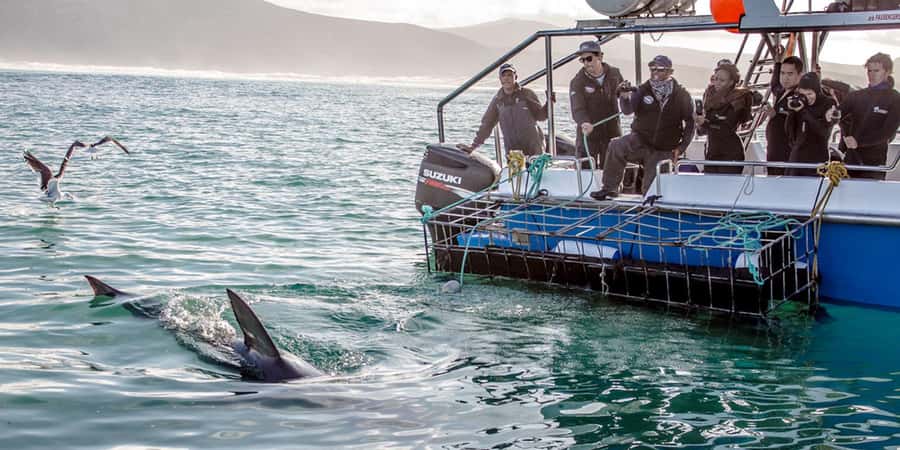
The flow is designed to keep you fed and moving. You’ll get breakfast on arrival at the shark centre, and then the day typically continues straight to the boat.
After the water time, you’ll come back to shore and there’s usually food waiting. In at least some runs, a lunch is provided after returning, which matters because it prevents the “starve first, eat later” squeeze when you’re working up an appetite in cold wind.
Also, the start-to-finish route matters if you’re planning around Cape Town. Transport isn’t included, though pickup is optional from Cape Town on request. So figure out whether you’re meeting at the harbour or letting the operator handle your drive.
Packing for Cold Water: The Small Things That Make a Big Difference
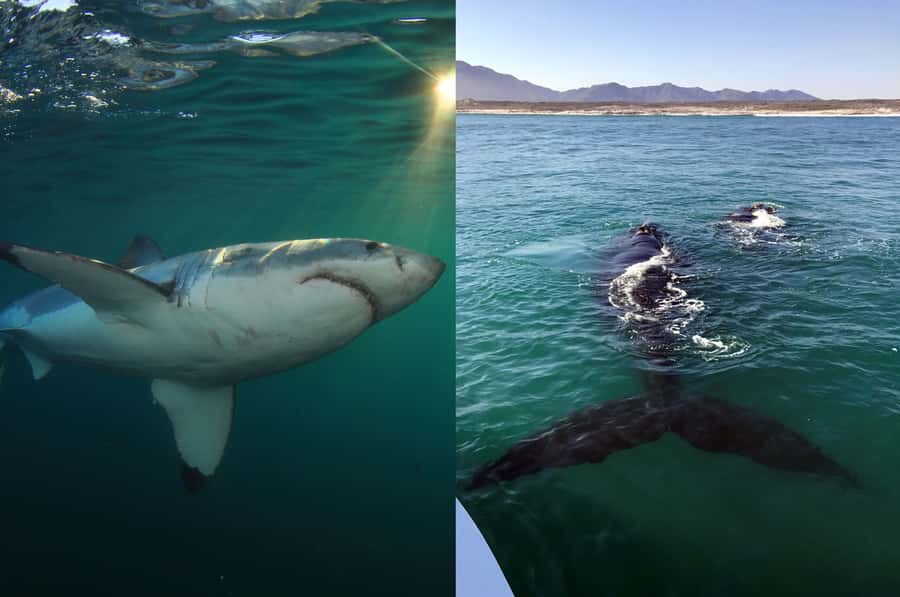
This is South Africa, but it’s still the Atlantic, and it can feel chilly on open water. Plan on being in wind, near spray, and in wet conditions if you go into the cage.
Bring:
- warm layers you can wear over swimwear
- a towel
- sunglasses and sunscreen
- a hat
- comfortable shoes for walking around harbour areas
- swimwear
- your camera or video camera
And yes, warm clothes matter even if you think you’re a “I run hot” person. On the ocean, the wind wins.
Also note the basic rules: smoking isn’t allowed, and children must be with an adult. Kids under 8 aren’t suitable for this setup, so families with younger kids may need a different plan.
Southern Right Whale Watching in Walker Bay: Timing That Actually Helps
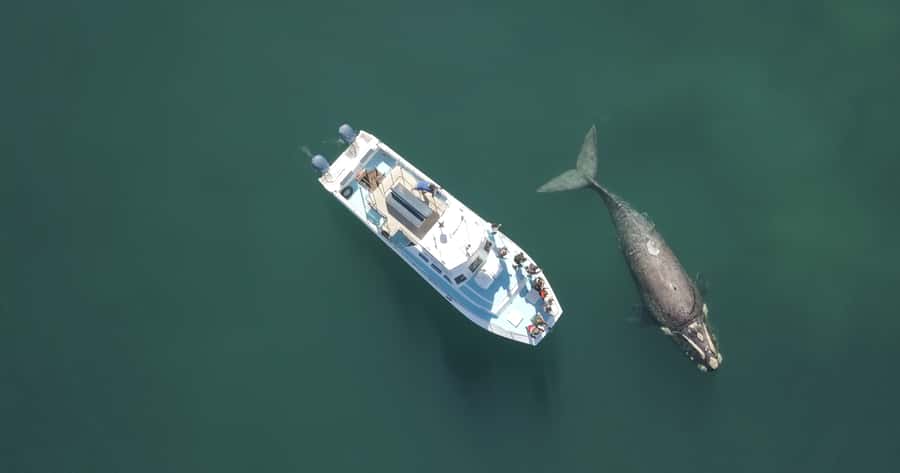
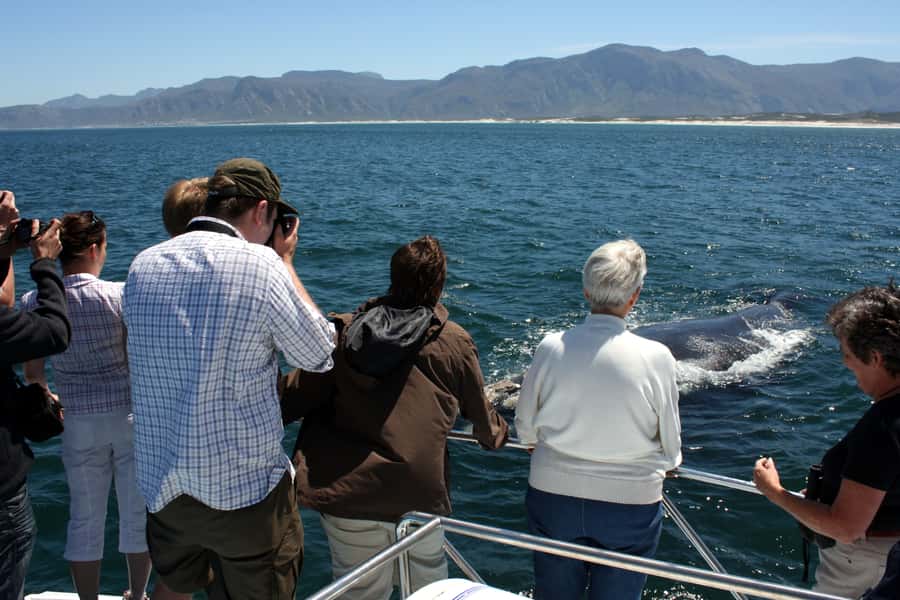
Whale watching runs roughly June to December. The operator can adjust timing if whales shift their migration schedule, including arriving early or leaving later, so you’re not stuck with one fixed plan that ignores real ocean movement.
Trips are generally about 2 hours, but that can extend depending on how quickly you find the whales. This is one of those cases where “short trip” doesn’t mean “rushed.” A good whale sighting often sets the pace.
Departure times run multiple times per day:
- typical launches at 10:00 AM and 1:00 PM
- during the main season (August to October), there can be an extra 7:00 AM option
- from September on, extra afternoon departures may run at 3:30 PM, and if conditions look good, a 5:00 PM sunset trip can happen
If you can choose, I’d strongly consider the later option. A sunset trip is built for a reason: whales may come closer to shallow waters, and the Walker Bay sunset behind them can turn the experience from “nice wildlife” into something you’ll remember for years.
Weather Reality Check: When the Whale Boat Doesn’t Go
The ocean can be moody, especially in windy conditions. In at least one documented case, the afternoon whale outing was cancelled due to strong wind, and the booking was refunded.
That tells you the real lesson: be flexible with your day. If you’re scheduling this while also planning other Cape Town activities, keep some breathing room. If one segment loses momentum, you want an option to adjust without stressing.
Combo Planning: One Day Together or Split Across Two
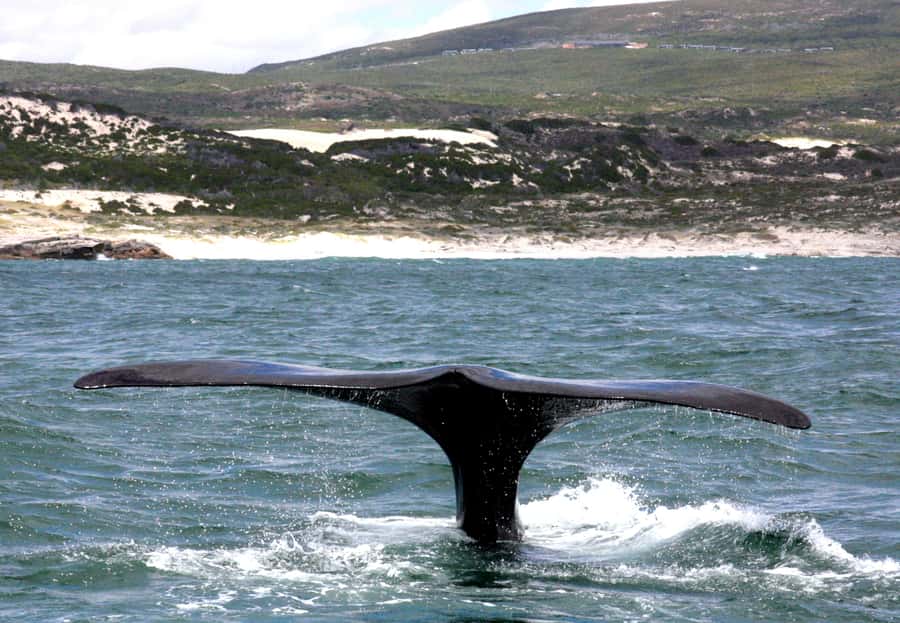
The combo gives you a couple ways to structure your time. You can do both activities in one longer window (the total stated duration runs 6 to 12 hours), or you can split the package across two days if you prefer more breathing room.
If you’re doing both in one day, the practical advantage is efficiency. You’ll get the shark portion plus whale watching without having to re-organize your logistics in between.
If you split it, your advantage is mental comfort. You can recharge after the shark time, then come back for whales when you’re ready to slow down. It’s also a smart choice if you’re worried about weather affecting one part of the day.
Meeting points are separate for each activity:
- Shark meeting point: 9 Kus Drive, Kleinbaai Harbour
- Whale meeting point: 3 Hawe Weg, Gansbaai
So splitting days can also reduce the hassle of switching places and times back-to-back.
Price and Value: Is $292 Worth It?
At $292 per person, you’re paying for two high-impact marine experiences in known areas with dedicated boats and specific equipment (like the wet suit for the cage time). It’s not a cheap day, but it’s also not trying to be a bargain where you get a shaky promise.
The value comes from two factors:
- You’re not just booking a “chance” to see wildlife. You’re going to shark habitat (Shark Alley) and a whale watching zone (Walker Bay).
- You’re getting real time on the water, not only a quick stop, with food provided at least at the start (and sometimes lunch after returning).
What you can’t fully control is sighting success. Great whites are a privilege, and whales depend on season and conditions. When you go in with that mindset, the price feels more reasonable because you’re buying an organized, high-probability experience, not a guaranteed animal encounter.
Best Fit: Who Should Book This, and Who Should Rethink It
This combo is ideal if you want a serious wildlife day and you’re comfortable with ocean variability. If you like hands-on observation and you don’t mind that the day can change based on marine conditions, you’ll probably enjoy it a lot.
It’s also a strong choice for people who want variety: one segment is structured, gear-based, and adrenaline-heavy; the other is more about patience and atmosphere.
You might rethink it if:
- you’re traveling with very young kids (under 8 isn’t suitable)
- you have zero flexibility in your schedule due to weather risk
- you want guaranteed sightings no matter what the sea does
On the plus side, the tour notes wheelchair accessibility, and private group options exist if you want a less crowded feel.
Should You Book This Shark-Cage + Whale Combo?
Yes, if you’re aiming for maximum wildlife per day in the Gansbaai–Walker Bay zone and you can handle the fact that the ocean is the boss. The shark portion gives you a rare, close-up viewing setup in a hotspot, and the whale portion offers a classic South African marine experience, especially with sunset departures.
I’d book it if you can bring warm layers, keep your plans flexible, and treat it as a wildlife outing—not a contract. If that matches your travel style, this combo is one of the most memorable ways to spend time along the coast.
FAQ
Where is the shark portion meeting point?
The shark portion meets at 9 Kus Drive, Kleinbaai Harbour (also listed with local naming variants).
Where is the whale portion meeting point?
The whale portion meets at 3 Hawe Weg, Gansbaai, 7220.
How long is the combo experience?
The total duration is listed as 6 to 12 hours, depending on starting times and how the day runs.
Can I split the shark and whale activities into two days?
Yes. The combo can be split over two days if you prefer.
When do the whale watching trips run?
Whale watching runs from June to December, and schedules can adjust based on whale migration timing.
How long is the whale watching trip?
The whale watching trip is generally about 2 hours, but it can last longer depending on how quickly you find the whales.
Is transportation included?
Transportation is not included, but it may be available on request, including optional pickup from Cape Town.
Do I need diving experience for the shark cage viewing?
No diving experience is needed for the cage experience because you are not using breathing tanks.
What should I bring, and what’s not allowed?
Bring comfortable shoes, warm clothing, sunglasses, a sun hat, swimwear, a towel, sunscreen, and your camera/video camera. Smoking is not allowed. Children must be accompanied by an adult, and unaccompanied minors are not permitted.