REVIEW · DJERBA
Diving initiation (Initiation)
Book on Viator →Operated by Club de Plongée La Sirène - Djerba Diving Center · Bookable on Viator
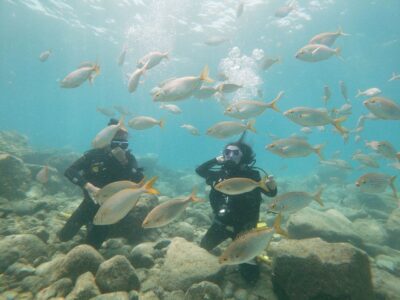
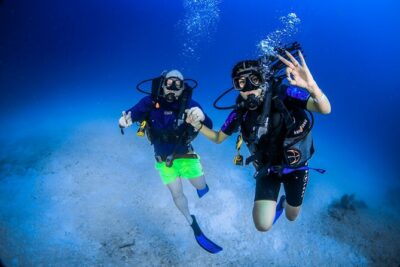
Your first minutes underwater set the tone for everything. This Djerba initiation keeps it friendly and guided, with a certified monitor and beach-access exploration in natural sea water at about 2–6m.
You’ll do the full loop: equipment prep, a short theory session (briefing), then supervised time in the sea, followed by a debrief. One watch-out: the exact time you spend underwater depends on your breathing underwater, and photos/videos plus the Discover Scuba diploma aren’t included.
In This Review
- Key highlights you’ll care about
- First Scuba from Djerba: why beach entry matters
- The 2-hour flow: gear, briefing, shallow sea time
- What you get (and what you don’t) with included scuba equipment
- 2 to 6 meters: how shallow water helps you relax
- Cost and value: what $75.49 covers in real terms
- Meeting at Club de Plongée La Sirène near Plage Hotel Iris
- Who this scuba initiation suits best in Djerba
- Should you book this scuba initiation in Djerba?
- FAQ
- FAQ
- Where does the scuba initiation start and end?
- How long is the experience?
- What depth will I be at in the water?
- Is there a theoretical briefing before going in the sea?
- Is scuba equipment included?
- Are photos and videos included?
- Is the Discover Scuba diploma included?
- What happens if the weather is poor or I need to cancel?
Key highlights you’ll care about
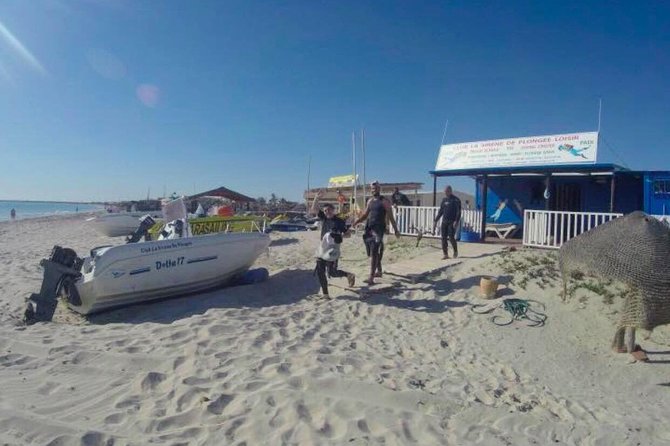
- Beach access means less setup stress and a calmer start
- Shallow 2–6m water helps you build confidence fast
- Briefing + debriefing keeps skills clear and expectations realistic
- Certified supervision focuses on safety and steady coaching
- Max 20 people keeps the group feeling controlled, not chaotic
First Scuba from Djerba: why beach entry matters
Djerba is a place where many first-timers hope for one thing: not a complicated day. This experience is built around getting in from the shore, so you’re not spending time on a long transfer or a lot of faffing with boats. You show up, you get set up, and you go straight to learning in the water environment that matters.
I also like how the program targets a small depth range (2m to 6m). That’s important because shallow water changes everything: your brain reads the “risk” differently, you can breathe steadily while you learn, and you’re more likely to stay relaxed enough to focus on technique. It’s not about going far or doing anything extreme. It’s about getting your bearings quickly.
And then there’s the human piece. A certified monitor (not just a casual helper) is there to supervise and guide you through the process. For a first scuba-style experience, that matters as much as the water depth. When coaching is clear, you learn faster and you enjoy it more.
The 2-hour flow: gear, briefing, shallow sea time
The schedule is short, which is great if you don’t want your day eaten up. You’re looking at about 2 hours total, and the session is structured like most good training: land first, water second, feedback last.
Here’s the rhythm you should expect:
First, you’ll prepare equipment. That’s not the glamorous part, but it’s where problems get prevented. Good prep means less wrestling with gear later, and it helps you understand how things work before you’re underwater.
Next comes the theoretical session, basically a briefing with the dive instructor. You’ll get the rules of the day and the key skills you need for controlled breathing and movement underwater. For me, the value of this stage is simple: it turns the sea into a manageable classroom, not a mystery.
Then you’ll do the initiation and exploration in the sea. You’re guided through the experience at a controlled depth between 2m and 6m. The time you spend underwater depends on your breathing underwater, which is a normal training variable. Translation: you won’t be rushed, but you also won’t get a guaranteed fixed underwater clock. The goal is comfort and control, not endurance.
Finally, there’s a debriefing. This is where you get course-corrected and leave with a clearer sense of what you did well and what to practice if you book another session. If you care about improving next time, debriefing is where you win.
What you get (and what you don’t) with included scuba equipment
The price includes use of scuba equipment, which is the big practical win here. For first-timers, renting gear is already a hassle; not having to source anything yourself keeps the whole plan simple. It also means the equipment is aligned with the training setup, rather than you guessing whether what you bring will actually work.
What’s not included is also worth knowing up front. You won’t get photos and videos in the package. If you want proof you did this, consider planning your own photos or bringing a camera plan that works in water, because the operator isn’t building that cost into the experience.
Also, the package does not include the Discover Scuba diploma. If your goal is to leave with a specific credential, you’ll need to arrange that separately. Knowing this ahead of time helps you avoid that annoying moment later when you realize you have the experience but not the document.
2 to 6 meters: how shallow water helps you relax
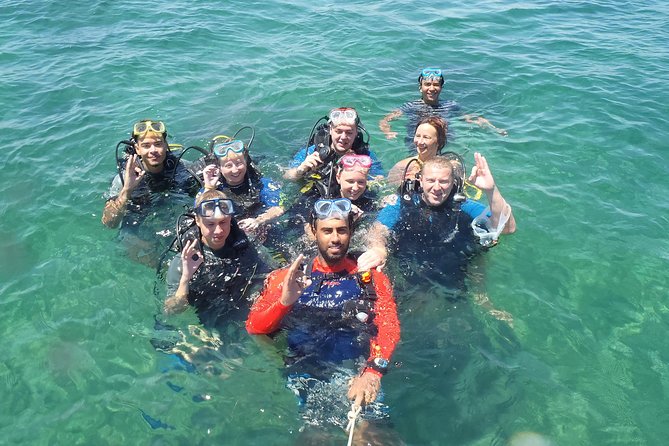
Depth is more than a number. Going from 2m to 6m is usually the “sweet spot” for first-timers because it’s shallow enough to feel grounded, while still being far enough down to feel like actual underwater training. You’re not just standing around at the surface.
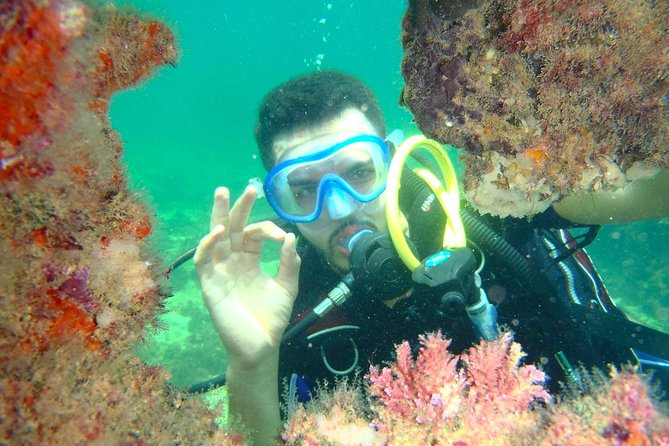
At these depths, you can focus on basics: breathing rhythm, buoyancy control, and learning how to move with purpose instead of flailing. That’s exactly what makes the session valuable even if you’re not chasing big marine-life moments. You’re learning how your body behaves underwater, with supervision that helps you adjust.
And because it’s accessible from the beach, the transition is smoother. You don’t have that “gear + transport + unknown conditions” build-up. That matters for your first time, because stress usually shows up as faster breathing or less patience with instruction.
One more practical note: since the duration underwater depends on breathing underwater, your mindset matters. If you go in relaxed and follow the instructor’s pacing, the session tends to feel smoother. If you go in tense, you may spend less time underwater than you hoped—not because anything is wrong, but because the plan prioritizes controlled breathing.
Cost and value: what $75.49 covers in real terms
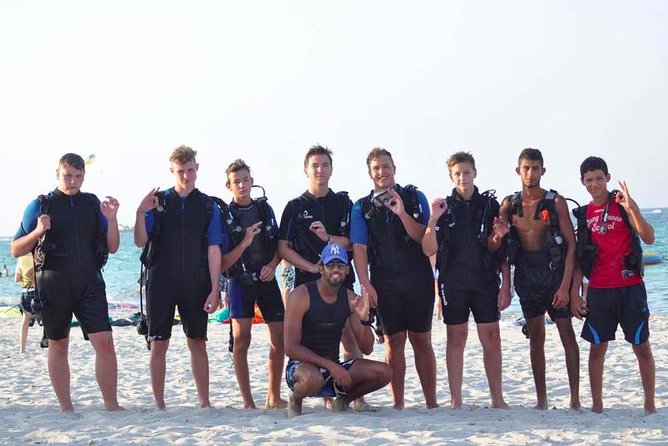
At $75.49 per person, this sits in the “entry” range for a supervised first scuba-style experience. What makes it feel like value isn’t just the price tag. It’s what’s bundled into it: equipment use, a briefing, certified supervision, and the full guided session from start to finish.
A lot of first experiences can hide costs later (gear rental, separate instruction time, special add-ons). Here, the core learning loop is included. The short duration also helps you compare value. About 2 hours means you can fit it into a day without sacrificing your whole schedule.
Two details I’d factor into your decision:
- The group limit is up to 20 travelers, which helps keep attention manageable during training.
- The booking pace averages about 25 days in advance, which suggests this is a popular slot when people arrive. If your dates are fixed, early booking is a smart move.
What you’ll want to plan for yourself: if you care about photos/videos, or you specifically need the Discover Scuba diploma, those are not included. If you want either of those, your real all-in cost will be higher than the base price.
Meeting at Club de Plongée La Sirène near Plage Hotel Iris
The meeting point is at Club de Plongée La Sirène in Djerba, at Plage Hotel Iris, 4116, Tunisia. The activity ends back at the meeting point, which is handy. No end-of-tour mystery where you’re left figuring out transport.
It’s also noted as near public transportation. That’s a big deal in practice because it gives you options if you’re not driving or if your hotel is a short ride away. In a place like Djerba, where beach days can be spread across different areas, starting and ending at the same spot simplifies your logistics.
Also, you’ll get a mobile ticket, so you’re not scrambling for paper confirmations at the last second. If you’re traveling with kids, or you just like keeping your travel day low-stress, that’s a small detail that pays off.
Finally, the operator mentions confirmation at booking time. That reduces uncertainty about whether you’re actually on the schedule.
Who this scuba initiation suits best in Djerba
This is designed for people who want instruction, structure, and a controlled first time in the sea. Most people can participate, which tells you it’s built for beginners rather than advanced underwater work.
If you’re the type who likes clear steps—equipment first, then briefing, then supervised water time—this format usually clicks. If you’d rather “just go in and figure it out,” you might find the theory and debriefing feel a bit too structured. But for most first-timers, training beats guessing every time.
It also suits anyone who wants shallow, manageable conditions rather than a long underwater endurance plan. Because the session runs between 2m and 6m and is supervised by a certified monitor, it’s a good match for learning fundamentals without overreaching.
One more factor: this experience requires good weather. If you’re planning a beach-heavy itinerary, build in flexibility. When weather is poor, plans can change.
Should you book this scuba initiation in Djerba?
I’d book it if your main goal is a well-managed first scuba-style introduction with equipment provided and certified supervision. The combination of shallow 2–6m training, a proper briefing/debriefing structure, and a relatively small cap of 20 people is exactly what you want when you’re trying to feel confident fast.
Skip it only if you’re mainly shopping for underwater photos/videos or a specific diploma credential, because those aren’t included. Also, if you can’t be flexible on timing due to weather, consider whether your trip has buffer time.
With a strong overall rating (4.8 out of 5) and 93% recommended, the big takeaway is consistency: people tend to leave impressed by how organized and friendly the intro feels. For a first-time experience, that’s the highest compliment you can ask for.
FAQ
FAQ
Where does the scuba initiation start and end?
The session starts at Club De Plongée La Sirène, located at Plage Hotel Iris, 4116, Tunisia. It ends back at the same meeting point.
How long is the experience?
It lasts about 2 hours.
What depth will I be at in the water?
The underwater exploration takes place between 2m and 6m, depending on the session flow and your breathing underwater.
Is there a theoretical briefing before going in the sea?
Yes. There’s a theoretical session (briefing) with the dive instructor before the supervised water part.
Is scuba equipment included?
Yes. The price includes use of scuba equipment.
Are photos and videos included?
No. Photos and videos are not included.
Is the Discover Scuba diploma included?
No. The Discover Scuba diploma is not included.
What happens if the weather is poor or I need to cancel?
If the experience is canceled due to poor weather, you’ll be offered a different date or a full refund. You can cancel up to 24 hours in advance for a full refund.