REVIEW · BOA VISTA ISLAND
Discover Scuba Diving Program for Beginners
Book on GetYourGuide →Operated by Diving Center Riamar · Bookable on GetYourGuide
Scuba for beginners can sound intimidating, but this program keeps it basic and guided. You’ll learn core gear use and hand-sign communication with an instructor in small-group conditions in Boa Vista, Cape Verde.
What I like most is the clear progression: practice first, then go open water with support.
The second big win for me is the chance to test the sport fast. You get a theory lesson, shallow-water skills practice, and your first real breaths underwater so you can decide if certification is worth your time. One consideration: the program isn’t suitable for non-swimmers, and it’s not for pregnant women or people with back problems.
In This Review
- Key highlights I’d plan around
- Scuba in Boa Vista, without certification pressure
- What the two days typically feel like
- Gear you don’t need to bring (and don’t need to stress about)
- Learning hand signs: the real confidence booster
- Shallow-water practice: where the nerves settle
- The open-water session: your first real breaths
- Diving Center Riamar and the value of small groups
- Price and logistics: what $129 really covers
- What to bring (so you’re not distracted)
- Who should skip this beginner scuba program
- How to decide: take the experience or go straight to certification
- Should you book Discover Scuba Diving in Boa Vista?
- FAQ
- Is certification included in this program?
- Do I need to bring my scuba gear?
- How big is the group?
- What languages are available for the instructor?
- What does pickup include?
- What should I bring?
- Who is this not suitable for?
Key highlights I’d plan around
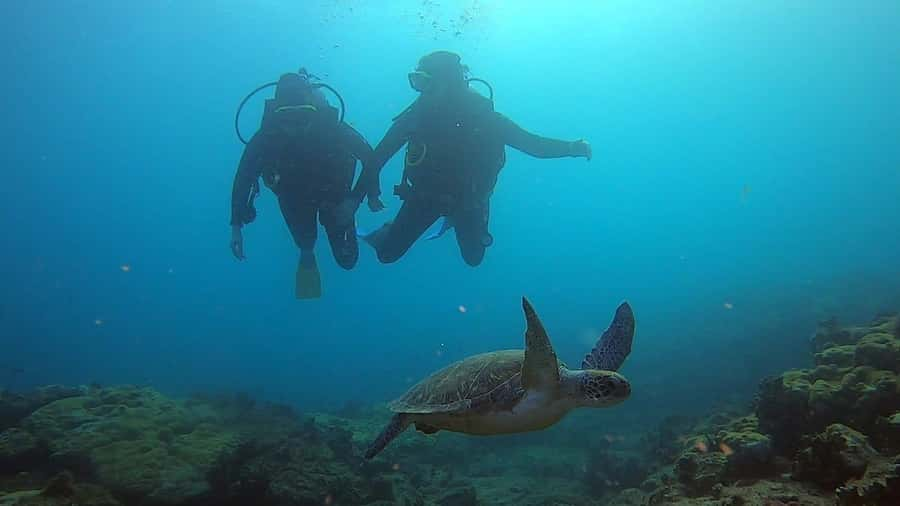
- Small group (max 8): more attention while you learn the basics.
- All necessary gear included: you don’t need to hunt rentals or guess sizes.
- Theory + shallow-water skills first: you’re not thrown straight into the deep end.
- Hand signs taught early: communication is built into the lesson, not improvised.
- Two-day format: enough time to get comfortable before committing to open-water practice.
Scuba in Boa Vista, without certification pressure
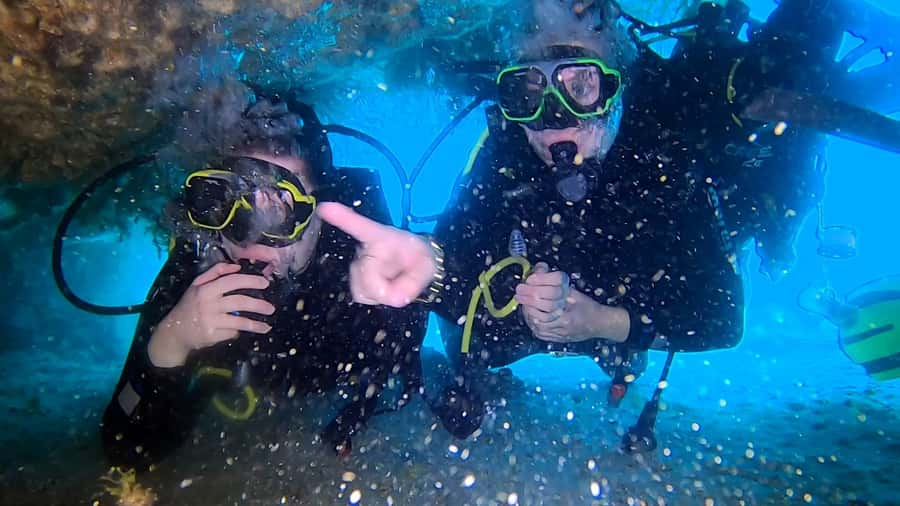
Boa Vista is a smart place to try scuba because the setup for beginners is designed to remove the biggest unknowns. You’re not expected to show up already trained. Instead, the whole point is a trial run: learn what the equipment does, learn how to communicate underwater, and then experience the water with an instructor watching closely.
The program is called Discover Scuba Diving, and it’s built for people who are curious but not ready to book a full certification course. At $129 per person for a 2-day experience, what you’re really paying for is instruction time plus access to an organized first-attempt setup. And you get more than a quick splash: you’ll do a short theory lesson, practice skills in shallow water, and then move into open-water practice with guidance.
If you’re the type who learns best by doing, this format makes sense. You get immediate feedback when something feels odd—breathing, buoyancy control basics, or simply staying calm while you get used to the gear.
What the two days typically feel like
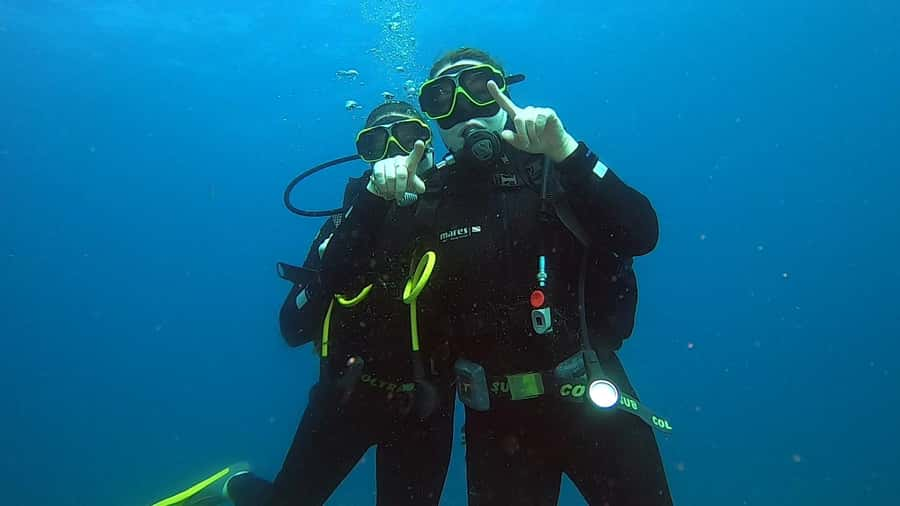
You’ll meet your instructor at the start, learn the main gear pieces, and get comfortable with the communication system. A key detail is that this is a small group limited to 8 participants, which means you’re more likely to get a real explanation instead of a rushed overview.
From there, the structure is straightforward:
- A brief theory lesson to cover the core basics.
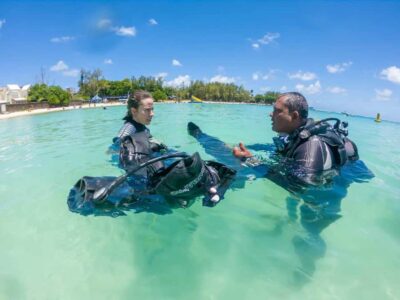
- Skills practice in shallow water, where mistakes are easier to manage.
- Then an open-water guided session, still with your instructor.
The program also notes that you’ll have pickup included from outside your hotel or apartment about 30 minutes before the activity starts. That matters because you won’t spend your time coordinating transport on your own—just show up ready to learn.
Also worth noting: the instructor can work in English, Portuguese, Spanish, or French. If you don’t speak English well, that multilingual option can make a real difference in how confident you feel during the early parts.
Gear you don’t need to bring (and don’t need to stress about)
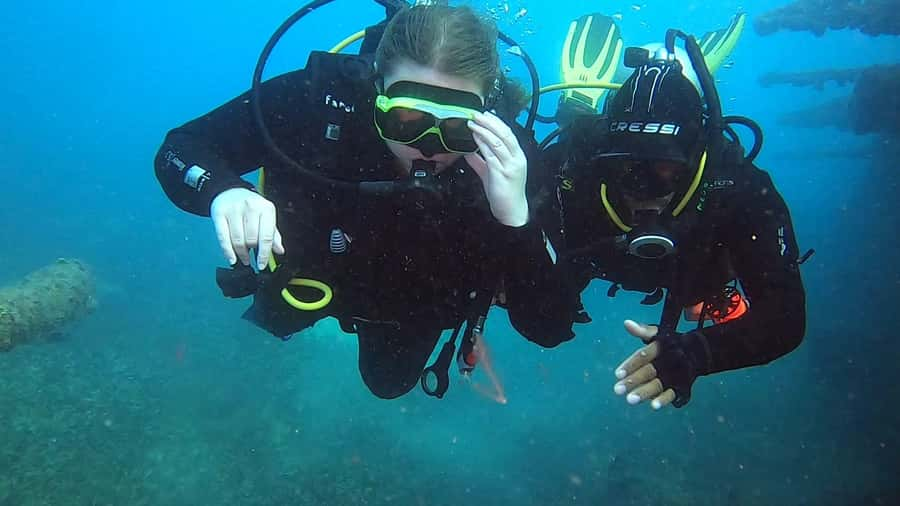
All necessary scuba gear is included. That sounds like a small point, but it’s actually a big deal for first-timers. When you’re new, the equipment is half the challenge. If you have the wrong fit, it can make basic skills feel harder than they should.
Here, you’ll be taught how to use the gear before you go into the water. That means you’re not only learning the mechanics of breathing and control—you’re also learning how the system fits and works for you in the moment.
Bring a simple setup on your side: you’ll need swimwear and a towel. Sunscreen and water are on the checklist too, so you’re not scrambling at the last minute.
Learning hand signs: the real confidence booster
Underwater, you can’t talk normally, so the lesson includes hand signs for communication. This matters more than most people expect. When you know how to signal for what you need, you stop guessing and start feeling in control.
You’ll practice the signs during the early training steps, then use them during the open-water guided session. That’s why this program is worth it even if you’re only considering scuba certification later: it teaches you the communication side you’ll need anyway.
I also like that this is taught as a skill, not just mentioned. If you already know how to ask for help underwater, you can enjoy the experience more—because you’re not thinking about how to say anything while also trying to breathe.
Shallow-water practice: where the nerves settle
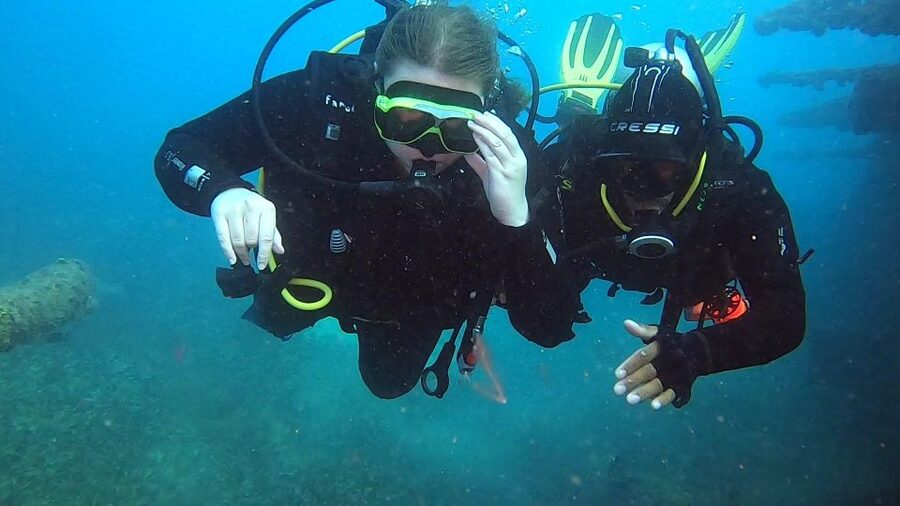
The shallow-water skills practice is where most first-timers benefit the most. It’s not about showing off. It’s about getting comfortable with the basics while the environment is forgiving.
You’ll practice simple scuba skills in shallow water after the brief theory lesson. In practical terms, that gives you time to:
- get used to equipment placement and breathing rhythm
- learn what it feels like to move with the gear
- understand how to respond when something feels unfamiliar
If you’re worried you’ll freeze up, shallow-water practice is the antidote. It lets you build trust in your instructor and in your own ability to follow instructions underwater.
The open-water session: your first real breaths
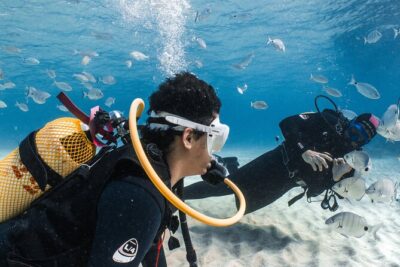
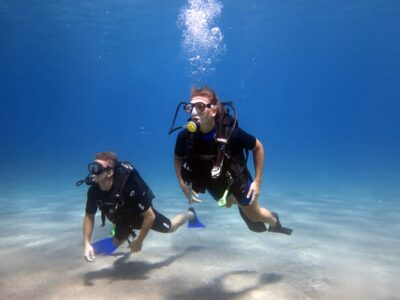
This is the moment the program is built around: the open-water guided experience. After the shallow-water practice, you’ll take your first breaths underwater with an instructor beside you.
The key word in the program description is guided. That means you’re not doing it alone. The instructor is there to keep the session beginner-friendly and to help you apply the skills you practiced earlier.
I’d think of this as an “experience check,” not a performance challenge. Your job is to focus on breathing and communication, while the instructor handles the flow of the session. If you want to know whether scuba is your thing, this is the part that answers the question.
And if you do enjoy it, the program specifically aims to help you figure out whether you want to become a certified diver next. For many people, that’s the exact decision they come on this trip to make.
Diving Center Riamar and the value of small groups
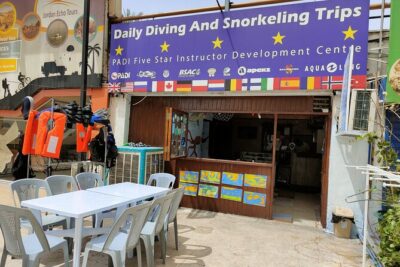
The experience provider is Diving Center Riamar. The program format includes a small group size of 8 participants maximum, which I appreciate because beginner scuba needs patience.
Small groups reduce the “wait time” between your questions and the next step. They also make it easier for the instructor to watch everyone and spot confusion early—especially during the hand-sign practice and early skills.
You can also feel the vibe from the ratings: the program has a 4.2 rating across 4 reviews, with comments describing it as extraordinary and the people being great. I take that as a strong indicator the staff are friendly and help beginners feel comfortable.
Price and logistics: what $129 really covers
The headline price is $129 per person for the 2-day Discover Scuba Diving program. In value terms, that price includes:
- a brief theory lesson
- skills practice in shallow water
- a guided open-water session
- all necessary scuba gear
So you’re not paying extra for the equipment or the instruction blocks. For a first-time experience, that’s usually where these programs either become a bargain or quietly become expensive. Here, the essentials are covered.
What’s not included:
- scuba diving certification
- hotel transfer
The transfer detail is important because it varies depending on where you start. The program notes specific shuttle/transfer costs from different areas:
- From Riu Karamboa, Palace, Horizon, Bravo: 10 euros one way
- From Touareg: 50 euros back and forth
- From Sal Rei city: 4 euros (listed as that amount)
At the same time, the activity also says pickup is included outside your hotel or apartment about 30 minutes before the activity start. That’s likely the meeting point timing, while the shuttle fee depends on how far your specific property is from the center. If you’re planning your budget, I’d confirm your exact pickup location and whether the shuttle fee applies to your resort.
What to bring (so you’re not distracted)
The program lists a short, practical packing list. I’d stick to it:
- Swimwear
- Towel
- Sunscreen
- Water
That’s it. Keep it simple. If you’re bringing an extra layer, it should be something light you can manage before and after the water portion.
Who should skip this beginner scuba program
This program has clear limits. It’s not suitable for:
- pregnant women
- people with back problems
- non-swimmers
I take these rules seriously because they’re not about “comfort” only. They affect how safely you can move, control your body underwater, and handle the equipment and instruction. If any of these apply to you, it’s worth looking for another activity in Boa Vista that fits your needs.
If you are a swimmer and generally healthy, this is a good “first step” format because it teaches you how to use the gear and communicate right away.
How to decide: take the experience or go straight to certification
Discover Scuba Diving is essentially a try-before-you-commit setup. For some people, the open-water session is all the “taste test” they need. For others, it’s the moment they realize they want more structure, more time, and more progress.
If you’re unsure you’ll like scuba, the program’s logic is strong: you get a guided underwater experience plus the basics of gear and communication. Then you can decide if certification makes sense.
But if you already know you want to become certified and you love structured training, you might consider whether you’re okay paying for a trial first. For many first-timers, though, this trial can save you money and frustration later.
Should you book Discover Scuba Diving in Boa Vista?
I’d book this program if you want a beginner-friendly way to test scuba without jumping straight into certification. The best reasons are simple: gear and instruction are included, you practice shallow-water skills first, and you get hand-sign communication training so the open-water session feels manageable.
The one reason to pause is suitability. If you’re a non-swimmer, have a back problem, or are pregnant, this one isn’t the right fit.
One more smart move: budget for transfers based on your resort area, since transfer pricing can vary. If you confirm that detail up front, the rest is refreshingly straightforward.
If your goal is to learn, breathe underwater with support, and figure out if scuba is your thing, this two-day Discover Scuba Diving program in Boa Vista is a practical, beginner-focused choice.
FAQ
Is certification included in this program?
No. Scuba diving certification is not included. The program helps you try the sport and decide if you want to become certified later.
Do I need to bring my scuba gear?
No. All necessary scuba gear is included in the program.
How big is the group?
The program is a small group limited to 8 participants.
What languages are available for the instructor?
The instructor can teach in English, Portuguese, Spanish, and French.
What does pickup include?
Pickup is included outside your hotel or apartment about 30 minutes before the activity start.
What should I bring?
Bring swimwear, a towel, sunscreen, and water.
Who is this not suitable for?
It’s not suitable for pregnant women, people with back problems, and non-swimmers.