REVIEW · SANTORINI
Discover Scuba Diving in Santorini
Book on Viator →Operated by Navys Waterworld Dive Center · Bookable on Viator
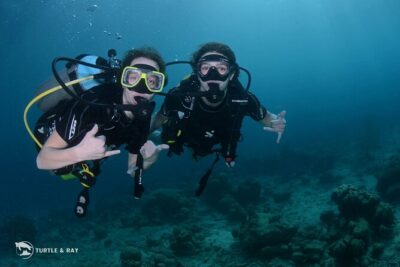
First time underwater feels daunting until it clicks. This intro scuba experience in Santorini is built for beginners, with PADI Professional coaching and a quick path to your first breaths underwater. I especially like the shore-based setup in Kamari (no boat ride), and the hands-on practice that happens in a short window; just be aware that if the sea is choppy, you may find the water portion harder and choose to hold back.
I also like the prep style: there’s a video briefing up front and the gear is handled for you. Reviews highlight instructors such as Robert and Lucas for taking time, teaching safety habits, and keeping it fun while you learn. The only “watch this” item is that promised photos may take time to arrive, so don’t plan on instant souvenirs.
Scheduling is mostly straightforward, and you’ll be back at the meeting point afterward. The group is kept small (max 6), and the start time is 9:00 am at Navy’s Waterworld in Kamari. Plan a 12-hour gap between your underwater experience and any flight to keep your day stress-free.
In This Review
- Key things that make this Santorini intro scuba experience worth it
- Santorini’s Kamari shoreline: why this location works for beginners
- The 3-hour schedule: what the morning feels like
- The underwater learning curve: what you’ll actually practice
- Shore entry in Santorini: no boat, just straightforward water time
- Instructor attention in a max-6 group (and why it matters)
- What you’ll experience underwater: from first breaths to comfortable control
- Gear, photos, and the small details that affect your comfort
- Price and value: is $118.58 a fair deal for 3 hours?
- Weather and timing: the practical reality behind the refund language
- Who should book this, and who should consider a different plan
- Should you book Discover Scuba in Santorini?
- FAQ
- Where is the meeting point?
- What time does the experience start?
- How long does the experience last?
- Is a boat used for this experience?
- Do I get scuba gear provided?
- Is there a guided open-water option?
- How many people are in the group?
- What if the weather is poor?
- Is there a flight time requirement?
- Can I cancel and get a full refund?
Key things that make this Santorini intro scuba experience worth it
- PADI-led instruction that teaches you what to do, not just what to look at
- Shore entry in Kamari, so you’re not spending your morning on a boat
- Small group size (max 6), which usually means more personal attention
- A structured flow: video briefing, gear fitting, basic skill practice, then your water time
- Two ways to spend your water time: relaxed practice or a guided open-water session
- Weather matters, and the operator will reschedule or refund if conditions aren’t safe
Santorini’s Kamari shoreline: why this location works for beginners
Santorini has dramatic caldera views from land, but for a first scuba trial, your real “wow” moment is what happens close to shore. This experience starts in Kamari, at Navy’s Waterworld (Panagias Myrtidiotisas, 847 00). The key benefit for beginners is simple: you don’t need to get used to boat logistics before you even put on gear.
That shore-based format matters more than people expect. Boats can add motion right when you’re trying to learn breathing control, buoyancy basics, and comfort with the mask. Here, you skip that and go straight into the water work area, which usually makes it easier to stay focused on the skills you’re being taught.
You’re also in a part of Santorini that’s practical. The meeting point is near public transportation, so if you’re staying in Fira, Imerovigli, or along the coast, you can usually plan a simple ride without complicated transfers. And since the activity ends back at the meeting point, you don’t lose half a day to moving around.
You can also read our reviews of more tours and experiences in Santorini.
The 3-hour schedule: what the morning feels like
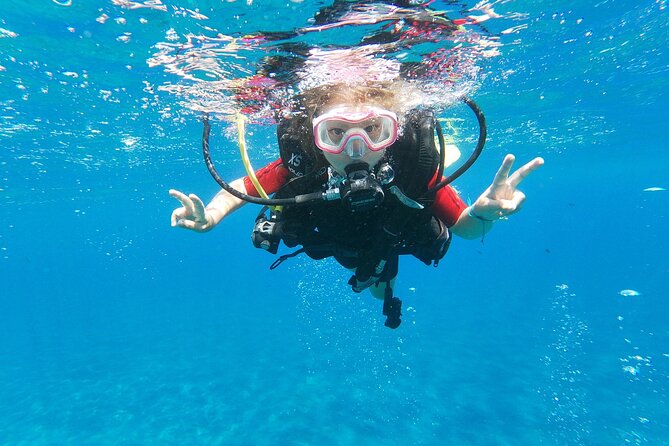
This experience runs about 3 hours, starting at 9:00 am. With a short duration like this, the operator’s job is to keep everything tight: enough time to teach, practice, and still leave you with some relaxed underwater time.
Here’s the rhythm you can expect:
1) Arrival and the initial briefing
You’ll start at the dive center in Kamari for check-in and setup. A video briefing kicks things off, which is a big deal for first-timers. Instead of learning everything through verbal instructions while you’re already in gear, you get the basics first, then you can translate what you saw into what you’re doing.
2) Gear fitting and how to use it
A PADI Professional fits you with your scuba equipment and explains how to use it. This is where first-timers often feel the most nervous, but proper fitting reduces most of the common problems (slipping mask, awkward regulator position, gear that feels “off”).
3) Basic skill practice
Next comes hands-on skill training. You’ll practice core scuba basics under instruction, and the emphasis is on safety habits as you learn. Reviews praise instructors for taking time with each person, and that matters because small errors early on tend to snowball fast once you’re underwater.
4) Water time: relaxed play or guided session
After the basics, you get options. You can have free time underwater to play and get comfortable, or you can join a guided open-water session. This is the part where you can match the experience to your confidence level—no pressure to go all-in right away.
5) Wrap-up back at the start point
You’ll end where you started, making it easy to keep the rest of your day open.
The underwater learning curve: what you’ll actually practice
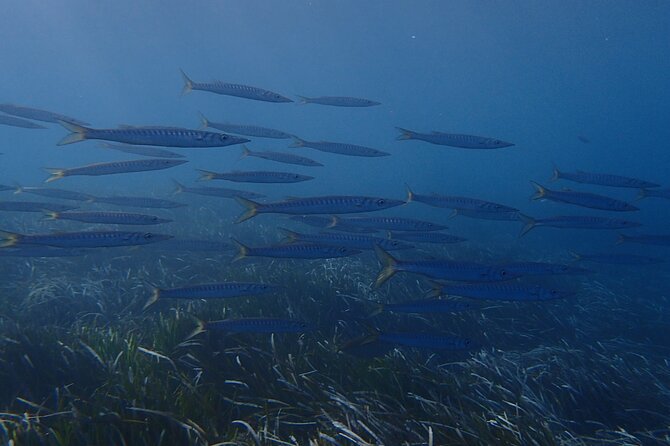
If you’ve never tried scuba before, it helps to know this isn’t a “watch and hope” situation. The structure is designed to get you breathing underwater safely and confidently, quickly.
You’ll learn the equipment basics and how the main pieces work with your body. Then you’ll practice fundamental skills that help you stay in control. What I like about this setup is that it treats comfort and safety as part of learning—not as separate issues.
From the reviews, you can also infer the teaching style is patient. People mention instructors like Robert and Lucas who take time with everybody to keep the experience both enjoyable and safe. That kind of pacing matters for first-timers, especially if you’re the sort of person who needs a few extra minutes to feel sure about what you’re doing.
One more practical note: the sea state can change how “easy” the skills feel. One review mentioned choppy conditions making it harder, and that can be true. Your best move is simple: communicate early if you feel uncomfortable. Good instructors don’t want you pushing beyond your comfort level.
Shore entry in Santorini: no boat, just straightforward water time
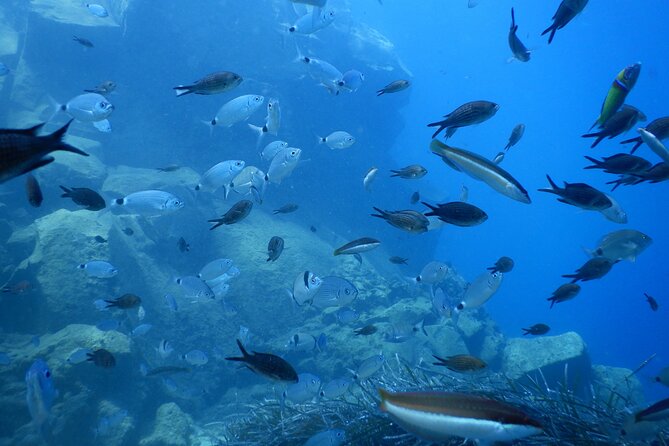
Most first-timers don’t realize how much a boat ride affects the experience. This one avoids that entirely. Since boats or other water vehicles aren’t used, you start from shore.
What that means for you:
- Less pre-water stress and less motion right before you gear up
- A faster transition from classroom-style learning to real underwater practice
- A more direct morning timeline, since you’re not coordinating boat schedules
The tradeoff is that shore conditions still matter. Even without a boat, waves and chopping can make it feel tougher to manage your position and breathing. That’s why this experience has a weather requirement—if conditions aren’t good enough, the operator will offer another date or a full refund.
Instructor attention in a max-6 group (and why it matters)
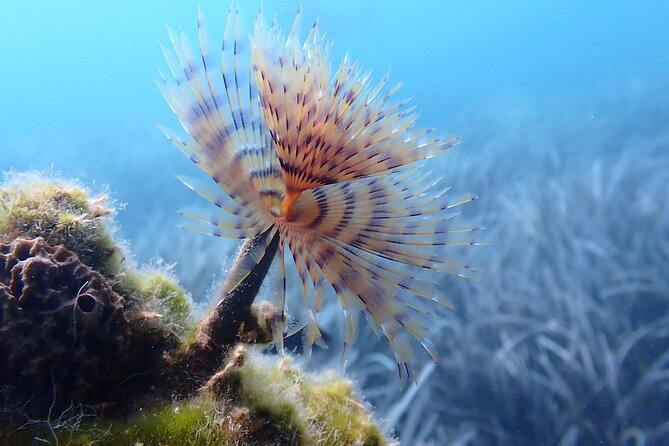
This is capped at 6 travelers, which is the kind of number that usually leads to better coaching. In a small group, instructors can watch what your hands and body are doing. They can correct the common issues quickly, like equipment comfort and slow, steady breathing habits.
Reviews give you extra confidence here. People highlight Robert for taking time, making sure everyone is having fun, and staying strict about safety habits. Another reviewer specifically mentions Lucas for giving lots of help during preparation so they could feel successful with moving and hovering underwater.
You should also expect a calm teaching approach because the whole idea is beginner-focused. The goal isn’t to test you. It’s to get you through the basics with a PADI Professional’s guidance and help you leave with a real sense of what scuba feels like.

What you’ll experience underwater: from first breaths to comfortable control
The marketing line here is your first breaths underwater, and that’s the heart of it. But there’s more to it than the first breath moment.
When this works well, you stop thinking about the scary parts and start noticing the manageable parts: the rhythm of breathing, the feel of buoyancy, and the way you can move slowly and predictably. That’s why the experience includes both structured practice and then free time. You need that decompression stage to turn training into actual comfort.
If you choose the guided open-water session, expect the instructor to keep you on track while you explore more of the open area. If you choose free time, your focus is more on comfort and playing within the rules you were taught.
Either way, you’ll come away with something practical: you’ll know what questions to ask next time and what you’ll want to improve—mask fit, fin positioning, or simply how quickly you relax.
Gear, photos, and the small details that affect your comfort
Gear is included, and that’s a big value point for most first-timers. It removes one of the biggest trip hassles: buying or borrowing equipment that you aren’t sure fits your body.
The reviews also mention that a video briefing happens at the start and that equipment is included. That combination is smart. You learn the basics, then you wear the gear correctly from the beginning.
About photos: at least one review notes that photos were promised and they were still waiting on them. That doesn’t mean anything went wrong, but it’s a good reminder to plan for a delay. Don’t build your itinerary around receiving photos immediately after the session.
What you can do to feel more comfortable:
- Tell your instructor right away if anything feels off with comfort or breathing
- Let them know about nerves before you get in, not after you’re already underwater
- Keep your focus on the instructions you’re given in the moment
Price and value: is $118.58 a fair deal for 3 hours?
At $118.58 per person, you’re paying for more than “time in the water.” You’re paying for training support, gear fitting, safety coaching, and the structured path that gets beginners to first breaths underwater in roughly 3 hours.
Here’s how the value adds up based on the experience info:
- PADI Professional instruction during the whole learning flow
- Equipment included (so you avoid extra costs and hassle)
- Small group size (max 6), which usually means more attention
- Shore entry that simplifies logistics compared with boat-based formats
- A choice after the basics: free underwater time or a guided open-water session
- Mobile ticket convenience and quick on-the-ground check-in
So the question isn’t just the price. It’s what’s included and how much coaching you’re getting for that duration. For a first-timer scuba trial, that combination is usually what separates a “cool story” from a confidence-building experience you can repeat.
Weather and timing: the practical reality behind the refund language
This experience requires good weather. If conditions are poor, the operator will either offer a different date or a full refund. That’s not only about comfort; it’s about safety and the ability to teach skills effectively.
The other timing detail is the flight rule: there should be a 12-hour gap between your underwater experience and your flight. That’s the kind of rule you want to treat as non-negotiable. Plan your last activity with that in mind, especially if your Santorini trip includes quick connections.
Also note confirmation comes within 48 hours of booking, subject to availability. If your schedule is tight, it’s worth booking early and keeping some flexibility.
Who should book this, and who should consider a different plan
This experience is a strong fit if:
- You’re a complete beginner who wants a real introduction with professional coaching
- You like structured learning (video briefing, gear fitting, skill practice)
- You want a calmer logistics day with shore entry and a short overall duration
- You’d benefit from a smaller group and extra instructor attention
You might think twice or go slower if:
- You’re sensitive to choppy water and tend to feel uneasy in motion
- You have an overly packed schedule with no room for the 12-hour flight buffer
- You expect a totally low-effort experience with zero nerves—scuba is still a new skill
If you fall into that last category, it’s still worth it. Just approach it like training, not like a stunt.
Should you book Discover Scuba in Santorini?
I’d book it if you want your first scuba trial to be organized, beginner-friendly, and coached by PADI professionals, without the extra complication of boats. The shore entry in Kamari simplifies your morning, and the max-6 group size is the kind of detail that can make a big difference when you’re learning something new.
Skip it (or reschedule) if your plans can’t handle weather flexibility, or if you’re unwilling to follow the 12-hour gap before flying. And if choppy conditions are likely for your dates, go in with a calm mindset and be ready to prioritize comfort and safety over bravado.
For most first-timers, this is the kind of tour that turns scary curiosity into a confident skill you understand.
FAQ
Where is the meeting point?
You’ll meet at Navy’s Waterworld in Kamari (Panagias Myrtidiotisas, 847 00, Greece).
What time does the experience start?
The start time is 9:00 am.
How long does the experience last?
It lasts about 3 hours.
Is a boat used for this experience?
No. Boats or other water vehicles are not used; the session starts from shore.
Do I get scuba gear provided?
Yes. Your scuba gear is included, and a PADI Professional will fit you with it.
Is there a guided open-water option?
Yes. After the basic skill practice, you can choose free time underwater or a guided open-water session.
How many people are in the group?
There is a maximum of 6 travelers.
What if the weather is poor?
The experience requires good weather. If it’s canceled due to poor weather, you’ll be offered a different date or a full refund.
Is there a flight time requirement?
Yes. There should be a 12-hour gap between the underwater experience and your flight.
Can I cancel and get a full refund?
Yes. You can cancel up to 24 hours in advance of the experience for a full refund. If you cancel less than 24 hours before the start time, you won’t get a refund.